
I love to be as close to people as possible. I guess it’s something about security.
When my last partner broke up with me (or we broke up with each other, or maybe I even broke up with him), I had to get a teddy bear—then, a gray kitten, silver tipped—because I seemed to have lost the ability to sleep alone. Eric was an encyclopedia on old country music, and I know you’re not supposed to talk about your ex in a letter like this, but I may as well be honest. I hope you’ll be an encyclopedia on something.
Also, I’ve been cultivating the ability to feel safe for awhile. Safe in myself, safe in my body. Only a few years ago, I would have told you I had finally reached my goal. I was whole—but it’s 2021 and a lot changed in the past year and a half—nothing is certain anymore. I’m sure you’ve heard. I’ve thought a lot about how people are obsessed with certainty, especially in the way we make choices. We don’t make a choice until we feel certain about it. We have to mull things over until it’s certain. “Are you certain?” people ask, which is another way of asking, “Are you sure?” When someone leaves you, or you leave them, you can ask yourself that, and each other. I don’t know if it helps you to answer the question. What about you, have you felt the need to be certain?
Would you feel the need to be certain about us?
Last January, I googled couples’ classes NYC, confirmed macarons were gluten-free, and booked me and my wife a chilly, late-night adventure in the East Village.
I was in the kitchen cleaning up after dinner when I heard the glass shatter. I simultaneously took a deep breath, closed my eyes, and waited for the inevitable outburst.
Busted.
We’d just finished brushing our teeth in Todd’s bathroom when he caught me in the mirror. Caught me sneering at the empty Yoo-hoo bottle near the sink, its cheerful yellow label a taunt.
“You don't like anything I like,” he accused me with his toothbrush. “Football. Battlestar Galactica. Yoo-hoo.”
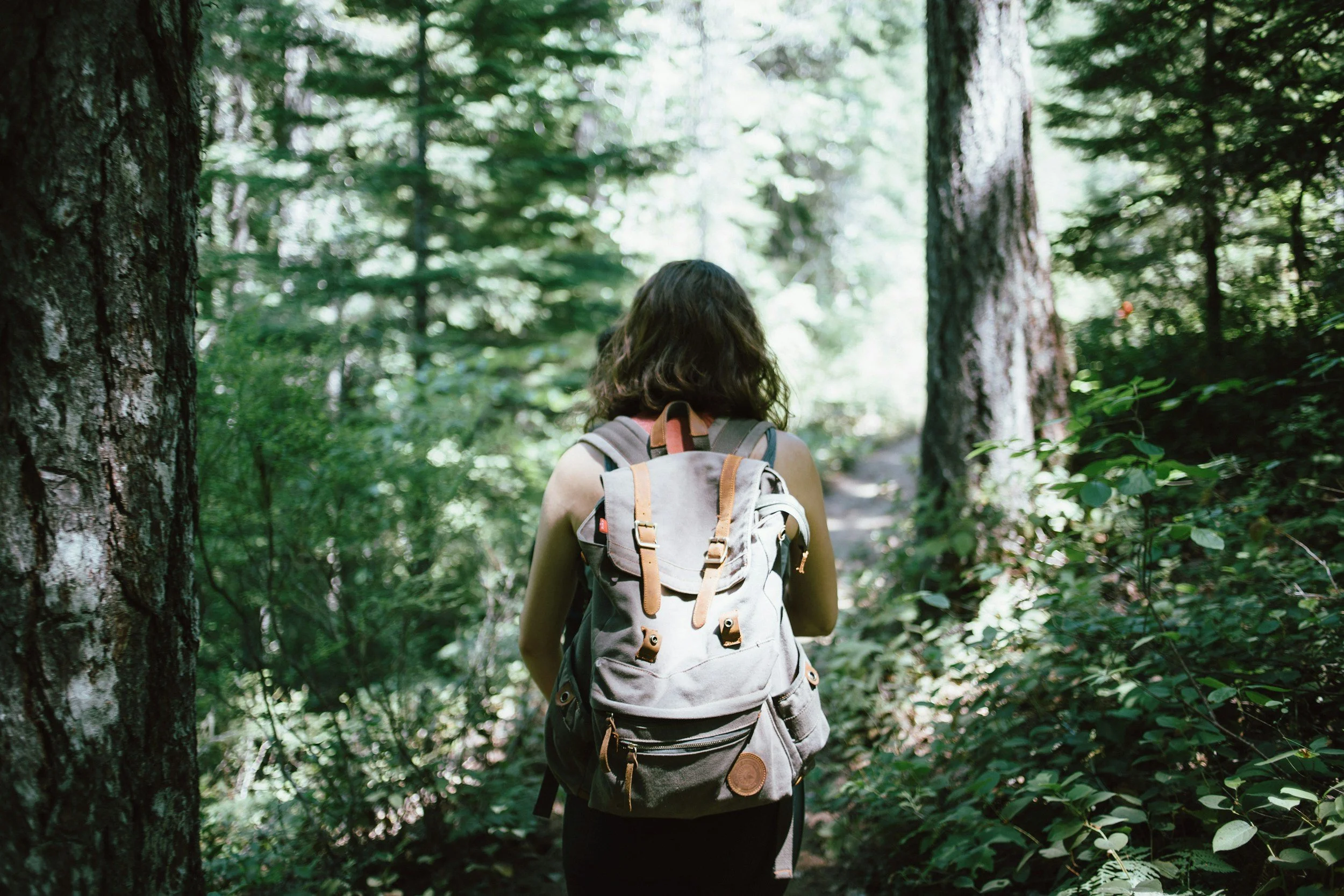
The majority of my childhood family backpacking trips occurred in New England. My father’s deep love of the wilderness initiated these excursions, but the whole family came to love how trees and natural waterways calmed us. Making such a journey with four small children was a tall order. In exchange for the extra effort involved for such trips—my mom was already working her ass off at home—my parents negotiated for my dad to be in charge of planning, packing, and cooking. Summer after summer, between Memorial Day and Labor Day, we set forth: to the Catskills, the White Mountains, and the Adirondacks—my dad’s pack piled higher than the top of his head and my mom’s not much shorter. If there were any tension around these trips, my parents kept it to themselves, and naturally I was eager to make similar forays once I reached adulthood myself.
The sun set an hour ago, which means it’s finally below forty degrees Celsius. Normally I embrace the dry heat in Erbil in exchange for the humidity back home in Toronto, but today it leaves my throat dry and hoarse. I shuffle my feet on the dusty tiles outside my house and peer over the metal gate until Emmita’s black SUV pulls up.
He poured his second, maybe third vodka tonic. He didn’t even look at me as he eased his six-foot-something frame through the sliding glass doors onto our deck. His words grazed by me as he sat down in the folding chair placing his drink on the small table between us, next to his worn copy of Machiavelli’s, The Prince.
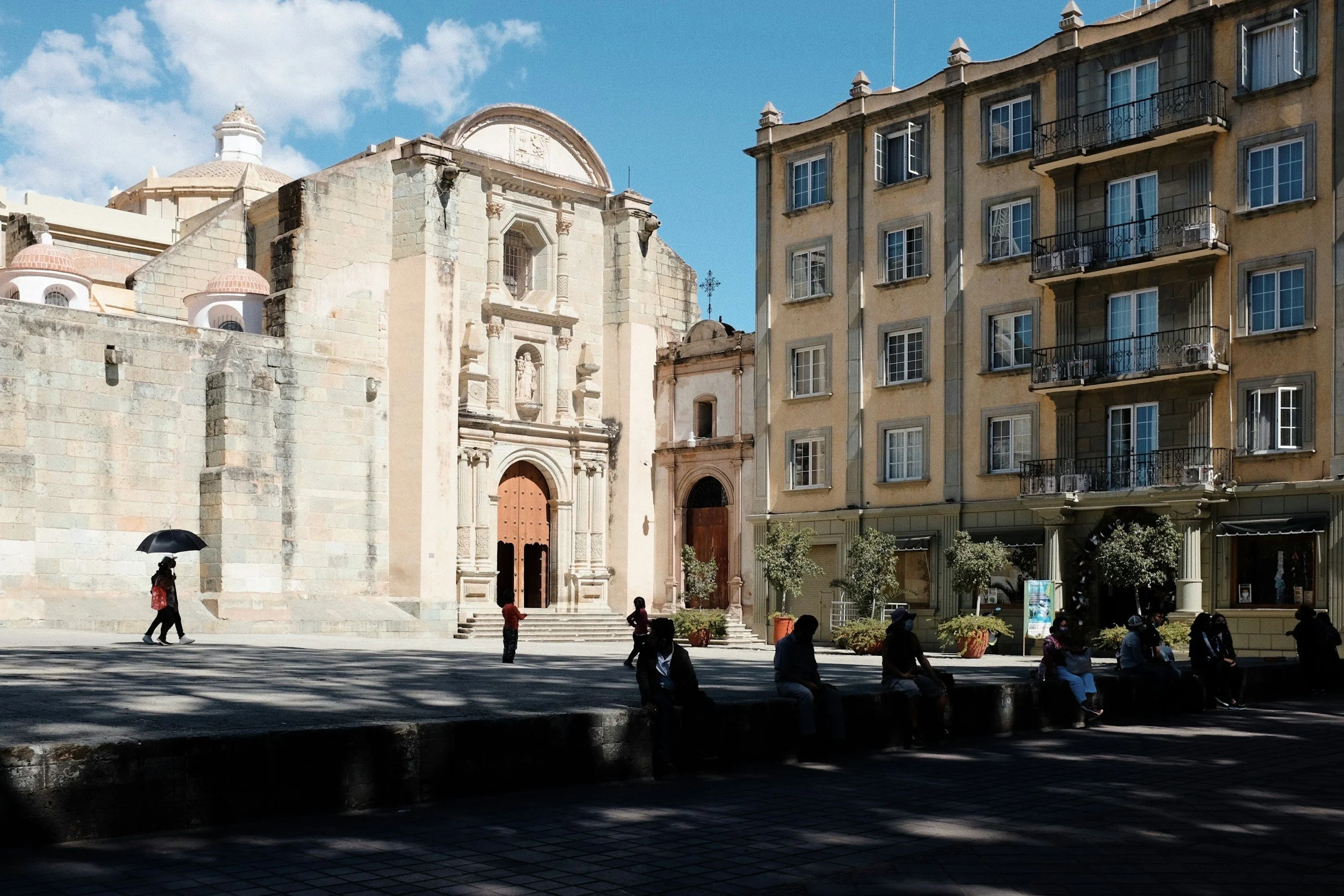
I’ve never seen the rooster next door that crows at dawn. And during thunderstorms. And during the ubiquitous fireworks—this is Oaxaca, after all. In the afternoon, when he’s tired of scratching at the same dirt hoping to find something different, but it’s just the same fucking dirt, he crows a little louder.
“I hear you,” I whisper over the fifteen-foot wall that separates us. “I feel you.”

For twelve years, I was an elementary school teacher in the Los Angeles Unified School District.
One hundred eighty school days each year.
Five years teaching kindergarten.
Six years teaching fourth grade.
One year teaching fifth grade.
The simple definition of teacher is one who teaches. But the reality of what it means to be a teacher is so much more.


I often wonder at the definition of first love. Many acquaint it to different people, for different reasons. Could I acquaint it to the first crush I ever had? Well then that would have to go to Orlando Bloom as Legolas in The Lord of the Rings. Do I count it as the first heart pounding, late night longing, tear-jerking crush I ever had? Well, that would have to go to a boy named Chase at the tender age of twelve, whom I was infatuated with for quite some time. Though he never liked me back, and while it was fun to crush on and spend nights talking about him with my girlfriends, I don’t think I could call it love. No. My first love belongs to my first boyfriend.
Vinegar-soaked fish and chips in a London pub, our families escaping the summer heat in 2006. You, me, your brother, my sister, all of us in a dark wood booth beside a window. English bric-a-brac, the smell of Guinness. In the spring, we’d both graduated from the University of Oklahoma and turned twenty-two within months of each other, which meant we’d known each other half our lives.

There’s an old Hebrew proverb that says before a child is born, the angel Gabriel whispers the secrets of the world in their ears. He tells them everything about God, life, love, the universe. Then he kisses them on the forehead, the child is born, and they begin to forget all the wisdom that was granted to them.

“Like, would that string really have stayed on her finger for fourteen years?” Lindsey asks, and I laugh in the carefree manner typically brought about by cheap vodka.
“Well, it’s magic string,” I respond, “because it’s infused with love.”
We continue to watch, a bowl of popcorn between us, buzzing on the fruit-flavored Smirnoff I am finally able to buy legally now that I’ve just turned twenty-one. It is summer; the semester has ended; we are each home from college.

When we were young and budding, we smiled as the girl’s body began to change. She was a skinny little thing without an ounce of fat or a wiggle to her bum.

I like to think about all the things that are uncertain—amorphous—nebulous, blobby, formless, indeterminate. Mostly those are the kind of things I like, anyway—things like clouds as they’re moving and changing, things like water, things like a body that seem solid but is really just growing, changing, sloughing, shedding. No one ever asks you if you’re certain about things like clouds, water, a body. I like to think we all once had long, aimless afternoons to spend staring up at cloud shapes, rich green grass under a blue sky. Childhood. We might banter a little about what we see, just playfully, but nobody is right. Shapes are shapes, shapes are your own.
I haven’t really let go of my ex, yet. Would you be okay with that? I always appreciate transparency. We haven’t let go because we’ve decided to leave the door open in case we find that one day, we may want to go back through the door again. I’ve always been a fan of closed doors, ruling out completely, finiteness and resolution—always as many questions answered as possible. I can pry so deep, as if there’s a center to everything. But it hasn’t always worked out for me, because thoughts tend to linger, questions tend to linger, love tends to linger. I have a memory. Like clouds in a cycle that become rain water, a lake, then cloud again—nobody asks a cloud to close a door, to stop being a cloud, to only be water. I hope you won’t ask me to be just one thing.
-Lindsay Clark
The hermit crab essay is a term originally coined by Brenda Miller and Suzanne Paola in their craft book Tell It Slant: Creating, Refining, and Publishing Creative Nonfiction. Like its namesake, the hermit crab essay borrows an existing container, such as a list, set of directions, tarot card reading, or real estate listing, and makes it its own.
In this workshop, we’ll explore how different authors use the Hermit Crab Essay as a creative vehicle for approaching topics that may feel too difficult, vulnerable, or traumatic to write about directly. I’ll share writing exercises, practical tools, and techniques that you can take with you to experiment with this form and begin crafting your own next essay.
The success of Gillian Flynn’s Gone Girl (2012) heralded a new era of domestic suspense. Most of the novels that came to define this genre featured white women narrators behaving badly. While this convention invokes the precedent of the pathologization of hysterical women, we must also consider how this convention relies on contemporary white privilege. How do Caro Claire Burke’s Yesteryear (2026), Alice Feeney’s My Husband’s Wife (2026), and Meagan Church’s The Mad Wife (2025) use unreliable narration to suggest that madness is a privileged state?
Women characters are still too often judged by one question: Is she likeable? That question can do a lot of damage on the page. Anger gets softened. Ambition needs an explanation. Bad decisions need a sympathetic reason behind them. A woman can be selfish, difficult, ruthless, jealous, furious, or want something she probably shouldn't, but writers often start sanding those edges down because they're afraid the reader won't like her. But liking a character and wanting to keep reading about her are two very different things. Stop Making Her Likeable is a 90-minute workshop about what actually keeps a reader invested in a complicated woman. We'll look at why readers can become completely absorbed by characters they don't approve of, what makes difficult behaviour fascinating rather than simply frustrating, and how motivation, contradiction, desire, and agency affect the way a reader responds to her. We'll also look at our own pages. Where are we explaining a woman because we're afraid she'll be judged? Where are we making her apologize for wanting something? Where have we given her a tragic reason for behaviour that we might simply allow from a male character? The goal isn't to teach writers how to create an “unlikeable female character.” It's to stop treating likeability as the price a woman has to pay to be worth reading about.

Lindsay Clark lives in Portland, Oregon after spending her formative years in the mountains of northern California. She is an accomplished songwriter and musician and an aspiring writer of creative nonfiction. She has had her musical work published on NPR, Popmatters, Oregon Arts Watch and more, and has shared the stage with notable folk artists such as Alela Diane and Michael Hurley. She is currently at work on her first collection of personal essays. You can find her at lindsaybethclark.com.
I used to believe risk would announce itself with fanfare—a cliff edge, a trembling ultimatum, something you could point to as the hinge on which your life turned.
In childhood I imagined risk as a sort of mythic test: a figure standing in the threshold, asking if I was brave enough to continue. I thought it would feel loud. Definite. Something that glowed red at the edges and warned me, Pay attention—this is important.