
Unbecoming
Not all transitions come with clarity.
Some arrive as quiet unraveling.
The day he left for graduate school, the air in the house felt different.
Not heavy. Not sad. Just…suspended. Like everything was still waiting for something to happen, even though it already had.
He moved through the rooms with a calm I didn’t recognize, gathering notebooks, chargers, socks, bowls, the stray things that make up a life. He didn’t ask where anything was.
He didn’t need me to hover or anticipate or translate the details.
I watched him pack the car, lifting boxes with the kind of casual confidence that comes from not knowing you’re being observed. A part of me wanted to fix something, a corner of a blanket, a stack of books, the way the suitcase sat crooked, but I didn’t.
There was nothing to fix.
At the doorway, we hugged longer than expected. Not dramatic. Just long enough for the moment to settle. When he pulled away, I stayed there for a second, the quiet gathering around me.
I didn’t cry.
I just watched his taillights fade into the late afternoon. After he drove away, I walked back into the house and I wasn’t sure if it felt different or I did. Not dramatic. Just…unfamiliar. I stood in the hallway for a long time. My body felt both too full and strangely weightless, like it hadn’t caught up to what had just happened. Something in me had shifted, even if I couldn’t name it yet. A role I’d lived inside for so long was suddenly quieter, and I could feel the beginning of that unraveling. The unbecoming started there, in that small, ordinary moment.
When he was little, everything was obvious. Need announced itself loudly: hunger, exhaustion, fear. His small body spoke a language I understood without thinking.
I remember one morning when he was three, his fingers curled in the hem of my shirt as we crossed a parking lot. He held on with complete certainty, trusting my body would know the way. And it did. Back then, I moved through the world in rhythms shaped around him — meals, naps, the soft weight of him falling asleep on my chest.
But there were cracks, even then, moments when exhaustion made my voice snap or patience ran out, when I wished for just an hour alone, then felt guilt gnaw at the wish as soon as it surfaced. I kept those moments quiet, tucked behind the reliable cadence of mothering.
There was no question about who I was. Motherhood fit like instinct, like breath.
I didn’t know then that identity could loosen, that roles could dissolve slowly, quietly, without asking for permission. There were early signs of distance, years before I noticed what they meant. The first time he didn’t look back when I dropped him at middle school. The first time he closed his bedroom door and stayed behind it. The first time he came home with opinions I hadn’t given him. None of it was outsized or amplified. Just the subtle calibration of a child becoming himself.
I remember standing in the kitchen once, watching him refill his water bottle without asking for help, the way he moved with a confidence that didn’t include me. It was small.
Ordinary. But it stayed with me.
There were afternoons when he’d retreat into himself and my attempts at conversation fell flat, or when I felt the drift but blamed hormones or school or myself always hunting for some reason to pin the distance on. The mess was quiet, but insistent. The quietness of those moments echoed years later, in the hallway after he drove away.
Unbecoming is slow.
It doesn’t arrive with clarity.
It doesn’t announce itself.
It begins as a quiet loosening, a soft erasure of the self you once were without ever intending to change.
I tried to believe absence would reorganize me, that space would rush in and show me what shape I could take. Instead, every room just felt uncertain, no longer his, not yet mine, as if the act of living here was waiting for someone else to decide. The house didn’t echo with possibility. It just felt unfinished. As if I’d walked off-stage and someone forgot to lower the curtain.
There is an ache to roles that no longer fit. A sadness in becoming a background presence in a life you once centered. A confusion in the space left behind. Boredom felt like shame.
It’s not grief, exactly.
Not pride, either.
It’s the hollowing-out of a role that once defined me…the subtraction of “mother” as a daily verb.
Unbecoming isn’t dramatic.
It’s not a clean break or a bold leap.
It’s incremental a slow dissolving.
It’s waking up and realizing the shape you used to occupy has softened, blurred, maybe even disappeared.
People talk about finding themselves again, about hobbies, adventures, reinvention. I mostly found questions. A low-grade restlessness. Some days I was content just to let nothing happen, to drift in the space he left behind. Other days, I tried to assign meaning to the quiet. Tried and failed.
The world is so eager to see endings as clean. They want a hobby, an epiphany, a story of finding something new inside the loss. I just felt suspended. I wanted to want something. Mostly, I didn’t. There wasn’t a before and after, just this long, uncertain space. Not a clean break. Not a mirror, just a smudge.
I notice it in small ways:
the unnecessary grocery list,
the absence of shoes by the door,
the quiet that isn’t peace but isn’t quite pain,
the soft hum of the fridge filling the silence that once belonged to us.
Becoming is often about growth, clarity, new chapters.
But unbecoming is quieter.
It’s the space before the next self arrives.
The uncertainty of existing without the scaffolding of who you used to be.
Some days I feel spacious, like something new might be forming.
Other days I feel unmoored, drifting, unsure what shape I’m supposed to take.
I don’t have a lesson in this.
I don’t have a ribbon to tie around the ending.
I don’t know what comes next.
Maybe unbecoming is simply the necessary emptiness before the next shape forms.
If you’re here too, adrift, in between, unsure,
this is me, waving from the unraveling.
Sometimes you lose your shape before you find it again.
-Faith Galliano Desai
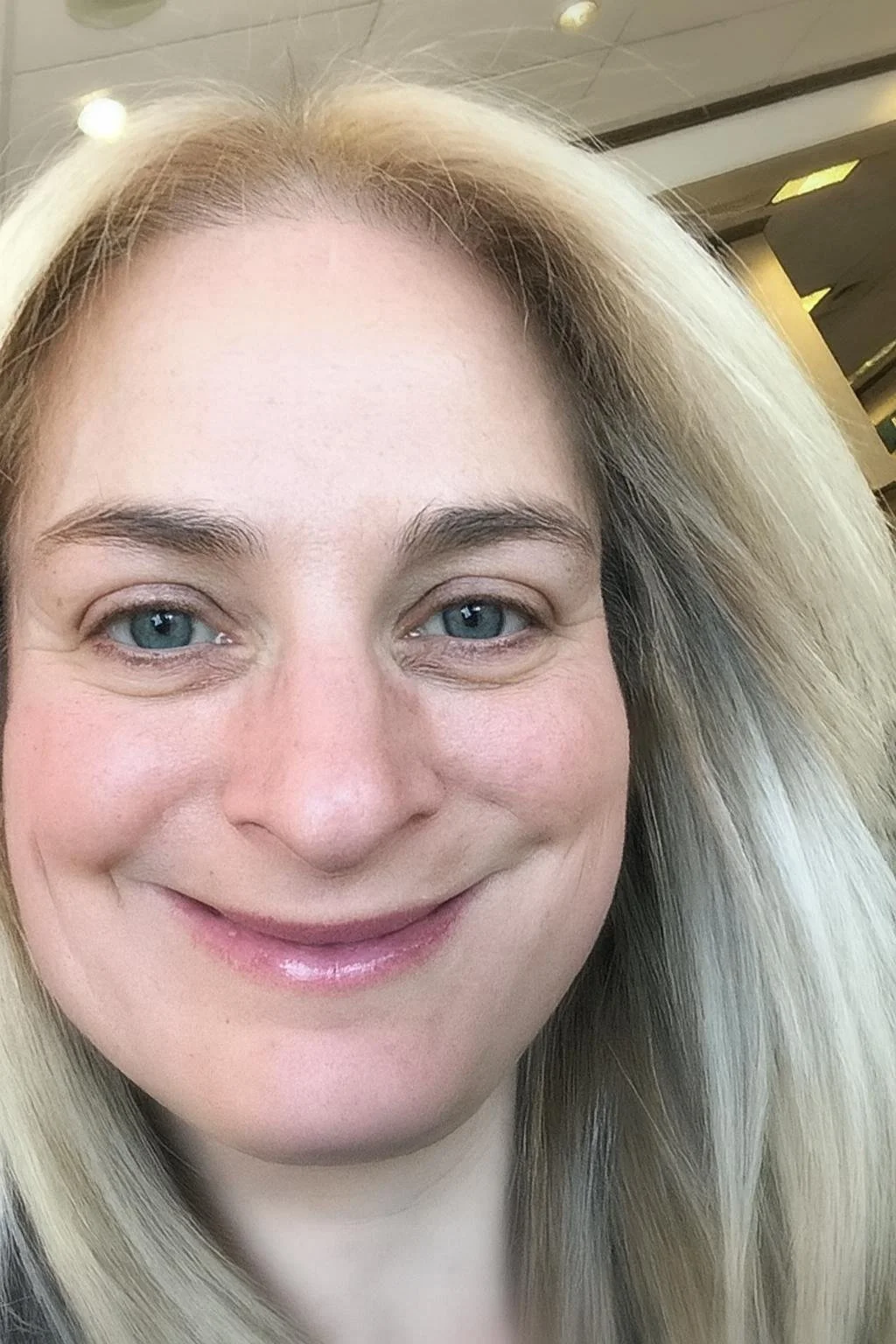
Faith Galliano Desai is a psychologist and essayist whose work traces the emotional and physiological contours of being human. Her writing explores the intersections of trauma, memory, grief, anxiety, and the body’s instinctive ways of holding what goes unspoken. With a background in holistic approaches to wellness, she is drawn to the quiet spaces where psychology, lived experience, and lyric inquiry meet. Her work has appeared in Intima: A Journal of Narrative Medicine. She is currently completing Unsaid, a collection of essays on the ways the body remembers what the mind forgets.