
Strands
I spent every Sunday morning from the ages of thirteen to eighteen in a windowless room tucked into a drab office park suite. Dark, meticulously arranged lighting paired with loud music created an atmosphere calibrated for the Holy Spirit to strike. For my sensitive, impressionable nervous system, this was paradise. A tapestry of religious fervor woven together by moments of perfect, holy ecstasy. For two hours every week, I was not in suburban Florida: I was in the kingdom of heaven.
Not all churches lack windows, of course, and not all buildings without windows are churches (i.e., strip clubs, casinos, seedy dive bars).
I’ve seen pictures of churches with floor to ceiling windows, like the architecturally acclaimed Thorncrown Chapel in Eureka Springs, Arkansas. Steel beams latticed across the crisp glass, a kaleidoscope of steel, sky, and leaves.
I’ve worshipped in churches entirely in the open air. The amphitheater-style chapel at my summer camp opened onto a vista of Table Rock Lake and the rolling Ozark mountains. A simple wooden cross in the center marked the place as holy.
I’ve attended church in pavilions and tents–ubiquitous in the revivals that marked each of the last three centuries of American life, and still common in many other parts of the world.
I’ve visited churches filled with stained glass; a funny middle ground, as they allow in light, but block our view of the outside. Creating an illuminated, large-scale storybook to ensure churchgoers fixate only on the approved avenues of the divine.
That sealed-off room in my childhood Evangelical church was a chrysalis. I was the pupa, cocooned in the spun web of silky melodies and mood lighting. Being transformed, transmuted from flesh into spirit, from civilian to warrior in the army of God. I sang, I cried out, I raised my hands and closed my eyes. I sobbed. I prayed. I laid hands on people. People laid hands on me. We were preparing ourselves for the battle out there. Like Jesus in the tomb, we waited in darkness for new life. For a religious tradition that so loudly rebukes the darkness, we sure spent a lot of time in it.
*
My family and I went to Ireland when I was six, a few years before the spiritual upheaval that led my parents to move from the mainline Presbyterian church we attended to a charismatic Evangelical church. That week in Ireland, I remember jewel-toned patchwork quilts of green pastures, herds of sheep lazily blocking the winding roads, and a seemingly infinite number of old, crumbling castles. I also remember an odd obsession with Celtic crosses. This little version of me adored the intricate designs of the circle around the cross, not knowing the Pagan origins of those swirls and twists. For my birthday I got to bring home a tiny silver cross, strung on an old chain. The finite lines of the cross with the infinite loop of the circle, mixing angularity with roundness.
*
My early love of that pagan symbol superimposed on top of a Christian one–a phenomenon I would later be able to explain with a fancy theological word, syncretism–was perhaps a clue that something in me yearned for that which was outside of the holy embrace of the sanctioned sacred.
There were other signs, too. The doubts, questions, incongruencies, and uncertainties visited me like unwelcome apparitions from an early age. The windows into my innermost soul seemed cracked from the start, unable to keep out the questions that streamed in like rays of unwelcome light through the morning curtains. I was always darkness and light, but I hid the doubt in the shadows, pretending I was on the straight and narrow road, bound for heaven.
But by the time I was a senior in college, I had seen behind the veil, through the windows into other, vastly different realities. It’s hard to study liberation theology and political theory during the first Trump presidency and come out with your beliefs intact. For a few years it felt like stumbling around in dense fog, trying to find my way back to the path, reaching for a railing, questions clouding my vision, my mind, my spirit.
Questions like, “Who am I, where do I come from, where am I going, and why?”[1] Questions to which Evangelical Christian doctrine provides firm answers:
Who am I? Child of God, sinner, follower of Jesus, depraved, selfish, made in His image
Where do I come from? Descendent of Eve, expelled from the Garden of Eden, born in darkness
Where am I going? Depends: Heaven, if you stay on the narrow path; Hell, for everyone else
Why? All for the glory of God
It was never the questions that haunted me, it was the answers.
Hillary McBride, a psychotherapist and researcher who studies religious and spiritual trauma, explains in an episode of her podcast Holy Hurt what it’s like to lose our spiritual worldview. She describes the experience as someone unexpectedly sitting on a broken chair. Used to feeling held and supported by our worldview, McBride notes, “We don’t think about how much of it exists and holds us up until it doesn’t anymore.” You don’t realize how much of your world is illuminated by the light of doctrine until you snuff it out.
I rejected those old answers, eventually, as I left the Evangelical church. But I needed new ones. I wouldn’t realize until years later just how much of my being was imbued with the mindset that raised me. The need to know, to be right, to reject doubt.
*
I torture myself every day with “killer” style Sudoku puzzles. I love puzzles for the same reason I loved religion for so long: answers. In my lowest points, where my deepest spiritual despair converged with the most intense bouts of my chronic illness, I would spend hours each day, completing puzzle after puzzle, lost in the comforting certainty of squares and numbers. I needed all those firm edges.
Spiritual deconstruction is spending twenty-four years of your life learning the rules to a puzzle, practicing daily, excelling at your craft until one day you discover you can’t do that puzzle anymore. You can go find someone else to teach you a different puzzle, or you can create a brand-new puzzle on your own. Or you can give up puzzles all together.
Overwhelmed, alone, and terrified, I borrowed from the old playbook: all or nothing, light and dark, good and bad. I believed I had been wrong, and now I wanted to be right. Some of what happened within my religious upbringing harmed me, so I had to reject all of it. I didn’t believe most of it, so I couldn’t believe any of it.
Over the years I shed layer after layer of belief, inverting the contents of my thoughts. So much of what they espoused as sinful–homosexuality, universalism, embodied sexuality, evolution, the Democratic party—I began to celebrate with equal fervor. I believed I had been given the wrong answers, but I still believed in Answers. The contents of my thoughts had changed, but the process of my thinking remained binary, concrete, and ultimately, limiting.
I needed a different way of orienting to truth. I didn’t need another puzzle with firm rules and unyielding logic. I needed to learn to weave.
*
For a few weeks in the spring of 2024, I took a weaving class through the public library. Half the time it was just me and the instructor, a former public-school teacher working toward her Master of Library Science, giving an hour of her week to teach the public to weave on the same hand looms they give ten-year-olds in elementary school.
I only completed three small weavings, barely larger than coasters. They aren’t straight, or even, or really all that good. I still have a bag full of yarn, plastic needles, and forgotten plans to make a larger loom out of an old picture frame. I learned the basic stitches but found it hard to understand the mechanisms of creating organic shapes from vertical and horizontal lines. I wanted roundness, softness. I wanted to weave waves of color but couldn’t transform the angles into curves.
*
Like those swirling crosses caught my eye as a child, Celtic spirituality eventually drew my attention as an adult. I first heard Pádraig Ó Tuama, an Irish poet, theologian, and conflict mediator, on an episode of Krista Tippett’s podcast On Being many years ago. I was still in the phase of desperately trying to find a foothold for my belief within Christianity. I pored over different versions of the faith that I prayed would be more palatable, even if being believable was already mostly out of the question.
I was moved by Ó Tuama’s words–he is a poet, after all–but mostly, it was the humble way he embodies his Catholic faith as source of his radical activism in the world, not a hinderance to it. And as a gay Catholic growing up in Ireland in the 80s, he understood deeply how harmful religion can be. Yet he found respite, meaning, and truth there.
By the time I returned to Ó Tuama a few years ago, I had given up trying to force belief, letting loose the tether to Christianity. I now don’t connect with Christian truth claims, nor do I connect with the way Padraig understands his relationship to his “beloved and bewildering Jesus.” But I do know what it’s like to feel loved by the universe while being bewildered by its mystery. I know what it’s like to be hurt by that which sustains you.
*
Around the time of weaving Ó Tuama’s words back into my story, my husband and I took a trip to a little cabin outside of Asheville. It was early spring, and the morning ground was freckled with both stubborn frost and precocious blooms. There were a few books laying around, and I picked up John O’Donohue’s Anam Cara. O’Donohue, like Ó Tuama, is an Irish poet and theologian. I only read a few pages, but I was apparently so moved by one phrase that I made it caption for my post on Instagram: “in our mediocrity and distraction, we forget that we are privileged to live in a wondrous universe.” Deep of me, I know.
I made my second attempt to read Anam Cara while on a family trip to Scotland last year. When I picked up the book it surprised me, the willingness I felt to read a book by a professedly Christian author. I was also surprised that trip by how much I cried, deeply and inexplicably moved by the scenery of this rugged and dramatic landscape.
O’Donohue writes in his first chapter, “we need a light that has retained its kinship with the darkness.” I looked up, surrounded by beauty forged in contrast: verdant green against the black stone of towering mountains; jagged, vertical rock faces cascading into the bright blue sea. A harsh climate that has formed such kind, open people.
I didn’t make it very far in the book that trip either, preferring to look up and out at the beauty around me. I finally returned to it for the third time months later, around the same time I began attending a Quaker meeting.
*
It was sitting in the Quaker meeting house that I finally realized the sanctuary of my childhood church was utterly windowless, lacking an immediate artery to the outside world. We were three months into a second Trump presidency, and all felt hopeless. So I threw a hail mary and agreed to go with a friend to a Quaker meeting.
I sat in the open, high-ceilinged room and watched the sunlight streaming through the windows and falling in leaf-patterned splotches on the wood floors. The silence rang in my ears. I attuned to every attempt at a quiet footstep, to each cough or shift in seat. I heard the birds outside, faint noise from the few cars that passed by the residential street below. Occasionally, people stood up and spoke. Mostly it was silent.
Quakers don’t all agree (a common experience within this tradition) on what exactly we’re doing when we sit. Some describe it as expectant waiting, listening, contemplating, holding in the light. Longtime Quaker Carl Abbot in “Quakers: A Quick Guide,” describes the purpose of waiting as “not to empty one’s mind, but to open it to a larger presence that may lead to a sense of wholeness with the group.”
The first time I went, I didn’t know any of that. But I felt it—the wholeness. And I experienced the simple power of presence, with almost nothing to mediate or manipulate my experience. I cried, unencumbered by the expectation to perform passion or pretend piety. My nascent understanding of Quakerism was that it allowed us space to be seekers without needing to find anything in particular, or anything at all. Quaker community seemed not about coming to the same conclusion but about asking questions with the same kind of tenderness and honesty and care.
*
I bring Anam Cara with me to the meeting almost every week and flip through it when I inevitably cannot sit with my own thoughts for a full hour. I love O’Donohue’s winding, circular, sometimes redundant prose like I love the contemplative silence, genuine kindness, and commitment to justice I find in that meeting. I still sometimes feel a knot of panic, threads I haven’t untangled yet, that tell me to run away from anything tied to Christianity. Sometimes I feel I’m ready again to start weaving in strands from my ancestral traditions; sometimes I’m not so sure. Stitches always hurt, at first.
*
Ó Tuama has a passage in his book In the Shelter that he shared at the end of his interview with Tippett:
“Neither I nor the poets I love have found the keys to the kingdom of prayer, and we cannot force God to stumble over us where we sit. But I know that it’s a good idea to sit anyway. So every morning I kneel, waiting, making friends with the habit of listening, hoping I’m being listened to.”
I don’t need to agree with all the same truth claims as him to know, in my bones, that I also need to sit, every day, and make friends with the habit of listening. That no one, absolutely no one, holds the key to divine understanding. None of us have the Answer. But we all want to be listened to.
*
I do not know what is True. I do not know what is Right. I do not know what is Good. I do not know what anyone else should think or believe for them to be able to make sense of this confusing, painful, beautiful world. Of course, I still judge others; condescension, arrogance, and superiority are not reserved for religions. Like early attempts at my loom, my stiches are clumsy still, as I learn to weave a new language of acceptance, curiosity, and humility into my being.
Some of the kindest, most generous people in my life–including my parents–still go to my childhood church. They still believe, and for them, that is true and good. For me, becoming less sure has helped me soften into my life and the world around me in a way that has been necessary, excruciating at times, and, ultimately, fruitful.
The new questions I want to keep asking, weaving and winding my strands of light and dark, old and new: What is helpful? What is generative? What is connecting? Where can I find new windows into other realities? What helps me embrace softness and uncertainty?
I still want the answers, a lot of the time. I still want to find something big enough to hold this bag of string. I have a lot more unraveling to do. Don’t we all, if we’re lucky?
[1] I encountered these questions in this order and form through The Unforeseen Relationship Between Spirituality and Psychiatric Medication: A Hermeneutic Phenomenological Study, by Lynne Vanderpot, John Swinton, and Helen Bedford, (2018).
-Elizabeth Woods
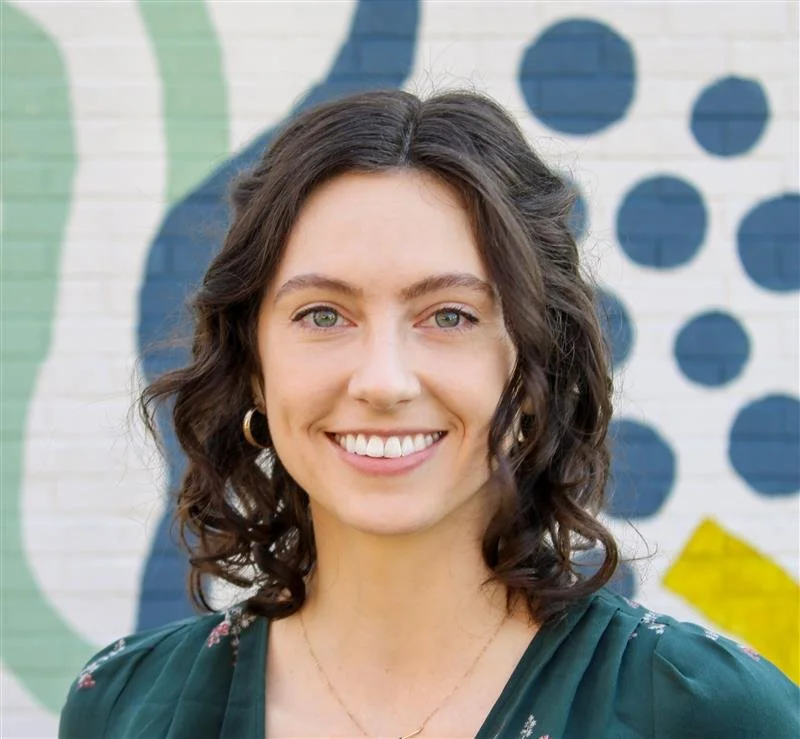
Elizabeth Woods is a psychotherapist and writer living in Nashville, TN. Elizabeth’s writing explores themes of religion, meaning, chronic pain, healing, and community. Elizabeth shares a home with her husband and their many houseplants. When she’s not working or writing, you can find Elizabeth cooking for friends, reading on her porch, or getting out of the city and onto some hiking trails.