
I would hope you’re reading this with tears streaming down your face, but I doubt it. Our relationship has not always been an easy one, volatile at times, distant at others. But never let it be said I didn’t love you. Very much. I don’t know how you feel about me. We don’t talk about such things, apparently. But now I’m about to die and there are some things you should know.
I know you won’t be here when it happens. You live far away and I live alone. Given my medical history, it’s likely I will drop dead on the floor, to be discovered only when the stench invades the neighborhood. The police will check my email mailboxes to find notifications. You’ll be on that list and, as my next of kin, you’ll be the decision maker. I’m sorry to put that on you but, as we know, life—and death—aren’t always fair.
There’s some service here in town that retrieves the body in a bag and torches it for a reasonable fee. What you do with the ashes, if anything, is entirely up to you.
I have enough friends here that there could be a small gathering. Please note that if it involves any religious invocation at all, I will come back to haunt you. And no euphemistic mention of “passing on,” please. I died. Plain and simple. Perhaps people would want to share remembrances. That would be nice. Or it could be. What might they say? That I was smart, talented, clever, a supportive friend, an accomplished person who led an interesting life. Good enough.

On Monday, August 20th, 2012 at 11:54 p.m., a piece of rail snapped beneath an eighty-car train carrying 9,837 tons of coal as it passed over a bridge above Main Street in Ellicott City, Maryland.
Just a moment before the accident, Elizabeth Nass and Rose Mayr, two nineteen-year-old friends spending one last night of summer together before heading back to college, sat on that same bridge, dangling their legs over the edge.
Just a moment after, the train cars tipped over on their bodies, crushing them beneath piles of coal.
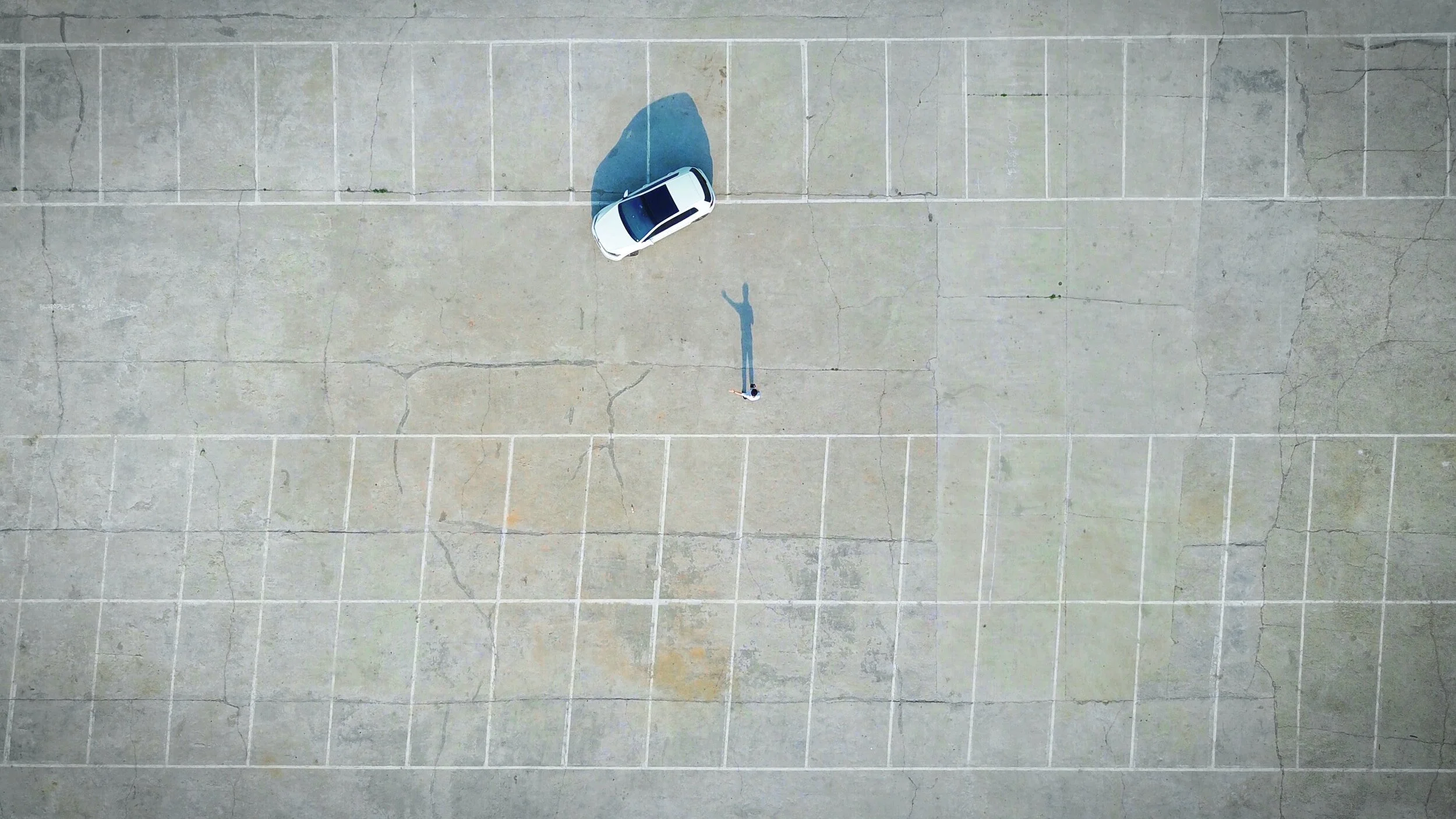
I stand at the church parking lot entrance and stop each car.
The surface lot is small and we’re saving it for those who NEED to park closer. Please park in the parking garage, yes, the one RIGHT there, and get your ticket validated inside for free parking.
I smile, nod, and point.

Right now, I am looking at a photo of us. From a lifetime ago. Stuck within the pages of an old book, the photo fell to the floor.

I stretch out my legs on the sand. I can see her almost approach me. She is wearing a white beach jacket and a straw hat with a veil over it. In sunglasses and standing proud, her breasts sprout. No one would ever have suspected the loss of one or the other. She is smiling, and her mouth says, ‘I am happy in the land of palm trees, coconuts, and certainly, I don’t have to search for any monkeys because I was never one.’

Elise is standing in front of her dresser mirror, a tangerine in one hand, a wad of Kleenex tissue in the other. Her dark-eyed reflection stares back at me beneath a fringe of stylish blond-brown bangs. In our fifth-grade class, Elise is a golden goose amid the rest of us awkward ducks, with her pert nose and movie star mole at the corner of her mouth.

My favorite book by bell hooks is in my friend Kjersten’s house, I think. We’d spent a Friday afternoon in my kitchen with fellow mom friends, our circle’s version of Happy Hour, discussing love, grief, loss, and healing, our children tossing a football around outside. I mentioned my love for hooks and her writing on such topics, and Kjersten expressed interest. I told her hooks’ words changed how I approached my most meaningful relationships, helped me understand past communication breakdowns. hooks pushed me to embrace honesty and openness, to recognize love as a verb: “To love somebody is not just a strong feeling - it's a decision, it's a judgement, it's a promise.”

“Hey, ain’t you Jesse’s sister?” Jesse’s sister, that name should have been on my birth certificate. Not one of my brother’s friends ever called me by my first name. Did they know it? Even Kevin, who always found his way into my room when my brother was in the bathroom.

Whenever I see a drawing of a bird, I think of my sister. Cherie had a fascination with birds and an encyclopedic knowledge of every species. She worked at a wildlife center and fostered the injured birds, but she had a particular fondness for the birds of prey. She took beautiful photographs of hawks, eagles and owls, and sketched them every chance that she had.

It was the fall of 2010 that change my life forever. I was a freshman in high school going through many changes in my life already and just trying to find out what I wanted to do in the next four years. Then something tragic happened that I would never forget. On October 19, 2010 my longtime friend Daniel, who had cerebral palsy and a brain tumor, lost his battle to the cancer.
But what would you say? Maybe that I was a good mother, whatever that might mean. I think that phrase sounds like it’s the first part of the sentence that continues with, “…but…” There were some of those in our life together. I would have apologized while I was alive if I knew what to apologize for, to make good if only I knew what I made bad. Something kept you at a distance. I did support you financially for a long time but that’s not a personal thing, nothing you’d brag about. I tried to support you emotionally, too, when you’d let me.
And what about music? How could there be any remembrance of my life without music? There are the two CDs I recorded but please don’t embarrass everyone by playing the first. The second is vastly superior. Choices of cut is up to you, of course. “Sentimental Journey” would be an easy choice, but I can understand the temptation to put all this behind you with “Today Will Be Yesterday Tomorrow.” It doesn’t have to be my voice in the room, either. You could select something from the work of Doris Day, who has been a poltergeist and role model for many years, most recently the subject of some of my writing—both fiction and nonfiction. Or you could choose Susannah McCorkle’s work. Her pathos and abrupt ending were also the fodder for my endless rumination and aspiration. But from now on, it’s all your call.
No more holidays together. No more flights back and forth. Think of the money you’ll save. You will be free—and pretty rich. I’m leaving you tons of money.
Life goes on. So if there really are tears on your face, they’ll be gone soon.
-Pam Munter
This product gives you access to all four weeks of the workshop. Purchase one or more drop-in sessions here.
Build a habit in 20 sessions. In this 4 week workshop that meets Mondays through Fridays from 8:00-9:00 AM CST, we will focus on generating new writing—making headway on a current project, reviving an old project that’s been gathering dust, or writing based off of the daily prompts Leigh provides.
The first 45 minutes of class are a gentle, camera-off, silent writing session. The remaining 15 minutes are an opportunity to share excerpts of our work, reflect on progress made, and set intentions for the following day. Then we will read a passage together on the writing life and close each class with a new learning about habit formation. By the end of this course we’ll have a morning writing habit that is each our own to continue and build upon.
This listing is for an individual class. To purchase access for the full 4-week workshop, click here.
Build a habit in 20 sessions. In this 4 week workshop that meets Mondays through Fridays from 8:00-9:00 AM CST, we will focus on generating new writing—making headway on a current project, reviving an old project that’s been gathering dust, or writing based off of the daily prompts Leigh provides.
The first 45 minutes of class is a gentle, camera-off, silent writing session. The remaining 15 minutes are an opportunity to share excerpts of our work, reflect on progress made, and set intentions for the following day. Then we will read a passage together on the writing life and close each class with a new learning about habit formation. By the end of this course we’ll have a morning writing habit that is each our own to continue and build upon.
Many writers feel drawn to write about their lives but struggle with uncertainty: Why this story? Why now? And who is it really for? This workshop is designed to help writers move beyond doubt and toward clarity by focusing on the deeper meaning and purpose beneath their story.
In this interactive, craft-forward session, participants will be introduced to the Memoir Compass, a practical framework that helps writers articulate their motivation (why they are writing), mission (who the story serves), and message (what meaning or insight the story carries). Through guided reflection and writing exercises, participants will begin shaping a personal narrative rooted in intention rather than overwhelm.
This workshop is ideal for writers interested in memoir or personal narrative, as well as fiction writers drawing from lived experience, who want to move forward with greater confidence, focus, and direction.
Some of the most compelling creative nonfiction begins with the feelings we are tempted to avoid: anger, resentment, shame, fear, or the sense that we have an axe to grind. In this six-week workshop, writers will explore how to follow that emotional heat toward deeper, more honest work—without sacrificing compassion, complexity, or craft. Through close readings, writing exercises, discussion, and constructive feedback, we’ll consider how to transform strong feelings into writing that reaches beyond catharsis and connects with readers.
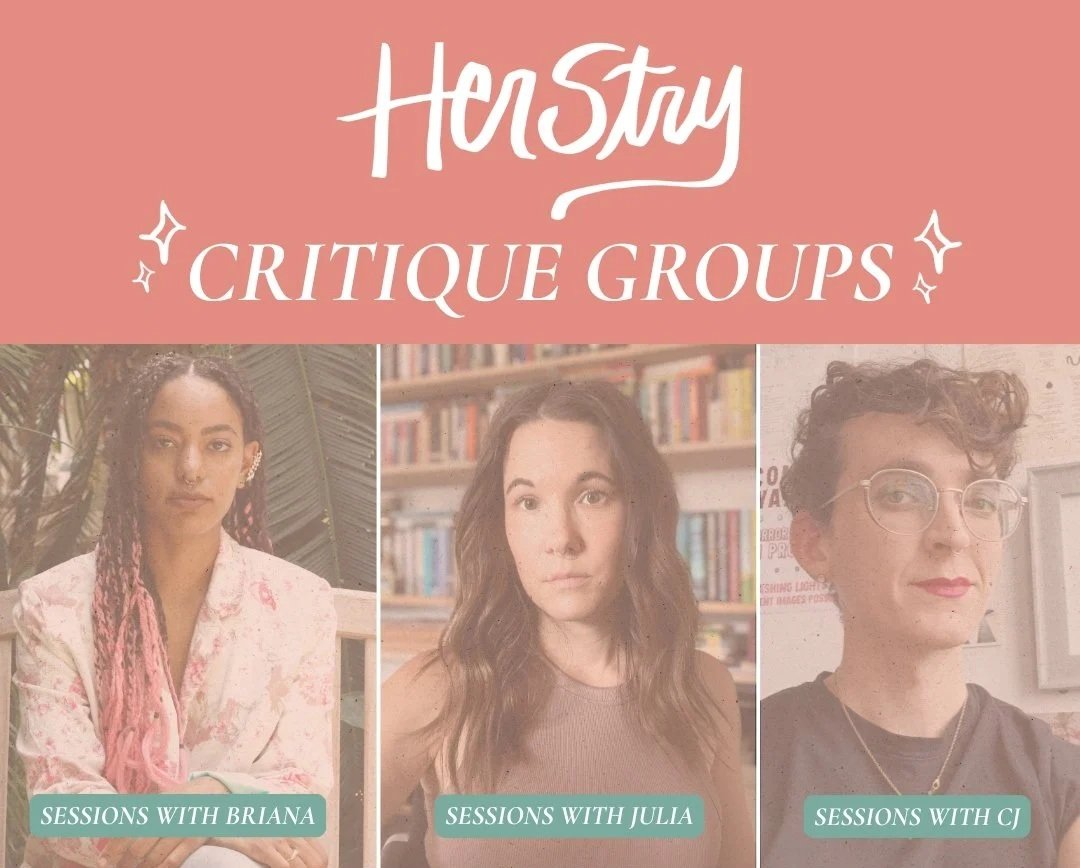
IT’S NO SECRET THAT FEEDBACK IS AN IMPORTANT PART OF THE WRITING PROCESS.
In fact, we argue that it might be the most important part of the process.
But it’s hard to find a writing community. It’s hard to find the people who are willing to take the time and the effort to read your work and give the feedback you really, truly deserves.
That’s where HerStry Critique Groups come in!
HerStry Critique Groups are small groups of 6 women who gather online for 6 weeks to share their writing, give constructive feedback and gain skills as writers.
Weekly online sessions last approximately ninety minutes, with three women sharing their work each week. Writers of all genres and levels are welcome and you may share both works of fiction and nonfiction.
Sessions take place on Mondays 7PM CT, Tuesdays 11AM CT, Fridays 11AM CT
WHAT’S INCLUDED IN THE HERSTRY CRITIQUE GROUPS?
Six 90 minute live workshop sessions
Three 20 minutes sessions in the “hot seat” to get you work critiqued
Written and verbal feedback from your fellow workshop participants
A weekly in depth edit and critique of your work from the group leader after each session
Weekly writing goals and accountability check ins
Full video recordings of each session to keep for your records
Say goodbye to the lonely, stuck in your head writing life!
LET’S WRITE!
From conception to submission. Let’s make summer sizzle with stories.
Writing a short story doesn’t happen in one session. It takes multiple drafts to get it exactly right, to create characters that come to life for the reader and a world they can’t stop thinking about. In this seven week course we will work on a single short story from conception to submission ready. The seven week session will include generative brainstorming sessions, short story craft talks, multiple workshops for feedback from fellow writers, and detailed line by line feedback and edits from your instructor. Plus, we’ll talk about submission venues, cover letters, and when to know if your story is ‘finished.’
IT’S NO SECRET THAT FEEDBACK IS AN IMPORTANT PART OF THE WRITING PROCESS.
In fact, we argue that it might be the most important part of the process.
But it’s hard to find a writing community. It’s hard to find the people who are willing to take the time and the effort to read your work and give the feedback you really, truly deserves.
That’s where HerStry Critique Groups come in!
HerStry Critique Groups are small groups of 6 women who gather online for 6 weeks to share their writing, give constructive feedback and gain skills as writers.
Weekly online sessions last approximately ninety minutes, with three women sharing their work each week. Writers of all genres and levels are welcome and you may share both works of fiction and nonfiction.
Sessions take place on Mondays 7PM CT, Tuesdays 11AM CT, Fridays 11AM CT
WHAT’S INCLUDED IN THE HERSTRY CRITIQUE GROUPS?
Six 90 minute live workshop sessions
Three 20 minutes sessions in the “hot seat” to get you work critiqued
Written and verbal feedback from your fellow workshop participants
A weekly in depth edit and critique of your work from the group leader after each session
Weekly writing goals and accountability check ins
Full video recordings of each session to keep for your records
Say goodbye to the lonely, stuck in your head writing life!
October 7, 14, 21, 28, November 4 and 18 CT
There is no class on November 11.
WRITING THE SEX SCENE.
Writing a sex scene can be delirious fun, a harrowing challenge, a literary milestone—possibly the most important part of building your short story or book. In our six weeks together, you’ll experience just about every possible emotion as you explore the erotic in different modes: comic, tender, harrowing, soul-shattering … because it really is all about the characters’ feelings, not just the mechanics. So we’ll talk about tone. Vocabulary. Metaphor. Sensory detail. How to get big emotions on the page … and when to pull back and let the reader’s imagination go to work.
This is a course for writers who want to explore the intersection between the novel and short stories, and would like to weave their short stories into a story cycle (or collection of "linked stories" or "composite novel"). This is also a class about the interaction of form and content, and how one influences the other. We will read works of interlinked stories by writers from diverse cultural and ethnic backgrounds, focusing on modern classics and contemporary practitioners of these hybrid forms. Weekly discussions will center on elements of craft, such as the expansion and compression of time, setting as an organizing and connecting principle, character development within and between stories, structure and plot for interconnected stories, and responding to literary influences in the same genre.
This six-week course guides writers through the literary submission process, offering insider insight and practical tools to help you get your work into the world. We’ll demystify everything from reading submission calls to writing cover letters and choosing the right journals. Along the way, we’ll workshop short bios, develop submission trackers, and build personalized plans that align with your voice and goals.
By the end of the course, you’ll walk away with a polished piece ready to send, a tailored submission list, and the confidence to navigate the lit mag world with clarity and purpose.
Ideal for writers of literary fiction, poetry, personal essay, memoir, and hybrid forms.

Pam Munter has authored several books including When Teens Were Keen: Freddie Stewart and The Teen Agers of Monogram and Almost Famous. She’s a retired clinical psychologist, former performer and film historian. Her essays, book reviews and short stories have appeared in more than 100 publications She is the nonfiction book reviewer for Fourth and Sycamore.Her play, “Life Without” was nominated for Outstanding Original Writing by the Desert Theatre League and she has been nominated for a Pushcart Prize. Her memoir, As Alone As I Want To Be was published in 2018 by Adelaide Books. Her work can be found at www.pammunter.com.
Cold. Alone. Dead. These were the few words that registered among the many spoken to me on that horrific afternoon when they came to tell me my son was gone. Fentanyl was added to the mix over the coming hours.
“Who? What? How?” repeated over and over again was all I could muster in response.
“We don’t know,” was their answer.
My living, breathing nightmare had only just begun.