

“The real voyage of discovery consists not in seeking new landscapes, but in having new eyes.”
-Marcel Proust
I read this quote before I began my physical voyage abroad, not knowing the truth and the sheer power within these words. I was inspired to travel after completing my yoga teacher training. I thought I could cultivate more compassion for others while sharing my own passion—yoga. What I found was beyond my expectations.
The beauty of traveling is that eventually we no longer need to go anywhere to get the experience that traveling once afforded us. Traveling is just a path or a launching pad to show us what’s possible. It’s the first glimpse of what it’s like to truly “wake up.” Traveling can be compared to one’s experience with taking drugs. You keep seeking new or more places to get you to that place within you which cannot be touched physically. “…The kingdom of God is within you” is one translation from the bible (Luke 17:21). In his many books and lectures the yogi and spiritual teacher Ram Dass writes of his relationship with psychedelics in this way. In his book, “Polishing the Mirror,” he describes it this way: “I continued using psychedelics for five or six years, trying to stay in that place of enlightenment, that place of being love. I would get high and come down, get high and come down, touching that state of being love but unable to stay there. I wanted to be free, not high.”
We go to a new place; we get the high, only to come down until we get to the next place. It makes me sad to see so many travelers who get lost in this game. They even get an ego behind how many places they have been. More places = bigger ego. These travelers have missed the mark completely.
I encourage traveling for many reasons. When we travel we are afforded the opportunity to see that there are different ways of doing things. There are different ways to live in this physical word. We can see that we don’t need to work a “nine-to-five” job every day.
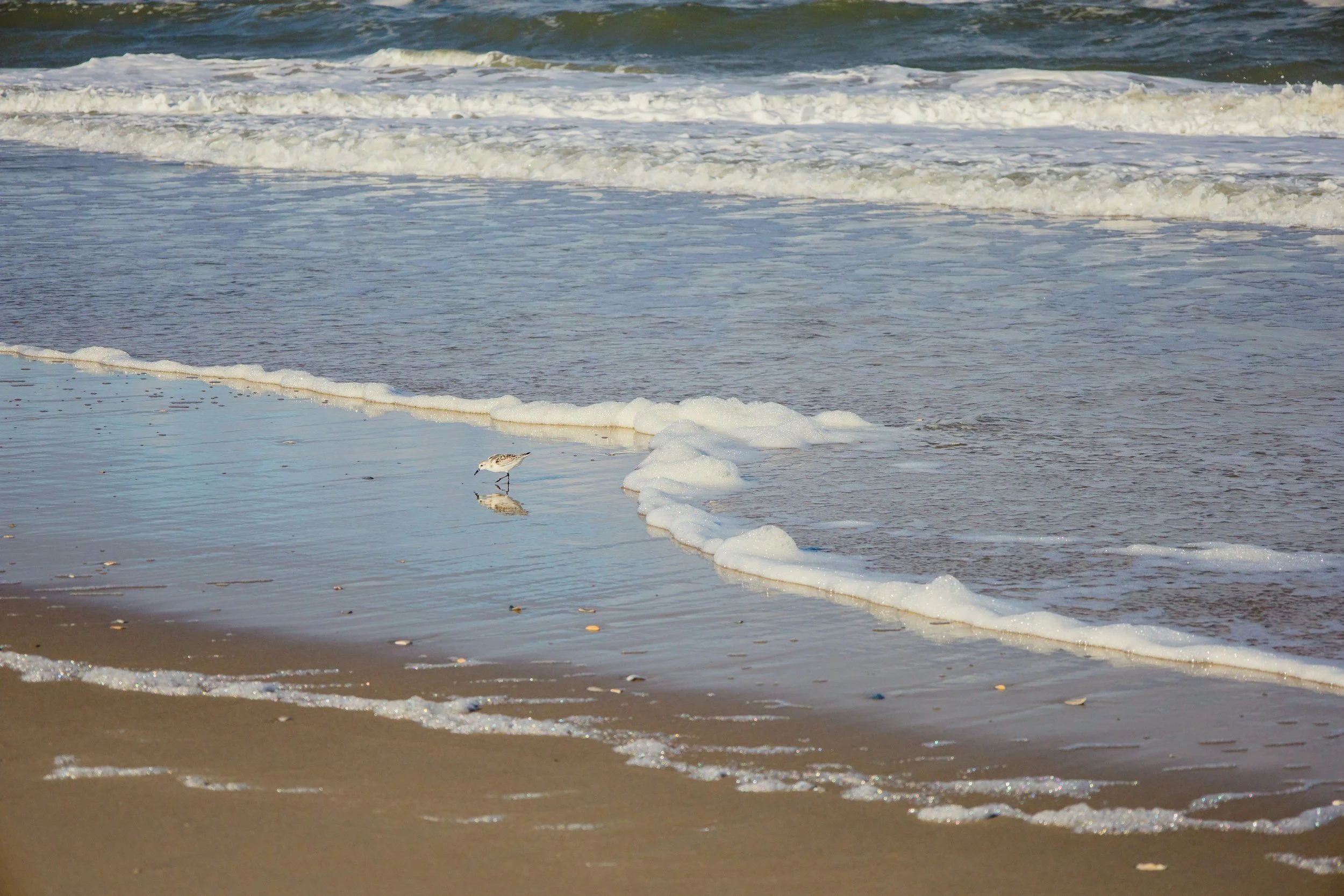
On a clear late summer afternoon along North Carolina’s Outer Banks, Sandbar slid off its foundation and washed into the Atlantic Ocean, the footage so dramatic, it went viral on social media and made the national news. The house was now called Dolphin’s Point, but for my friends and me, it would always be Sandbar. I thought about how the owners must have felt watching something they loved drift away from them, as they stood helpless, knowing they would never see it again.

I asked myself, how do I get into these things? How did I find myself in the middle of a desert, with nothing but a gas station for over a hundred miles, in the searing heat toting a backpack that magically gained weight the further I went?

Is it possible to feel the loss of something if you never had it to begin with? I don’t mean desire, because to desire something doesn’t necessarily mean a palpable sense of missing it. I mean, rather, to feel a defined and tangible absence, like that of a phantom limb, but for one never possessed in the first place.
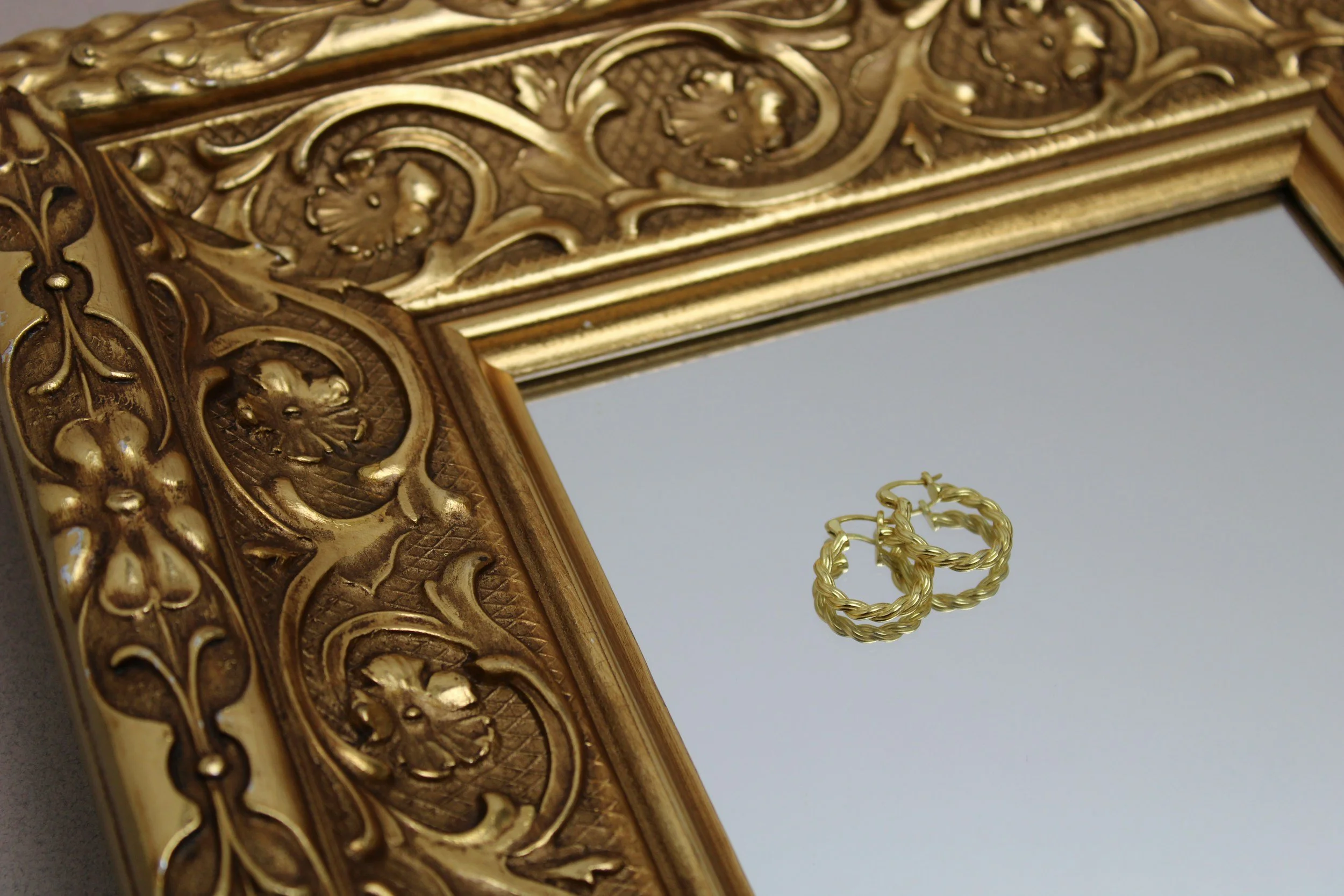
The sun set an hour ago, which means it’s finally below forty degrees Celsius. Normally I embrace the dry heat in Erbil in exchange for the humidity back home in Toronto, but today it leaves my throat dry and hoarse. I shuffle my feet on the dusty tiles outside my house and peer over the metal gate until Emmita’s black SUV pulls up.

I moved to Albuquerque in August. In the middle of, at the end of, during a pandemic that plausibly does not have an end. I got a job here, and in late-stage American capitalism that’s about all it takes to rationalize moving across the country.

When we tell Clarence that I need to drive my car from New York to Los Angeles, the first thing he says is, you can have the time off. She can’t. He is, of course, pointing at S, not knowing we’ve stayed up the night before planning a 12-day, 10-city cross country road trip. We’ve planned this trip down to a T, but what we haven’t factored in is our boss not being on board.

Two years into teaching English in Barcelona I have this feeling of doom. It’s a hollowness in my stomach, a black hole sucking everything in. It's too late to leave but too late to stay. Time grinds to a halt. I no longer understand anything; at the event horizon, the rules no longer apply. We fly back from a short summer vacation in Prague and the plane circles the city, round and round, waiting to land, and I look down and I recognize every landmark, and I see all of my neighborhoods, and can only think, why? Why come back? I don't belong here.
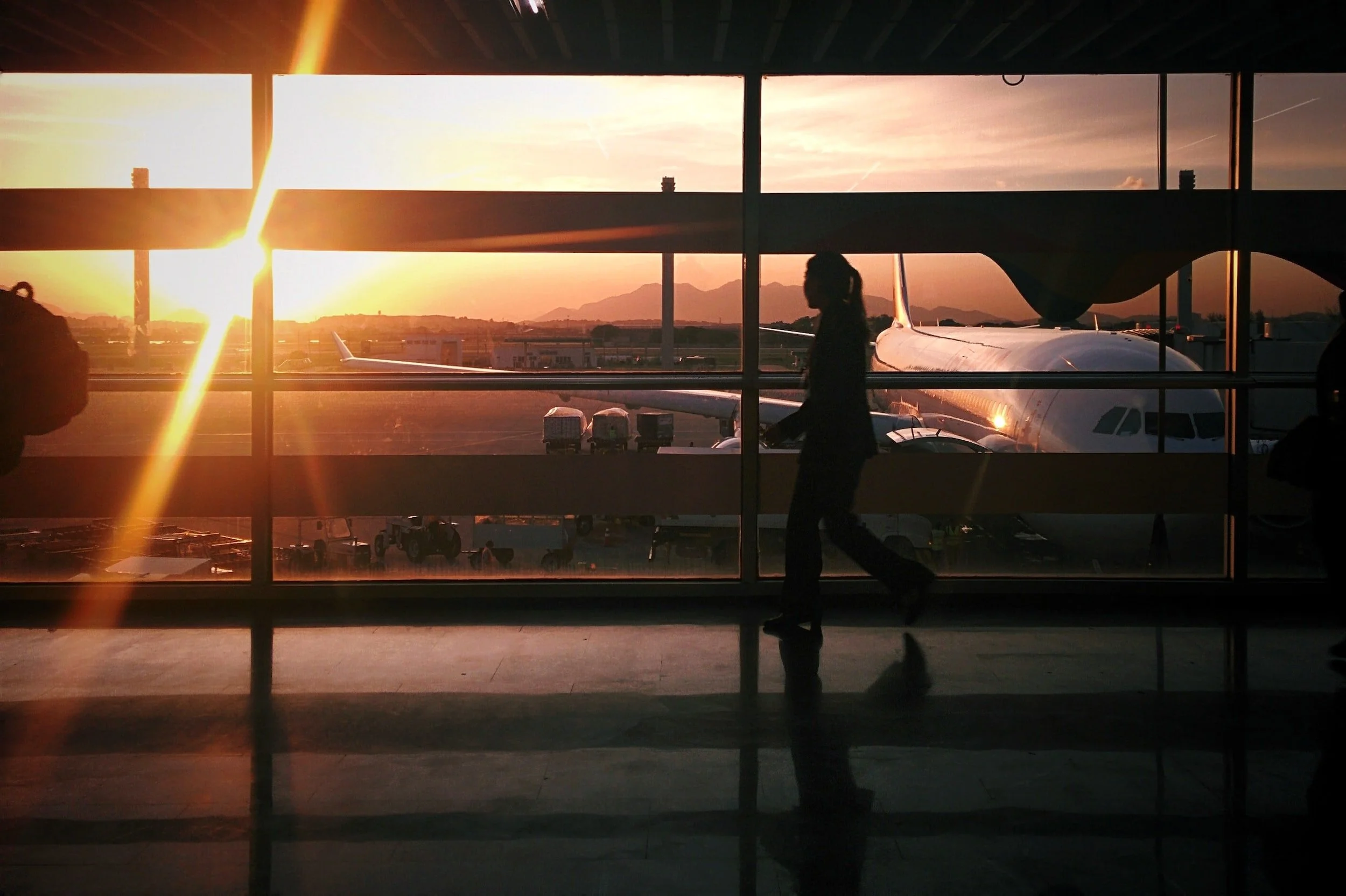
The airplane skims over a monotonously beautiful carpet of lakes, clouds, forest, and fields. The Land of Midnight Sun (well, actually, one out of five possible Lands of Midnight Sun; each Nordic nation with its twenty-four hours of summer daylight technically qualified to claim the title) reveals itself to you in puffs of white, geometries of emerald, bowls of aqua. It’s only a matter of minutes before you land and have to start apologizing.

The road unfolds in front of us, a black ribbon of tarmac glittering in the summer heat. It is one of many roads I have taken. The rearview mirror reflects the same view, a yellow dotted line that connects us to the next destination, and the previous. Were we ever there? Over a hill, the road disappears, and I wonder if we too will disappear as we follow it.
Traveling can teach us compassion. It teaches us how to give to yourself and one others. When we travel we discover a new languages, hobbies, careers, and even relationships. But we must be careful not to miss the point. The point being that we don’t have to travel to begin the practice of waking up. We can wake up through anything—writing, music, gardening, sewing, church, yoga, relationships, etc. Every moment—every breath holds the opportunity to awaken. When we breath in we touch God, when we breath out he touches us. I’ve heard many Buddhist monks express it in a similar way. The saying goes: “When you breathe in, it is your gift from the trees, when you breath out it is your gift to the trees.” Scientifically speaking we know the truth to this saying. We know nature needs both carbon and nitrogen elements.
So, in reflecting on my travels, the question now becomes what do I see with my “new eyes”? My eyes see there is no me without you, no us without them. There is no sun without rain, no light without dark. There is no summer without winter, no warm without cold. My eyes see the importance of all things. They see that flowers need good soil (or cow poop) in order to grow—“No shit, no flowers.” My eyes feel God crying in your tears. These ever-changing eyes see the beauty of an impermanent reality. My eyes see that within one thing we can experience everything.
-Heather Walter
This product gives you access to all four weeks of the workshop. Purchase one or more drop-in sessions here.
Build a habit in 20 sessions. In this 4 week workshop that meets Mondays through Fridays from 8:00-9:00 AM CST, we will focus on generating new writing—making headway on a current project, reviving an old project that’s been gathering dust, or writing based off of the daily prompts Leigh provides.
The first 45 minutes of class are a gentle, camera-off, silent writing session. The remaining 15 minutes are an opportunity to share excerpts of our work, reflect on progress made, and set intentions for the following day. Then we will read a passage together on the writing life and close each class with a new learning about habit formation. By the end of this course we’ll have a morning writing habit that is each our own to continue and build upon.
This listing is for an individual class. To purchase access for the full 4-week workshop, click here.
Build a habit in 20 sessions. In this 4 week workshop that meets Mondays through Fridays from 8:00-9:00 AM CST, we will focus on generating new writing—making headway on a current project, reviving an old project that’s been gathering dust, or writing based off of the daily prompts Leigh provides.
The first 45 minutes of class is a gentle, camera-off, silent writing session. The remaining 15 minutes are an opportunity to share excerpts of our work, reflect on progress made, and set intentions for the following day. Then we will read a passage together on the writing life and close each class with a new learning about habit formation. By the end of this course we’ll have a morning writing habit that is each our own to continue and build upon.
Many writers feel drawn to write about their lives but struggle with uncertainty: Why this story? Why now? And who is it really for? This workshop is designed to help writers move beyond doubt and toward clarity by focusing on the deeper meaning and purpose beneath their story.
In this interactive, craft-forward session, participants will be introduced to the Memoir Compass, a practical framework that helps writers articulate their motivation (why they are writing), mission (who the story serves), and message (what meaning or insight the story carries). Through guided reflection and writing exercises, participants will begin shaping a personal narrative rooted in intention rather than overwhelm.
This workshop is ideal for writers interested in memoir or personal narrative, as well as fiction writers drawing from lived experience, who want to move forward with greater confidence, focus, and direction.
Some of the most compelling creative nonfiction begins with the feelings we are tempted to avoid: anger, resentment, shame, fear, or the sense that we have an axe to grind. In this six-week workshop, writers will explore how to follow that emotional heat toward deeper, more honest work—without sacrificing compassion, complexity, or craft. Through close readings, writing exercises, discussion, and constructive feedback, we’ll consider how to transform strong feelings into writing that reaches beyond catharsis and connects with readers.
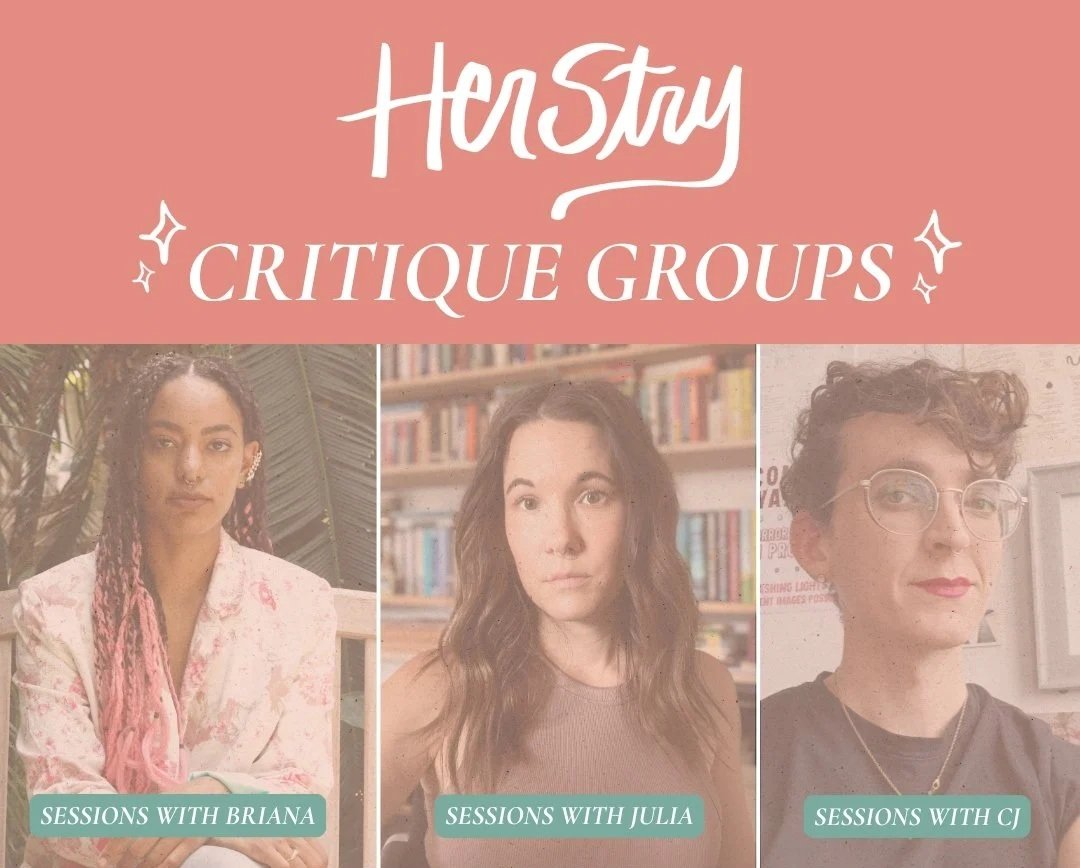
IT’S NO SECRET THAT FEEDBACK IS AN IMPORTANT PART OF THE WRITING PROCESS.
In fact, we argue that it might be the most important part of the process.
But it’s hard to find a writing community. It’s hard to find the people who are willing to take the time and the effort to read your work and give the feedback you really, truly deserves.
That’s where HerStry Critique Groups come in!
HerStry Critique Groups are small groups of 6 women who gather online for 6 weeks to share their writing, give constructive feedback and gain skills as writers.
Weekly online sessions last approximately ninety minutes, with three women sharing their work each week. Writers of all genres and levels are welcome and you may share both works of fiction and nonfiction.
Sessions take place on Mondays 7PM CT, Tuesdays 11AM CT, Fridays 11AM CT
WHAT’S INCLUDED IN THE HERSTRY CRITIQUE GROUPS?
Six 90 minute live workshop sessions
Three 20 minutes sessions in the “hot seat” to get you work critiqued
Written and verbal feedback from your fellow workshop participants
A weekly in depth edit and critique of your work from the group leader after each session
Weekly writing goals and accountability check ins
Full video recordings of each session to keep for your records
Say goodbye to the lonely, stuck in your head writing life!

LET’S WRITE!
From conception to submission. Let’s make summer sizzle with stories.
Writing a short story doesn’t happen in one session. It takes multiple drafts to get it exactly right, to create characters that come to life for the reader and a world they can’t stop thinking about. In this seven week course we will work on a single short story from conception to submission ready. The seven week session will include generative brainstorming sessions, short story craft talks, multiple workshops for feedback from fellow writers, and detailed line by line feedback and edits from your instructor. Plus, we’ll talk about submission venues, cover letters, and when to know if your story is ‘finished.’
IT’S NO SECRET THAT FEEDBACK IS AN IMPORTANT PART OF THE WRITING PROCESS.
In fact, we argue that it might be the most important part of the process.
But it’s hard to find a writing community. It’s hard to find the people who are willing to take the time and the effort to read your work and give the feedback you really, truly deserves.
That’s where HerStry Critique Groups come in!
HerStry Critique Groups are small groups of 6 women who gather online for 6 weeks to share their writing, give constructive feedback and gain skills as writers.
Weekly online sessions last approximately ninety minutes, with three women sharing their work each week. Writers of all genres and levels are welcome and you may share both works of fiction and nonfiction.
Sessions take place on Mondays 7PM CT, Tuesdays 11AM CT, Fridays 11AM CT
WHAT’S INCLUDED IN THE HERSTRY CRITIQUE GROUPS?
Six 90 minute live workshop sessions
Three 20 minutes sessions in the “hot seat” to get you work critiqued
Written and verbal feedback from your fellow workshop participants
A weekly in depth edit and critique of your work from the group leader after each session
Weekly writing goals and accountability check ins
Full video recordings of each session to keep for your records
Say goodbye to the lonely, stuck in your head writing life!

October 7, 14, 21, 28, November 4 and 18 CT
There is no class on November 11.
WRITING THE SEX SCENE.
Writing a sex scene can be delirious fun, a harrowing challenge, a literary milestone—possibly the most important part of building your short story or book. In our six weeks together, you’ll experience just about every possible emotion as you explore the erotic in different modes: comic, tender, harrowing, soul-shattering … because it really is all about the characters’ feelings, not just the mechanics. So we’ll talk about tone. Vocabulary. Metaphor. Sensory detail. How to get big emotions on the page … and when to pull back and let the reader’s imagination go to work.
This is a course for writers who want to explore the intersection between the novel and short stories, and would like to weave their short stories into a story cycle (or collection of "linked stories" or "composite novel"). This is also a class about the interaction of form and content, and how one influences the other. We will read works of interlinked stories by writers from diverse cultural and ethnic backgrounds, focusing on modern classics and contemporary practitioners of these hybrid forms. Weekly discussions will center on elements of craft, such as the expansion and compression of time, setting as an organizing and connecting principle, character development within and between stories, structure and plot for interconnected stories, and responding to literary influences in the same genre.
This six-week course guides writers through the literary submission process, offering insider insight and practical tools to help you get your work into the world. We’ll demystify everything from reading submission calls to writing cover letters and choosing the right journals. Along the way, we’ll workshop short bios, develop submission trackers, and build personalized plans that align with your voice and goals.
By the end of the course, you’ll walk away with a polished piece ready to send, a tailored submission list, and the confidence to navigate the lit mag world with clarity and purpose.
Ideal for writers of literary fiction, poetry, personal essay, memoir, and hybrid forms.
When Weezie came to pick me up for our road trip to the mountains, six months after her husband Emmanuel was diagnosed, she looked excited. But it felt forced, like a child who no longer believes in Santa but pretends to believe so they may feel the old tingle of anticipation. What I saw was grief.