
Over It
It was a good thing.
No, in fact, it was the best thing that could’ve happened.
I know that.
I was in an abusive relationship—eighteen years old—and the stick said positive.
Of course it was better the thing ended in cramps after only a couple months. I was young and had my whole life ahead of me. I felt better. I felt clean. I felt free.
Other than keeping it a secret.
It was shameful—a bright eighteen-year-old, pregnant the summer before her adult life. Yes, it ended. It was over. Who needed to know?
I made peace. It was over.
But…
When you’re twenty-nine, and failing to conceive after two years of trying….
That peace gets rocky.
What would that little baby look like now? Well, not baby. They’d be ten.
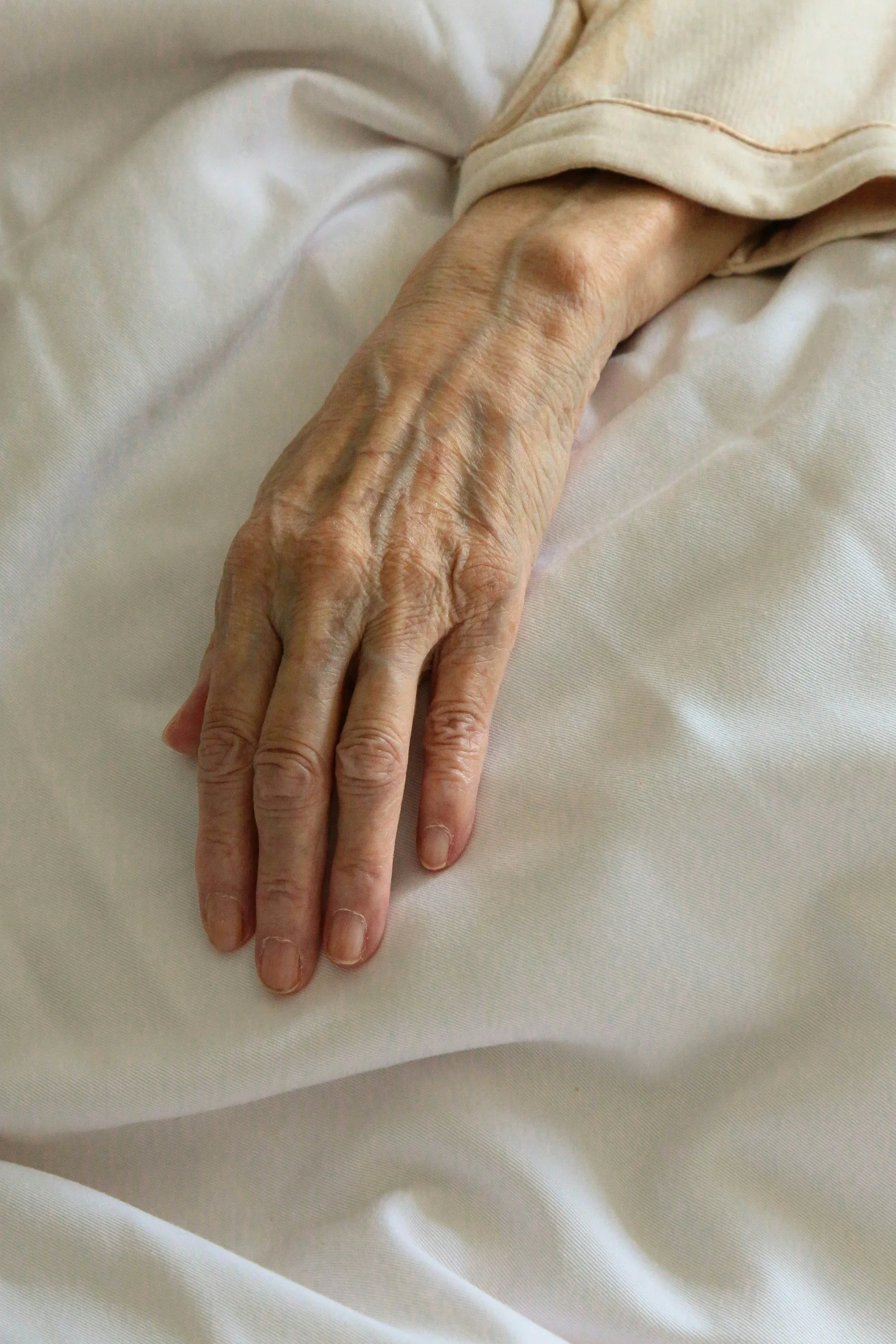
Of all the memories that I have of my great great grandmother from the first thirteen years of my life, the one that I remember most of all occurred in the tiny kitchen of her small home, tucked away in the orchards of Live Oak. I was in sixth grade, and she was teaching me how to sweep the right way, a skillset that my mother had still yet to properly impart upon me; she was too busy smoking weed and sleeping with her latest boyfriend.

I was in the kitchen cleaning up after dinner when I heard the glass shatter. I simultaneously took a deep breath, closed my eyes, and waited for the inevitable outburst.

I was deceived by the feel of her supple cheek that day after she died. She was like a green limb reaching for the sun, severed at the whim of the wind, the tree’s canopy of little protection. When illicit Oxy’s calming wind blew into her veins did she suddenly realize what she consumed was coated in fentanyl poison? Was it like being in the eye of the hurricane where there is calm for a moment before chaos takes over or was it like floating away on her favorite pair of Nike Airs™?

The phone rings. I see the vet clinic’s number and my throat goes dry. I feel a jolt of anxiety. Although there can be no more bad news, I don’t want to talk to them. I just want all this to go away, to be one of my nightmares. “Mosi’s ashes are ready for pickup,” says the receptionist softly.

I thought about writing this story as fiction: two women, a later-in-life, larger-than-life friendship that changes both of them, a sudden fatal illness. Fiction can fix the broken, prevent the disaster, turn around the inevitable. The child can be saved. The bad guys can be caught. The terminal patient can beat all odds. By choosing fiction, I could change the ending of our story, Diana’s and mine. I could keep her alive. But no. If I did that, it wouldn’t be our story anymore.

On the day after Thanksgiving 2022, I dragged my husband to a thrift shop outside Boston to look for a book I'd donated nearly twenty years ago. It started as a Twitter dare the week before. I was chatting with some pals about a book an ex-boyfriend gave me when I was twenty and we were at the height of a love affair that lasted seven years. My ex died in February, and I was having a hard time talking about it; most people didn't seem to understand why I was so upset about the death of a guy I broke up with so long ago. The easiest thing to do, sometimes, was to play it for laughs; at least that way I got to talk about it a little, with strangers who didn't know me well. "Why don't you go look for it?" someone said. "You never know, and it'll be a great story if you find it."

My mother’s eyes registered my arrival, but without her dependable smile. The bones of her face were sharp and craggy, her nose slightly humped from a childhood fall, her eyes blue and deeply set. Tita, who cared for her, had dressed her in her brightest blouse and hung a necklace round her neck. Mom was crooked in her chair and not pretending, while a cheerful string of rainbow-colored letters on the mantle shouted happy birthday for her eighty-ninth and last.

“Dear Poo, I’m sorry I’m writing this in a letter, I just couldn’t bring myself to tell you face to face…”
We’d been in our new house just a couple of weeks when my dad—Da—left a letter and, with it, left us. He was gone. And none of us knew what gone meant. Mom couldn’t tell me where he went or why. She called Grandma to try to decipher his note. Whatever sense they made of it wasn’t shared.

When my ex-husband told me his father was dead, he said it casually. The way you'd mention an alma mater, or that you'd lived abroad for a while.
"My dad died five years ago," he said. We were at work, in a courtroom with no privacy, dressed in our lawyer suits. He reached down to tug up his socks when he said it. I remember searching for significance in how he announced his tragedy while adjusting his outfit. It made me wonder if his father's death was an easy thing to bear. Or if it were so painful he needed to reveal it in the bright bustle of a courtroom, with busied hands. He usually seemed so guarded.
Could I have done it? Could I have broken away, told my family and friends, and not let stress and depression and anxiety kill that pregnancy?
Should I have?
Is it affecting me now?
Was that my one chance?
Is it ok to grieve something you didn’t want then, but you want now? Even when you didn’t grieve then?

Would it have been better to be honest back then? Everyone says: “honesty is the best policy.” Could that have moved me into acceptance? Working through the pain then, talking to the almost-father? No. He would’ve wanted to keep it. And that was the worst thing. At the time, it ended, and that was the best thing. Remember?
Is it normal to cry only when your husband isn’t home, thinking about calling that abusive ex? Just to tell them the story. Just to see what they think. Just to hear you did the wrong thing.
That would make this whole process worse, of course. But who else can relate, other than the person intimately involved?
That’s a scary wormhole; let’s step away.
Try to let your feelings out in a healthier way.
Lean on your husband. He’s a wonderful human being. Supportive—leaves space when it’s needed—tries to understand. Understands that he doesn’t understand. Which helps. Sort of.
Talking is supposed to help. Well, ok. Except, I have no one who’s been through this. My friends never wanted kids. My family hasn’t had these issues, can’t truly relate. Other than “That sucks.” Which sometimes helps.
How do you talk through an emotion-ridden journey? Especially one that goes into the past and gets all dark and twisty.
So, you keep quiet. Talk about the things other people do—tracking temperature, how hard it is. Men don’t really understand how much your ovulation sticks cost, medications, etc. People can handle those topics. That’s what they’re used to.
But mourning a pregnancy that may or may not have anything to do with what you’re dealing now? That happened over a decade past? That no one knows about?
You should be over that.
And I was.
-Samantha O'Keefe
This product gives you access to all four weeks of the workshop. Purchase one or more drop-in sessions here.
Build a habit in 20 sessions. In this 4 week workshop that meets Mondays through Fridays from 8:00-9:00 AM CST, we will focus on generating new writing—making headway on a current project, reviving an old project that’s been gathering dust, or writing based off of the daily prompts Leigh provides.
The first 45 minutes of class are a gentle, camera-off, silent writing session. The remaining 15 minutes are an opportunity to share excerpts of our work, reflect on progress made, and set intentions for the following day. Then we will read a passage together on the writing life and close each class with a new learning about habit formation. By the end of this course we’ll have a morning writing habit that is each our own to continue and build upon.
This listing is for an individual class. To purchase access for the full 4-week workshop, click here.
Build a habit in 20 sessions. In this 4 week workshop that meets Mondays through Fridays from 8:00-9:00 AM CST, we will focus on generating new writing—making headway on a current project, reviving an old project that’s been gathering dust, or writing based off of the daily prompts Leigh provides.
The first 45 minutes of class is a gentle, camera-off, silent writing session. The remaining 15 minutes are an opportunity to share excerpts of our work, reflect on progress made, and set intentions for the following day. Then we will read a passage together on the writing life and close each class with a new learning about habit formation. By the end of this course we’ll have a morning writing habit that is each our own to continue and build upon.
Many writers feel drawn to write about their lives but struggle with uncertainty: Why this story? Why now? And who is it really for? This workshop is designed to help writers move beyond doubt and toward clarity by focusing on the deeper meaning and purpose beneath their story.
In this interactive, craft-forward session, participants will be introduced to the Memoir Compass, a practical framework that helps writers articulate their motivation (why they are writing), mission (who the story serves), and message (what meaning or insight the story carries). Through guided reflection and writing exercises, participants will begin shaping a personal narrative rooted in intention rather than overwhelm.
This workshop is ideal for writers interested in memoir or personal narrative, as well as fiction writers drawing from lived experience, who want to move forward with greater confidence, focus, and direction.
Some of the most compelling creative nonfiction begins with the feelings we are tempted to avoid: anger, resentment, shame, fear, or the sense that we have an axe to grind. In this six-week workshop, writers will explore how to follow that emotional heat toward deeper, more honest work—without sacrificing compassion, complexity, or craft. Through close readings, writing exercises, discussion, and constructive feedback, we’ll consider how to transform strong feelings into writing that reaches beyond catharsis and connects with readers.
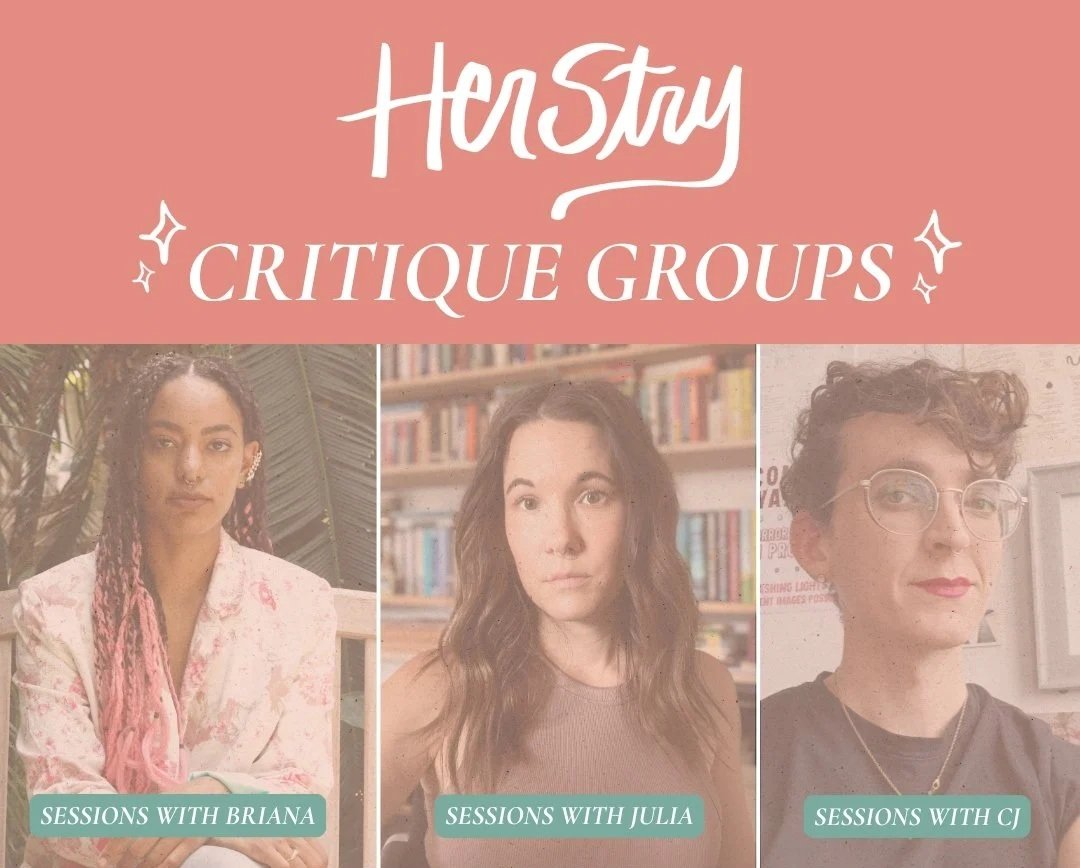
IT’S NO SECRET THAT FEEDBACK IS AN IMPORTANT PART OF THE WRITING PROCESS.
In fact, we argue that it might be the most important part of the process.
But it’s hard to find a writing community. It’s hard to find the people who are willing to take the time and the effort to read your work and give the feedback you really, truly deserves.
That’s where HerStry Critique Groups come in!
HerStry Critique Groups are small groups of 6 women who gather online for 6 weeks to share their writing, give constructive feedback and gain skills as writers.
Weekly online sessions last approximately ninety minutes, with three women sharing their work each week. Writers of all genres and levels are welcome and you may share both works of fiction and nonfiction.
Sessions take place on Mondays 7PM CT, Tuesdays 11AM CT, Fridays 11AM CT
WHAT’S INCLUDED IN THE HERSTRY CRITIQUE GROUPS?
Six 90 minute live workshop sessions
Three 20 minutes sessions in the “hot seat” to get you work critiqued
Written and verbal feedback from your fellow workshop participants
A weekly in depth edit and critique of your work from the group leader after each session
Weekly writing goals and accountability check ins
Full video recordings of each session to keep for your records
Say goodbye to the lonely, stuck in your head writing life!

LET’S WRITE!
From conception to submission. Let’s make summer sizzle with stories.
Writing a short story doesn’t happen in one session. It takes multiple drafts to get it exactly right, to create characters that come to life for the reader and a world they can’t stop thinking about. In this seven week course we will work on a single short story from conception to submission ready. The seven week session will include generative brainstorming sessions, short story craft talks, multiple workshops for feedback from fellow writers, and detailed line by line feedback and edits from your instructor. Plus, we’ll talk about submission venues, cover letters, and when to know if your story is ‘finished.’
IT’S NO SECRET THAT FEEDBACK IS AN IMPORTANT PART OF THE WRITING PROCESS.
In fact, we argue that it might be the most important part of the process.
But it’s hard to find a writing community. It’s hard to find the people who are willing to take the time and the effort to read your work and give the feedback you really, truly deserves.
That’s where HerStry Critique Groups come in!
HerStry Critique Groups are small groups of 6 women who gather online for 6 weeks to share their writing, give constructive feedback and gain skills as writers.
Weekly online sessions last approximately ninety minutes, with three women sharing their work each week. Writers of all genres and levels are welcome and you may share both works of fiction and nonfiction.
Sessions take place on Mondays 7PM CT, Tuesdays 11AM CT, Fridays 11AM CT
WHAT’S INCLUDED IN THE HERSTRY CRITIQUE GROUPS?
Six 90 minute live workshop sessions
Three 20 minutes sessions in the “hot seat” to get you work critiqued
Written and verbal feedback from your fellow workshop participants
A weekly in depth edit and critique of your work from the group leader after each session
Weekly writing goals and accountability check ins
Full video recordings of each session to keep for your records
Say goodbye to the lonely, stuck in your head writing life!
October 7, 14, 21, 28, November 4 and 18 CT
There is no class on November 11.
WRITING THE SEX SCENE.
Writing a sex scene can be delirious fun, a harrowing challenge, a literary milestone—possibly the most important part of building your short story or book. In our six weeks together, you’ll experience just about every possible emotion as you explore the erotic in different modes: comic, tender, harrowing, soul-shattering … because it really is all about the characters’ feelings, not just the mechanics. So we’ll talk about tone. Vocabulary. Metaphor. Sensory detail. How to get big emotions on the page … and when to pull back and let the reader’s imagination go to work.
This is a course for writers who want to explore the intersection between the novel and short stories, and would like to weave their short stories into a story cycle (or collection of "linked stories" or "composite novel"). This is also a class about the interaction of form and content, and how one influences the other. We will read works of interlinked stories by writers from diverse cultural and ethnic backgrounds, focusing on modern classics and contemporary practitioners of these hybrid forms. Weekly discussions will center on elements of craft, such as the expansion and compression of time, setting as an organizing and connecting principle, character development within and between stories, structure and plot for interconnected stories, and responding to literary influences in the same genre.
This six-week course guides writers through the literary submission process, offering insider insight and practical tools to help you get your work into the world. We’ll demystify everything from reading submission calls to writing cover letters and choosing the right journals. Along the way, we’ll workshop short bios, develop submission trackers, and build personalized plans that align with your voice and goals.
By the end of the course, you’ll walk away with a polished piece ready to send, a tailored submission list, and the confidence to navigate the lit mag world with clarity and purpose.
Ideal for writers of literary fiction, poetry, personal essay, memoir, and hybrid forms.

Samantha O'Keefe lives in Sterling, Illinois with her husband and crazy cat. She's a church secretary by day and a bartender by night, and loves the dichotomy of her life. She reads too much, dabbles in writing, and enjoys the time she gets with her family and friends.
I laughed when they called to schedule it, when I put it in my calendar over the faint traces of where you’d been. I’m not surprised. This much I’ve learned about grief—that it’s cruel in how it compounds, strata over strata of reddened rock.