
To Capitalize on the Misfortune of Others
The women who wear athletic leisure apparel are the same women who use the thin, translucent toilet seat covers to protect themselves from the scary whiteness of the plastic seat. When there are no toilet seat covers available, they hover. These women are the same women who look at me horrified when I exit the stall. Their mouths make little gasping sounds and they check the sign on the door, nonsensically, because there are no urinals. If this were the men’s restroom, there would be urinals. I wear pants with a button and a zipper— they do not conform to the shape of my body. Everyone who has complimented my short haircut has done so with a feeling of obligation and asked when I might let it grow again.
A lady in a handicapped cart said, “Thank you, ma’am,” and then, “Thank you, sir” and then, “Sorry.” She gave me a dollar for helping her to her car. We are not meant to except tips, but I do it anyway, and so does everyone else. I suppose her hardship benefits me in this way, since, were she not disabled, I would not have had to help her, and, so, would not have received the dollar. I put the dollar in my pocket and I go back inside.

The head of the Communications Department, Janine, fixes her big eyes on me and says, “I want you to think about whether you are really sick, or just tired.”

All “business professionals” crawl under their desks to cry, their bank account overdrawn (again), munching candy that coworkers slide beneath the plywood desktop. We all decorate our cubicle walls with drawings by our children, photos of our families, and potted plants that we fail to water, then revive, then fail again. All of us place small plastic goats to the left of our desktops that scream when we push down on them—wild, ugly, depraved screams that fill the room, saying “I’m okay. See? I’m fine.” Screams that ease laughs from workers drowning in hyper-focus, drowning in code, drowning in editing edits.

“Hey Ref! You’re making calls out of your aaass!” the father of a nine-year-old kid in a game I was officiating yelled at me at the top of his lungs, adding a two-handed, open-palm slam against the glass for emphasis.
Handing off the puck to my officiating partner, I skated to my designated position, which happened to be a spot on the ice fairly close to where that parent stood, still pressed against the glass. Slowly, deliberately, I leaned forward with my hands on my knees, focusing on the impending puck-drop—and giving that parent a good look at the region from which my calls were coming.

I donned an orange safety vest and sparkling new hard hat fresh from its cellophane wrapper and trudged up the wide, steep incline under a blazing California sky. My gait was off-kilter, too much weight in the front of my steel-toed boots. The Sony camera slung across my body hit my back every step I took, like a stranger trying to get my attention. I shoved my small notebook and pen into my jeans back pocket and swung the camera around, securing it with my right hand. Up and up the bridge deck I climbed, all the way to the end, halfway across the San Francisco Bay.

The women who wear athletic leisure apparel are the same women who use the thin, translucent toilet seat covers to protect themselves from the scary whiteness of the plastic seat. When there are no toilet seat covers available, they hover. These women are the same women who look at me horrified when I exit the stall.
A twelve hour shift feels like forever when you’re waiting on bad news. If you’re busy, the time might pass easily enough. Otherwise, it’s a relentless crawl. Even the most mundane tasks feel insurmountably hard.

The day after my husband brought our first batch of piglets home to our farm, they escaped. The forty little black creatures that had seemed so content gamboling in our barnyard throughout the morning had, by noon, slipped out of their fencing and assembled under the ornamental crab apple tree on the lawn.

Because I spent too long in Boston with its long and twisted streets, bikers and Priuses negotiating for space, college students converging at the end of summer, forming clusters along the Charles River, Birkenstocks in spring and Blundstones in winter. Because I was tired of texts from my mother asking if I wanted to pop out for a jog.

I hear the retching vomit and feel my breasts seize up. Even the mechanical waves of my pump can’t drown out the sick splattering on the linoleum floor under fluorescent lights. I’ve never understood fluorescent lights in schools. Research says they stress and strain, and yet they populate our buildings as if the sun might disappear one day.
Sometimes it makes people angry, and those people are strange. “Excuse me, sir?” a lady asked, “or ma’am? Sir? Ma’am?” I was waiting for her question. “Which one,” she said. “Which one is it?” Her voice was all sharp edges. She looked distraught, which amused and disturbed me. Her eyelids were blue and glittery. Some of her teeth were crooked. Then she asked me which cherries were sweeter. I didn’t know.

As I clean the bathrooms, I watch myself closely. In the mirror, my nametag seems to read “ALLEB”. I would rather be called Pablo or Dagmar or Charles Darwin, but I will always be called by the same two dull syllables. Of all the misfortunes available to me, an ugly and ill-fitting name is a comparatively light burden to carry; small enough, even, to fit in a front pocket. They have asked me if I am Italian. They have asked, “Do you know that your name means beautiful?”
The women who call me ‘sir’ apologize when I look up and say “Yes?” in an unexpected voice. During the subsequent interaction between us, they are excessively polite, feeling they have already reached their rudeness quota. They do not say very much, afraid they will tip something over and spill its sticky disorder all over the floor. Again, I benefit from their discomfort; since I have now been made a victim of their disrespect, they have acquired the status of a transgressor. I can now do things I could not have otherwise done. I can choose to spurn them or smite them or to exonerate them with the solitary freedom of a god.
When there are no toilet seat covers available, these women hover. The pee goes on the floor and dries sticky like soda. I mop twice and still a slight stickiness remains; it has that sort of perseverance. These same women like everything clean. Around the handles of shopping carts, they wrap plastic bags, which they throw away as they walk out the door, thoroughly spoiling the earth with litter in an attempt to preserve their personal purity. These are the same women who stare like wolves at me, reread the sign on the door, mutter “women, women” under a hot breath. These very same women, from whose misfortune I reap riches like hard candy to smash between my teeth.
-Bella Braxton
This product gives you access to all four weeks of the workshop. Purchase one or more drop-in sessions here.
Build a habit in 20 sessions. In this 4 week workshop that meets Mondays through Fridays from 8:00-9:00 AM CST, we will focus on generating new writing—making headway on a current project, reviving an old project that’s been gathering dust, or writing based off of the daily prompts Leigh provides.
The first 45 minutes of class are a gentle, camera-off, silent writing session. The remaining 15 minutes are an opportunity to share excerpts of our work, reflect on progress made, and set intentions for the following day. Then we will read a passage together on the writing life and close each class with a new learning about habit formation. By the end of this course we’ll have a morning writing habit that is each our own to continue and build upon.
This listing is for an individual class. To purchase access for the full 4-week workshop, click here.
Build a habit in 20 sessions. In this 4 week workshop that meets Mondays through Fridays from 8:00-9:00 AM CST, we will focus on generating new writing—making headway on a current project, reviving an old project that’s been gathering dust, or writing based off of the daily prompts Leigh provides.
The first 45 minutes of class is a gentle, camera-off, silent writing session. The remaining 15 minutes are an opportunity to share excerpts of our work, reflect on progress made, and set intentions for the following day. Then we will read a passage together on the writing life and close each class with a new learning about habit formation. By the end of this course we’ll have a morning writing habit that is each our own to continue and build upon.
Many writers feel drawn to write about their lives but struggle with uncertainty: Why this story? Why now? And who is it really for? This workshop is designed to help writers move beyond doubt and toward clarity by focusing on the deeper meaning and purpose beneath their story.
In this interactive, craft-forward session, participants will be introduced to the Memoir Compass, a practical framework that helps writers articulate their motivation (why they are writing), mission (who the story serves), and message (what meaning or insight the story carries). Through guided reflection and writing exercises, participants will begin shaping a personal narrative rooted in intention rather than overwhelm.
This workshop is ideal for writers interested in memoir or personal narrative, as well as fiction writers drawing from lived experience, who want to move forward with greater confidence, focus, and direction.
Some of the most compelling creative nonfiction begins with the feelings we are tempted to avoid: anger, resentment, shame, fear, or the sense that we have an axe to grind. In this six-week workshop, writers will explore how to follow that emotional heat toward deeper, more honest work—without sacrificing compassion, complexity, or craft. Through close readings, writing exercises, discussion, and constructive feedback, we’ll consider how to transform strong feelings into writing that reaches beyond catharsis and connects with readers.

IT’S NO SECRET THAT FEEDBACK IS AN IMPORTANT PART OF THE WRITING PROCESS.
In fact, we argue that it might be the most important part of the process.
But it’s hard to find a writing community. It’s hard to find the people who are willing to take the time and the effort to read your work and give the feedback you really, truly deserves.
That’s where HerStry Critique Groups come in!
HerStry Critique Groups are small groups of 6 women who gather online for 6 weeks to share their writing, give constructive feedback and gain skills as writers.
Weekly online sessions last approximately ninety minutes, with three women sharing their work each week. Writers of all genres and levels are welcome and you may share both works of fiction and nonfiction.
Sessions take place on Mondays 7PM CT, Tuesdays 11AM CT, Fridays 11AM CT
WHAT’S INCLUDED IN THE HERSTRY CRITIQUE GROUPS?
Six 90 minute live workshop sessions
Three 20 minutes sessions in the “hot seat” to get you work critiqued
Written and verbal feedback from your fellow workshop participants
A weekly in depth edit and critique of your work from the group leader after each session
Weekly writing goals and accountability check ins
Full video recordings of each session to keep for your records
Say goodbye to the lonely, stuck in your head writing life!

LET’S WRITE!
From conception to submission. Let’s make summer sizzle with stories.
Writing a short story doesn’t happen in one session. It takes multiple drafts to get it exactly right, to create characters that come to life for the reader and a world they can’t stop thinking about. In this seven week course we will work on a single short story from conception to submission ready. The seven week session will include generative brainstorming sessions, short story craft talks, multiple workshops for feedback from fellow writers, and detailed line by line feedback and edits from your instructor. Plus, we’ll talk about submission venues, cover letters, and when to know if your story is ‘finished.’
IT’S NO SECRET THAT FEEDBACK IS AN IMPORTANT PART OF THE WRITING PROCESS.
In fact, we argue that it might be the most important part of the process.
But it’s hard to find a writing community. It’s hard to find the people who are willing to take the time and the effort to read your work and give the feedback you really, truly deserves.
That’s where HerStry Critique Groups come in!
HerStry Critique Groups are small groups of 6 women who gather online for 6 weeks to share their writing, give constructive feedback and gain skills as writers.
Weekly online sessions last approximately ninety minutes, with three women sharing their work each week. Writers of all genres and levels are welcome and you may share both works of fiction and nonfiction.
Sessions take place on Mondays 7PM CT, Tuesdays 11AM CT, Fridays 11AM CT
WHAT’S INCLUDED IN THE HERSTRY CRITIQUE GROUPS?
Six 90 minute live workshop sessions
Three 20 minutes sessions in the “hot seat” to get you work critiqued
Written and verbal feedback from your fellow workshop participants
A weekly in depth edit and critique of your work from the group leader after each session
Weekly writing goals and accountability check ins
Full video recordings of each session to keep for your records
Say goodbye to the lonely, stuck in your head writing life!
October 7, 14, 21, 28, November 4 and 18 CT
There is no class on November 11.
WRITING THE SEX SCENE.
Writing a sex scene can be delirious fun, a harrowing challenge, a literary milestone—possibly the most important part of building your short story or book. In our six weeks together, you’ll experience just about every possible emotion as you explore the erotic in different modes: comic, tender, harrowing, soul-shattering … because it really is all about the characters’ feelings, not just the mechanics. So we’ll talk about tone. Vocabulary. Metaphor. Sensory detail. How to get big emotions on the page … and when to pull back and let the reader’s imagination go to work.
This is a course for writers who want to explore the intersection between the novel and short stories, and would like to weave their short stories into a story cycle (or collection of "linked stories" or "composite novel"). This is also a class about the interaction of form and content, and how one influences the other. We will read works of interlinked stories by writers from diverse cultural and ethnic backgrounds, focusing on modern classics and contemporary practitioners of these hybrid forms. Weekly discussions will center on elements of craft, such as the expansion and compression of time, setting as an organizing and connecting principle, character development within and between stories, structure and plot for interconnected stories, and responding to literary influences in the same genre.
This six-week course guides writers through the literary submission process, offering insider insight and practical tools to help you get your work into the world. We’ll demystify everything from reading submission calls to writing cover letters and choosing the right journals. Along the way, we’ll workshop short bios, develop submission trackers, and build personalized plans that align with your voice and goals.
By the end of the course, you’ll walk away with a polished piece ready to send, a tailored submission list, and the confidence to navigate the lit mag world with clarity and purpose.
Ideal for writers of literary fiction, poetry, personal essay, memoir, and hybrid forms.
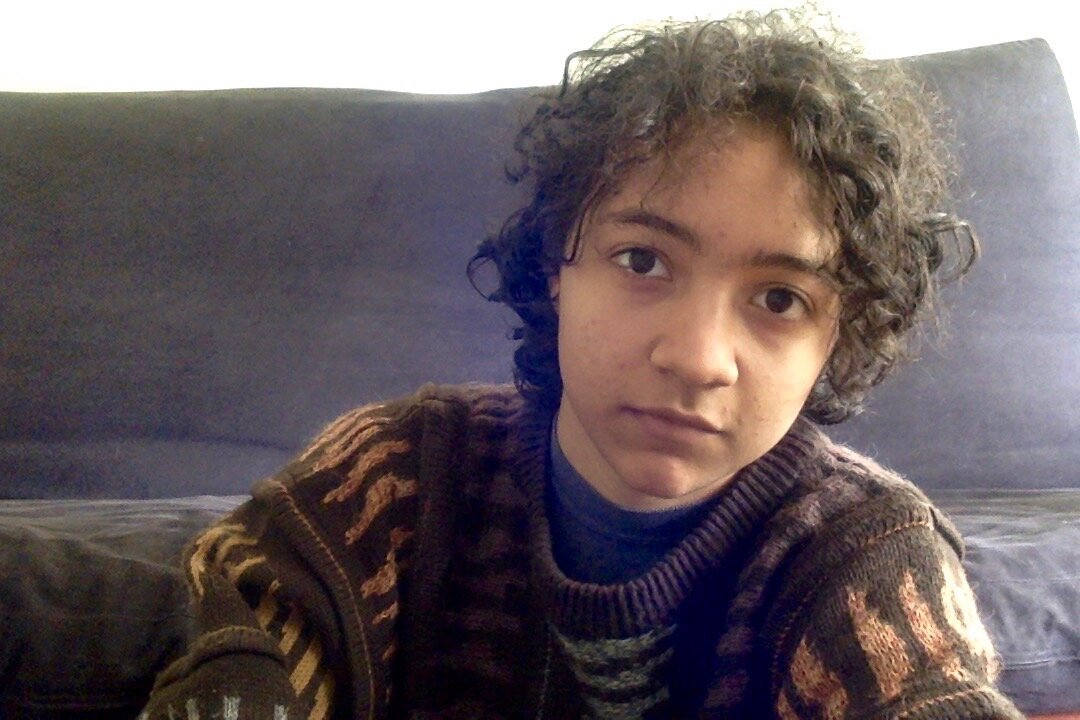
Bella Braxton is a philosophy major at Agnes Scott College.
For twelve years, I was an elementary school teacher in the Los Angeles Unified School District.
One hundred eighty school days each year.
Five years teaching kindergarten.
Six years teaching fourth grade.
One year teaching fifth grade.
The simple definition of teacher is one who teaches. But the reality of what it means to be a teacher is so much more.