
06.25.2022
Umma understands one out of three of my poems. This is why she declares I sound like a poet. I read Elizabeth Barrett Browning to her before I gave up on art, small girl of ten brimming with precious audacity not yet oxidized by sharp gust of outside air; recited Jabberwocky in a basement, sang Maya Angelou over the counter of an addressless existence. As long as we had no house, I could not be contained. But I gave up on art when I got my first room, blunt molasses space concretizer of reality, snuffer of dreams. Word became flesh and I hated mine, blunt molasses block of pound. What words could soften the thud of me hitting air?
But now Umma understands one out of three of my poems. I explain the other two over the phone. She says, your grandmother loved poems. She would not understand yours. But she would believe them possible.
06.20.2022
You learned piano until the day you could no longer play. We watched you at your funeral. Your fingers pressed on the keys in thirds in fifths in chords you never had the chance to learn in childhood so you learned them decades later in Los Angeles until you could no longer get out of bed unassisted, which was when we flew over from our green coast of morning dew and deciduous seasons to the place I dreaded visiting every year in middle and high school. I hated how everyone who looked like me, who was supposed to want me, looked at me like I wasn’t supposed to be here because what are you we don’t want you, but I came, grandma, I came for you.
I wonder how many people at the funeral understood that, as you approached death, you became the girl who had been taken from you circumstance after circumstance, and through each movement of a finger, you were winning her back dream after dream until your last breath. I think we did. Three grandchildren side by side, we sobbed and sobbed. My fingers felt your chords. When I play them now, they are ours.
It’s been seventy-two days.
I manage to get the dog out this morning and the kids some breakfast, but then crawl right back under the covers. I don’t have it today. I am exhausted and my body hurts though I have barely moved in days.
The slight rise and fall of my chest is the only evidence that I am not dead. Long pauses between breaths; my breathing is shallow and slow. Cradled by the foam liner of the mattress, my limbs are heavy and still. Staring at the wall, I barely even blink, hopeful that time will pass around me and leave me overlooked in the safety of our bed. Maybe if I remain still, the kids will forget that I am here? Maybe they won’t need me for anything?

I thought about writing this story as fiction: two women, a later-in-life, larger-than-life friendship that changes both of them, a sudden fatal illness. Fiction can fix the broken, prevent the disaster, turn around the inevitable. The child can be saved. The bad guys can be caught. The terminal patient can beat all odds. By choosing fiction, I could change the ending of our story, Diana’s and mine. I could keep her alive. But no. If I did that, it wouldn’t be our story anymore.

When Weezie came to pick me up for our road trip to the mountains, six months after her husband Emmanuel was diagnosed, she looked excited. But it felt forced, like a child who no longer believes in Santa but pretends to believe so they may feel the old tingle of anticipation. What I saw was grief.
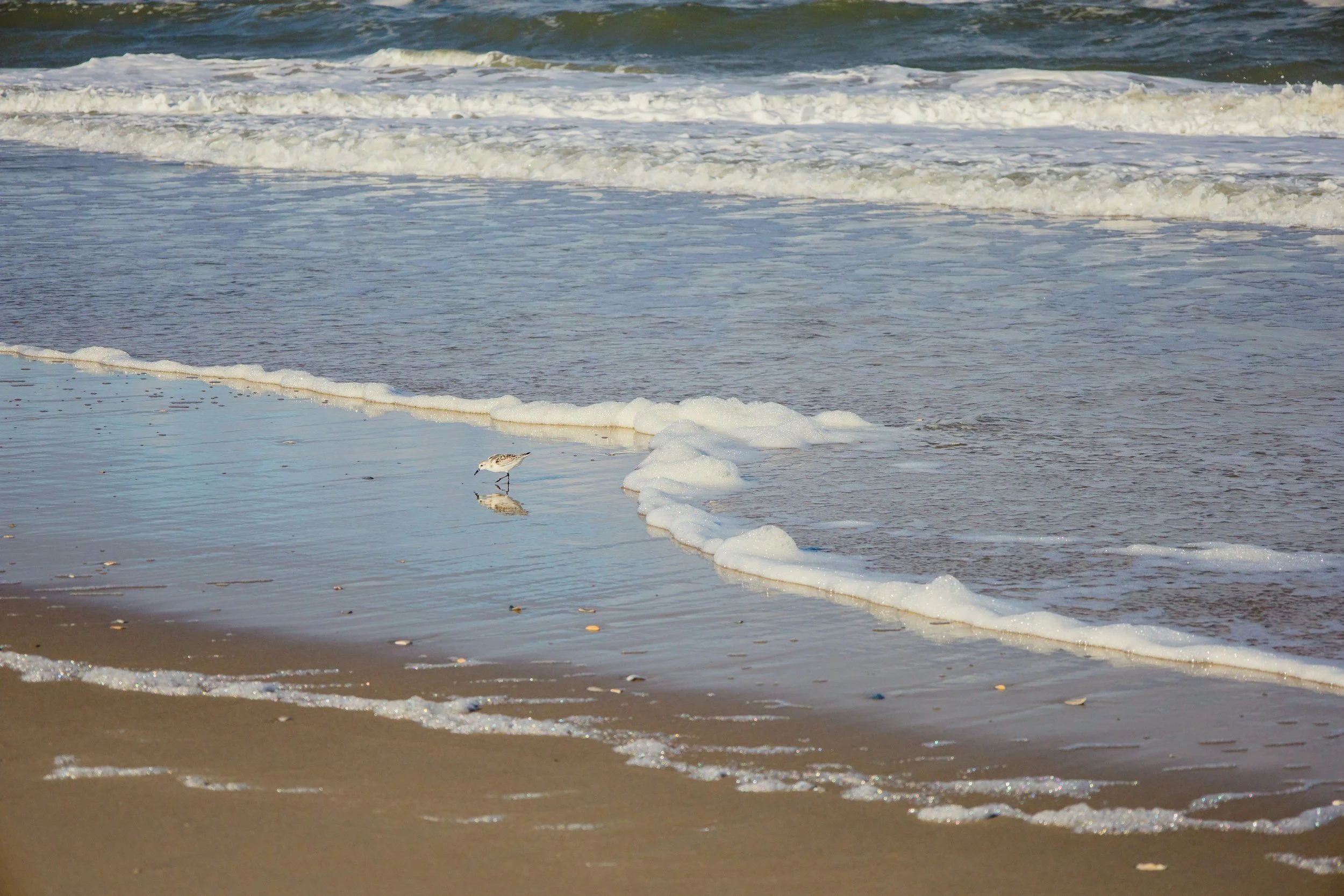
On a clear late summer afternoon along North Carolina’s Outer Banks, Sandbar slid off its foundation and washed into the Atlantic Ocean, the footage so dramatic, it went viral on social media and made the national news. The house was now called Dolphin’s Point, but for my friends and me, it would always be Sandbar. I thought about how the owners must have felt watching something they loved drift away from them, as they stood helpless, knowing they would never see it again.

Is it possible to feel the loss of something if you never had it to begin with? I don’t mean desire, because to desire something doesn’t necessarily mean a palpable sense of missing it. I mean, rather, to feel a defined and tangible absence, like that of a phantom limb, but for one never possessed in the first place.

I’m sorry I couldn’t go to your wedding and that my explanation was vague and seemed rude. My doctor wouldn’t let me fly. I couldn’t find the words. I worried that mentioning pregnancy loss would cloud the conversation of your celebration.

On the day after Thanksgiving 2022, I dragged my husband to a thrift shop outside Boston to look for a book I'd donated nearly twenty years ago. It started as a Twitter dare the week before. I was chatting with some pals about a book an ex-boyfriend gave me when I was twenty and we were at the height of a love affair that lasted seven years. My ex died in February, and I was having a hard time talking about it; most people didn't seem to understand why I was so upset about the death of a guy I broke up with so long ago. The easiest thing to do, sometimes, was to play it for laughs; at least that way I got to talk about it a little, with strangers who didn't know me well. "Why don't you go look for it?" someone said. "You never know, and it'll be a great story if you find it."

My mother’s eyes registered my arrival, but without her dependable smile. The bones of her face were sharp and craggy, her nose slightly humped from a childhood fall, her eyes blue and deeply set. Tita, who cared for her, had dressed her in her brightest blouse and hung a necklace round her neck. Mom was crooked in her chair and not pretending, while a cheerful string of rainbow-colored letters on the mantle shouted happy birthday for her eighty-ninth and last.

“Dear Poo, I’m sorry I’m writing this in a letter, I just couldn’t bring myself to tell you face to face…”
We’d been in our new house just a couple of weeks when my dad—Da—left a letter and, with it, left us. He was gone. And none of us knew what gone meant. Mom couldn’t tell me where he went or why. She called Grandma to try to decipher his note. Whatever sense they made of it wasn’t shared.
When my ex-husband told me his father was dead, he said it casually. The way you'd mention an alma mater, or that you'd lived abroad for a while.
"My dad died five years ago," he said. We were at work, in a courtroom with no privacy, dressed in our lawyer suits. He reached down to tug up his socks when he said it. I remember searching for significance in how he announced his tragedy while adjusting his outfit. It made me wonder if his father's death was an easy thing to bear. Or if it were so painful he needed to reveal it in the bright bustle of a courtroom, with busied hands. He usually seemed so guarded.

The platter was lovely. It was a vintage looking black and white interpretation of a sea turtle on melamine. The species was a Kemp’s Ridley. Despite being the rarest and most endangered sea turtle in the world, it is the most common turtle to see stranded on the beaches of Cape Cod.
My daughter’s fortieth birthday is soon, and I’m looking for something special for her. It’s a tradition in our family. At particular milestones, the mother gifts the celebrant with a special piece of jewelry, other “heirloom” from her own life. I’m looking for a piece of my history—something of me to stay with her as she moves toward all she’s becoming. When I turned forty, my mother surprised me by crocheting a lovely blue throw that I still can snuggle under on cold nights. I don’t have time to create something, so I sort through my jewelry box, looking for just the right thing.
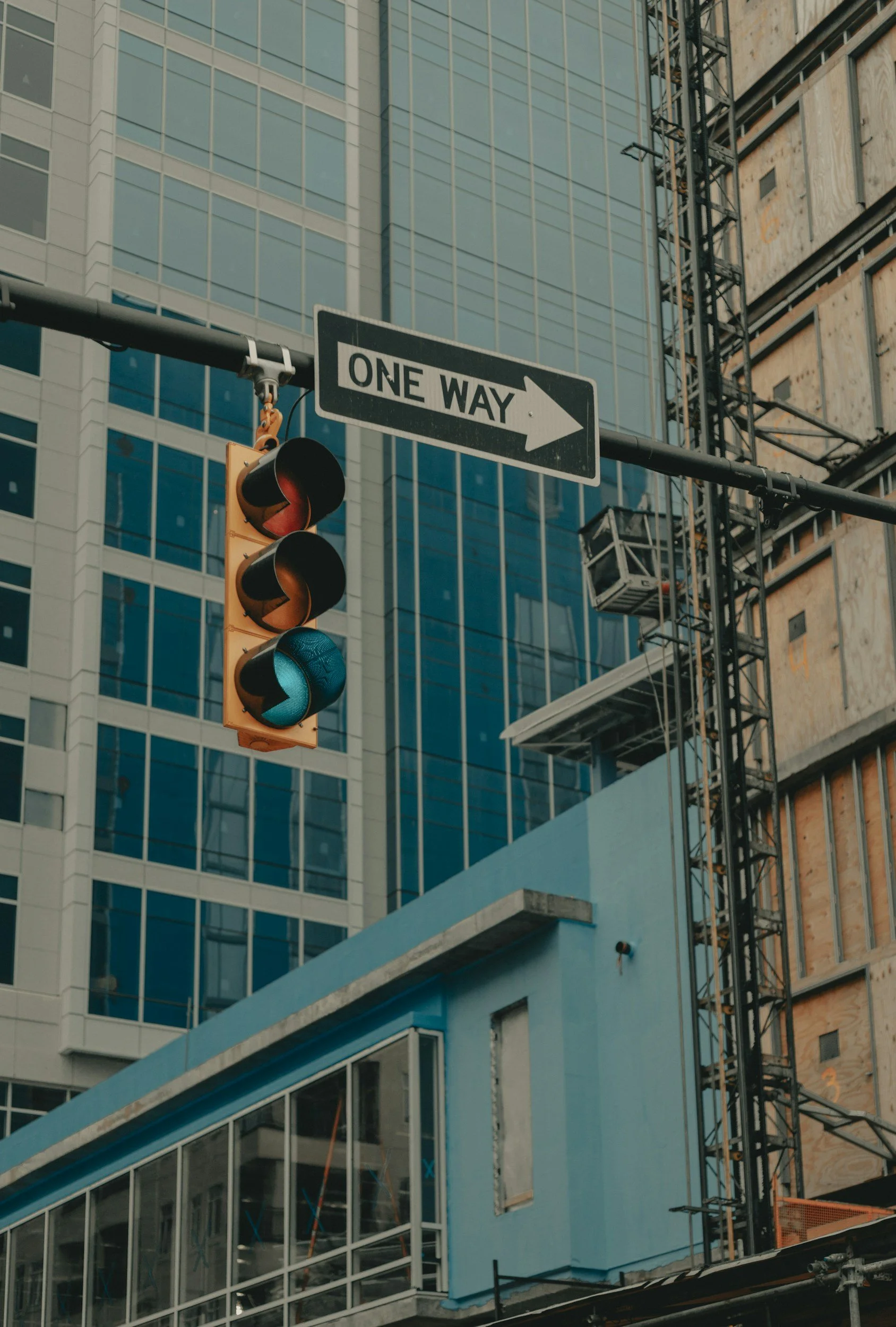
I’m seated in the passenger seat of my old gray Prius teaching Zahra how to drive. She is in the driver’s seat intently watching the traffic light, waiting for the moment it turns green. I sit quietly so I don’t disturb her concentration. She’s wearing a black blouse with long sleeves and black pants on this hot summer day; her headscarf is absent. I’ve known her long enough to know that she wears a headscarf only when she wants to. “It’s not for religion,” she’s told me before, stopping short of telling me why she sometimes wears it. I’m wearing a short skirt and a tank top in light colors. Despite our different appearances, I feel a strong emotional kinship with her.

I rush to the quai in the Gare de Lyon in Paris. Flinging my small case on the train, I jump on. Moments later the train pulls away along the track, heading to Nice.
Slumped in my seat, I can relax, breathe, and observe those already settled in my compartment. Business people, couples, and single travellers surround me. One small figure catches my eye—a lady in her early sixties, dressed in a double-breasted camel hair coat, green beret, and smart brown leather gloves. She is elegant, with red lipstick. The slight nervousness of her fidgeting hands is familiar.
Grandma, do you know that I don’t hate California anymore? I don’t hate anyone or anything anymore. I am in love. It makes me cry. A lesson no one can teach you but God. Umma told me that you prayed for me every night of senior year, and knowing that I’m sure you prayed for me every night before and after too. You prayed I would smile. You prayed the world would give me reason to laugh. You were afraid it was too late. You were afraid it was your fault. You were so relieved when you moved in with us and heard me talking, loudly, hands waving. You were so relieved that I had a voice and I was using it. I think this is true so I trust that it is. I trust that your message got through.
We watched you tell your church that your one regret was not loving your grandchildren enough. When I heard this I cried. The cruelty of diaspora, that we can drown until the end never knowing. I will never know how you loved me. You will never know that I know. A lesson no one can teach you but God.
08.04.2021
Halmeoni’s life, said my father, is her business.
To know that, I think, is to give her the most dignity.
-Karis Ryu
This product gives you access to all four weeks of the workshop. Purchase one or more drop-in sessions here.
Build a habit in 20 sessions. In this 4 week workshop that meets Mondays through Fridays from 8:00-9:00 AM CST, we will focus on generating new writing—making headway on a current project, reviving an old project that’s been gathering dust, or writing based off of the daily prompts Leigh provides.
The first 45 minutes of class are a gentle, camera-off, silent writing session. The remaining 15 minutes are an opportunity to share excerpts of our work, reflect on progress made, and set intentions for the following day. Then we will read a passage together on the writing life and close each class with a new learning about habit formation. By the end of this course we’ll have a morning writing habit that is each our own to continue and build upon.
This listing is for an individual class. To purchase access for the full 4-week workshop, click here.
Build a habit in 20 sessions. In this 4 week workshop that meets Mondays through Fridays from 8:00-9:00 AM CST, we will focus on generating new writing—making headway on a current project, reviving an old project that’s been gathering dust, or writing based off of the daily prompts Leigh provides.
The first 45 minutes of class is a gentle, camera-off, silent writing session. The remaining 15 minutes are an opportunity to share excerpts of our work, reflect on progress made, and set intentions for the following day. Then we will read a passage together on the writing life and close each class with a new learning about habit formation. By the end of this course we’ll have a morning writing habit that is each our own to continue and build upon.
Many writers feel drawn to write about their lives but struggle with uncertainty: Why this story? Why now? And who is it really for? This workshop is designed to help writers move beyond doubt and toward clarity by focusing on the deeper meaning and purpose beneath their story.
In this interactive, craft-forward session, participants will be introduced to the Memoir Compass, a practical framework that helps writers articulate their motivation (why they are writing), mission (who the story serves), and message (what meaning or insight the story carries). Through guided reflection and writing exercises, participants will begin shaping a personal narrative rooted in intention rather than overwhelm.
This workshop is ideal for writers interested in memoir or personal narrative, as well as fiction writers drawing from lived experience, who want to move forward with greater confidence, focus, and direction.
Some of the most compelling creative nonfiction begins with the feelings we are tempted to avoid: anger, resentment, shame, fear, or the sense that we have an axe to grind. In this six-week workshop, writers will explore how to follow that emotional heat toward deeper, more honest work—without sacrificing compassion, complexity, or craft. Through close readings, writing exercises, discussion, and constructive feedback, we’ll consider how to transform strong feelings into writing that reaches beyond catharsis and connects with readers.
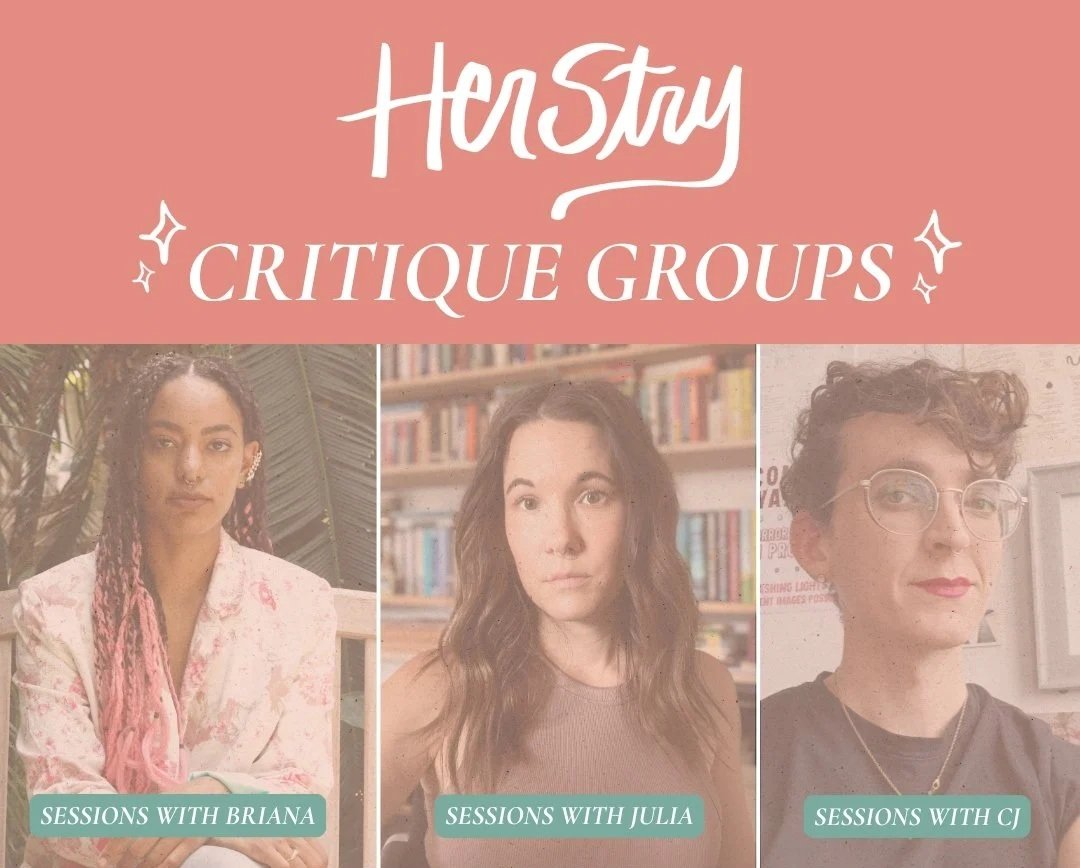
IT’S NO SECRET THAT FEEDBACK IS AN IMPORTANT PART OF THE WRITING PROCESS.
In fact, we argue that it might be the most important part of the process.
But it’s hard to find a writing community. It’s hard to find the people who are willing to take the time and the effort to read your work and give the feedback you really, truly deserves.
That’s where HerStry Critique Groups come in!
HerStry Critique Groups are small groups of 6 women who gather online for 6 weeks to share their writing, give constructive feedback and gain skills as writers.
Weekly online sessions last approximately ninety minutes, with three women sharing their work each week. Writers of all genres and levels are welcome and you may share both works of fiction and nonfiction.
Sessions take place on Mondays 7PM CT, Tuesdays 11AM CT, Fridays 11AM CT
WHAT’S INCLUDED IN THE HERSTRY CRITIQUE GROUPS?
Six 90 minute live workshop sessions
Three 20 minutes sessions in the “hot seat” to get you work critiqued
Written and verbal feedback from your fellow workshop participants
A weekly in depth edit and critique of your work from the group leader after each session
Weekly writing goals and accountability check ins
Full video recordings of each session to keep for your records
Say goodbye to the lonely, stuck in your head writing life!
LET’S WRITE!
From conception to submission. Let’s make summer sizzle with stories.
Writing a short story doesn’t happen in one session. It takes multiple drafts to get it exactly right, to create characters that come to life for the reader and a world they can’t stop thinking about. In this seven week course we will work on a single short story from conception to submission ready. The seven week session will include generative brainstorming sessions, short story craft talks, multiple workshops for feedback from fellow writers, and detailed line by line feedback and edits from your instructor. Plus, we’ll talk about submission venues, cover letters, and when to know if your story is ‘finished.’
IT’S NO SECRET THAT FEEDBACK IS AN IMPORTANT PART OF THE WRITING PROCESS.
In fact, we argue that it might be the most important part of the process.
But it’s hard to find a writing community. It’s hard to find the people who are willing to take the time and the effort to read your work and give the feedback you really, truly deserves.
That’s where HerStry Critique Groups come in!
HerStry Critique Groups are small groups of 6 women who gather online for 6 weeks to share their writing, give constructive feedback and gain skills as writers.
Weekly online sessions last approximately ninety minutes, with three women sharing their work each week. Writers of all genres and levels are welcome and you may share both works of fiction and nonfiction.
Sessions take place on Mondays 7PM CT, Tuesdays 11AM CT, Fridays 11AM CT
WHAT’S INCLUDED IN THE HERSTRY CRITIQUE GROUPS?
Six 90 minute live workshop sessions
Three 20 minutes sessions in the “hot seat” to get you work critiqued
Written and verbal feedback from your fellow workshop participants
A weekly in depth edit and critique of your work from the group leader after each session
Weekly writing goals and accountability check ins
Full video recordings of each session to keep for your records
Say goodbye to the lonely, stuck in your head writing life!
October 7, 14, 21, 28, November 4 and 18 CT
There is no class on November 11.
WRITING THE SEX SCENE.
Writing a sex scene can be delirious fun, a harrowing challenge, a literary milestone—possibly the most important part of building your short story or book. In our six weeks together, you’ll experience just about every possible emotion as you explore the erotic in different modes: comic, tender, harrowing, soul-shattering … because it really is all about the characters’ feelings, not just the mechanics. So we’ll talk about tone. Vocabulary. Metaphor. Sensory detail. How to get big emotions on the page … and when to pull back and let the reader’s imagination go to work.
This is a course for writers who want to explore the intersection between the novel and short stories, and would like to weave their short stories into a story cycle (or collection of "linked stories" or "composite novel"). This is also a class about the interaction of form and content, and how one influences the other. We will read works of interlinked stories by writers from diverse cultural and ethnic backgrounds, focusing on modern classics and contemporary practitioners of these hybrid forms. Weekly discussions will center on elements of craft, such as the expansion and compression of time, setting as an organizing and connecting principle, character development within and between stories, structure and plot for interconnected stories, and responding to literary influences in the same genre.
This six-week course guides writers through the literary submission process, offering insider insight and practical tools to help you get your work into the world. We’ll demystify everything from reading submission calls to writing cover letters and choosing the right journals. Along the way, we’ll workshop short bios, develop submission trackers, and build personalized plans that align with your voice and goals.
By the end of the course, you’ll walk away with a polished piece ready to send, a tailored submission list, and the confidence to navigate the lit mag world with clarity and purpose.
Ideal for writers of literary fiction, poetry, personal essay, memoir, and hybrid forms.
Tension feels tangible to a reader, an active experience. But from a craft perspective, tension is often a function of restraint, palpable from what is withheld, delayed or left unresolved. Why do some stories feel urgent even in stillness while others fall flat despite dramatic events? Our impulse to resolve tension often comes from a deeply human instinct to seek coherence and moral clarity, but resisting that instinct creates compelling narratives. When we let characters misbehave or allow ambiguity in their actions, we pull readers closer to them.
This course examines tension as a narrative force. We’ll consider how writers can counter the impulse to resolve too quickly, to justify wrongful acts or to redeem a character’s behavior. By looking at ways to sustain tension without escalation into spectacle, we’ll experiment with evoking it in the ordinary and the unspoken. The class will combine close reading, craft reflection and writing prompts to practice distinct approaches to writing tension. This course is designed for writers working in fiction, nonfiction, and hybrid forms who are interested in deepening the psychological and structural complexity of their work. Ultimately, tension is what compels the reader to turn the page.
In this generative writing workshop, ecologist and poet Anne Marie Wells will introduce participants to some of today's eco-poets and essayists and guide participants through a series of writing prompts that will use the outdoors and personal experience as inspiration for creative expression. No writing experience is necessary to participate.

Karis Ryu is a writer, artist, and graduate student currently based in New Haven, Connecticut. She grew up moving frequently across North America and the Pacific as a U.S. military child of Korean descent. Her work has previously appeared in The B'K, Zindabad, Harpy Hybrid Review, and other publications. Find her at karisryu.com
The eldest and only daughter, I had always liked being alone with a book in my hands, and my bedroom door closed. If the chaos of my three younger brothers seeped into my imagination at work, I’d lock the door. My mother called it my retreat from the noise but often would disrupt it herself with chores or babysitting for me since I was the right hand she turned to when she was overwhelmed. Growing up, I heard my mother yell my name from afar more than I heard it any other way.