
Most Likely to Be Famous (Online)
To some, I am a 1:1 aspect ratio profile picture, my left hand obscuring my face at a strategic angle to only partially reveal a coy expression. To others, I am found embedded within the thousands of images I’ve reblogged on my now-defunct Tumblr, a silhouette submerged in a long rivulet of sunlight as an extra in Picnic at Hanging Rock. My digital presence at best was a creative outlet, artfully curated betraying a hint of pretension; at worst, it was an unfaithful representation of the person I was offline. Much of my online activity, which began in 2006 when I was ten, has been a solitary exercise, yet I cultivated this split-personality because I deeply desired real-life connection with others. According to a cross-national study by the National Institute of Health, more time spent on social media is associated with a higher degree of loneliness, and my experience is a testament to this research.
In the early aughts, I grew up seeing models and celebrities with unattainable appearances in glossy magazines, turning the page when I had had enough. I came of age, however, with a deluge of online content showcasing everyday people becoming what is now termed as “influencers,” inspired to photoshop my own flaws into oblivion and broadcast my own niche interests, so I too could feel valued by this microcosm of society.
As individuals who can hardly recognize a world without social media, Gen Zers and Millennials like me continue to be captive audiences of media that subliminally asks us to reinvent ourselves; to be thick but only in a Fashion Nova way, Ozempic skinny, coquettish, succubus chic, mob wives, tomato girls; less human, more perfect; to have depth, but not too much. To fit in with what is trending according to the all-seeing algorithm. And what better way to do that than to create an avatar out of yourself who is you but also isn’t?
From a young age, the Internet granted me the ability to create an idealized version of me—to be perceived as I wanted others to. As an individual with obsessive-compulsive disorder manifesting in a variety of ways, one of those being perfectionism OCD, I wasn’t initially aware that I was feeding the beast that was my disorder. I was happy that I had the power to control the narrative, and for once, I had agency over how others saw me. And all of it would have been fine, maybe, had I not desired to take these digital connections offline.
*
As a child, I was often bored in the summertime. Why don’t you go outside, my parents would say, but my father had given up teaching me how to ride a bike, and when I went swimming, he would comment on my ten-year-old body that had grown rotund with the onset of puberty. My only friend that summer was a blonde girl down the street who grew up in an abusive—but importantly, “all-American,” as my half-Syrian, half-Polish mother liked to say—household, and after an uncomfortable incident with her father, I was left to cope with this confusing time on my own.
My high school-aged sister talked a lot about a social media platform called MySpace, which piqued my curiosity—you mean you can interact with anyone in the world online? When she was out with her friends, my parents gave me unrestricted access to her laptop to play games, and within weeks, I too had a MySpace. My Internet usage was anywhere from four to ten hours a day, during which I prolifically posted images of myself in forums to check if I was pretty. While some strangers said, you’re just a kid, others commented, ugly, big nose, WTF.
I made a few friends when I entered the new school year, but most of my life was lived online, and it was that way through my adolescence. I did not attach the same emotions to being weird or ugly digitally. In fact, it was my weirdnessthat gave me an edge, and the faceless accounts posing as my “friends” on the Internet validated that.
*
Upon entering high school, I was excommunicated from the “popular” group before I even had a chance to show them that I was cool now. I had gotten pretty, a friend of my mother’s confirmed. I went down the list: I had vowed to stop caring about my grades to focus on my social standing, so I didn’t bother testing into honors classes the summer before. I had even had a fling with an upperclassman, another prerequisite of popularity. But I had already made my mark on these kids who knew me from childhood, and it was too late to prove that I had really changed, so I continued spending nights at home on social media—this time, Tumblr.
“She’s a real loner,” my classmates used to say as they walked the halls in pairs. Whore, an unfamiliar voice echoed behind me. Slut. My stomach would turn when the bell rang for lunch, and I’d find myself standing on my own.
The few friends I did make came and went, so in my third year of high school, I committed to spending my lunch period in the school library, pretending I had important assignments to finish, and then, in my final year, I altered my course schedule so that I could leave for lunch and didn’t have to be so publicly alone. My following on Tumblr steadily grew despite my status as a loner.
“You know, they’re just jealous,” my mother used to tell me. Mom, bullied throughout her teens, ditched high school one day and never went back. I learned this when I was much older.
“I don’t think so,” I’d respond. I believed there had to be a better reason no one wanted to be seen with me.
*
Hell is a teenage girl, read a caption beneath a post in my Tumblr feed, reblog. I spent hours curating my page, interspersing selfies and my creative writing with edgy quotes and GIFs. Then, a notification.

I can honestly say your an inspiration too me…you have that “I don’t give a fuck what you think,” an anonymous message in my inbox read, unfinished. I opened another, perhaps from someone else. You’resomeone I will always wonder about. My cheeks burned hot as I read the rest. Publish.
The insults that infrequently appeared in my inbox hurt a lot less—whore, slut, ugly, weird—because I had the power to block users and delete the negativity. It wasn’t the same as walking into a room, hearing the whispers and unable to silence them with the click of a button.
During my final year of high school, I was voted “Most Likely to Be Famous” by my peers, a coveted superlative reserved for “popular” kids. I hadn’t even known I’d been nominated.
“Me?” I looked at the note bearing the results incredulously. How?
Through Tumblr, I sought to exorcise the demons from my reality, penning long pieces about my father’s infidelity, and later, the estrangement between him and me. I also took inspiration from Lana Del Rey’s “Ride” music video, writing about my penchant for living life on the edge, which to me meant smoking cigarettes while underage. Mostly, I wrote about my inability to cope with my depression. At the time, I thought suffering from a mental illness gave me more depth, but really, it made me not want to seek help when I desperately needed it.
Until my early twenties, I thought I would follow in my mother’s footsteps, who had posed for Playboy in the nineties, and model. I turned my focus to Instagram. I edited out my imperfections; I angled my head just right so that my nose appeared smaller. I wore less clothes. One photographer I met online who ended up on a #MeToo-era list said to me when I turned eighteen, “You’ll grow into your beauty one day,” but I didn’t want to wait. I wanted to feel beautiful now, and I did, thanks to my increasingly provocative appearance.
When I went to college, I linked my social media profiles on dating apps like Tinder. I wanted to prove to others before meeting me that I wasn’t as worthless as I felt in real-life, that I was interesting, and maybe even beautiful by society’s standards.
The new friends I made in my college courses took to calling me Tinderella. I basked in the constant flurry of compliments given online, speaking to dozens potential love interests—glorified pen pals—at any given time.
*
One of the online relationships I took offline was with a musician who had had a promising career. I hit him with my usual, Hope you’re well, via Instagram direct messages, and we met in-person the following week.
Intoxicated after two caipirinhas, he quizzed me on authors, seeking my perspective on books I had read and long forgotten, but posted about on social media. It was as though he knew me but didn’t. He had been an English major in college eight years prior, he reminded me. I stammered my way through my interpretation of On the Road. He looked bored and shook his head.
“You call yourself a writer?” He scoffed. At some point, he mentioned he thought I looked better in real-life, a veiled compliment that diminished my self-confidence both on- and offline.
I had been found out, I thought. I was a fraud, a caricature of myself. But he was a thirty-year-old man, and I was nineteen, desperate to impress someone I had been interested in because of his persona, and maybe he felt duped in a similar way.
*
At twenty-two, I met the person I would eventually marry, sparked by a brief and uninteresting conversation on Tinder. The unshakable summertime ennui had returned. I wanted to go to a bar and have a glass of chardonnay, but I hated being on my own—it brought me back to my younger years. Perhaps that was one reason I relied on a rotating group of Internet strangers to keep me company.
L was twice my age, and from his photos, I wasn’t entirely interested. He was a warm body to fill the seat adjacent to me, someone to help pass the time so the patrons of the establishment didn’t notice they were in the presence of a bonafied loner. I texted him, and he happened to be free, so we met at a bar in Los Angeles after I finished my shift at my retail job.
It was unexpected that we would connect over our shared love of music or my recent trip to his native England. He didn’t bother reviewing my social media accounts beyond a glimpse at my Instagram, he said, and I was surprised. Disappointed even. After we finished our planned drinks at the bar, the date continued late into the night.
“Don’t kiss me yet,” I said, turning my head after he walked me to my car, far too familiar with men from Tinder.
“Why would I do that?”
L was hardly a fan of social media. He used it sparingly and stopped using it altogether later in our relationship. In time, I was inspired to cull my following and set all social media profiles to “private.” It was only then that I felt more at home as myself, more willing to confront the discomfort of existing in a body that was entirely mine.
I started therapy, and after meeting with a psychiatrist, I was diagnosed with OCD, and later, social anxiety. One of the tenets of OCD is a strong desire for control. It was my relationship with L that helped me realize I had been portraying a character, attempting to get others to see me as the perfectly curated version of myself. I had also been trying to trick myself that I was fine, that past traumatic experiences were what made me different. My diagnosis gave me the freedom to unapologetically accept myself, imperfections and all, and importantly, seek the help that I had desperately needed.
I still occasionally use social media as a creative outlet, but with no expectations. I have had the same friendships for nearly ten years, all cultivated offline. I consider whether I have simply grown out of the need for Internet validation, or if I am finally healing. While loneliness still permeates my life at times, especially in a marriage with a generational divide, my relationship’s grounding in reality enables its survival—and, of course, my own.
-Taylor Harrison
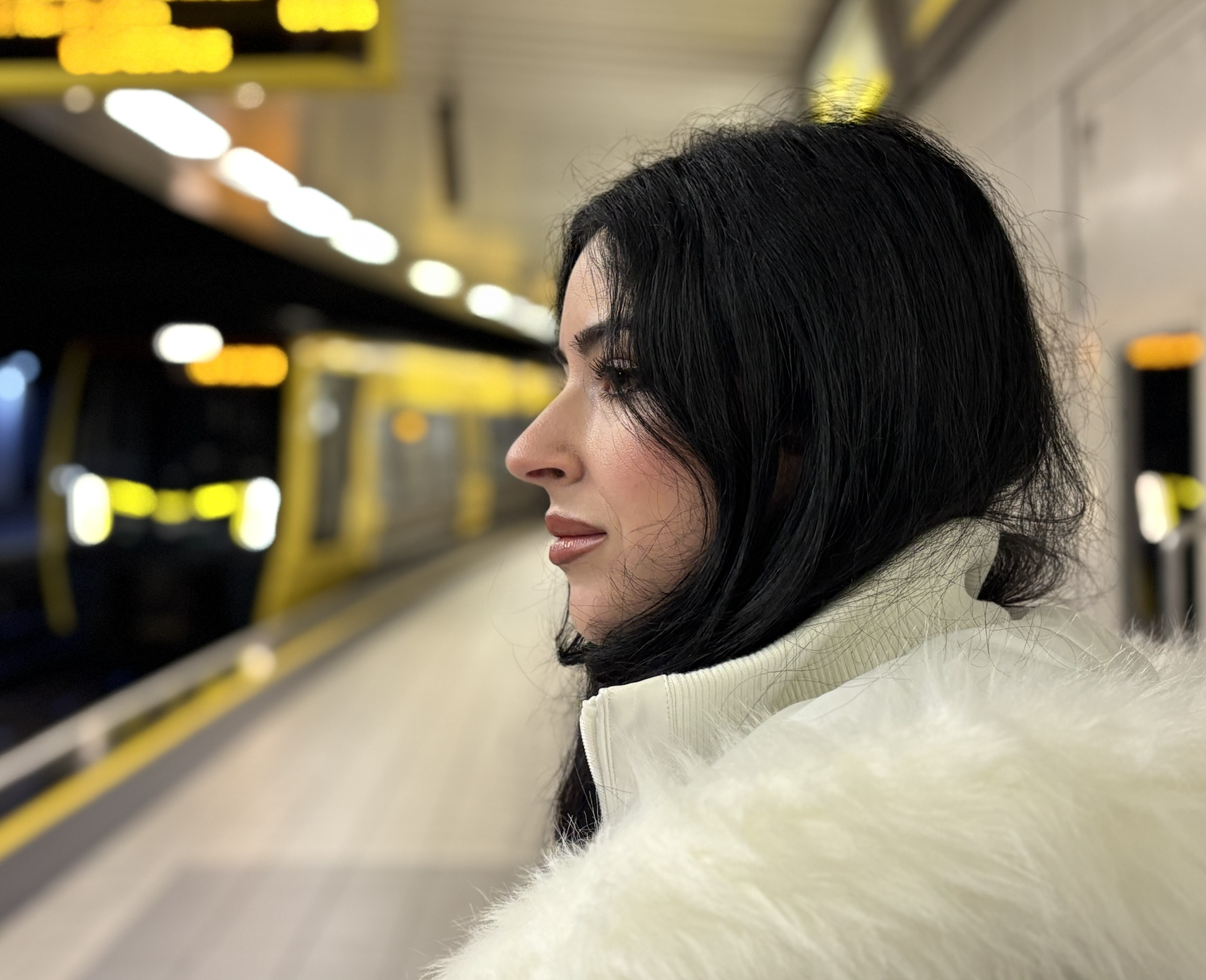
Taylor Harrison is an American writer whose work has been featured or is forthcoming in a variety of literary magazines, including Thirteen Bridges Review, Mulberry Literary, Chicago Story Press, and Yellow Arrow Journal, among others. She was a recent participant of the Yale Writers' Workshop. You can learn more about Taylor by following her Instagram account, @tharrisonwriting.