
All of them had been so sudden. Death. Now you see them, now you don’t. That was my experience of the deceased, the ones closest to me. Mother, father, sister, brother, brother. With you through their time on earth, then gone in a flash. Departing like lightning.
Until Timmy. He didn’t just die. He suffered with more strikes than all the thunderstorms of an old fashioned summer.
The year was 1990 and it was August, exactly two years to the day since my brother Vin, the last of my immediate family, dropped dead from a young and weakened heart. Tim wouldn’t have picked that day to call me if he had known, or remembered––he was the sensitive kind.
It would have made sense that he was calling me about the garden. He had finally made it big into show business (though not in an acting role he had once aspired to). Along with his partner, he had made a successful career as a Hollywood casting director. They had recently remodeled a get-away home in the desert and Tim had wanted a garden.
"No, the garden's done. You're gonna love it. We'll fly you down. Come soon. As soon as you can. I have some news. I just got out of the hospital. I've had pneumonia."
I felt the hesitation, losing a breath, the pause as a tangible moment. A before and after.
"I'm HIV positive.," he said. You know. AIDS."
And I knew. We all knew because it was 1990 and there was no cure.
Timmy, Tim, Timothy, like the summer grasses. He was hardly a summer grass but a feeling you get when one thinks of green grasses in summer swaying in a breeze, humming with buzzing and bird song. Gentle on the outside, though inward he was churning, intensely passionate, a restless wind. I loved him for that.
I’ll never forget the day I met him at a summer pool party. I was 16 and had been swooning over one of his older brothers —movie star macho and so far out of reach when I noticed Tim, shy and quiet. Tim was handsome pretty, mysterious, eyes deep and sad. His older brothers had moved on and Tim lived alone at home with his mother. He told me she was ill. And I told him my mother was too.
We quickly became good friends. We held hands and walked together like two people who really liked each other, convincing everyone––my mother, his mother, that we were together. We might have looked like boyfriend and girlfriend, comfortable and kind to the other. Secure and trusting, I supposed as love should be. No one would ever guess that I had been wary of love; of love and loss. And Tim was attracted to boys, even men. We were a perfect couple.
I loved him for the adventures we later shared; the introductions to worlds I hadn’t imagined as if he were part of my education. He made sure I understood my direction: my east and my west. He had me memorize the provinces of Canada, taught me how read a road map, drive a “four on the floor” pick-up. He showed me the old Hollywood movies, theater nightlife and supper clubs. I loved him for coming to see me when I moved away to Arizona, then San Francisco.
Come soon. Soon as you can. Don’t wait.
The desert house was a bittersweet Shangri-La. Tasteful, enchanting, magical as a movie set yet doomed with the transparent cloud cover of reality and denial. It had been hard to accept––all the beauty with the inevitable. Although Tim had lost some weight, he was still handsomely debonair and quick with his constant wit. After my first visit, I vowed to return. And by October, I was back to the desert house. Tim's partner could resume his work in L.A. and I could care and watch over Tim until the day he died.
The last week of my long stay, Tim was having more bad days than good days. He lost his appetite and slept a lot. He became depressed, anxious and wanted me to go home. I resisted until I knew there was nothing else I could do.
The small desert airport was from another era. I watched myself in a 50's like movie, tinted color over black and white film. Palm trees, cactus and Indian motifs. I'm wearing my favorite summer dress; white linen, sandals and a stylish straw hat. Tim strains to carry my small duffle of a suitcase. The last time we did this we were both eighteen and Tim was sending me off on a plane from Butte to Phoenix after our epic "Us on a Bus" cross country adventure. Once again, he escorts me like a leading lady to the aircraft on the runway. The staircase is waiting and the air is blowing noise and furnace heat and I don't want to go. I don't want to say goodbye. Tim hugs me and I hide a little cry and climb the airplane's stairs. I reach the top and look back, waiting for a wave and a smile and he's gone.
So, this is what it's like to say goodbye.
Tim didn't die. Not yet. AIDS was a fickle curse, a bandit of dignity and a political and social epidemic. In the early 90's there was still no cure and treatments were costly and most unattainable. There weren't the cocktails that would become available to someday extend a life one more month, one more year. Experimental treatments were limited. In the early years of the 1990's, HIV had been the #1 cause of death of men between the ages of 25 and 44.
The stigma would never go away. As time would tell, it only escalated its wrath of shame and disgrace. We knew it was a death sentence. A waiting game. We had made the best of our time together without talking about dying.
But we could talk about my brother. Tim had been a friend who understood my family history and the aftershocks from Vin's sudden death. He had been with me through hard times. So often there were things that were understood between us, that we never had to say out loud. I was surprised when he told me he had always had been in love with my brother. When I explained to him that my husband and I had decided to not have children because of Vin’s premature death, the family curse, he declared he was selfishly disappointed.
"Oh, I'm so sorry," he said in all sincerity. "I always imagined you'd have a girl. And I'd go to Paris and bring her back pretty clothes and special things I know you never had."
And I loved him for that too.
We shared another winter, then a monumental spring when the desert wildflowers bloomed like no other. Our season of Joshua Tree diversions and Tim was beginning to waste away, in and out of hospitals, losing his stamina but not his will or his urge for adventure.
Two years after his initial diagnosis, he called again with another demand.
"Let's go home together," he said, announcing in a voice so firm yet desperate, as if his life depended on it. "We'll go when the leaves are turning."
We met in our Pennsylvania river town in the peak of autumn. It was our favorite time of year and Tim and I had longed for it since we both lived in different parts of California. We'd never admit that we also missed the place we still called home.
"Let's go," I said to Tim. We have to."
"It will be fabulous," he said. He could convince me of anything.
Halloween was close; cornstalks adorned doorways in our quaint little town with displays of gourds and goblins, bats and webs. Everywhere the props of the season, reminders of death and spirits, mirroring Tim’s rapid decline. In all its autumn splendor, it was not fabulous. Tim’s dementia from the AIDS virus took us through a dark and dangerous journey of delusions, dodging lightning bolts with every step into the hell.
“I didn’t have a gun,” he stated after trying to kidnap his mother from a nursing home. “I said I thought I was a nun!” The police admitted him to the psychiatric ward at the county hospital where he was later released to his grieving partner.
I wasn't sure if Tim would ever forgive me after that trip. I had tried to keep him safe so he wouldn’t do something we’d all regret in his uncontrolled mania. By protecting him from disaster, I felt as if I had betrayed him. Disaster had been as inevitable as dying.
Pennsylvania's trees had long been dormant when I made one last visit to the desert house. Tim had moved from room to room, sleeping under covers so no one would see him, no one could feel him. I couldn't bear the thought that he had blamed me, as if I had denied him his right of freedom to live his last dying days. He didn't have many, wasting away into the dark of a winter landscape. Never to see tomorrow.
Who knew that sitting next to death could be so awkward. Should I stay or should I go? I wanted to belong to a moment of mercy for no one's sake but my own. Asking for forgiveness felt selfish, wishing I could undo all the wrongs I had committed. This act of dying appeared solitary, disrupting would be an act against nature.
I snuggled next to him in the heavenly clouds of pillows and shams in the happy playroom under clear blue desert skies. He could barely speak. "I'm sorry." He had said it first. I held his hand and said, yes, I know. I said that I was sorry too and kissed him goodbye.
There was no lingering, no lightning. It was time to go. I held on to the last precious minutes like a bird in my hand. I knew I had to let it go.
So this is what it's like to say goodbye. Forever.
-Kathy Ziccardi
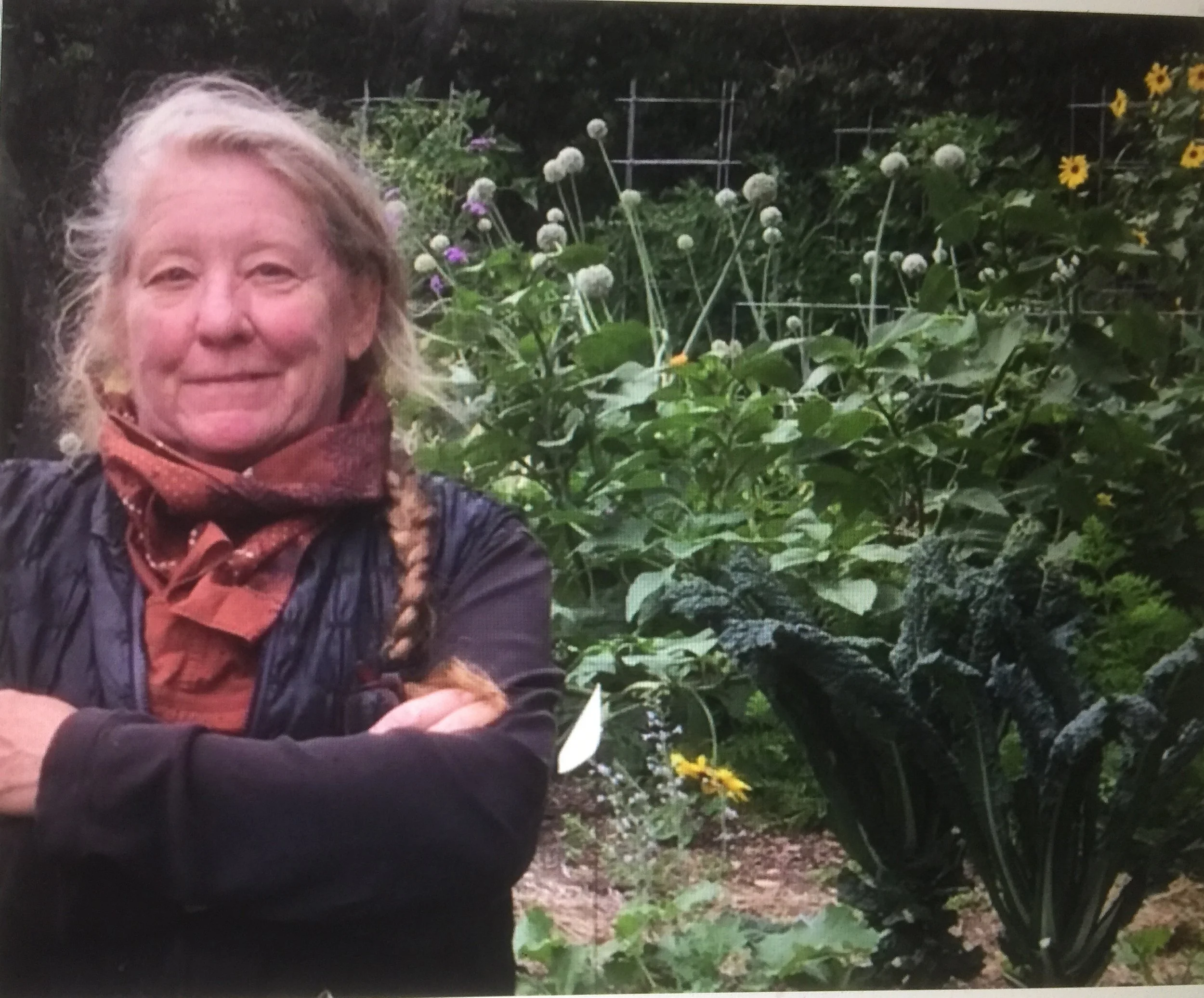
Kathy Ziccardi likes to write stories about where she came from and where she's been––the woods and cornfields, the desert, the bay. Her upbringing in the countryside of northeastern Pennsylvania inspired her creativity and love of nature. She lives in the San Francisco Bay Area, creating and tending gardens. Along with her memoir she is currently working on a collection of stories titled, "A Treasury of Endings."

The summer after my dad dies is a slutty one.
I spend most of May haunting a neighborhood ex while his girlfriend is out of town. We trade plausibly-deniable texts and “accidentally” run into each other at Cobble Hill’s diviest bar. I sit on a wooden stool six inches too close to him, fully aware that my silk mini skirt has ridden up around my waist. I don’t bother adjusting it. We never cross any official lines, but the thrill of possibility is enough to feed the yawning hunger that eats through my gut at all hours.