
Turning Point
The city lights blurred as I drove to the hospital. Mt. Spokane sat on the horizon, its slopes and lifts hidden in darkness, a silent witness to my brother’s sudden fall. Hours earlier, he'd grabbed his snowboard and driven to the top. Now, he lay braced and broken.
Part of me rehearsed the what-ifs, ran scripts about what could have been. I pushed these thoughts away, wiping the blur from my eyes. I couldn't create a second emergency. But few drivers were out, streets icy from a fresh storm.
At the hospital, the doors opened with a smooth thunk, the lobby pulsing with warmth. I passed twinkling Christmas lights and a tree dotted with ornaments, cherubs peeking from the branches. In the elevator, I pressed the button my mother instructed. Then I found my brother, lying on a gurney, past a turning point he could not have fathomed that morning.
Through the haze and perfect clarity of pain and medication, he said it was a fluke, on the first run of opening day. He remembered the toboggan and the ambulances that sped him down the mountain and across town. I tried not to imagine how he must have felt—head and neck braced, medics offering comfort, sirens wailing. The traffic slowing around them, hazards flashing.
When the neurosurgeon briefed us, his long fingers crossing delicately, he said he hoped my brother would walk away from this. We all heard the doubt in his voice. I wish I hadn't seen the tears form in my brother’s eyes. Or the color drain from his face. It wasn’t just his legs, the doctor said, but his bladder and bowels. I think I held my brother's hand, though I'm not sure if that's a memory or what I wanted to do.
We were ushered to a waiting room, where people like us did the heavy work of waiting. It smelled of antiseptic, clean and frightening, the scent of sickness. The holiday season had ended at the elevators. In this stark room, time stretched like a rubber band between different outcomes. My brother might live, or not. He may walk, or not. I thought of nothing and everything, trapped in the taut, disorienting rhythm of small talk, TV, and endless scrolling. I ran more scenarios, some where he walked out and some where he didn't. Where he was alive and where he was not. I stacked them simultaneously, strange parallel worlds not yet made into reality.
I expected relief when the neurosurgeon briefed us, but the surgery wasn't perfect. The vertebrae were splintered, unstable. Again, he crossed those slender fingers. Yet somewhere in that hospital, my brother was alive, a gratitude I'd never thought to feel before. Now, he hovered between the life he knew and one he could barely imagine.
When we were finally allowed to see him, I stood at the foot of his bed, unsure of what to do. I thought of the years spent apart, living a life without him. As a child, I longed for a sibling, someone I saw in the stories I read, but what I got was nothing like fiction. There were too many years between us, and we are like two only children. Despite this, the brother who once felt so distant lay before me, raw and vulnerable, and I resolved to be there as much as I could.
He looked unnervingly normal, as if his spine weren't held together by metal rods and screws. The cross on the wall stared down, asking for belief, for faith. Our mother had raised us both agnostic, not rejecting religion but allowing its absence. When I was young, I sometimes went with her mother to a Methodist church, ignorant of the hymns and prayers, yet comforted by the ritual. When invited to take communion, I did, though I had no idea what it meant for my soul.
As my brother recovered, I brought my work with me to the hospital, but my mind wandered. I sat at the foot of his bed as nurses checked vitals, his catheter level, bowel movements. The morphine dulled the pain but also complicated his need to eliminate, leaving us suspended, neither knowing nor not knowing. Still, there was progress: he wiggled his toes and could feel his legs. They fitted him with a brace and we were trained to use it. Sliding it beneath him, I feared undoing all he was fighting for. Each shift felt risky, but we found a rhythm, small and tentative. As he pulled the straps taut, he reminded me gently: I wasn't going to hurt him. Small jokes appeared, bits of laughter. It started to feel comfortable, natural, like we were becoming a team.
Each time I entered the hospital, I passed the tall fake tree, its warm white lights steadfast. Families gathered beneath it, each caught in their own uncertainty. I wondered what would come next for them, for us. More than once, I thought of stepping into the adjoining chapel—to do what? Pray? Sit in silence? I don’t know. It wasn’t faith that called me there but desperation. For the others inside the chapel, did they believe? Or were they, too, bargaining for just this one time?
For days, my brother lay in that bed, his face pale beneath a scruffy auburn beard. Medicated, restless, and bored, he needed distraction, so I dug an iPod from a moving box, its outdated features feeling as remote as he once did, and downloaded a Harry Potter audiobook. I watched him drift asleep, thinking how fragile the body, but also how resilient. Being here was the only thing that mattered. The emails, the texts? I let them pile up like the dishes in my sink. The ordinary things that might never return. Each seemed like they hovered above us, waiting to take form. As he listened to a story from his childhood—those days when he grew wildly, and I rarely came home except for holidays—I hoped he dreamed of wizards and owls, far from the hospital and his injuries.

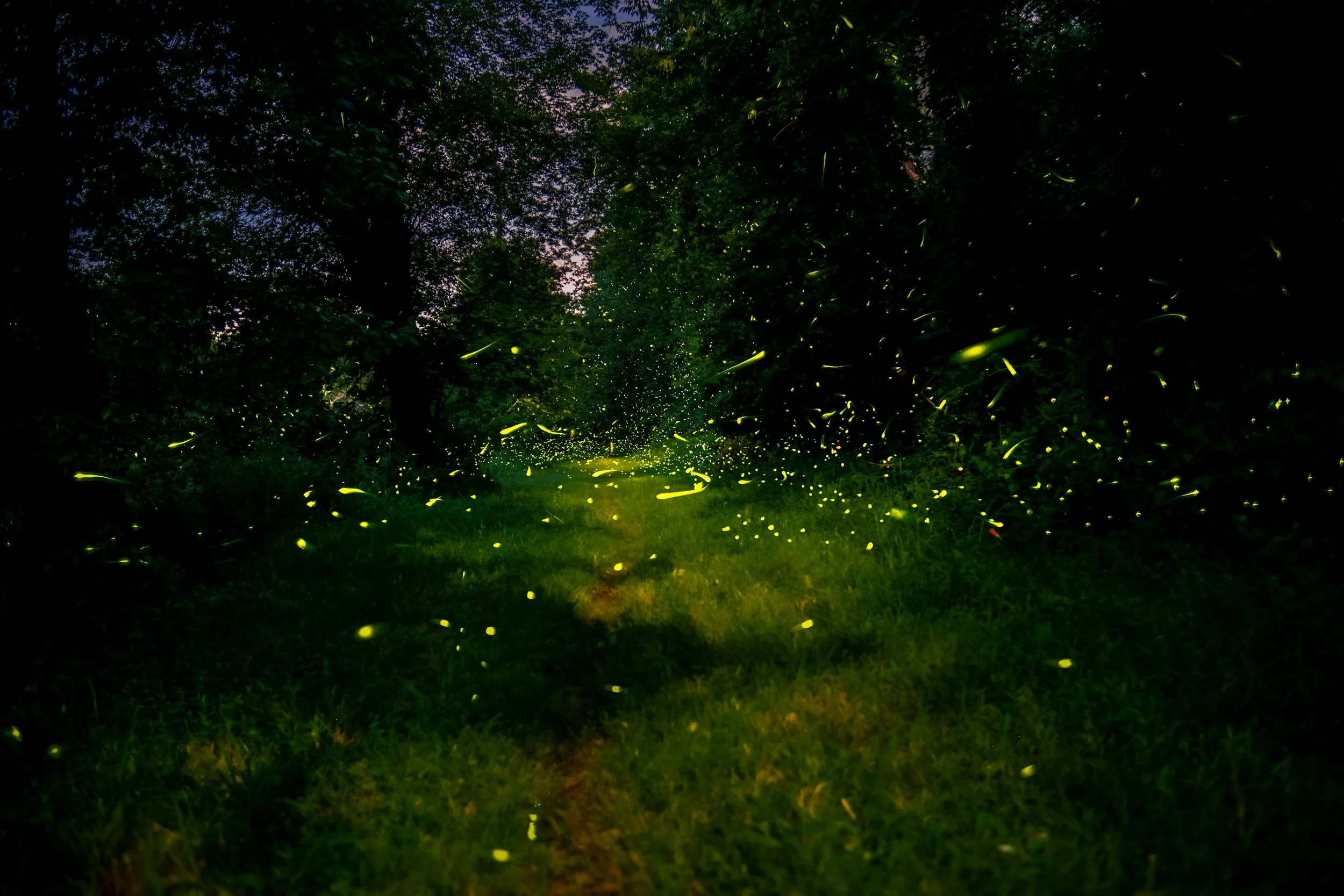
After work, I could see my breath as I walked past St. Aloysius Church, candles glowing with prayers inside the grotto. For a moment, I thought about the hopes that sparked each wick and how they intersected with my own desires. If I were bold enough, I would have lit my own flame. What if I’d still been away when my brother fell, still across the country, feeling helpless and removed? Moving back to Washington that summer now seemed like a blessing. My phone buzzed, pulling me away from my thoughts. It was our mom, asking if I'd pick up a hamburger on my way to the hospital. He was tired of hospital food.
The smell of disinfectant mixed with vomit still makes me gag—the hamburger, bread, and saliva on my hands, the shockingly blue barf bag. I'd never shown such an instinct, yet as my brother began to heave, I dropped my papers and ran to him. Our mother left the room to finish her phone call. I guess she assumed her eldest would figure it out. He may have been tired of the food, but he was not ready for a hamburger.
By the sixth day, he still wore a catheter and his bowels remained stubbornly inactive—a silent alarm we couldn’t ignore. But he could walk, shuffling down the hall in his brace, which meant he could go home. Mom would stay with him for several weeks, with her version of convalescence and rehab. As the afternoon bled into dusk, the discharge process began, hurried and chaotic, as if we were being expelled.
I wheeled my brother to the pharmacy window while Mom went to warm up her truck, taking his things in a plastic bag. He sat sweating in his snowboarding jacket and brace. The search for his wallet felt endless, an unnecessary hurdle that sharpened the urgency. I ended up paying for the prescriptions, a small gesture to keep us moving forward. He rested the paper bag on his lap: painkillers, sedatives, and anti-inflammatories to medicate him through the holidays, the darkest days of the year. On winter solstice, I marked my own acknowledgment of light's slow return, and the hope that he would recover.
Though my brother was going home and could walk, the catheter and Metamucil were reminders of what we wouldn’t know for days. He doesn’t remember much from this time—opening presents on Christmas, listening to George Michael, who had died that morning. The toboggan ride down the mountain, the ambulances, the hours we spent together, the inside jokes. He has only fragments, like the shards in his spine. That’s probably for the best, even though it stings to know our closeness was so temporary. Those small moments between us—the careful slide of the brace, the weight of laughter—would be mine alone, as we slipped back into how we'd always been.
As I wheeled him through the lobby, it felt more like midnight than early evening. Our worst fears were simply fears, not reality, but what came next was still forming. We passed the Christmas spruce, families gathered under the cherubs and wreaths, the cross. We were leaving this place, somewhere between the world we knew and the one that lay ahead, unsure of what we would find.
-Jenne Knight
Jenne Knight is an editor based in the Inland Northwest. Her work appears in Poetry Northwest, Five Minutes, Unbound, The Rumpus, The Common, and elsewhere. More information is available at www.jenneknight.com.
I left on a clear October Monday. Seated at the bulkhead, my elbow rested next to a man who asked if I was going to Chicago for business. I lied, nodding my head yes. Ambivalence prevented me from updating my second-generation iPod earlier in the day, leaving Missy Elliott and Usher to comfort me. A leathery skinned smoker picked me up at baggage claim. She drove me forty-five minutes to our rural destination while I imagined what happens when car doors open and bodies land on I-55 at seventy-five miles per hour.