
Seven
My mother remembers one less, but I remember seven. Seven places I called home outside of Nanny’s trailer. Each move had its own life and timeline complete with characters and climate, seemingly separate from the world happening at Nanny’s. Seven times I packed my “101 Dalmatians” suitcase and cardboard boxes of pictures. I gained a little more makeup for each move: a new sheen lip gloss, glitter nail polish with chunky stars, Hot Topic eyeshadow, the limited edition Gerard Way palette that glowed bright red. Puberty marked by moves.
*
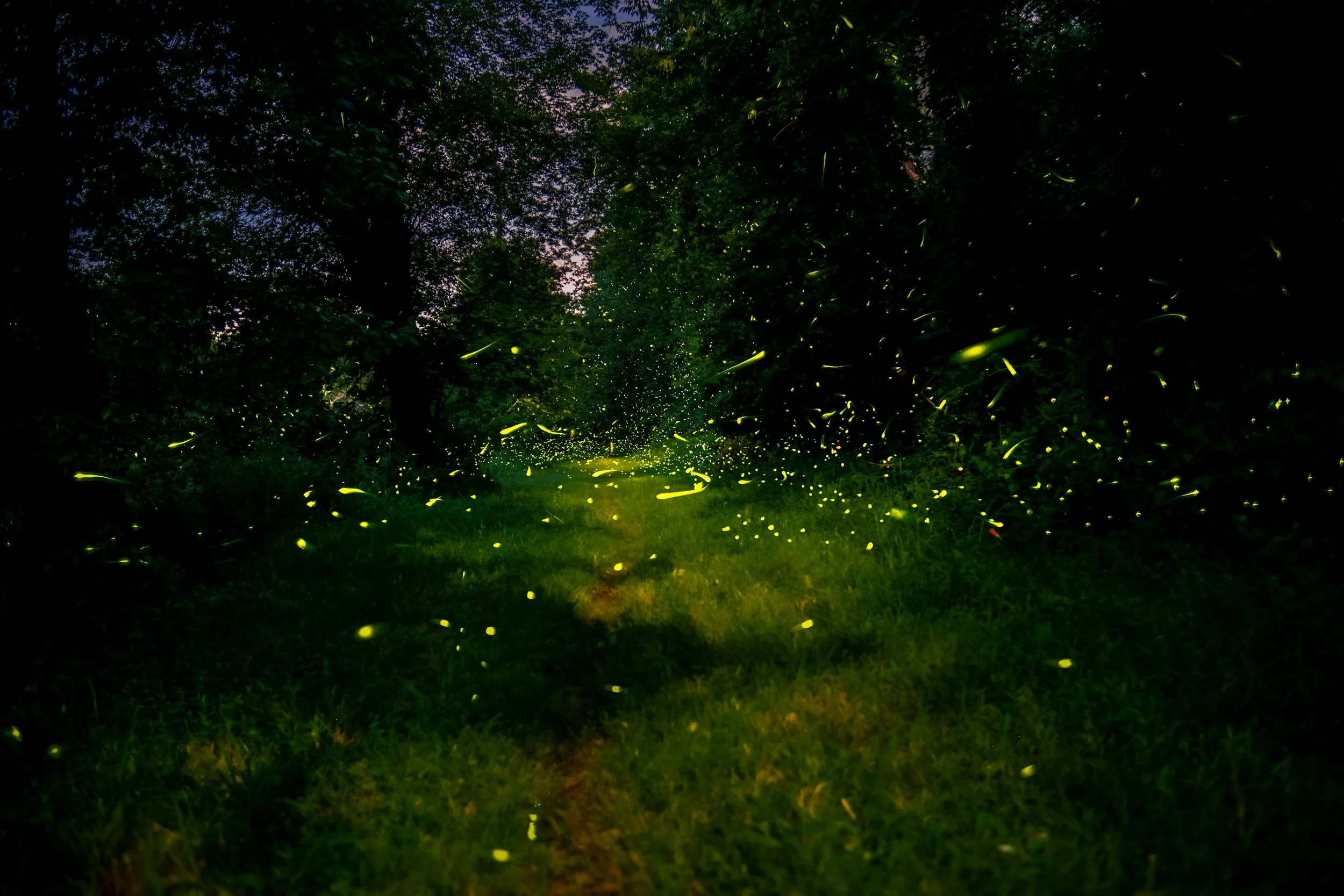
Slurping Mountain Dew on ice, I look into the lightning bug-lit backyard. I pause gnawing on the flimsy ridged straw to take a gulp that sends a temporary freeze to my chest. My feet are dirty and crunchy from the unswept floor. Often too lazy to put shoes on anyway, the dirt stays and I’m still like this. Careless, letting crumbs collect on my soles. From the sound of Mama’s and my brother’s laughter carrying through the screened door, I sense we’ve got a new family dynamic. Backyard shenanigans are a part of this newness, something we’ve never had before. I step outside to watch the noise. Mama’s boyfriend, Scott, takes what I can only assume is a lukewarm sip of beer, throws a hammer into the air, lets it cycle down, and catches the handle. Mama looks on deferentially. My little brother cheers with each throw and catch, thinking this not only exciting, but viewing this game as proof Scott is a good source of Fun for the family. I feel worried that throwing hammers in the air is what my little brother will believe makes a man. A man is showy, a man is dangerous. My brother’s intake of the world has always been that serious of a case for me; a desire to protect him from seeing too much, maybe change the way it ends.
In the backyard, the hammer falls claw-side down into Scott’s hand. The claw causes a tear from the middle finger base all the way across his palm. Between Scott’s screams, my mom takes to the accident with the desperation of a fly to dog shit in the summer. Scrambling to his side, she uses our dishcloth reserved for cooking to stop the bleeding. Playfully, she whines, “Well, what did you think was gonna happen, dum dum?” In her voice, I sense her waiting to see which side of the dial Scott would land on, enraged with who was liable or embarrassed by the feat’s demise. He looks up at us after clenching his eyes and hands together for a while, “God, this hurts.” Blood, an emergency room visit, stitches. Nanny stays with us while my mother and the idiot tend to his self-inflicted stupidity.
That same year, an incensed Scott would break my mom’s arm by crushing it with the car door during some fight. Over and over again, he pulled the door down on her small arm causing the forearm bones to fracture to dust. She wore a cast after that. Scott and my mom did not last. He was the type to blame the hammer for what it did to him.
*
Empathy for my mother has grown legs in the last few years. Those legs take speed to get as far away as possible, but they’re there. Running and walking to meaning, I try my hardest to understand how we got here. I know now she moved us so much as an attempt to build her own independence and start for herself, A Life. The last few times we moved, I stopped crying about it. About being far away from Nanny, about losing, again, a sense of permanence with my things. I knew we’d be back. We used Nanny’s address so I never had to change schools.
The three of us, the girls, did everything together. We would spend weekends running errands with the type of fervor and drill one could find on a military base. Layaway is best at this time at Belk, grab plates at Dollar Tree before the rush. When it came to coupons, they were at-once mathematicians. My job in-store would be to pull a tab from every coupon dispenser up and down the aisles. Pockets screaming with savings, we’d add up the discounts and shop the sales only.
The times we moved out, we were always running out of toilet paper. I had to wipe my pee with towels I found on the floor or wait until we ran errands to go. Bathroom visits were rushed and shared. I was so tired of sharing, of being exposed, of being broke. I shared a room and bed with Nanny, the majority of my childhood. Moving in and out of her trailer had a painfully hopeful hue, one my mother must’ve seen, too. I missed Nanny and our shared everythings, but I wanted a closed door, a bathroom where I didn’t have to worry about the visibility of my newly hairy legs and upgraded bra. Vigilance of being seen from all angles, at all times, made my skin crawl by the time I was a teenager.
My first period is a family gathering in the bedroom, our shared space as much as a living room. In the bathroom, we are all family. I am keeled over, clutching the door frame, Nanny and Mama watch me from the bed. Flipping through Food Lion coupons, they barely look up at my wincing. I knew one other girl in my grade who had gotten her period so far. She told us at a sleepover and then she became the woman in the room, fielding questions from us all. Did it hurt? Could you still play soccer? Did it smell? I cried to Mama and Nanny and told them I didn’t want mine yet. I was too scared to put a tampon in and pads looked like diapers. This seemed like an illness I’d have to tend to for the rest of my days.
Dispersed among their coupons and papers on the bed, they ring, “Just wait until you’re older, it gets worse.” I wondered if being older would automatically alleviate discomfort faster or give me more access to ease, in general. Will I be able to afford everything I need when I grow up? How much will I need?
I run a hot bath for relief and can hear them on the other side of the door planning what side to make with salmon patties for dinner.
*
We move to Main Street in Belmont when I am fifteen and it feels like an invitation to a society, one of addresses, the elite. It felt central, main. Looking into the string of homes, this one glows. My classmates live all around me here. I have my own room, a fluffy comforter with butterflies, flowers, and unicorns everywhere. My boyfriend drops me off in the driveway, we kiss while the mosquitos and gnats violently swarm the light bulb porch light. He takes a picture of me on the stairs back there, a cheeky smile looking down at a frozen yogurt bowl. I am living my teenage fantasy, just like everyone else. I throw the only house party I’ll ever throw in that small, white, cubed house. The vinyl siding is paneled all crispy clean like icing on a wedding cake. At our historic, one-night-only house party, Patricia, JM, and I throw back Mike’s Hard Lemonades. We tie a bag around JM’s neck by the end of the night so he can vomit without having to leave the conversation. In our Main Street house, I keep a mattress for Patricia in my room so she can, at any moment’s notice, leave her stuffy family’s confines. Finally, I feel spacious.
*

In seventh grade, my mom starts dating my math teacher. He’s also my soccer coach. We live in a set of four units, crusty and flaked. I take long walks around the neighborhood with my best friend Patricia when she stays over. The area is unremarkable except for one house that pushes up against a creek. This house seemed full, rocking chairs with cushions on the front porch and a trampoline on the side yard. I remember steady rain when we lived on this block. Wet pavement smell could put me to sleep and wake me up again, even now. I ride my skateboard sitting down, blasting shakily down the one big hill in the neighborhood, and sometimes crash-land in the yard with the creek sounds. Getting up, wiping off my butt and knees, I move my eyes all the way to the side of my view just enough to look at the house without being too obvious. The home always had soft lighting and no yelling. I do not think it could be that we lived on the same block, me in a unit with cockroaches and my math teacher lingering, while this majestic muddy creek got to be theirs. Am I allowed to stomp in it, too? Resentment is a learned feeling from small comparisons like this one; these resentments sustain me for the rest of my life. How can I be wrong when I have so much evidence of disparity? On the walks with Patricia, we light up cigarettes as soon as we’re out of sight of the units. We turn the corner and loop back and Mr. Wido, my teacher and coach, is standing there with his arms crossed. We roll our eyes as he asks to smell our fingers as proof that we did not smoke on the walk. All he would smell was the hand sanitizer and Bath and Body Works lotion we used to cover it up. I loved lying right to his face.
*
In another set of units, at another address I will fail to commit to memory, I settle into teenager restless rest with my hands curled close to my face. Ready to defend whatever villains my brain is gonna kick up in my dreams. My feet are swirled into the covers, wet hair braided down my back, and the plastic siding made to look wooden is cold on my forehead. I flatten my face to the wall but remember germs and pimples, so I pull back. I fall asleep in my corner bed to the sound of the neighbor watching tv and coughing. It feels gross to know a neighbor so intimately by their inside moments. I cover my ears with my stuffed Eeyore to drown out his hacking.
*
Sophomore year, we move into a very structured, respectable apartment complex not too far from my school. We live on the top floor, my mom paints an accent wall purple upon arrival, and we live there when the snow falls miraculously into weighted blankets across Belmont. It snows and the town stops moving. Stoplights break down and power goes out, forcing families to talk to each other without distraction. While my mom is at work, Patricia comes over. Schools are closed for bad weather and we are left to be. We take pictures of each other with our skateboards in my room, the barely used things a prop like a promise of being cool sometime, just not quite yet. We venture into the snow covered parking lot, no proper shoes for this in sight. We walk to a housing development under construction and take pictures. Leaning up against steel beams, perched on red clay piles of dirt with our backs arched and heads down. Anything to look emo. I am not fraught with the weight of where we will go next or why in these memories, but instead, I am doing my homework nightly and flirting with boys and taking pictures to carefully scan and post on LiveJournal with my best friend. Back at my apartment, I’m so proud of this home. It’s clean and in the right area code. It has carpet and a peep hole, internet and snacks. Mama is happy here, too.
Still, she decides someone else is worth moving for so she reaches for what she thinks is the right one this time, hoping it will last. By senior year, that apartment that held our happiness is gone.
*
We are back at Nanny’s. Mama is settled in with someone else and my brother splits his sleeps between there and with us, me and Nanny and Pappy. By this time, I am allotted the bed space I so crave. We still share a bathroom and the doors, like cardboard, feel flimsy between any secrets I try to keep. With school days, hostess shifts at a local bar and grill, senior soccer activities and my boyfriend off at college, I feel growing up happening to me. The lyrics from Bright Eyes, Dashboard Confessional, and Third Eye Blind bleed so personally in my heart, I hallucinate myself into the lyrics. I want a life bigger—one worth singing about like the characters in their songs.
In Art IV, I start a disposable photo project to document each and every one of these places. Seven homes across a few counties. In class, I am learning how to manipulate watercolor pencils, so I plan to draw self-portraits to go with the photos, too. The medium proves to be as ornery and unpredictable as the project it’s illustrating. A hard thing to learn. I pull the car into every driveway or lot where we’ve ever lived and it hits me just how unfair this is. To endure this much change, to live in turbulence, and become a person in it. I realize there are two options: resent it or find meaning. Big deal. My resentment is big.
*
I feel the ache when a friend says my apartment ‘looks nicer’ inside than it appears from the outside. She must’ve noticed how the apartments are situated across from a Sonic Drive-In and next to a convenience store and a bus stop. The slightly upgraded apartments that I saved an extra fifty dollars a month to be able to afford which meant more windows for my cat. I feel comfort among the riff-raff of fast food and a highway. I can walk ten steps to cigarettes, a hotdog, or a stoplight. I feel the settling when the songs of Los Tigres del Norte blast every Sunday complemented by the smell of a charcoal grill and the sound of kids running on pavement. I am happy to be here. I am happy I have keys, a thick door and spine even if that means my skull is just as thick.
Nanny is dead, Patricia’s sober, and JM lives an hour north. Everything hurts still if I look at it too much, pick at it. In our apartment’s backyard, my boyfriend smokes out the charcoal to ash. I look on from my lawn chair and fold my gravel-caked feet up so the mosquitoes can’t bite them. My glass of chilled red is so cold.
-Kristin Kennedy
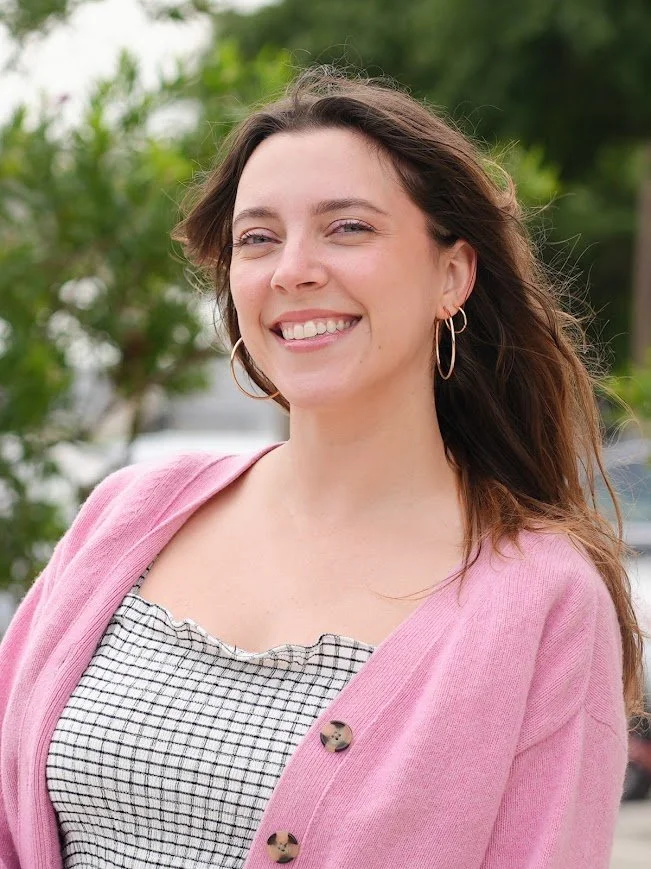
Kristin Kennedy is an Austin, Texas based writer originally from Belmont, North Carolina. She is a public school educator who mostly writes creative nonfiction.
I left on a clear October Monday. Seated at the bulkhead, my elbow rested next to a man who asked if I was going to Chicago for business. I lied, nodding my head yes. Ambivalence prevented me from updating my second-generation iPod earlier in the day, leaving Missy Elliott and Usher to comfort me. A leathery skinned smoker picked me up at baggage claim. She drove me forty-five minutes to our rural destination while I imagined what happens when car doors open and bodies land on I-55 at seventy-five miles per hour.