
Ripped
One of my really good friends was having a birthday and I wanted to show her the best time possible. So I gathered up all our friends for a night of roller skating in retro, vintage clothes followed by dinner and debauchery.
Birthday girl and I scoured all the local thrift shops for the most hideously awesome outfit. After two hours of giggling in the fitting rooms, we had decided on our ensembles and went home to get ready.
We arrived at the roller skating rink and laced up our skates. I don’t care who you are, when you are an adult and you put on skates for the first time there is an acclimation period. We all walked around like baby giraffes on the carpet, with our skates on, to regain some sense of balance. Once we had enough (liquid) courage we hit the rink.
Man, those 12-year-old kids were fast.
I could hear that inner judgemental adult voice, that sometimes catches you by surprise, screaming for safety. My fight or flight senses were activated and saying, bitch, get out of here. You are too old for this. You aren’t going to make it. My reaction to these warnings? Shouting at the DJ to turn. that. music. up.
The problem wasn’t when we were going straight. It was those sneaky, little, bastard turns to go the other direction. You know, where your balance is so thrown off you have to lean sideways like you’re on a bobsled team.

I’m standing at the edge of a small, rocky precipice, deep in the heart of the Washington Cascades. Fear courses through me like a vise, squeezing so tight it takes my breath. Crusted with ice, the yawning gap stares up at me with cold contempt, challenging me to leap.

“Pain. Today I learned what that word really means...”
My first period is documented in my childhood journal when on July 3, 1998 I became a woman. I was just a month shy of turning fourteen and about to embark on my freshman year of high school.

I contemplated flinging the ring over the railing into the woods, but then I thought: no, then it will be down there. The diamond will be shining in the dirt like the highlight on an eye in a painting, watching me. It will bother me that it’s still close by.

I grab my keys and check my purse before heading out. It’s not a huge trip, but these days, it seems like a huge trip—a visit to the grocery store. For a little over a year now, this trip has required some extra preparation. The old usuals: cell phone—check...wallet—check...coupons—check. And the new usuals: mask—check...extra mask—check...hand sanitizer and wipes—check... gloves—check.

As soon as I started to pull off my sweater, stretching the thin black vee-neck up and over my head, it suddenly occurred to me. I needed to remove one or both of my masks. I’d dutifully fastened the blue paper surgical mask around my ears, covered by a black cotton one, while sitting in the parking lot.

One cold winter morning I’m out in the field, surrounded by grassy-breathed sheep, checking tension on the barbed wire fence. My mobile buzzes in my pocket, frozen fingers fumbling and numb. “There’s this boy,” they announce. I check the calendar: nine months of paper-based gestation.

The internet has made and destroyed me in equal measure.
Picture this: I'm eleven years old, and we've just gotten our first family computer. I was some months into secondary school, having spent the first few months working from a local library whilst my mum read magazines in a corner. It was clear very early on, the things I'd explore on the internet. Yes, you've guessed it. My future.

Thick. Big boned. Fluffy. Curvy. Let’s be real, you mean fat. Go ahead…you can say it…FAT! It’s the three letter F word that people only say in whispered tones behind my back. This is me, a fat girl, officially giving you permission to say it. Because guess what? Fat is an adjective, but it’s also a noun. It’s a thing I have a lot of, but it’s not the only thing that defines me.

It’s the same as it is every Wednesday. The writing prompt scrolled on the dry erase board in plain view:
Summer
Fifteen minutes to write what comes to mind – that’s the drill – and at the close the option to share, or be chosen if no one volunteers.
Someone always volunteers.
We had just passed one of those dreaded turns. Sigh of relief. Then someone had the genius idea to take a selfie picture while we were skating. Yea! Great idea!
It all happened so quickly. Snap. Bam. Rip.
As the phone clicked I was pulled down and completely busted open my vintage dress. In the back. My super cute outfit now resembled a hospital gown. Luckily (I guess), I had on underwear that actually somewhat covered my rear but it was still embarrassingly obvious what had happened. I tried my best to make it look like I had thoughtfully left the house that way.
“It’s not so bad right?”, I asked my friend.
“Jackie, there are children here”, he responded.
Damn. I knew it, but you think a girl could get a little white lie in dire situations to make her feel better. Unfortunately, I had no change of clothes. I had carpooled. And next up was dinner at a hibachi restaurant. It took us 20 minutes to get a table we had reservations for. No idea why...
-Jackie Cheuvront
This product gives you access to all four weeks of the workshop. Purchase one or more drop-in sessions here.
Build a habit in 20 sessions. In this 4 week workshop that meets Mondays through Fridays from 8:00-9:00 AM CST, we will focus on generating new writing—making headway on a current project, reviving an old project that’s been gathering dust, or writing based off of the daily prompts Leigh provides.
The first 45 minutes of class are a gentle, camera-off, silent writing session. The remaining 15 minutes are an opportunity to share excerpts of our work, reflect on progress made, and set intentions for the following day. Then we will read a passage together on the writing life and close each class with a new learning about habit formation. By the end of this course we’ll have a morning writing habit that is each our own to continue and build upon.
This listing is for an individual class. To purchase access for the full 4-week workshop, click here.
Build a habit in 20 sessions. In this 4 week workshop that meets Mondays through Fridays from 8:00-9:00 AM CST, we will focus on generating new writing—making headway on a current project, reviving an old project that’s been gathering dust, or writing based off of the daily prompts Leigh provides.
The first 45 minutes of class is a gentle, camera-off, silent writing session. The remaining 15 minutes are an opportunity to share excerpts of our work, reflect on progress made, and set intentions for the following day. Then we will read a passage together on the writing life and close each class with a new learning about habit formation. By the end of this course we’ll have a morning writing habit that is each our own to continue and build upon.
Many writers feel drawn to write about their lives but struggle with uncertainty: Why this story? Why now? And who is it really for? This workshop is designed to help writers move beyond doubt and toward clarity by focusing on the deeper meaning and purpose beneath their story.
In this interactive, craft-forward session, participants will be introduced to the Memoir Compass, a practical framework that helps writers articulate their motivation (why they are writing), mission (who the story serves), and message (what meaning or insight the story carries). Through guided reflection and writing exercises, participants will begin shaping a personal narrative rooted in intention rather than overwhelm.
This workshop is ideal for writers interested in memoir or personal narrative, as well as fiction writers drawing from lived experience, who want to move forward with greater confidence, focus, and direction.
Some of the most compelling creative nonfiction begins with the feelings we are tempted to avoid: anger, resentment, shame, fear, or the sense that we have an axe to grind. In this six-week workshop, writers will explore how to follow that emotional heat toward deeper, more honest work—without sacrificing compassion, complexity, or craft. Through close readings, writing exercises, discussion, and constructive feedback, we’ll consider how to transform strong feelings into writing that reaches beyond catharsis and connects with readers.
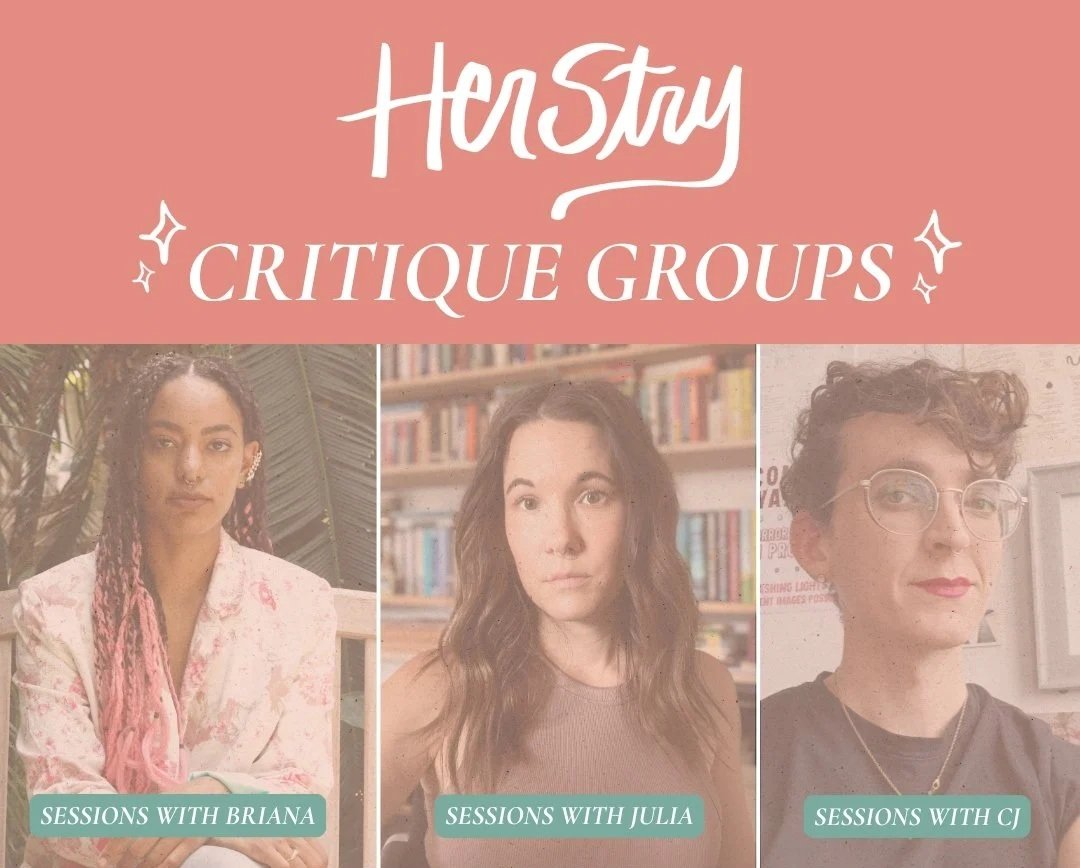
IT’S NO SECRET THAT FEEDBACK IS AN IMPORTANT PART OF THE WRITING PROCESS.
In fact, we argue that it might be the most important part of the process.
But it’s hard to find a writing community. It’s hard to find the people who are willing to take the time and the effort to read your work and give the feedback you really, truly deserves.
That’s where HerStry Critique Groups come in!
HerStry Critique Groups are small groups of 6 women who gather online for 6 weeks to share their writing, give constructive feedback and gain skills as writers.
Weekly online sessions last approximately ninety minutes, with three women sharing their work each week. Writers of all genres and levels are welcome and you may share both works of fiction and nonfiction.
Sessions take place on Mondays 7PM CT, Tuesdays 11AM CT, Fridays 11AM CT
WHAT’S INCLUDED IN THE HERSTRY CRITIQUE GROUPS?
Six 90 minute live workshop sessions
Three 20 minutes sessions in the “hot seat” to get you work critiqued
Written and verbal feedback from your fellow workshop participants
A weekly in depth edit and critique of your work from the group leader after each session
Weekly writing goals and accountability check ins
Full video recordings of each session to keep for your records
Say goodbye to the lonely, stuck in your head writing life!
LET’S WRITE!
From conception to submission. Let’s make summer sizzle with stories.
Writing a short story doesn’t happen in one session. It takes multiple drafts to get it exactly right, to create characters that come to life for the reader and a world they can’t stop thinking about. In this seven week course we will work on a single short story from conception to submission ready. The seven week session will include generative brainstorming sessions, short story craft talks, multiple workshops for feedback from fellow writers, and detailed line by line feedback and edits from your instructor. Plus, we’ll talk about submission venues, cover letters, and when to know if your story is ‘finished.’
IT’S NO SECRET THAT FEEDBACK IS AN IMPORTANT PART OF THE WRITING PROCESS.
In fact, we argue that it might be the most important part of the process.
But it’s hard to find a writing community. It’s hard to find the people who are willing to take the time and the effort to read your work and give the feedback you really, truly deserves.
That’s where HerStry Critique Groups come in!
HerStry Critique Groups are small groups of 6 women who gather online for 6 weeks to share their writing, give constructive feedback and gain skills as writers.
Weekly online sessions last approximately ninety minutes, with three women sharing their work each week. Writers of all genres and levels are welcome and you may share both works of fiction and nonfiction.
Sessions take place on Mondays 7PM CT, Tuesdays 11AM CT, Fridays 11AM CT
WHAT’S INCLUDED IN THE HERSTRY CRITIQUE GROUPS?
Six 90 minute live workshop sessions
Three 20 minutes sessions in the “hot seat” to get you work critiqued
Written and verbal feedback from your fellow workshop participants
A weekly in depth edit and critique of your work from the group leader after each session
Weekly writing goals and accountability check ins
Full video recordings of each session to keep for your records
Say goodbye to the lonely, stuck in your head writing life!
October 7, 14, 21, 28, November 4 and 18 CT
There is no class on November 11.
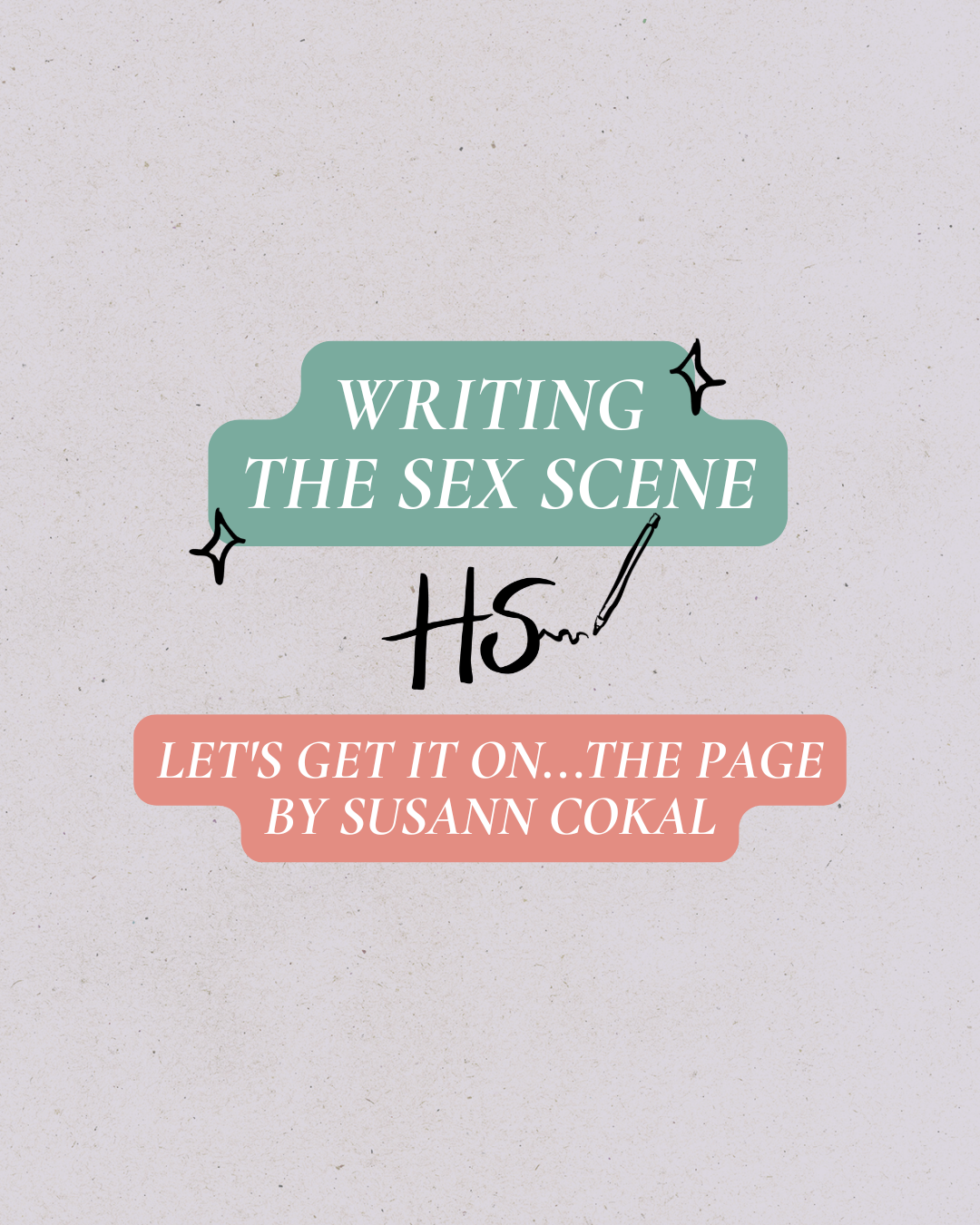
WRITING THE SEX SCENE.
Writing a sex scene can be delirious fun, a harrowing challenge, a literary milestone—possibly the most important part of building your short story or book. In our six weeks together, you’ll experience just about every possible emotion as you explore the erotic in different modes: comic, tender, harrowing, soul-shattering … because it really is all about the characters’ feelings, not just the mechanics. So we’ll talk about tone. Vocabulary. Metaphor. Sensory detail. How to get big emotions on the page … and when to pull back and let the reader’s imagination go to work.
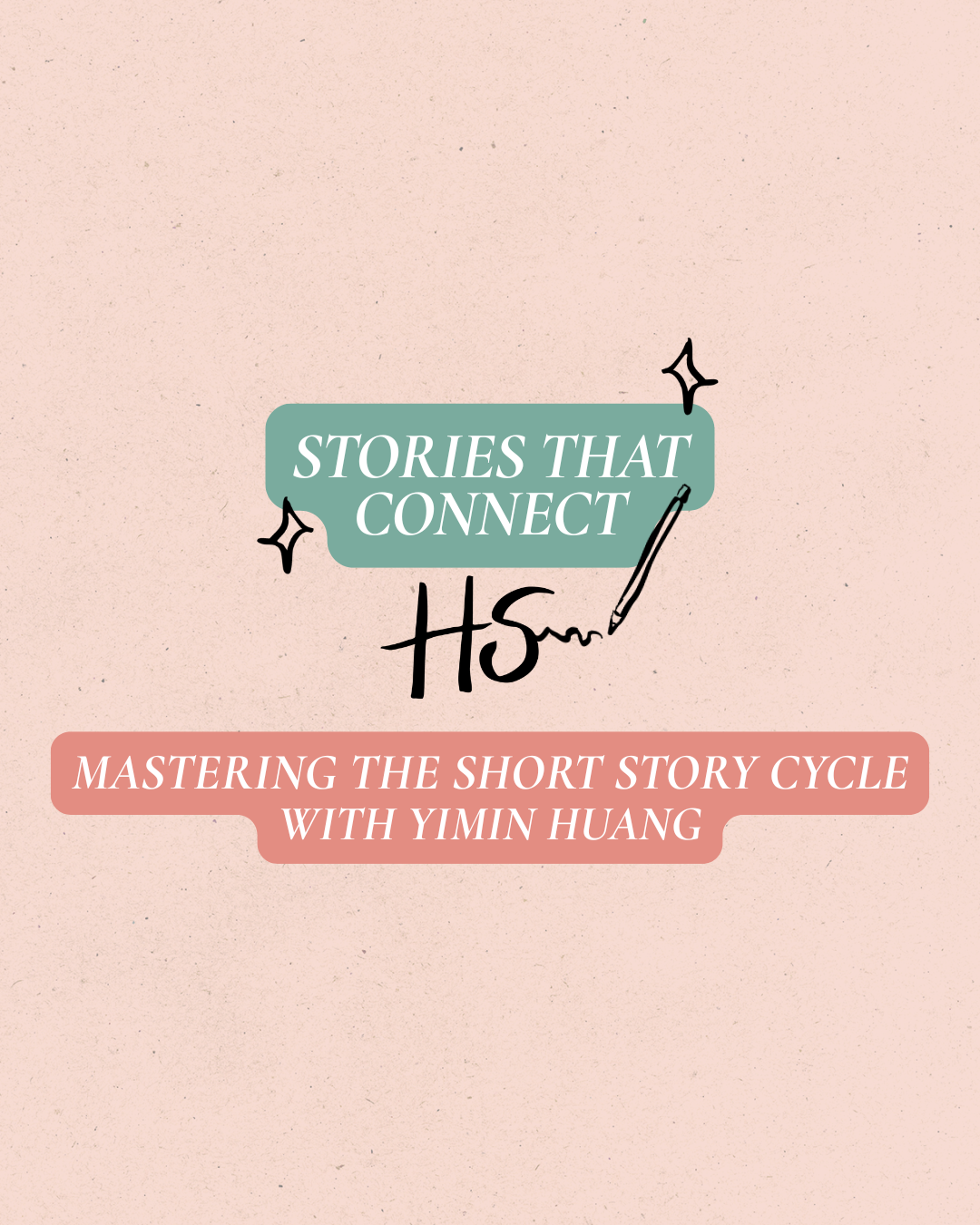
This is a course for writers who want to explore the intersection between the novel and short stories, and would like to weave their short stories into a story cycle (or collection of "linked stories" or "composite novel"). This is also a class about the interaction of form and content, and how one influences the other. We will read works of interlinked stories by writers from diverse cultural and ethnic backgrounds, focusing on modern classics and contemporary practitioners of these hybrid forms. Weekly discussions will center on elements of craft, such as the expansion and compression of time, setting as an organizing and connecting principle, character development within and between stories, structure and plot for interconnected stories, and responding to literary influences in the same genre.
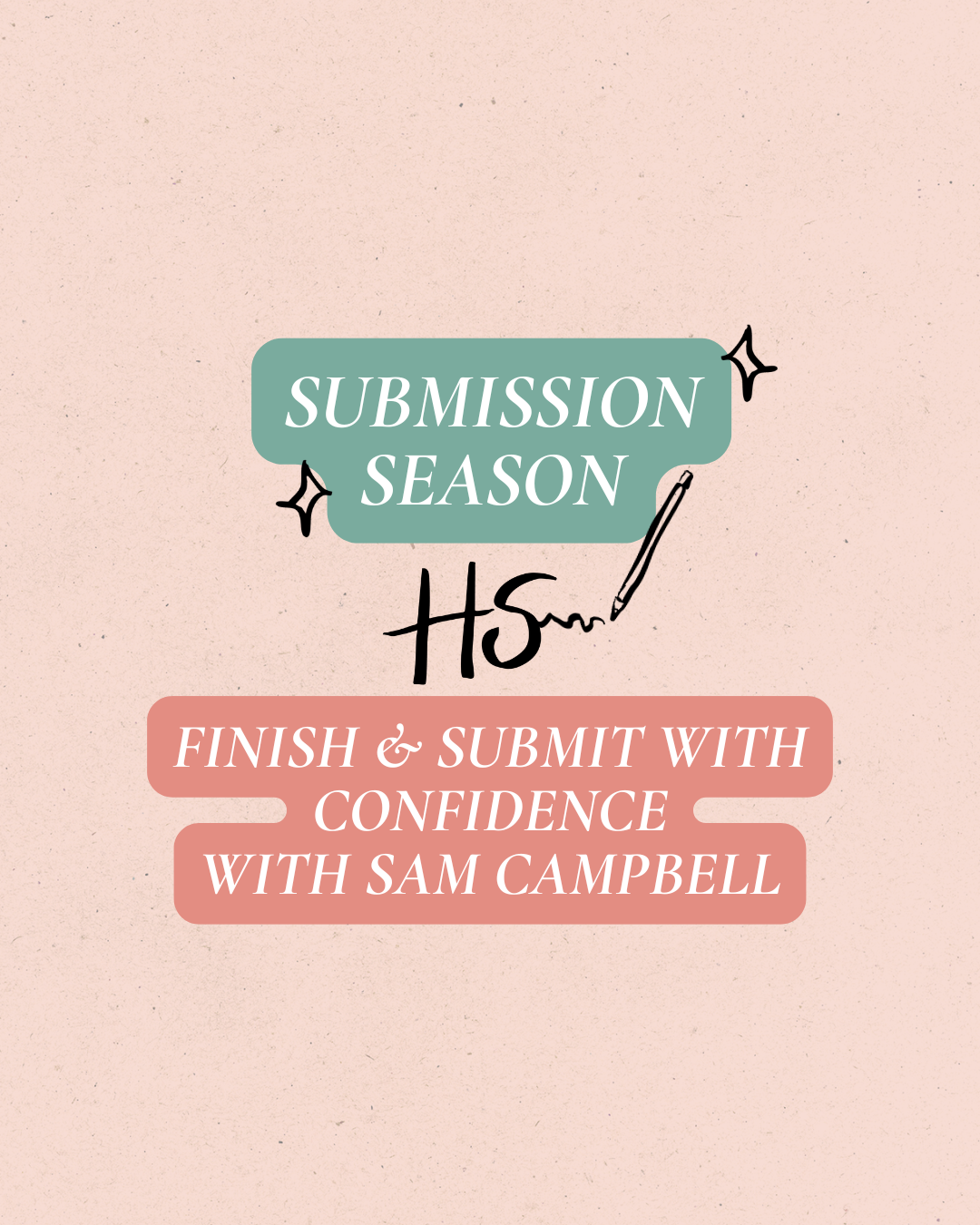
This six-week course guides writers through the literary submission process, offering insider insight and practical tools to help you get your work into the world. We’ll demystify everything from reading submission calls to writing cover letters and choosing the right journals. Along the way, we’ll workshop short bios, develop submission trackers, and build personalized plans that align with your voice and goals.
By the end of the course, you’ll walk away with a polished piece ready to send, a tailored submission list, and the confidence to navigate the lit mag world with clarity and purpose.
Ideal for writers of literary fiction, poetry, personal essay, memoir, and hybrid forms.

Jackie Cheuvront is an illustrator and writer in the Nashville, TN area. You can find her charting stars in her backyard, hiking in local parks, or rocking out at a concert. Follow Jackie on Instagram @jackiecheuvront.
At the age of fifteen, during the second semester of my sophomore year in high school, I cut off my hair—as close as I could to the roots—and started wearing my brother’s clothes. I wasn’t trying to be a boy; I was trying to un-girl myself.