
Transition
It’s that same feeling. When you’re a few weeks newly pregnant and no one knows but you. The grocery store aisles are spent dreaming of new life with a baby while you scooch past the crowding carts whose temporary owners probably have their own secret story happening.
This time, I’m just in transition. Out of an occupation I’ve held for over six years, turning my side hustle into a full time gig. Being in one place for too long has never been my thing, except for this time. Sixish years of rooting down. In this job I’ve had a surprise miscarriage, gotten married, bought a house, birthed a rainbow baby and morphed into mother. The little pockets of time in between those great big things have been successfully spent discovering what in the hell I want to actually do with my life.
Is it metamorphosis? Going from immature being to adult being. From caterpillar to butterfly, tadpole to frog. Has it been occurring without me knowing over these last years of building the foundation? This place has built my cornerstones; giving four posts to my small square house. These metaphorical feelings are what transition has always felt like to me. It’s a long, strange trip as an intrical thinker and connector of dots.
Sometimes it feels lonely, doesn’t it, to be the main character of a book that is ending to begin another? It seems colossal only to us and so we think ‘they just don’t get it’. You explain it to your most important and supportive friends and they are so good at giving you the words you’re looking for. Making you feel loved and validated in all of your choices. But somehow it still doesn’t seem like enough. You still travel through the thoughts alone, wondering if you’ve made the right choice and at the same time being hazed with excitement. What an odd place to be.

LOVE
noun | \ lev : an intense feeling of deep affection; a great interest and pleasure in something.
LUST
noun | \ lest : very strong sexual desire.
She opens the cupboard above the sink and stretches her body as far as it can go. The glasses and bowls have moved closer to the edge of the shelves since I was here last.
This is about my mama because I’m too stubborn, too proud, too self-conscious to tell these things to her in person. I’ll backpack around with luggage until I gain enough substance to face it head-on. For now, I’m simply going to make excuses and say that I’m too green to face this— pride(?) Perhaps sheepish-ness is a more suited term. English doesn’t wield such a single term that encases this feeling to its extent.

Just after the pandemic, I went to New York City with my aunt Mimi. We had planned the trip as a way for me to learn everything I could about my mother, who died thirty-five years ago from an aggressive form of breast cancer. It was the hottest day on record for the month of May and we sat in an air-conditioned restaurant in Greenwich Village.
Mimi listed things my mother loved: dancing, parties, fashion, Bailey’s Irish Cream.

I should have heard the warning growl before pulling open the dresser drawer in the garage. It had been twenty years since my husband and I had done any cleaning out here beyond superficial tidying. We’d plunked down his scratched childhood dresser in the garage when we first bought the house. Since there wasn’t enough room for the old dresser inside our new home, it never traveled any farther. The top of the dresser became a landing station for stray gardening tools, rafts of paper towels, and a box of Hannukah decorations.

Before she died, Nancy compiled a list of appropriate women she thought could be a good partner for me, which I told her was ridiculous. I was doing everything I could to keep her alive, nor did I like the women she had chosen for me. I had loved her for twenty-seven years. She would never be replaceable. My everything wasn’t enough; all I had of Nancy were her ashes. At sixty-one, I had vaulted into old age overnight, with grey roots grown inches during Nancy’s last months of hospice. I was the solo parent of two grieving teenage daughters, one who was depressed, the other defiant. My eros was exhausted, maybe dead even. But Nancy was not five months into her grave when I hooked up with Tami.
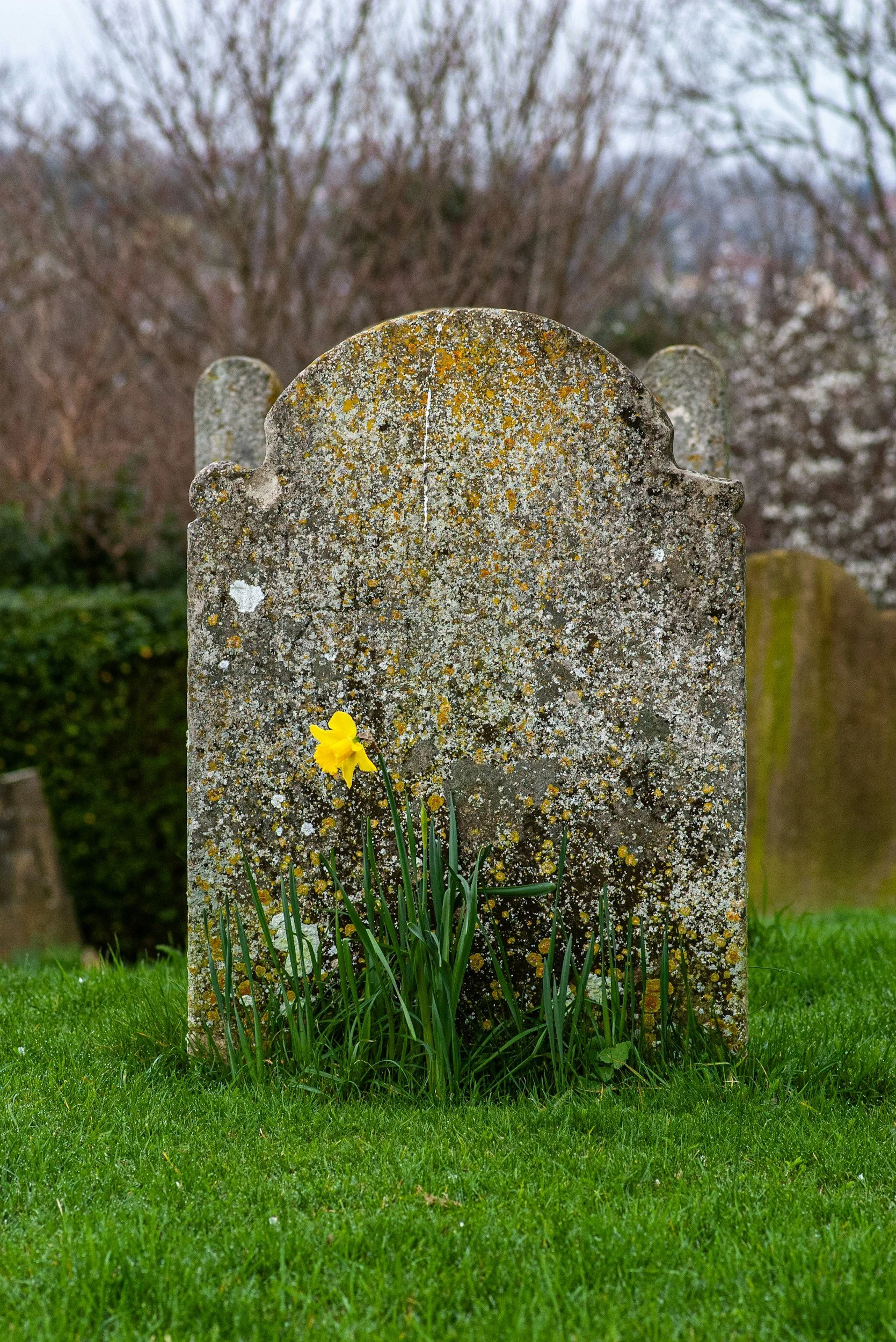
On Sundays, I take my grandmother to the cemetery to visit her mother. With her is a straw broom, small enough to carry in a reusable bag. When I was young, I would pull from that broom, break its straw to pieces, and throw them, watching as they spun to the ground like helicopter seeds. Now, in my grandmother’s hands, the broom brushes away dirt and moss and leaves from a headstone that shares my name.

I locked myself in the bathroom. Even though I made myself untouchable, unreachable, all I wanted was to be saved. As I laid down on the tiles, facing up towards the dangling florescent light, I craved death. I don’t mean absence of living—quite the opposite actually. What I really wanted was death to what was inside of me, to the illness that spread from my brain into my entire body, the illness at the core of all the pain and torture I put upon myself. I craved death because I wanted a life, a different life.

The night before my mother’s funeral, I assured my niece I wouldn’t cry. “I’ve shed all my tears,” I told her. “I’ve practiced what I’m going to say until I’m dry.” She nodded, clearly skeptical.
You’re really convincing yourself—praying, meditating, reading inspirational boss babe material and requesting reassurance from your people—that you’re making the right move. Every little thing that occurs throughout the day can be a reminder that you are ready, or be a small scare that you aren’t. It’s happening nonetheless because you already put in your notice.
The hard conversations have been had. That particular weight of not feeling like you’re lying anymore has been lifted. Knowing there is an end in sight to what has been a lovely time but has needed to conclude—that feeling is unmatched.
If I can triumph over these episodes of doubt with my bag of coping skills in tow, the transition can feel like a crisp deep breath. In through the nose, expanding the ribs, filling up the stomach and out through the mouth. Traveling into the unknown with confidence that if I just keep moving, the next big thing is going to fall in line. It may yield an unexpected crop but it will be new. New things bring an airy light to the heart, pep in the step, a sigh of relief at the sight and thought of them.
This is what I know from experience. Seems like this has been the longest time I’ve gone without being in transition. The conclusion to this book is being written right now. Not just ‘see you later,’ but actually goodbye. It’s time to move on and to you, steady job that has paid the bills and given me a community that I so cherish with every inch of my being, it’s time for you to go. You’ve been so damn good to me.
-Riah Durick
This product gives you access to all four weeks of the workshop. Purchase one or more drop-in sessions here.
Build a habit in 20 sessions. In this 4 week workshop that meets Mondays through Fridays from 8:00-9:00 AM CST, we will focus on generating new writing—making headway on a current project, reviving an old project that’s been gathering dust, or writing based off of the daily prompts Leigh provides.
The first 45 minutes of class are a gentle, camera-off, silent writing session. The remaining 15 minutes are an opportunity to share excerpts of our work, reflect on progress made, and set intentions for the following day. Then we will read a passage together on the writing life and close each class with a new learning about habit formation. By the end of this course we’ll have a morning writing habit that is each our own to continue and build upon.
This listing is for an individual class. To purchase access for the full 4-week workshop, click here.
Build a habit in 20 sessions. In this 4 week workshop that meets Mondays through Fridays from 8:00-9:00 AM CST, we will focus on generating new writing—making headway on a current project, reviving an old project that’s been gathering dust, or writing based off of the daily prompts Leigh provides.
The first 45 minutes of class is a gentle, camera-off, silent writing session. The remaining 15 minutes are an opportunity to share excerpts of our work, reflect on progress made, and set intentions for the following day. Then we will read a passage together on the writing life and close each class with a new learning about habit formation. By the end of this course we’ll have a morning writing habit that is each our own to continue and build upon.
Many writers feel drawn to write about their lives but struggle with uncertainty: Why this story? Why now? And who is it really for? This workshop is designed to help writers move beyond doubt and toward clarity by focusing on the deeper meaning and purpose beneath their story.
In this interactive, craft-forward session, participants will be introduced to the Memoir Compass, a practical framework that helps writers articulate their motivation (why they are writing), mission (who the story serves), and message (what meaning or insight the story carries). Through guided reflection and writing exercises, participants will begin shaping a personal narrative rooted in intention rather than overwhelm.
This workshop is ideal for writers interested in memoir or personal narrative, as well as fiction writers drawing from lived experience, who want to move forward with greater confidence, focus, and direction.
Some of the most compelling creative nonfiction begins with the feelings we are tempted to avoid: anger, resentment, shame, fear, or the sense that we have an axe to grind. In this six-week workshop, writers will explore how to follow that emotional heat toward deeper, more honest work—without sacrificing compassion, complexity, or craft. Through close readings, writing exercises, discussion, and constructive feedback, we’ll consider how to transform strong feelings into writing that reaches beyond catharsis and connects with readers.
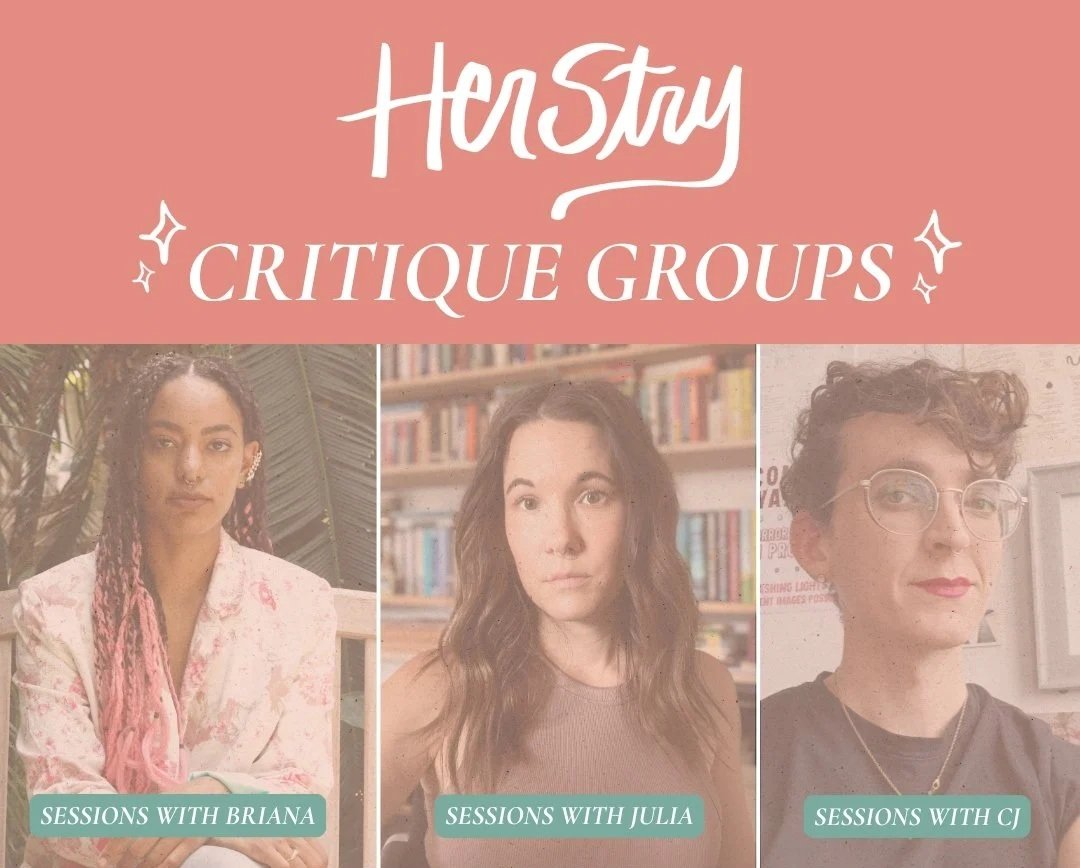
IT’S NO SECRET THAT FEEDBACK IS AN IMPORTANT PART OF THE WRITING PROCESS.
In fact, we argue that it might be the most important part of the process.
But it’s hard to find a writing community. It’s hard to find the people who are willing to take the time and the effort to read your work and give the feedback you really, truly deserves.
That’s where HerStry Critique Groups come in!
HerStry Critique Groups are small groups of 6 women who gather online for 6 weeks to share their writing, give constructive feedback and gain skills as writers.
Weekly online sessions last approximately ninety minutes, with three women sharing their work each week. Writers of all genres and levels are welcome and you may share both works of fiction and nonfiction.
Sessions take place on Mondays 7PM CT, Tuesdays 11AM CT, Fridays 11AM CT
WHAT’S INCLUDED IN THE HERSTRY CRITIQUE GROUPS?
Six 90 minute live workshop sessions
Three 20 minutes sessions in the “hot seat” to get you work critiqued
Written and verbal feedback from your fellow workshop participants
A weekly in depth edit and critique of your work from the group leader after each session
Weekly writing goals and accountability check ins
Full video recordings of each session to keep for your records
Say goodbye to the lonely, stuck in your head writing life!

LET’S WRITE!
From conception to submission. Let’s make summer sizzle with stories.
Writing a short story doesn’t happen in one session. It takes multiple drafts to get it exactly right, to create characters that come to life for the reader and a world they can’t stop thinking about. In this seven week course we will work on a single short story from conception to submission ready. The seven week session will include generative brainstorming sessions, short story craft talks, multiple workshops for feedback from fellow writers, and detailed line by line feedback and edits from your instructor. Plus, we’ll talk about submission venues, cover letters, and when to know if your story is ‘finished.’
IT’S NO SECRET THAT FEEDBACK IS AN IMPORTANT PART OF THE WRITING PROCESS.
In fact, we argue that it might be the most important part of the process.
But it’s hard to find a writing community. It’s hard to find the people who are willing to take the time and the effort to read your work and give the feedback you really, truly deserves.
That’s where HerStry Critique Groups come in!
HerStry Critique Groups are small groups of 6 women who gather online for 6 weeks to share their writing, give constructive feedback and gain skills as writers.
Weekly online sessions last approximately ninety minutes, with three women sharing their work each week. Writers of all genres and levels are welcome and you may share both works of fiction and nonfiction.
Sessions take place on Mondays 7PM CT, Tuesdays 11AM CT, Fridays 11AM CT
WHAT’S INCLUDED IN THE HERSTRY CRITIQUE GROUPS?
Six 90 minute live workshop sessions
Three 20 minutes sessions in the “hot seat” to get you work critiqued
Written and verbal feedback from your fellow workshop participants
A weekly in depth edit and critique of your work from the group leader after each session
Weekly writing goals and accountability check ins
Full video recordings of each session to keep for your records
Say goodbye to the lonely, stuck in your head writing life!
October 7, 14, 21, 28, November 4 and 18 CT
There is no class on November 11.
WRITING THE SEX SCENE.
Writing a sex scene can be delirious fun, a harrowing challenge, a literary milestone—possibly the most important part of building your short story or book. In our six weeks together, you’ll experience just about every possible emotion as you explore the erotic in different modes: comic, tender, harrowing, soul-shattering … because it really is all about the characters’ feelings, not just the mechanics. So we’ll talk about tone. Vocabulary. Metaphor. Sensory detail. How to get big emotions on the page … and when to pull back and let the reader’s imagination go to work.
This is a course for writers who want to explore the intersection between the novel and short stories, and would like to weave their short stories into a story cycle (or collection of "linked stories" or "composite novel"). This is also a class about the interaction of form and content, and how one influences the other. We will read works of interlinked stories by writers from diverse cultural and ethnic backgrounds, focusing on modern classics and contemporary practitioners of these hybrid forms. Weekly discussions will center on elements of craft, such as the expansion and compression of time, setting as an organizing and connecting principle, character development within and between stories, structure and plot for interconnected stories, and responding to literary influences in the same genre.
This six-week course guides writers through the literary submission process, offering insider insight and practical tools to help you get your work into the world. We’ll demystify everything from reading submission calls to writing cover letters and choosing the right journals. Along the way, we’ll workshop short bios, develop submission trackers, and build personalized plans that align with your voice and goals.
By the end of the course, you’ll walk away with a polished piece ready to send, a tailored submission list, and the confidence to navigate the lit mag world with clarity and purpose.
Ideal for writers of literary fiction, poetry, personal essay, memoir, and hybrid forms.

Riah is wife, mother, friend, daughter, childbirth doula and creative. Kentucky has been her home for nearly 33 years. She loves being a mother, supporting mothers, cooking slowly with a glass of wine, laughing around a dinner table, paying attention to detail, and being curious about the intricacies of life’s true purpose. This bio was hard to write because she feels weird talking about herself.

December 22nd
One day after winter solstice
Five hours, forty-four minutes and twenty-seven seconds of daylight
Sunrise: 10:13 a.m.
Sunset: 3:41 p.m.