
My Sister
My sister is in and of and around me always.
My sister, who had more soul and love and passion than anyone else I know.
My sister, who visits me in quiet moments, floating into the space behind my closed eyes.
I see her still, the sister I lost two years ago. The sister who came to Australia with long, dark, curly hair and the look of a mischievous Jesus. The sister who fought her cancer so hard, so bravely, even as her hair fell and her skin grew pallid.
In the 10 days before she died, my big, noisy sister grew malleable and silent.
We turned her each day, my brother and I. My sister’s hollowed out shoulders made me weep because they had once been so full of muscle and power.
I had promised myself I would not get maudlin in those last days of my sister’s life. She would not have wanted that. Instead, I put on my best bossy big sister voice and urged her to drink her bloody Gaviscon and to keep bloody coughing up the phlegm that threatened to suffocate her.
And when her chest became wet and murky I slept next to her, watching that chest go up and down, up and down. And even after the medication cleared up her breathing, I slept nearby. I just needed to be close.

"Don't you think it's kinda weird, not showing your face for like, 229 months?" Bunnie, an anthropomorphic rabbit, lightly chided me. She wasn't wrong. I hadn’t booted up Nintendo’s original Animal Crossing game in nearly twenty years.
There is a feeling I get when I travel alone. The moment I get to my destination—a hotel or Airbnb—when I walk in the room, roll my suitcase into a corner, and close the door, it hits me. I am hopeful on every trip that I won’t feel it this time, but I always do. My chest and stomach get tight. I can’t catch a full breath. There is a sense of dread and impending doom. And emptiness so loud one might think it is the thing I’ve come to visit. As if it lives right there in that room and has been waiting for me since the last time we saw each other.

I should have heard the warning growl before pulling open the dresser drawer in the garage. It had been twenty years since my husband and I had done any cleaning out here beyond superficial tidying. We’d plunked down his scratched childhood dresser in the garage when we first bought the house. Since there wasn’t enough room for the old dresser inside our new home, it never traveled any farther. The top of the dresser became a landing station for stray gardening tools, rafts of paper towels, and a box of Hannukah decorations.

I lost my mother on Christmas Eve. Colored lights twinkled up and down the block as I arrived but her window was dark. A pile of mail in the hall. Television on, cold coffee in her mug. The radiator banging away. The tree was half trimmed and the cats were prowling around the apartment crying, unfed. Overflowing ashtray. Cat
toys and dust balls, empty bottles of bourbon.

You stand with your husband on the balcony of a hotel room in Ao Nang, Thailand. Together, you watch the sky turn from pre-dawn pink to blue. It rained during the night and the air smells like damp teakwood and salt. Your hotel sits at the edge of town on top of a steep hill. As the sun rises, you contemplate the serenity of the Indian Ocean—a sea without waves.

It was time for our one rehearsal, the day of my daughter’s wedding. A group of family and friends who had been practicing alone now gathered, anticipating the thrill of voices blending and harmonizing, woven together by the glistening thread that is my daughter’s life force. In the run-up to this event, all said, “Yes, we will sing…We are honored to sing…We are thrilled to be part of this special surprise,” a touching tribute to a father long dead. All coming together from different places, different times, different experiences, to fuse in song.
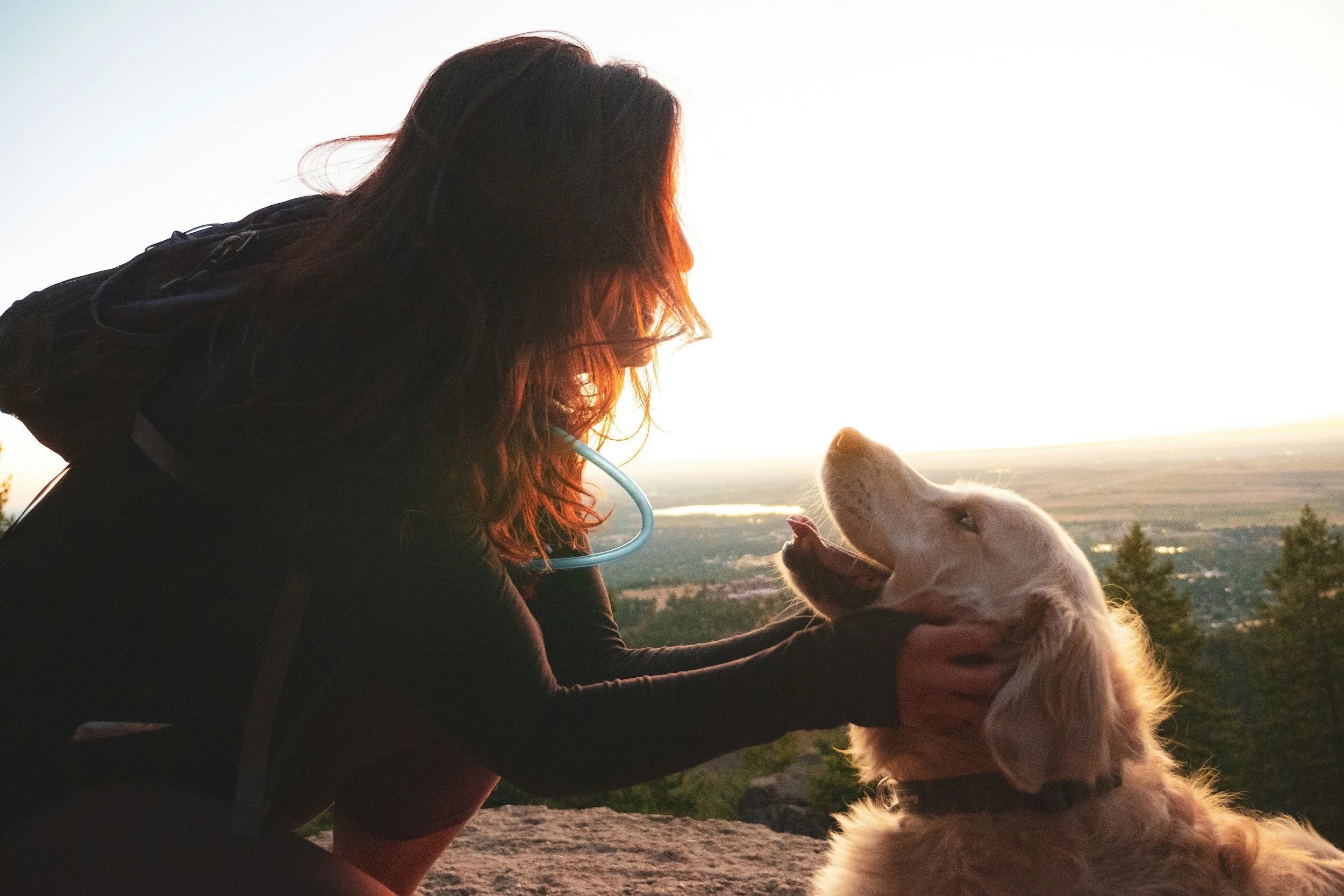
The dog is different now. He has developed a subtle yet more articulate language of long gazes and soft moans. Maybe not just expressions of pain but also the frustrating inability to fully express himself. These are of course, just my interpretations and perhaps too self-reflective. “What is it, buddy?” I ask him, “What is it?” It’s cancer and it is, as they say, aggressive.

Cold. Alone. Dead. These were the few words that registered among the many spoken to me on that horrific afternoon when they came to tell me my son was gone. Fentanyl was added to the mix over the coming hours.
“Who? What? How?” repeated over and over again was all I could muster in response.
“We don’t know,” was their answer.
My living, breathing nightmare had only just begun.

On Monday, August 20th, 2012 at 11:54 p.m., a piece of rail snapped beneath an eighty-car train carrying 9,837 tons of coal as it passed over a bridge above Main Street in Ellicott City, Maryland.
Just a moment before the accident, Elizabeth Nass and Rose Mayr, two nineteen-year-old friends spending one last night of summer together before heading back to college, sat on that same bridge, dangling their legs over the edge.
Just a moment after, the train cars tipped over on their bodies, crushing them beneath piles of coal.
I prayed that she would stop eating because then she would stop shitting and we could stop torturing her poor, tired body as we slid the toileting sling beneath her. When we lowered her down onto the commode, my sister screamed and swore and bit any hand that came too close. Her agony made me sad but the biting made me laugh. It was so her.
And then the last day, when I offered my sister food and she said yes, but only to please me. One minuscule square of buttered toast, two sips of tea, some of which found her soft neck, and that was it for food. That worried me more than anything else. My sister had once been such a glutton.

Her last precious hours stretched on forever, as the day grew warm and found its momentum. The sound of the fan. The cool of the concrete floor. The flowers on the curtains. Dogs asleep. Wildflowers in a glass. Mortein in a red can. The gentle hum of the bed inflator to stop blood clots forming in her swollen legs. The leaves rustling in the breeze. And there I sat, keeping watch over my sister as she slept her way towards forever.
I didn’t know what to do. I was like a balloon with no air left in it. I was anxious and fearful of what lay ahead. I just wanted to sit there, near my sister, allowing her body to do whatever it must. Because despite it all, despite being prepared, I found I was not yet ready for a world without her in it.
In my sister’s final quiet hour, there was no longer any need to move or feed or disturb her. I put her favourite song on the record player and wept silently at her bedside. I played guitar, sang her soft versions of other songs she loved, and – as if the music was a rope and she, momentarily, could climb up it, she joined in, eyes closed but in there still.
And then, when everything was silent and I thought there would be no more, my sister looked up at me with those limpid eyes, took my hand and smiled a little, just a little, then closed her eyes forever. I saw it. I saw the light flicker and fade.
I taste her still. The scent of patchouli. The twang of body shop White Musk perfume. The immense thereness of her. My sister.
-Jane Cornes
This product gives you access to all four weeks of the workshop. Purchase one or more drop-in sessions here.
Build a habit in 20 sessions. In this 4 week workshop that meets Mondays through Fridays from 8:00-9:00 AM CST, we will focus on generating new writing—making headway on a current project, reviving an old project that’s been gathering dust, or writing based off of the daily prompts Leigh provides.
The first 45 minutes of class are a gentle, camera-off, silent writing session. The remaining 15 minutes are an opportunity to share excerpts of our work, reflect on progress made, and set intentions for the following day. Then we will read a passage together on the writing life and close each class with a new learning about habit formation. By the end of this course we’ll have a morning writing habit that is each our own to continue and build upon.
This listing is for an individual class. To purchase access for the full 4-week workshop, click here.
Build a habit in 20 sessions. In this 4 week workshop that meets Mondays through Fridays from 8:00-9:00 AM CST, we will focus on generating new writing—making headway on a current project, reviving an old project that’s been gathering dust, or writing based off of the daily prompts Leigh provides.
The first 45 minutes of class is a gentle, camera-off, silent writing session. The remaining 15 minutes are an opportunity to share excerpts of our work, reflect on progress made, and set intentions for the following day. Then we will read a passage together on the writing life and close each class with a new learning about habit formation. By the end of this course we’ll have a morning writing habit that is each our own to continue and build upon.
Many writers feel drawn to write about their lives but struggle with uncertainty: Why this story? Why now? And who is it really for? This workshop is designed to help writers move beyond doubt and toward clarity by focusing on the deeper meaning and purpose beneath their story.
In this interactive, craft-forward session, participants will be introduced to the Memoir Compass, a practical framework that helps writers articulate their motivation (why they are writing), mission (who the story serves), and message (what meaning or insight the story carries). Through guided reflection and writing exercises, participants will begin shaping a personal narrative rooted in intention rather than overwhelm.
This workshop is ideal for writers interested in memoir or personal narrative, as well as fiction writers drawing from lived experience, who want to move forward with greater confidence, focus, and direction.
Some of the most compelling creative nonfiction begins with the feelings we are tempted to avoid: anger, resentment, shame, fear, or the sense that we have an axe to grind. In this six-week workshop, writers will explore how to follow that emotional heat toward deeper, more honest work—without sacrificing compassion, complexity, or craft. Through close readings, writing exercises, discussion, and constructive feedback, we’ll consider how to transform strong feelings into writing that reaches beyond catharsis and connects with readers.

IT’S NO SECRET THAT FEEDBACK IS AN IMPORTANT PART OF THE WRITING PROCESS.
In fact, we argue that it might be the most important part of the process.
But it’s hard to find a writing community. It’s hard to find the people who are willing to take the time and the effort to read your work and give the feedback you really, truly deserves.
That’s where HerStry Critique Groups come in!
HerStry Critique Groups are small groups of 6 women who gather online for 6 weeks to share their writing, give constructive feedback and gain skills as writers.
Weekly online sessions last approximately ninety minutes, with three women sharing their work each week. Writers of all genres and levels are welcome and you may share both works of fiction and nonfiction.
Sessions take place on Mondays 7PM CT, Tuesdays 11AM CT, Fridays 11AM CT
WHAT’S INCLUDED IN THE HERSTRY CRITIQUE GROUPS?
Six 90 minute live workshop sessions
Three 20 minutes sessions in the “hot seat” to get you work critiqued
Written and verbal feedback from your fellow workshop participants
A weekly in depth edit and critique of your work from the group leader after each session
Weekly writing goals and accountability check ins
Full video recordings of each session to keep for your records
Say goodbye to the lonely, stuck in your head writing life!

LET’S WRITE!
From conception to submission. Let’s make summer sizzle with stories.
Writing a short story doesn’t happen in one session. It takes multiple drafts to get it exactly right, to create characters that come to life for the reader and a world they can’t stop thinking about. In this seven week course we will work on a single short story from conception to submission ready. The seven week session will include generative brainstorming sessions, short story craft talks, multiple workshops for feedback from fellow writers, and detailed line by line feedback and edits from your instructor. Plus, we’ll talk about submission venues, cover letters, and when to know if your story is ‘finished.’
IT’S NO SECRET THAT FEEDBACK IS AN IMPORTANT PART OF THE WRITING PROCESS.
In fact, we argue that it might be the most important part of the process.
But it’s hard to find a writing community. It’s hard to find the people who are willing to take the time and the effort to read your work and give the feedback you really, truly deserves.
That’s where HerStry Critique Groups come in!
HerStry Critique Groups are small groups of 6 women who gather online for 6 weeks to share their writing, give constructive feedback and gain skills as writers.
Weekly online sessions last approximately ninety minutes, with three women sharing their work each week. Writers of all genres and levels are welcome and you may share both works of fiction and nonfiction.
Sessions take place on Mondays 7PM CT, Tuesdays 11AM CT, Fridays 11AM CT
WHAT’S INCLUDED IN THE HERSTRY CRITIQUE GROUPS?
Six 90 minute live workshop sessions
Three 20 minutes sessions in the “hot seat” to get you work critiqued
Written and verbal feedback from your fellow workshop participants
A weekly in depth edit and critique of your work from the group leader after each session
Weekly writing goals and accountability check ins
Full video recordings of each session to keep for your records
Say goodbye to the lonely, stuck in your head writing life!
October 7, 14, 21, 28, November 4 and 18 CT
There is no class on November 11.
WRITING THE SEX SCENE.
Writing a sex scene can be delirious fun, a harrowing challenge, a literary milestone—possibly the most important part of building your short story or book. In our six weeks together, you’ll experience just about every possible emotion as you explore the erotic in different modes: comic, tender, harrowing, soul-shattering … because it really is all about the characters’ feelings, not just the mechanics. So we’ll talk about tone. Vocabulary. Metaphor. Sensory detail. How to get big emotions on the page … and when to pull back and let the reader’s imagination go to work.
This is a course for writers who want to explore the intersection between the novel and short stories, and would like to weave their short stories into a story cycle (or collection of "linked stories" or "composite novel"). This is also a class about the interaction of form and content, and how one influences the other. We will read works of interlinked stories by writers from diverse cultural and ethnic backgrounds, focusing on modern classics and contemporary practitioners of these hybrid forms. Weekly discussions will center on elements of craft, such as the expansion and compression of time, setting as an organizing and connecting principle, character development within and between stories, structure and plot for interconnected stories, and responding to literary influences in the same genre.
This six-week course guides writers through the literary submission process, offering insider insight and practical tools to help you get your work into the world. We’ll demystify everything from reading submission calls to writing cover letters and choosing the right journals. Along the way, we’ll workshop short bios, develop submission trackers, and build personalized plans that align with your voice and goals.
By the end of the course, you’ll walk away with a polished piece ready to send, a tailored submission list, and the confidence to navigate the lit mag world with clarity and purpose.
Ideal for writers of literary fiction, poetry, personal essay, memoir, and hybrid forms.
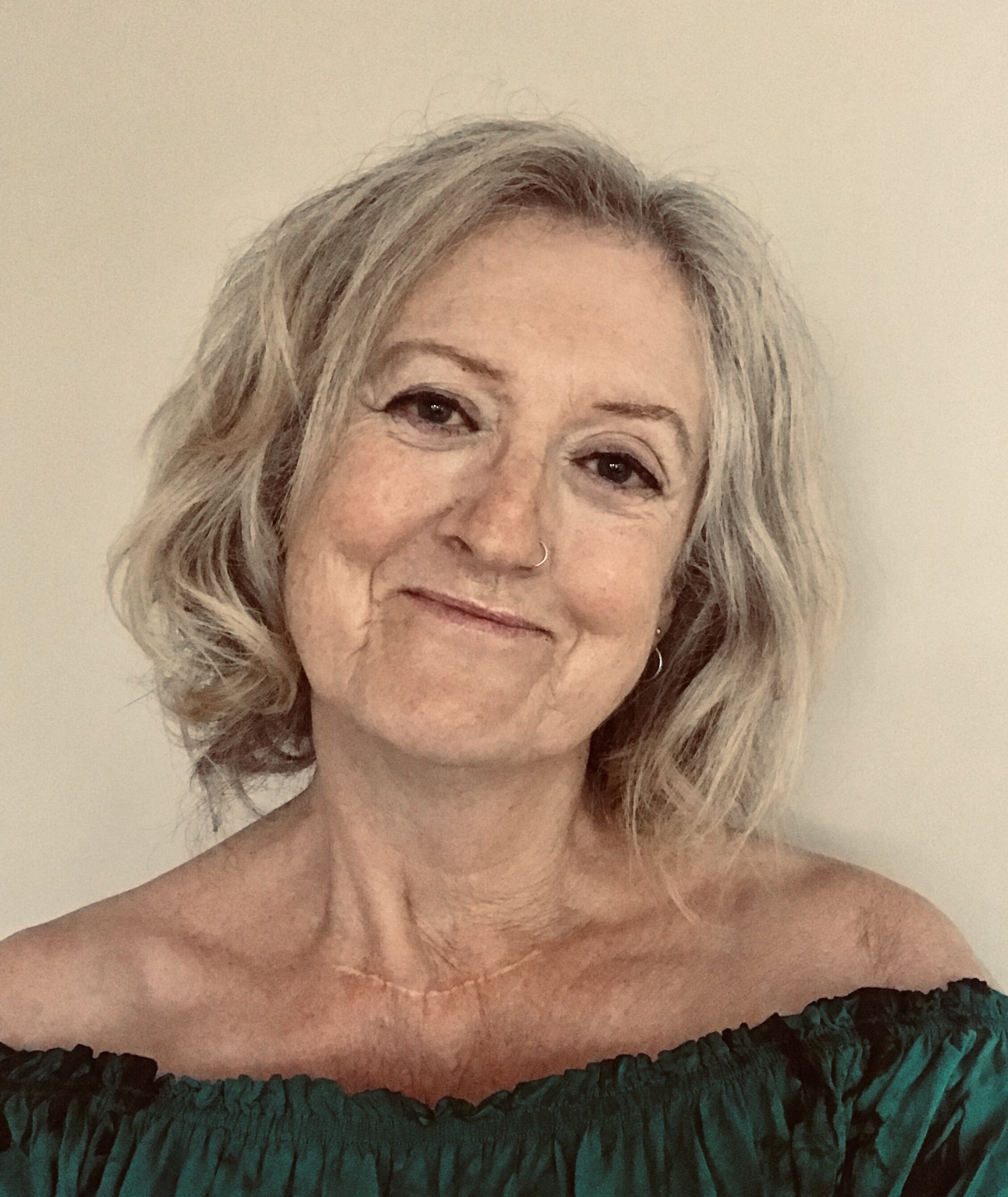
Jane has edited numerous non-fiction titles and contributed feature articles to a wide variety of magazines and newspapers. In 2020, Jane wrote, photographed and designed her first book of recipes and stories, Lazy Fare. In 2021, the book won a special category award at the Gourmand International book awards. In 2020, Jane was named winner of the prestigious AAWP best short story competition.

December 22nd
One day after winter solstice
Five hours, forty-four minutes and twenty-seven seconds of daylight
Sunrise: 10:13 a.m.
Sunset: 3:41 p.m.