
"Don't you think it's kinda weird, not showing your face for like, 229 months?" Bunnie, an anthropomorphic rabbit, lightly chided me. She wasn't wrong. I hadn’t booted up Nintendo’s original Animal Crossing game in nearly twenty years.
Nostalgia and a quiet desire to sink into a familiar, virtual world had drawn me to dig out the old game disc. As the game loaded on my modern TV, graphics fuzzy and slightly distorted, I logged into the town that middle-school me had so creatively named “town.” I wondered if I’d remember where each building was on the map, or whether my town would be overrun with weeds. What I didn’t anticipate was confronting a swirling, gray haze of grief.
In the spring of 2023, my mom was getting sick. She visited her doctor and sent multiple messages through her online medical portal. But everyone brushed her worsening cough off as a side effect of the blood pressure medication she had taken for many years. When one doctor finally suggested a chest X-ray, it was already too late.
Her cough grew more debilitating, and she was sent for more testing. She could hardly eat, and her voice was so hoarse it was difficult to understand her. By June, she was diagnosed with stage four non-small cell lung cancer. We were devastated. She was only sixty-five years old and had never smoked. There was no anticipating it.
Despite the hope my dad and I tried to hold on to, Mom didn’t really have a chance. The day after my husband and I visited her over the fourth of July weekend, her oxygen level dropped so low that she went to the emergency room and was admitted to the hospital, finally prescribed an oxygen tank. Each time a doctor told her she’d be released soon, another ordered more tests or blood draws. One requested a genetic marker test to determine if she would be eligible for life-extending treatments; yet another counseled that she had about a year to live with typical therapies. My husband and I visited again, expecting her to come home during our stay. Instead, she died.
I turned to constant distraction, work, and projects to keep myself going. Surviving isn’t really living, but it’s something. I took a week off work and stayed busy preparing for three research conferences or practicing a new craft. Often, I’d suspend reality with video games.
It was impossible to play Animal Crossing without thinking of my mom. She bought me the game for Christmas when I was about twelve, along with the Gamecube. My parents didn’t play games, but they always supported my interest throughout my teens. Even into adulthood, my mom gifted me games. She used to say she wanted to give me something fun, something less practical.
She would watch me play sometimes. She’d poke fun at me for running around shaking trees for their fruit, pulling up weeds, and hitting rocks with a shovel to search for hidden money. Now, I did those same things as if on autopilot. And when I received letters from my in-game mom, including on my birthday, I cried over the realization that I’d never get another card from my real mom, and all the other “nevers.” She’ll never see me honor my passion for gaming through writing. She won’t get to see our first house. She doesn’t know I returned to graduate school, changed jobs, or started a new hobby. Many things simply feel incomplete.
It’s been almost two years, and I still feel like I’m living in a cruel simulation, even when I’m not inside a video game. I often forget my own reality, picking up my phone to text her before I realize I can’t. Mundane happenings spark a thought: “I should tell Mom!” Then my brain catches up and reminds me I don’t have one. Other times, I relive the trauma of watching her suffer in the hospital, sometimes multiple times a day.
Fresh grief is easy to see. We’re more observant in the moments and days after someone has experienced a loss; but over time, grief becomes increasingly silent and invisible. I don’t expect anyone to ask how I’m doing now; many people would find this to be nothing but a painful reminder of what’s gone. But before I knew it, I was hiding my grief in post-midnight cries when I was the only one awake, or behind the cover of a running shower to drown out the noise. I was naive to think I’d ever get over it. There is no such thing; there’s only learning to live alongside it. No one can see it now, but my grief—and its close companion, existential anxiety—hang over me like a solitary sword of Damocles.
Now, when I revisit Animal Crossing, I’m not sure I like what I feel: an eerie melancholy tinged with longing that’s hard to describe. My little time capsule of a town is unsurprisingly unchanged, but the same cannot be said about me.
Two decades in the real world translates to me graduating from high school and college. Moving to a new city and starting my career. Traveling. Graduating from a master’s program. Getting married. Following my passions by investing in independent research. That time also brought other losses, most of which are far enough away to be scars rather than open wounds. I lost both of my grandfathers, fell out with friends, and said goodbye to a cat I adopted when I was five years old as she crossed the rainbow bridge. Maybe revisiting Animal Crossing is difficult in part because middle-school me had not yet truly suffered. That feels strange to say, even now. But it’s hard to think of yourself as someone who has suffered when you’ve had so many blessings too.
I leaned more heavily into gaming after my mom’s passing for comfort, escapism, and distraction. Animal Crossing’s everyday, trivial tasks matched well with how I lived after Mom was gone. But as my grief simmered just under the surface, when I revisited that old town, I had no choice but to sit with it. Acknowledge it. Think about it.
I didn’t get to say goodbye to Mom. Not while she was conscious, anyway. I think it’ll haunt me forever.
Like my digital mom who never really fades away, forever preserved in pixels, my Mom lingers too. In her jewelry I wear now in her memory. In the little stuffed cat she gave me, shortly before she died, that sits on my bookshelf and watches over me. In my stories, my voice, and scattered photographs. Her traces are everywhere, and my grief is always close by.
-Courtney Lazore
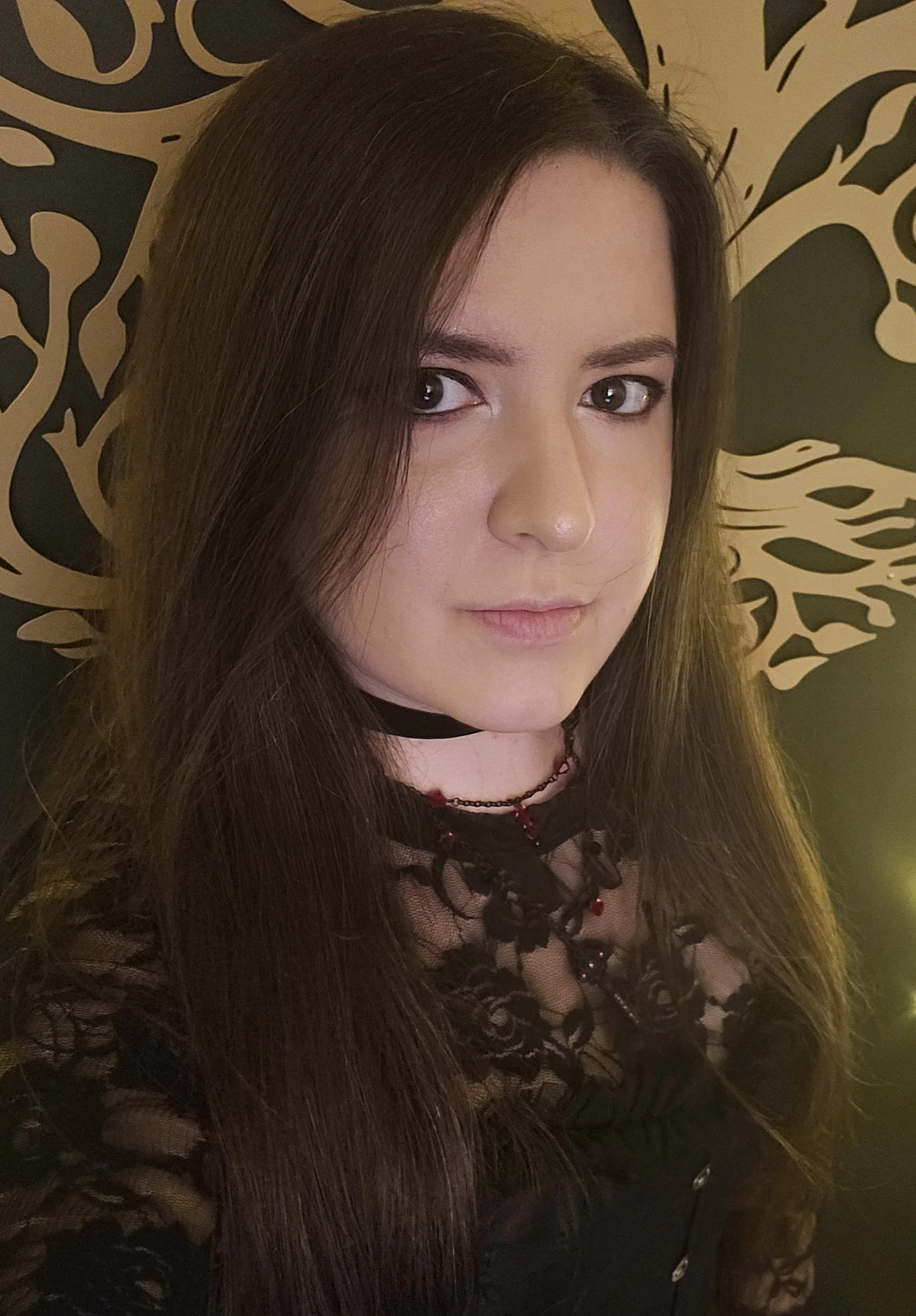
Courtney Lazore is an independent scholar interested in media, fan, and game studies. She is a member of the National Coalition of Independent Scholars and writes on a wide range of topics surrounding Korean pop group BTS. Recently she has expanded her work to cover gaming and started a second MA program. Her work has been published in several academic books and journals, including Bangtan Remixed: A Critical BTS Reader (Duke University, 2024), Fandom | Cultures | Research (2025), and Asia Marketing Journal (2021).