
Girls Like Us
In purple light of my daughter’s first concert, lyrics wrangle with all the fears, hopes, and possibilities of growing up. Light-up stars glow into the darkness as pictures of the artist as a young girl flicker behind her. A young pop star sits at the baby grand, singing into a purple haze. I glance over at my girl, singing along, and in her profile, I see her at age twelve. I see myself at twelve too. I remember and imagine her at twenty, all of the ages I have been and she will be. A little girl voice calls out to us, and tears well up as we search for ourselves there, among the stars.
When I was little, smaller than my daughter is now, I looked up into the star-filled skies of Central Oregon and watched Sesame Street. “Can you tell me how to get, how to get to Sesame Street?” I was certain Sesame Street existed somewhere on the east coast, a city where all these different people, and puppet animals, lived in a small-kid utopia. Children learned their letters and numbers. They began to read and count; explored snow and rain. They jumped double-dutch, sat together on stoops, and had roommates like Bert and Ernie. There was Oscar, the grouchy neighbor, but he was nothing to fear. He hung out with Big Bird and Snuffy, and they talked about thoughts and feelings. Kermit the Frog taught us how to draw a square, Count Dracula counted, and Cookie Monster ate cookies all before commercials brought to you by the letter W.
From a black-and-white tv set in Bend, Oregon, my small-town home felt so far away from Sesame Street, but I could see myself there, playing in the snow, learning my letters, and counting alongside the other kids. I tuned in every afternoon, hoping someone would tell me how to get to Sesame Street. One of my favorite segments was when they asked us to look at these four videos at the same time.
“Three of these kids belong together. Three of these kids are kind of the same. But one of these kids is doing her own thing. Now it's time to play our game.”
Three kids swung baseball bats while the fourth tossed a football. Three kids were right side up while the other was upside down. Three kids stood in snow, dressed for the weather, while the other shivered, wearing shorts and a t-shirt. It was easy to figure out which one didn’t belong, and the belonging was never about race. But for my multiracial family, the thing that usually didn’t belong in Bend, Oregon was us, and those early days watching Sesame Street got me searching screens for where I belonged.
My racially ambiguous daughter is almost a teenager. Growing up within the cultural milieu that is Los Angeles, she sees herself in comparison to her communities. In quiet moments of observation, she measures her own proximity to whiteness, Asian-ness, Blackness, and Latin-ness. Her cousins are Black, Asian, and white. Her Spanish immersion program surrounds her with Latina school friends. Girls from diverse backgrounds and cultures play soccer, basketball, and softball with her on fields and in gyms across Southern California. Both of her white grandparents have passed, so the influence of white culture is limited, and also is not limited at all. This past summer, she leaned toward whiteness as a Swifty. She took criticism from those who find it easy to hate on Taylor Swift, but she hoped the Eras tour would be her first big concert. As summer bled into fall, it was Olivia Rodrigo, not Taylor Swift, we could afford.
My first concert was long after my Sesame Street watching days. I was still growing up in Central Oregon, still bathed in whiteness. Kids in LA tuned in to radio stations playing Janet and Whitney, Lisa Lisa and Cult Jam, Prince, and LL Cool J, but my girlfriends and I fell in love with Crowded House. It was the summer of 1987, and we memorized every song on their self-titled debut album. Everyone knew “Something So Strong” and “Don’t Dream It’s Over,” but we could sing along to “Mean to Me,” “World Where You Live,” and “Now We’re Getting Somewhere” too. When my friends and I found out they were playing at the Oregon State Fair, we begged our parents to let us go.
On a hot summer day, my best friend’s step-dad drove us over the McKenzie Pass from Bend to Salem for the show. We loaded thick batteries into a boom box and played the tape on loop as we sprawled across the bed of a capped pickup truck. We passed old growth stands and rushing rivers, oblivious to it all until we pulled into the State fairgrounds. We bought concert t-shirts and wore them immediately with our cut-off jeans. We stood in line in blazing heat so we could be front-and-center to see this Australian rock band.
Before the Olivia Rodrigo concert, my daughter and I order purple shirts emblazoned with butterflies and stars. We listen to Rodrigo’s SOUR and GUTS, on repeat, and the lyrics, “Ego crush is so severe, God, it’s brutal out here” speak to both mother and daughter. Song after song captures teenage angst and early adult experiences with heartbroken insecurity. There is jealousy and vibrato, and Rodrigo is acutely American. In “All-American Bitch” she sings about optimism, toxic positivity, corporate brands and violence. She references the Kennedys and Coca-Cola, gratitude, beauty, and vulnerability. In “So American” she falls in love with someone who sees her as so American. Both songs play with stereotypes many of us think of as American, but Rodrigo is unbothered by her American-ness. There is no need to hyphenate her identity. She is so American and a perfect All-American bitch, and as my girl sings along in the car, I realize she and Olivia belong together. Both are part white and part Filipino. My daughter is seeing a young woman who is half-Asian, like her and me. We get to listen to a girl like us.
When I outgrew Sesame Street, I watched M*A*S*H in the evenings with my mom. There, I caught glimpses of Asian actors as patients and nurses. As a teenager, there were smatterings of Asian characters who often spoke strongly accented English like Long Duc Dong and Data. Then, there were others, multiracial Asians like Phoebe Cates and Keanu Reeves, who snuck past my radar. With no quick internet search available to uncover racial backgrounds, these actors became just white. In high school, Richard Gere portrayed a half-Japanese American, and I looked to my mom. “Is he like us?” She shook her head. “No, that’s yellow face, like Ben Kingsley playing Gandhi or The King and I casting Yul Brenner as the King.”
When I was five, my siblings and I were cast in a Central Oregon Theatre production of The King and I. We were the only Asians, but small-kid-me felt discomfort in the role. Maybe it was the chiffon dress, the stage makeup, and the cloud of hairspray that bloomed around the tightly bound bun atop my head. Something about half-Japanese kids, playing Thai royalty felt wrong, and not all that different than what the rest of the all-white cast was doing. I had no idea what yellowface was, but I could feel it, taste the sour fruit of it in my mouth. In 1979, I played a Thai princess. In 1990, Richard Gere portrayed a half-Japanese character in a Kurosawa film. In 2015, Emma Stone played a hapa character in Aloha. Three of these things belong together. Three of these things are kind of the same.
On the night of the concert, the girl and I make the short drive from home to a brand new LA concert venue on a perfect fall evening in Los Angeles. As the sun falls behind the lavender-lit venue, we find ourselves surrounded by thousands of Olivia Rodrigo fans. We walk alongside girls from all backgrounds in different versions of Olivia’s cheerleader skirts and sequins, tank tops and boots. We go with the flow up a long escalator aside larger-than-life screens with Olivia, her mouth agape, the words GUTS and multicolored stars spilling from her mouth. The crowd looks like LA, like my daughter’s friend group: girls from all backgrounds, girls who are racially ambiguous, girls like me, like my daughter, like Olivia Rodrigo.
Our tickets take us high above the stage and the enormous, stage-length screen. We peer down as Oliva dances, skips, and sings. We sing along with a pop star who looks a whole lot like us. In the same way I got teary-eyed watching professional women’s soccer for the first time in Los Angeles, my breath catches as I watch Olivia perform, and she opens up the possibilities of who my girl might be.
Olivia sings, “All the time, I'm grateful all the time. I'm sexy and I'm kind. I'm pretty when I cry” and we scream/sing along with the crowd about American experiences we know and live every day. Olivia Rodrigo, who can could pass as white or Latina, identifies as Filipina, and Kiara and I can see “which of these things belongs together? Which of these things is kind of the same.”
After the opening few songs, the lights turn low. Olivia sits at the piano as photos and videos of her as a little girl light up the stage. A child who looks a whole lot like me when I played the littlest princess in The King and I, a child who looks a lot like my daughter, sings about wanting to be wise, and pretty, and good. Tears that sat at the edges of my eyes all night, well and slip. I smile, surprised by this moment, so far away from those years when I sang along with Crowded House. I close my eyes and cross the distance of all those miles, and all of those years. When I open my teary eyes, Olivia climbs onto the moon. She hangs there, suspended in the dark, surrounded by stars, where possibilities feel endless. I’m far away from the star-filled Central Oregon skies of my youth, and as Olivia sings across the expanse, I see endless possibilities ahead of us.
Basking in the afterglow of the concert, my daughter decides to be Olivia Rodrigo for Halloween. She pulls on black stockings with rhinestone stars, a silver sequined skirt and a customized tank top with the purple lyrics: “I’M OVER THIS TEENAGE DREAM.” She poses next to her Latina girlfriends, who dress up as other versions of Oliva Rodrigo, but Kiara looks the most like her. Little girl me, who still searches screens for belonging from Sesame Street to all the screens, big and small, looks on, awestruck, as my girl embodies one of the biggest popstars shining. Later, when we look at pictures from Halloween she says, “Hey, Olivia looks like me.”
Just like the night of her first concert, surrounded by bright-light stars and moon, we stood surrounded by a crowd that was like us and not quite like us. In this increasingly nuanced and multifaceted world, a pop star embodies my complex relationship with my own identity and simplifies things for my daughter. In an easy-to swallow pop kind of way, girls like my daughter, girls like me, can see ourselves, shining from larger than life screens. A girl like headlines the concert, carries the show, and shines bright and letting us all know exactly where girls like us belong.
-Noriko Nakada
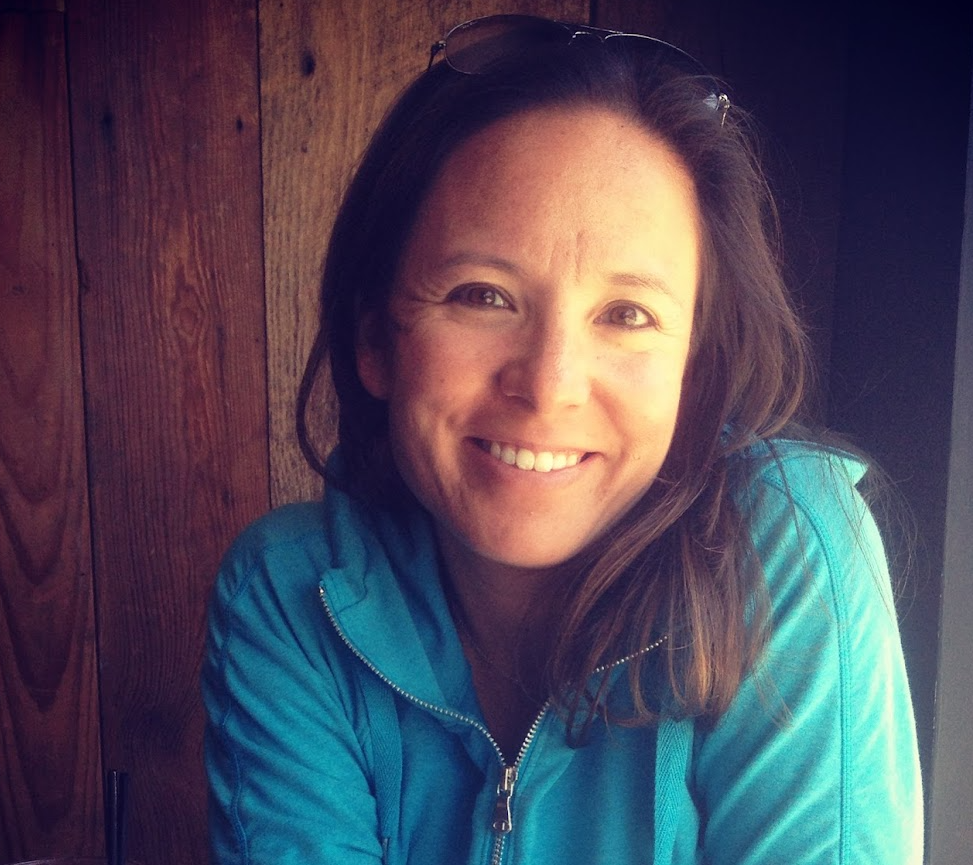
Noriko Nakada is a multi-racial Asian American who creates fiction, nonfiction, poetry, and art to capture the stories she has been told not to talk about. Her memoir Through Eyes Like Mine, was shortlisted for the 2040 Book Award. Excerpts, essays, stories and poetry have been published in Hippocampus, Catapult, Made in LA, Linden Ave, and elsewhere. She is an LAUSD teacher and parent, and a UTLA organizer. She sits on the Women Who Submit board supporting women and nonbinary writers to submit their work for publication. She lives in Los Angeles on stolen Tongva Land.