
The Silver Strand
I am a mother and a daughter. But I was not mothered—at least not in any traditional sense. Five months after they met, my parents were married: She’d just turned twenty-one; he was six months younger. They bought a house with red stairs, a half-block from the beach in Santa Monica. Five years later, in 1970, they had me. But in March 1973 my mother divorced my father, and a few months later, she called to tell him that she was leaving me at her parents’ house in Berkeley. The next day, my maternal grandmother met my father at the Oakland airport with me in her arms. My mother cut off all communication with her family and friends.
She disappeared.
Once I had my first child—at twenty-eight, just a year older than my mother was when she became a parent – I missed the absence of my mother fiercely, in a way that I hadn’t since I was small. The transition to motherhood is a slow pot that boils before you realize you’re inside with no way out. I could ask other women for advice, but not my own mother. This loss was a small raw place inside of me that I returned to when my breasts engorged so painfully that I just wanted to cut them off and when my son refused to sleep longer than two hours a night for the first two years. I couldn’t ask her what it had been like, with me. I couldn’t compare stories of my own infancy, as my friends did.
So I began to imagine her, everywhere. At the park, when I placed my feet on my son’s small belly and hoisted him into the air, mimicking a photo I had of myself in the same position, flying happily over my mother’s smiling face. At the beach, when we built a castle where my father had once snapped a picture of my mother and me covered in sand. At the health food store, where she met the man for whom she would eventually leave my father. I had two more children – my daughters were born when I was thirty-one and thirty-five. I thought of my mother through every pregnancy, birth, and the months that followed. I never stopped imagining her.
Then, my grandmother died. My aunt organized a memorial at Sea Ranch, a small, seaside community north of San Francisco where my grandparents once had a home. On a phone call, my aunt told me that she had reconnected with and invited my mother. I nearly dropped the receiver. I was thirty-six – but fear and anger made me feel like a child. My grief over my grandmother’s death was subsumed by the anxiety over the prospect of seeing my mother: Every time I thought about it, my heart beat faster and my breath caught in my throat.
“What are you so afraid of?” My spouse asked as we slithered through the curves of Highway 1. We had left our children with his parents to travel up the coast. The skies were gloomy and gray. The bluff sheared off abruptly and the white foam crashed on the rocks.
“I don’t know,” I said. But I did know.
In the wake of her abandonment, I had fought for something different. Now, my life was everything a mother would want for her child: job, house, children, spouse. There was no flaw that my mother could use as a reason to reject me again. Yet I was still afraid – in my trembling heart and shaking hands – that she would.
There is a strict building code at Sea Ranch: All the homes are made of redwood and weathered a silvery gray so that they melt into the muted colors of the native grasses that populate the bluffs on which they’re built. My aunt had rented two homes: Kevin and I shared one with her, my uncle, and my cousin; my mother was in a home with another set of relatives. I wouldn’t see her until the following day, at the memorial. I barely slept.
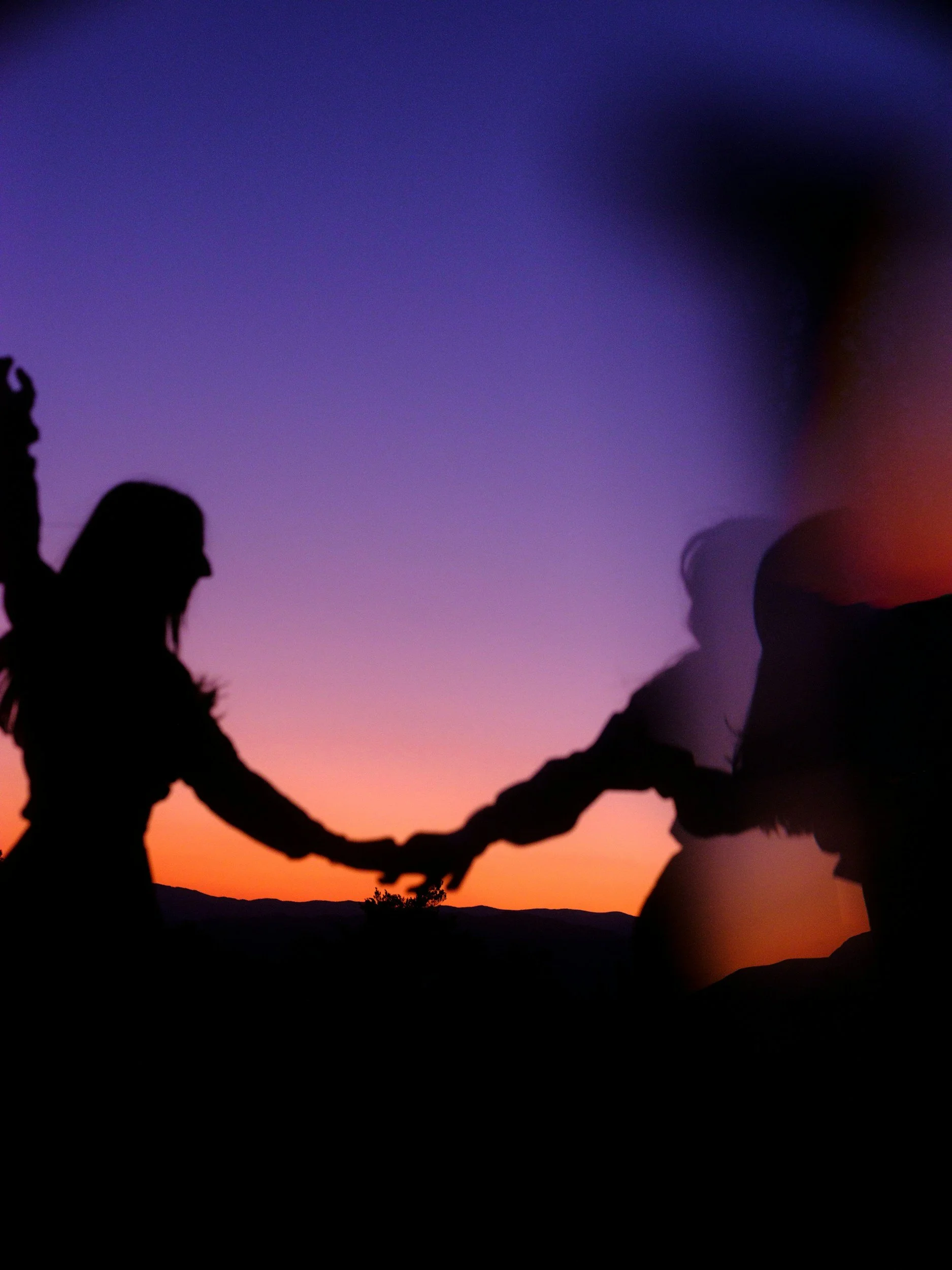

In the morning, the clouds were bruised and black on the horizon as twenty of us trudged up the hill to the bluff. My mother walked ahead of me in a white linen skirt with a long, flowing shirt over it that stopped at the knees. Her scoliosis was pronounced: One shoulder was higher than the other and her hips rolled out of sync with her torso so that she walked slightly sideways, like a crab. She stopped at the top of the bluff where the rest of the family had gathered in front of a fence made of two weathered boards set at intervals between low, splintering posts—the only thing that separated us from a fifty-foot cliff that plunged into the blue-green water. I looked away and around—anywhere but at her. Beneath my feet, the ice plants were spongy and thick.
My mother held an armful of long-stemmed white carnations—my grandmother’s favorite – and walked around the circle, handing them out. She stood in front of me and extended the flower, forcing me to look at her. My heart pounded and my hands dripped sweat and I kept my eyes on the horizon. Finally, I shifted my gaze.
Her hair was dark blond threaded with silver and there were deep lines etched around her mouth. The faint lines above her eyebrows echoed their contours and faded to her hairline like ripples of movement on a lake. Her hair was short and layered, a dark blond so thin and fine that the tiniest breeze caught and lifted her bangs like feathers. Her head tilted slightly and she smiled at me with a question in her eyes.
She didn’t look like the yellowed photo I had kept hidden in a drawer: A glamorous bride in a white dress with wasp waist and the mantilla veil. She didn’t look like the young mother on the beach in the hip-hugger bathing suit and platinum chignon or the girl that had laid on the green grass and held a smiling baby up to the blue sky. She didn’t look like the woman I imagined.
She looked like my grandmother.
My grandmother, with her crepe paper skin and sparkling blue eyes, who had made a home for me in Berkeley when my father’s Los Angeles houses and apartments shifted like sand under my feet. Who waited at the landing gate an hour before my arrival so she would be the first thing I saw—crouched with her arms open wide—when I stepped off the plane. Who dried lavender from the bush that flowered in the sun and sewed it into sachets, then tucked them in my pockets so her scent followed me back onto the plane. Ice cream sundaes in Ghiradelli Square. Dust and dye in the fabric store. Lunch under the art deco ceilings at the Berkeley City Club where the waiters wore white aprons and served with one hand behind their backs.
My grandmother, who was one of my favorite people in the world.
In that moment, everything shifted. A thread hovered between us like a physical thing —a shining silver strand that connected my grandmother to my mother to me. I took the flower and my mother folded me into her arms. She smelled like lavender.
-Rachel Lincoln Sarnoff

Rachel Lincoln Sarnoff is a journalist who recently graduated with an MFA in fiction from Pacific University, publishes the Good Newsletter, and is querying her first novel.
The slumbering house cradles the echo of your footsteps as you wander its sleepy halls. Sleep should have come for you hours ago, but your anticipation has successfully warded off any chances. The contractions come so lightly and irregular that you wonder if it’s even labor. Perhaps it is the Braxton-Hicks you read about.