
Catered
“If this doesn’t get better, I may have to cater Christmas.”
The words hung in the air like the smell that affixes to your hair when you’ve been frying chicken cutlets over the stove in anticipation of the holiday. My Italian American ears burned. Christmas was Christmas. The women planned menus, stood in long lines at Waldbaum’s, the Italian salumeria, the bakery. The men drifted between courses in various states of uprightness and sleep while the women - elbow deep in sudsy water - tried to figure out who forgot to stir the sauce, causing it to stick to the bottom of the pot.
After dinner and before dessert, the men gathered at the table around a heavy crystal bowl of unshelled nuts. Heavy, metal, ornate nut crackers and a fruit basket sat beside it. As a girl, I’d orbit the table waiting for an invitation from my father or grandfather to crack a nut at its seam or to taste a piece of fruit that was “like candy.” It felt like a sacred male rite - with a shelf life. The women didn’t sit at the table for that part. They prepared for the “second act,” making coffee and plating pastries while the men savored fruit and tradition.
There was no place at such a gathering for a caterer who would not stuff the artichokes with more breadcrumbs than cheese, would not put sugar in the sauce to cut the acid, would not know that if you fry the breaded chicken cutlets you dip in egg but if you bake them you dip in oil. The very idea was a betrayal.
And, I would learn, there were many more betrayals to come.
But my mother did cater Christmas. No one acknowledged the sternos or the aluminum trays. My family lived for a passive-aggressive critique, but no one said a word. There was no one to complain to - the meal’s creator wasn’t present, because my mother hadn’t made most of the meal.
That Christmas was eight days from my due date and I arrived wearing a bright pink tank top and flip flops. It was below freezing, but I didn’t wear a coat. When they say you have a bun in the oven, it means your body is an overheated cooking appliance. And I, too, complied with the unstated vow of silence. My mother looked exhausted in a way she never had when she had cooked, but we chalked it up to her long bout with bronchitis.
We rang in the New Year - 2004. My due date came and went. “She’s waiting,” my husband, Jason said. “It’s a test.” If so, it would be the easiest of all tests that year. I went to bed on January 4 and woke up at 2:30 am on January 5. I giggled at my daughter’s timing: my twenty-seventh birthday.


Having my mother in the delivery room felt natural. We needed her. Although we had three names ready, Jason was the first to see her face and simply said, "It’s Anabella," as if our girl had introduced herself.
The doctor who delivered my baby had also been treating my mom. He peeled off his gloves and smiled at her. “I think I’ll see you tomorrow?” “Yes,” she said, “but I have to be quick - I need to get back to my granddaughter.” We all laughed. Relieved. Naive.
Later, in the hospital room, we shared my birthday cake - yellow with chocolate icing. My parents left, promising to return before noon the next day. “The nurses know I’ll be in a rush - we were just with the doctor.” She’d been struggling for months with extreme gynecological symptoms that everyone blamed on “menopause”. She kept the book The Pause dutifully on her nightstand, after all. But, now that she was over her bronchitis, they’d finally scheduled an “easy outpatient surgery.”
By 11 am, my mother was still not there. Noon came and went. I relentlessly asked Jason for the time. I called my parents’ cell phones and their offices. Nothing. I held the baby tight, oozing anger and fear onto her hospital-issued baby blanket. “They will call us when they can, babe,” Jason said. I kept calling.
When they finally arrived - nearly six hours later - they were unrecognizable. My father’s normally strong stride that often forced my mother to chase behind was now slow and weak. He kept her steadily by his side as if he wasn’t in a rush even though he should have been. Were those tears in my Dad’s eyes? I sat holding Anabella and waiting. "Give me my Bella," my dad said. I squeezed the baby closer to my chest. My mom stood there, paralyzed and hidden behind a smile that didn’t reach her unblinking eyes. "We couldn't wait for you to get here," Jason, my usually silent husband said, just shy of an accusation. All of us huddled around the baby who somehow knew not to cry.
But I shouted. I was yelling for an explanation as they all outstretched their arms towards me trying to take the baby. My dad started to speak, but my mother touched his arm. "I have cancer," she said. "I'm sorry I wasn't here. Today didn't go as planned."
The rest blurred. Stage four, uterine, immediate surgery, cancer, curable, cancer, awful timing. That's when her voice cracked, when she mentioned the timing. She wouldn't be able to help me. But that was impossible. She was never unable to help. She had never catered Christmas.
They didn’t stay long that night. When they left, Jason gently took Anabella from my arms—hoping, I think, to protect her from the energy I emitted.
The next day, we went home to an apartment devoid of visitors. Both pieces of news spread - Anabella had been born on my birthday and my mother had cancer. Everyone assumed I’d stay home on the day of her surgery. I had a newborn, after all. But I wanted to be at the hospital. The very same doctor who delivered Anabella on Monday would remove my mother’s uterus on Thursday. I stayed back with the baby - as everyone expected. “How big was the tumor?,” I asked my father afterward. “A grapefruit,” he said.
I already hated grapefruits. In my childhood, they were the breakfast of women who wanted to be thinner. I had been given that breakfast before I was anywhere close to being a woman. I learned to pretend to enjoy the bitter fruit, sliced in half sprinkled with Sweet & Lo, even as it fought back against the spoon. There were never grapefruits in the baskets at the holiday meal. I always thought that was because it was the one time the women were allowed to eat. In that one week, I had given birth to my birthday twin, and my mother had birthed a cancerous grapefruit.
Ten months later, the grapefruit took her life - the same amount of time it took me to grow Anabella. Those ten months were sprinkled with chaos and disappointment and tenderness. I was an awkward, willing caregiver to my mother – rubbing her back and packing myself and my baby up early in the morning to spend the day with her. I was simultaneously a robotic and resentful caregiver to my daughter – scoffing when she cried and rolling my eyes when she did not want to be set down.
What do you get when you add new motherhood to fading daughterhood? I still don’t know the answer.
Until then, my life had been relatively free from loss. Suddenly, it was littered with tiny betrayals - moments that looked like catering Christmas but felt like what I eventually understood to be grief. Like paper cuts, they stung more than anyone expected. That year taught me to mother in every direction.
Years after my mother passed, I began to host a Mother’s Day open house for anyone and everyone who might need a little extra love. For the first few open houses, I refused to cater. Staunchly. Defiantly. I became a fitness instructor determined to help women feel stronger. I co-hosted a podcast with a young woman who I adore and I tried to mother her and our unidentified listeners too. I’m now an elected official in our small New Jersey town. A friend’s husband recently pointed out that I mother the whole community.
Maybe this looks like martyrdom, but it isn’t. The book Motherless Daughters explains that women who lose their mothers - not just to death - go on a lifelong quest to feel what a “good,” healthy mother offers. My search is more complicated. I spent my daughter’s first year inside the shadow of my mother’s last. Instead of just searching for my mother’s comfort, I’m still seeking affirmation that I am a good mother - to everyone.
My son wasn’t born yet when all of this happened—when, you could say, I became who I am. He came along after, so his perspective is different. One day he simply said, “You can’t untie everyone’s knots, mom.” He somehow saw that I was untying more knots than two hands should ever manage. He somehow saw the calluses on my finger tips. I thought I’d hidden them. Typically, I brush his comments off and give the expected responses. “I’m a joiner.” “I love hosting.” “The more the merrier.” But when I’m alone, I try my best to accept the approach I have crafted—to honoring my mother by being one, but doing so in my own way. I mean, I have not figured out the holidays and after two decades, I may never. I do not have a dedicated crystal bowl for nuts. My husband does not sleep while I wash pots.
And I do cater.
-Christie Del Rey-Cone
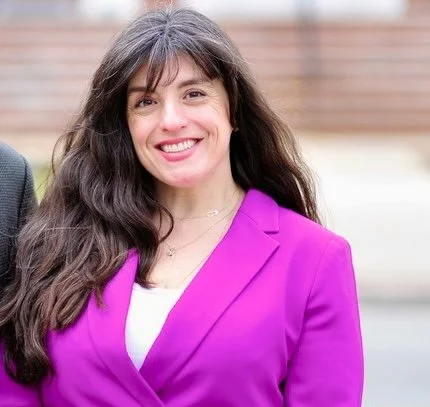
Christie Del Rey-Cone is a woman...a human. Let's say that first because after we list all that the world defines her as, she does not want to lose sight of the fact that first, and foremost, she is a human. Christie is also a wife, mother, attorney, mediator, public servant, dance floor dominator, former podcaster and hopeful life observer. She is also a griever, a wonderer and a human that chooses to feel life deeply. Actually, it is not a choice. It is a gift. That gift also allows her to write about life and love and grief in a way that doesn't completely eliminate the sugar coating but certainly may make the most heart sick of us wish for a bit more icing.

I left on a clear October Monday. Seated at the bulkhead, my elbow rested next to a man who asked if I was going to Chicago for business. I lied, nodding my head yes. Ambivalence prevented me from updating my second-generation iPod earlier in the day, leaving Missy Elliott and Usher to comfort me. A leathery skinned smoker picked me up at baggage claim. She drove me forty-five minutes to our rural destination while I imagined what happens when car doors open and bodies land on I-55 at seventy-five miles per hour.