
Mary Catherine was sixteen when she was diagnosed with liver cancer and barely twenty-one when she died. I traveled to the depths of despair after she was gone. I found my way back by convincing myself I’d never have to return.
I was wrong.
My daughter was a happy girl with a big personality, as bubbly as an uncorked bottle of champaign spewing a fine mist of fizz. And she’d had big plans. She was determined to be an actress, cancer be damned. She’d been accepted to the acting program at Syracuse University in 2010 but took a gap year to undergo more chemotherapy and surgery. By the time that course of treatment failed, just like all the others before, she’d narrowed both her plans and expectations. All she wanted was a shot at college.
One semester, plus a few short weeks, was all the shot she got. She was tethered to a chemo drip at a local hospital too much of the time. In constant pain, she was unable to handle the physical rigors of Syracuse’s acting program and too debilitated to be cast in shows. Soon enough, her doctors gave us the news we’d dreaded since her diagnosis: surgery was no longer possible. Barring a medical miracle in the form of a clinical trial, Mary Catherine was on borrowed time.
She returned home in February 2012, the last full year of her life. By then, her plans and expectations were confined to her bedroom, which served as both her sanctuary and her prison. There among her pillows and projects and sorrow, she became a sporadic diarist, writing down in journals all the things she couldn’t say to me. All the things she could barely say to herself.
I became aware of these journals in 2019, six years after she was gone. My husband Matt and I were preparing to move – out of the Chicago suburbs, back to the city. In order to leave the house where Mary Catherine died, we had to dismantle the bedroom we’d turned into a shrine, a holy place frozen in time.
I found the journals during the dismantling, hiding in plain sight on the bookshelf built into the headboard of her bed. My first quick flip through their pages revealed a world of misery. I recoiled. I was already miserable enough as I prepared to leave behind the room, the house, the shrine. Standing among her things, trying to decide what to keep and what to let go, I was accosted by stray sentences: “Fucked up with food again.” “I am so sad lately.” “I miss my friends. I am so lonely.” “I have to have clean scans. I have to.” “God, please let me die an old woman in my sleep.”
One of the first entries was written in September 2008, just a few months before the massive tumor in her liver was detected. She hadn’t been feeling well or doing well. I’d given her a fabric-covered notebook and told her to pour her heart out. She’d heard an order – and poured out her frustration: “I hate not being friends with mom. I just want all this shit to be done and over with b/c I want her to be happy. Mom would say ‘make yourself happy.’ Why is that so hard for me? Why can’t I ‘make myself happy’? I guess I am, but it’s only short term. I’m not making myself happy in the long run.”


That day in 2019, the fabric-covered notebook may as well have bitten me. I slammed it shut. I didn’t know what Mary Catherine meant by “this shit” but suddenly I was smeared with it. I never wanted to open the journal – or any of the others – again. But I knew I would. I knew I had to. They were reckoning with all I had to answer for, if only to myself. I packed them away in a box, a cardboard crypt, and told myself I would deal with them. Someday.
Someday turned out to be the spring of 2023 near the tenth anniversary of Mary Catherine’s death. I opened the box of journals, organized them as best I could, fell into an overstuffed sofa, and began to read. Mary Catherine didn’t write a lot; months went by between entries. She abandoned old notebooks for new ones – sometimes after recording just a few thoughts – as if attempting a fresh start. But she was consistent in this: she held nothing back, spilling her guts all over the place in a style best described as scorched-earth honesty.
On page after page, she ricocheted between believing she would get well and losing all hope. Hating me and loving me. Despising everyone she knew and adoring everyone she knew. Despising herself – calling herself stupid and fat and ugly and a liar – and loving herself. Wanting to end her life because living was too hard and pain was too constant. Wanting to live because she deserved to live, because she was a good person who had a lot to give.
She doubted the existence of God and begged God to save her. She cried out for romantic love and despaired that anyone could ever love her. She longed for children who would have her eyes and her dimpled chin and her cankles. She wanted more than anything – as she struggled through one inhumane treatment after the next – to look back on this terrible time when she was teetering on a precipice between life and death, and smile. Smile at how much time and energy she wasted wondering what would become of her and worrying she wouldn’t make it. Smile the smile of a wise old woman remembering her silly and scared young self.
I was as laid as low by her words as by everything she’d actually suffered. And by everything I’d put her through. I gathered the journals into my arms and hit the road again, headed back to despair’s depths, torturing myself with memories of my futile, damaging crusade to cure one very specific case of incurable liver cancer with a methodology best described as the “grasping at straws” approach.
In the four years between diagnosis and death, I’d piled alternative treatments and wacko diets – stripped of sugars and fats and carbohydrates and joy – on top of traditional protocols and surgeries. I’d made appointments with hypnotists and healers of dubious reputation on the theory that they couldn’t make the situation any worse than it already was – and maybe they’d make it better. I’d introduced acupuncture and Chinese herbs, homeopathy, reiki, cranial sacral therapy. I’d pursued multiple rounds of genetic testing, hoping to compile enough data to provide clues as to why this particular girl – my girl – contracted liver cancer in the first place. I’d formed prayer groups.
I’d also demanded a lot from Mary Catherine – that she eat well, exercise, get enough sleep, have a positive attitude, follow the regimens and protocols my phalanx of wellness experts prescribed. For better and worse, my daughter trusted me. She followed where I led. She desperately wanted to live and counted on me to help save her. She just hated the way I went about it. Her journals made this abundantly clear:
“I hate life. It sucks. I’m just writing for Mom. I do everything for Mom.” “I hate that I worry Mom and that I piss her off.” “I was so upset by Mom’s prayer group two days ago.” “I need to get away from Mom and all her controlling/judging fun times.”
Worst of all were the things I did after all hope for recovery was gone. I ordered leg wraps designed to mechanically massage away the terrible edema in her legs. They left her screaming in pain. I undertook the arduous process of applying for a “compassionate use request” from the National Institutes of Health that allowed Mary Catherine access to an electromagnetic device showing promise in clinical trials with liver cancer patients. The device resembled something a high school science class might have cobbled together. It came with an attachment shaped like a spoon. I urged her to keep it in her mouth for minutes at a time, even when she could barely hold her lips together.
For weeks after subjecting myself to the inner workings of Mary Catherine’s mind, I wallowed in the lunacy of my cockamamy crusade. I couldn’t believe what I’d put her through and couldn’t forgive myself for withholding from her what she’d needed most: permission to die.
Matt tried to lead me back home. Our son Tom tried. Our daughter Sally finally succeeded. “Mom,” she said, as I sobbed into the phone one day, “nobody writes in a journal when they’re happy.” A history professor at a big Midwestern university, Sally reminded me that all the world’s archives are crammed with diaries that made Mary Catherine’s look positively cheery. And that many a diarist had set fire to angst-ridden journals written by their younger selves, mortified by their overblown, hormone-fueled rants against the universe and everyone in it. Mothers included, sisters included.
“I’m sure she had a few choice words in there about me, too,” Sally said.
“A few,” I said. “Of course, she spared your father and your brother.”
“Of course!” Sally said.
“But she never got the chance to burn them,” I said of the journals. “She never got the chance to open them up from a safe vantage point, look back and cringe or roll her eyes or have a good laugh at herself. These are her last words. This is what we’re left with.”
“No, they’re not,” Sally said. “These aren’t her last words. These journals are where she vented and she deserved to vent. That’s all they are.”
“Tom said her last words to him were, ‘Will you help me?’”
“Well, her last words to me,” Sally said, “were something about Grey’s Anatomy.”
*
I tried to remember Mary Catherine’s last words to me. I couldn’t. But, of the many things that haunted me about her life and death, I realized this wasn’t one of them.
There were a lot of words spoken between Mary Catherine and me in the final months, weeks and days. There were a lot of words unspoken. I don’t remember begging her forgiveness for everything I did and did not do, both before and after she got so sick. But I do remember my rosy-cheeked girl forgiving me.
And I remember this: It was a day sometime during the last year of Mary Catherine’s life and we were driving north on Lake Shore Drive, headed home after a dreadful appointment with one of her oncologists in Chicago. I don’t recall why the appointment was dreadful; by this point, all of them were. I was too sad to speak. She broke the silence with a question: “Mom, can we talk about if the worst should happen?”
I braced myself, my knuckles white atop the steering wheel. “Sure, Honey,” I said.
“Ok,” she said, her voice suddenly buoyant as she exhaled the unspeakable and began to tell me what she wanted for her funeral. “I want to be cremated,” she said matter-of-factly. “Is that okay?”
“Sure, it is,” I said. “You want it, Mary Catherine, you got it.”
She picked up steam. “I want the funeral to be at Sacred Heart,” she said, of our parish church. “And I want my male cousins to be the pall bearers, plus Doug and Ryan.” Doug and Ryan were two of her closest friends.
“Put me in the dress I wore to junior prom,” she said. “Not senior prom, junior prom. Do you know the one?” She was speaking of a dark gray, full-skirted, calf-length number covered in silver flowers.
“I know the one, good choice.”
“And put me in flats. Not heels. I hate heels. I don’t want to be buried in heels.”
She paused. I could tell from the sound of her voice that Mary Catherine, the actress, had just walked out on stage. I glanced her way. She’d crossed her legs just so, placed her hands over her knees just so, dropped her chin and lifted her eyebrows just so, sucked in her cheeks just so.
“Corrrrrrrrrection,” she said, trilling her “r’s” as she adopted the accent of a well-heeled society doyenne. “I do not want to be burned in heels.”
I howled with laughter while she cackled with delight.
Finally, I remember this:
Several months after our conversation in the car, the worst was happening. Mary Catherine was lying in hospital bed, her organs failing, her skin the color of a urine sample. A young doctor we did not know entered the claustrophobic room. He had test results. They were not good. “I think it’s time for hospice care,” he said.
I did not say anything, just folded myself over onto her body and held her close. I heard Mary Catherine ask the doctor, in a high, thin voice that was barely audible, “Is surgery no longer an option?” She already knew the answer. The doctor shook his head.
Suddenly, and with a burst of energy she hadn’t possessed in days, she reached over to her bedside tray, grabbed her laptop and began typing. She turned the laptop screen my way. I saw the words, “If the Worst Should Happen, My Last Will and Testament.” I began to read her brief instructions for dispersing her personal effects, including giving the $60 in her bank account to Tom, “who never has any money, poor boy.” I read her directives for her funeral, which were just as she’d told them to me months before.
I stared into Mary Catherine’s trusting blue eyes, rimmed with yellow. I would spend years castigating myself for all the ways I failed this child of mine. Failed to save her. Then, failed to let her go. It would take me a decade to finally realize my greatest failing was believing I had any control over her fate in the first place.
But in that dark moment in that hospital room, I knew what she needed from me. And I said the right thing. “I’ll make sure everything is exactly as you want it, Honey. To the letter. I promise.”
I was as good as my word. I did not burn Mary Catherine in heels.
-Katie Seigenthaler
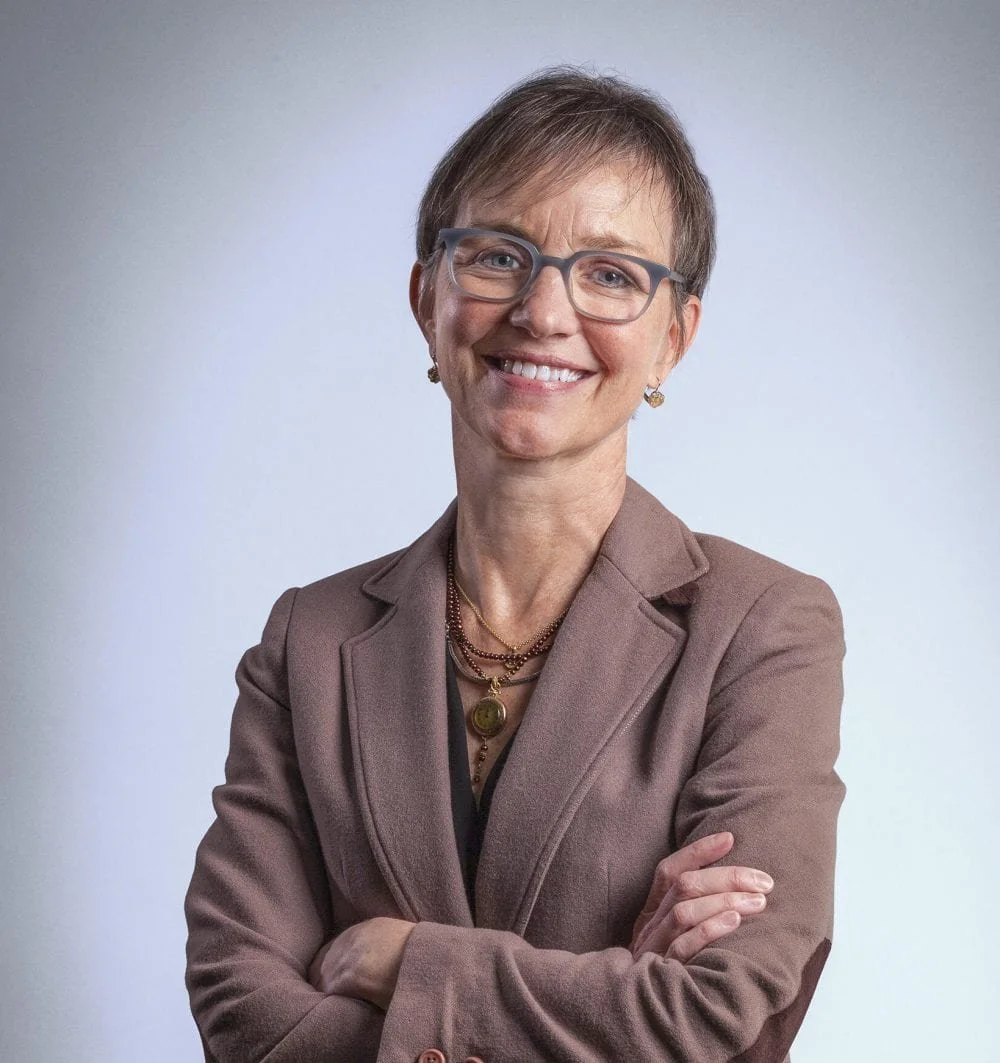
Katie Seigenthaler is the co-editor of The Kingdom of the Poor: My Journey Home, the best-selling posthumous memoir by Charles Strobel. The beloved Nashville priest and champion of the unhoused dictated the book to Seigenthaler, his niece, and to his colleague Amy Frogge during the last months of his remarkable life. Called "a manual for decency and kindness" by renowned author Ann Patchett, who wrote the book’s foreword, The Kingdom of The Poor (Vanderbilt University Press, 2024) recounts Strobel's stories of the people who shaped his life and led him to the conviction that we are all poor and worthy of love. Seigenthaler is also the co-author with Dr. Alex Jahangir of Hot Spot: A Doctor's Diary from the Pandemic, a best-selling memoir (Vanderbilt University Press, 2021) that chronicles Dr. Jahangir's harrowing year as the head of Nashville's COVID Task Force. A former editorial assistant with the Washington Post; and reporter, editor and columnist with the Chicago Tribune during the 1980s and '90s, Seigenthaler is a managing partner with the global communications firm Finn Partners. Most recently, Seigenthaler's Tiny Love Story "The Prettiest Talk" was published by the New York Times in May, 2026. She is a native of Nashville and lives in Racine, Wisconsin.

I left on a clear October Monday. Seated at the bulkhead, my elbow rested next to a man who asked if I was going to Chicago for business. I lied, nodding my head yes. Ambivalence prevented me from updating my second-generation iPod earlier in the day, leaving Missy Elliott and Usher to comfort me. A leathery skinned smoker picked me up at baggage claim. She drove me forty-five minutes to our rural destination while I imagined what happens when car doors open and bodies land on I-55 at seventy-five miles per hour.