
Caught in a Fog
I was caught in a fog of subtle depravity.
That is how I would describe my first years living in Guatemala. It is terrifying what one believes to be truth and noble when done in God’s name. Evil has no boundaries.
In 2011, I started working full-time in Guatemala. I worked for a school that serves low-resource children. Coming from an upbringing in a normal Christian church, I was full of energy and excitement to brave living in a new culture, working against the cycle of poverty and abuse to bring education to the next generation of children in the villages surrounding Antigua, Guatemala. I was in my early twenties and had the typical twenty-something mindset of thinking that I knew everything—knowing exactly where the lines were, knowing what was right, knowing more than everyone else in general about God, life, and circumstance.
Of course working in a ministry for the impoverished was virtuous calling, I thought. But why did it not always feel “right?” I know I am supposed to be here—was the constant confirming voice in my head. This struggle continued for years:
“This doesn’t feel right...but I know I am supposed to be here…”
“This doesn’t look right…but I know I am supposed to be here…”
“What I am doing is not right…but I know I am supposed to be here…”

View of Antigua, Guatemala
These thought were never overpowering, but lingered always in the back of my mind. Because after all, I was working for a Christian organization, what could be wrong when everything looked so right? But, as I said, evil has no boundaries. It creeps up and pretends to be the caregiver, the helper, and the savior. It is petrifying to see how deep manipulation can truly go, especially in oppressed people, the ones who are looking for a caregiver and a helper and a savior. In his book People of the Lie, Dr. Scott peck states, “The reader will be struck by the extraordinary willfulness of evil people. They are men and women of obvious strong will, determined to have their own way. There is a remarkable power in the manner in which they attempt to control others.” Can you imagine what that does to beleaguered people? It destroys them and they do not even know it. This was leadership I was working under. Thankfully it eventually came to an end, but not before peoples lives were left in a tangled mess.

I met you by the river the first time while the mist rose from the banks like it was trying to change elements. You were more fun to run from the cops with than anyone else I’d met, and man you made me reckless. I never had to test my legs though, the minivan did it for us while Jerry blasted through the blown speakers in the cornfield. You walked 2,000 miles up the country on trail and wrote me letters back home while I watched, sidelined. I could have walked myself from Georgia to Maine with you, but it was your own pilgrimage to undertake, your season spending nights under a green tarp.

You listened to Joni Mitchell’s Blue while you were abroad. Some say an unhealthy amount, but you beg to differ. Something about the timbre of her voice resonates with traveling, long-distance train rides and loneliness. Because that’s what the feeling was, right? Loneliness?

I balanced on the side of Mt. Yale, quietly crying into my knees. Rory hopped from stone to stone ahead of me, following my husband, Julio. Between only weighing thirteen pounds (mostly fluff) and having the start of cataracts—and being a dog—Rory did not notice the four thousand-foot drop on the other side of the rocks. Once she realized I was no longer a step behind her, she came plopping back to where I froze and wiggled her way onto my lap. Panting and licking my face, in her obliviousness, Rory pulled me out of my panic and helped me make it the rest of the way to Mt. Yale’s fourteen thousand two hundred-foot summit. I had stopped just a short scramble from the top because the trail was more exposed than I expected, and I was sure I would slip and plummet to my death. Predictably, I did not.
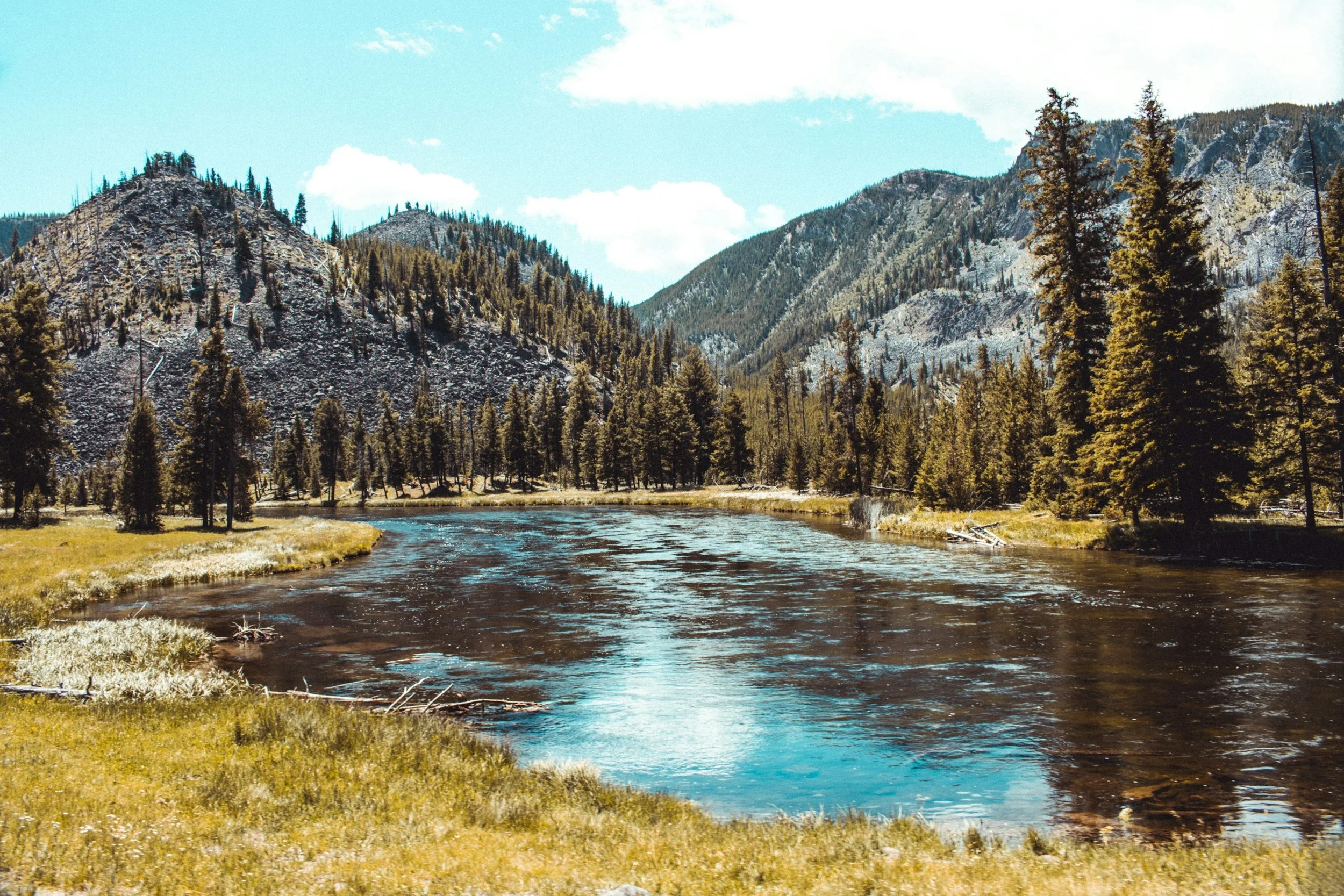
In June of 1993, I was twenty-three and pregnant—again. Despite having been on the pill for years and using a diaphragm correctly, this was the third time my body tried to make me a mother before I was ready. Nothing had changed since the last time it happened: I was still living in the Ocean Beach enclave of San Diego, still in a rocky relationship with Richard, still a part-time student inching my way toward a bachelor’s degree, still a waitress, still broke. Things were worse, in fact. My roommate informed me that she was moving to Guatemala, and as I couldn’t afford the whole apartment, I had to move out. Richard had just graduated college and planned to ride his motorcycle up the west coast to Seattle, so we decided to break up (again). When a co-worker heard me complaining about a lack of summer plans, he suggested a hospitality company that hired seasonal workers in Yellowstone National Park. Employment included room and board, so I applied, they accepted, and I packed my bags.

We found the perfect place to camp. At eleven-thousand feet in the mountains of Eastern Nepal—the sky filled with puffy white clouds and a panoramic view of Kanchenjunga, the third highest mountain in the world. My friend Elizabeth and I traveled with five porters, two cooks and a guide. The porters set up four tents—a toilet tent with a hole dug into the ground inside, a larger dining tent where the guys, after dinner, rolled out their sleeping bags and one tent each for Elizabeth and me. I threw my duffel bag into my tent and turned to look at Kanchenjunga. I knew these clouds, swirling, changing, growing darker, moving as if the hilltop itself was spinning.
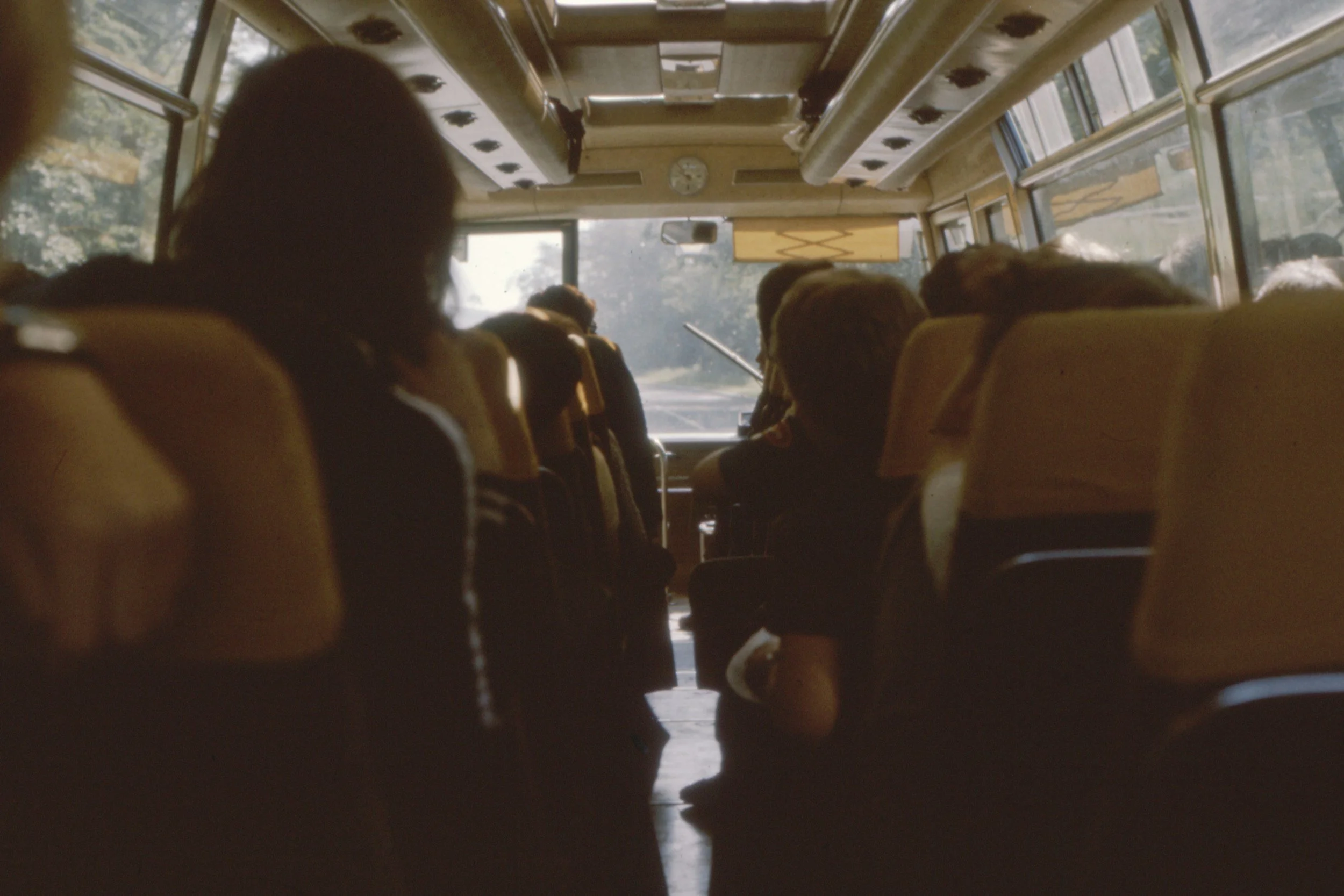
We stand together near the bus station, inhaling the smell of cow shit, watching miniature dust devils swirling around in the street like tiny tornados. Two hippie imposters, my boyfriend Don and I, wait for a Greyhound bus to take us from Stockton to Pasadena, California.

He’s never been there before, but my husband drives through Arizona like he’s a native. Our kids bicker in the backseat as he squints into the Southwestern sunshine.
The highway carves a groove into the hills. Forests of saguaro fade to arid plains. Endless interstate stretches through hours of tanned earth, unfurling at the feet of piney, snow-capped forests. Our rental car pushes higher and higher. We tug layers over jeans and t-shirts.

When I was a child, each summer, my mother took my sisters and me on a journey westward from our home in New Jersey to Minnesota, where my grandparents, cousins, aunts, and uncles lived. Although my sisters and I delighted in the prospects of seeing our relatives once again, what pleased us most was the train ride that lay ahead.

“So you’re the matriarch,” the bartender says as I join my daughter and granddaughter at the bar for a sunset drink.
If there is a stereotype of a good missionary girl then take that stereotype and turn it in the opposite direction and that is where you will find me standing. But I hate stereotypes. What I love is potential. I strive for it. I look for it in everything. I love working in a school full of children and young people and discovering their God-given abilities and the amazing things they are capable of.
I work with children whose circumstances have made their lives difficult. Children who cannot do their homework at night due to lack of electricity, children who cannot bathe due to lack of privacy, children who skip school because they don’t have money for transportation. I work with children who are molested, beaten, and who are constantly being stomped on or looked down upon. These children have purpose. They have hope. They are bright shinning lights. After so many people seemed without hope due to oppression and manipulation, things are changing, there are so many now who have hope. Things are changing and hope is springing out of every part of their being.
I will always work towards hope, I will always listen for the constant confirming voice and I will always look beyond.
-Hannah Noella Nadeau
This product gives you access to all four weeks of the workshop. Purchase one or more drop-in sessions here.
Build a habit in 20 sessions. In this 4 week workshop that meets Mondays through Fridays from 8:00-9:00 AM CST, we will focus on generating new writing—making headway on a current project, reviving an old project that’s been gathering dust, or writing based off of the daily prompts Leigh provides.
The first 45 minutes of class are a gentle, camera-off, silent writing session. The remaining 15 minutes are an opportunity to share excerpts of our work, reflect on progress made, and set intentions for the following day. Then we will read a passage together on the writing life and close each class with a new learning about habit formation. By the end of this course we’ll have a morning writing habit that is each our own to continue and build upon.
This listing is for an individual class. To purchase access for the full 4-week workshop, click here.
Build a habit in 20 sessions. In this 4 week workshop that meets Mondays through Fridays from 8:00-9:00 AM CST, we will focus on generating new writing—making headway on a current project, reviving an old project that’s been gathering dust, or writing based off of the daily prompts Leigh provides.
The first 45 minutes of class is a gentle, camera-off, silent writing session. The remaining 15 minutes are an opportunity to share excerpts of our work, reflect on progress made, and set intentions for the following day. Then we will read a passage together on the writing life and close each class with a new learning about habit formation. By the end of this course we’ll have a morning writing habit that is each our own to continue and build upon.
Many writers feel drawn to write about their lives but struggle with uncertainty: Why this story? Why now? And who is it really for? This workshop is designed to help writers move beyond doubt and toward clarity by focusing on the deeper meaning and purpose beneath their story.
In this interactive, craft-forward session, participants will be introduced to the Memoir Compass, a practical framework that helps writers articulate their motivation (why they are writing), mission (who the story serves), and message (what meaning or insight the story carries). Through guided reflection and writing exercises, participants will begin shaping a personal narrative rooted in intention rather than overwhelm.
This workshop is ideal for writers interested in memoir or personal narrative, as well as fiction writers drawing from lived experience, who want to move forward with greater confidence, focus, and direction.
Some of the most compelling creative nonfiction begins with the feelings we are tempted to avoid: anger, resentment, shame, fear, or the sense that we have an axe to grind. In this six-week workshop, writers will explore how to follow that emotional heat toward deeper, more honest work—without sacrificing compassion, complexity, or craft. Through close readings, writing exercises, discussion, and constructive feedback, we’ll consider how to transform strong feelings into writing that reaches beyond catharsis and connects with readers.
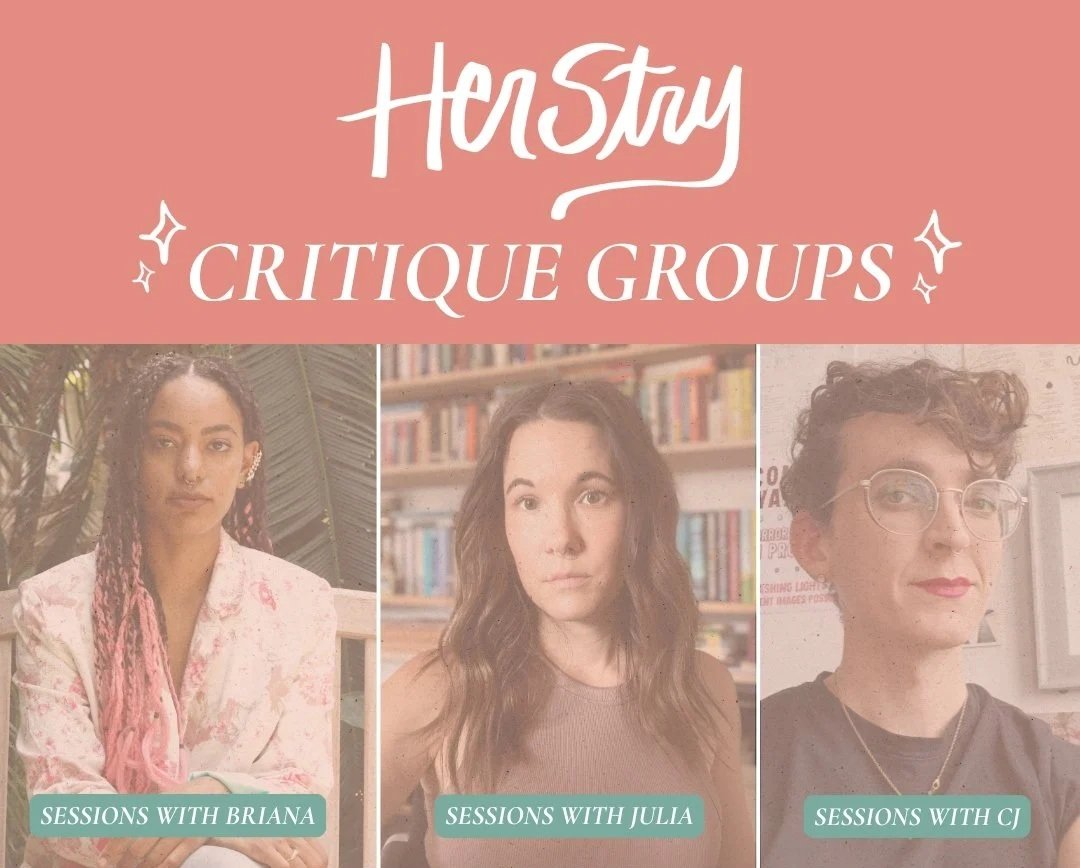
IT’S NO SECRET THAT FEEDBACK IS AN IMPORTANT PART OF THE WRITING PROCESS.
In fact, we argue that it might be the most important part of the process.
But it’s hard to find a writing community. It’s hard to find the people who are willing to take the time and the effort to read your work and give the feedback you really, truly deserves.
That’s where HerStry Critique Groups come in!
HerStry Critique Groups are small groups of 6 women who gather online for 6 weeks to share their writing, give constructive feedback and gain skills as writers.
Weekly online sessions last approximately ninety minutes, with three women sharing their work each week. Writers of all genres and levels are welcome and you may share both works of fiction and nonfiction.
Sessions take place on Mondays 7PM CT, Tuesdays 11AM CT, Fridays 11AM CT
WHAT’S INCLUDED IN THE HERSTRY CRITIQUE GROUPS?
Six 90 minute live workshop sessions
Three 20 minutes sessions in the “hot seat” to get you work critiqued
Written and verbal feedback from your fellow workshop participants
A weekly in depth edit and critique of your work from the group leader after each session
Weekly writing goals and accountability check ins
Full video recordings of each session to keep for your records
Say goodbye to the lonely, stuck in your head writing life!

LET’S WRITE!
From conception to submission. Let’s make summer sizzle with stories.
Writing a short story doesn’t happen in one session. It takes multiple drafts to get it exactly right, to create characters that come to life for the reader and a world they can’t stop thinking about. In this seven week course we will work on a single short story from conception to submission ready. The seven week session will include generative brainstorming sessions, short story craft talks, multiple workshops for feedback from fellow writers, and detailed line by line feedback and edits from your instructor. Plus, we’ll talk about submission venues, cover letters, and when to know if your story is ‘finished.’
IT’S NO SECRET THAT FEEDBACK IS AN IMPORTANT PART OF THE WRITING PROCESS.
In fact, we argue that it might be the most important part of the process.
But it’s hard to find a writing community. It’s hard to find the people who are willing to take the time and the effort to read your work and give the feedback you really, truly deserves.
That’s where HerStry Critique Groups come in!
HerStry Critique Groups are small groups of 6 women who gather online for 6 weeks to share their writing, give constructive feedback and gain skills as writers.
Weekly online sessions last approximately ninety minutes, with three women sharing their work each week. Writers of all genres and levels are welcome and you may share both works of fiction and nonfiction.
Sessions take place on Mondays 7PM CT, Tuesdays 11AM CT, Fridays 11AM CT
WHAT’S INCLUDED IN THE HERSTRY CRITIQUE GROUPS?
Six 90 minute live workshop sessions
Three 20 minutes sessions in the “hot seat” to get you work critiqued
Written and verbal feedback from your fellow workshop participants
A weekly in depth edit and critique of your work from the group leader after each session
Weekly writing goals and accountability check ins
Full video recordings of each session to keep for your records
Say goodbye to the lonely, stuck in your head writing life!

October 7, 14, 21, 28, November 4 and 18 CT
There is no class on November 11.
WRITING THE SEX SCENE.
Writing a sex scene can be delirious fun, a harrowing challenge, a literary milestone—possibly the most important part of building your short story or book. In our six weeks together, you’ll experience just about every possible emotion as you explore the erotic in different modes: comic, tender, harrowing, soul-shattering … because it really is all about the characters’ feelings, not just the mechanics. So we’ll talk about tone. Vocabulary. Metaphor. Sensory detail. How to get big emotions on the page … and when to pull back and let the reader’s imagination go to work.
This is a course for writers who want to explore the intersection between the novel and short stories, and would like to weave their short stories into a story cycle (or collection of "linked stories" or "composite novel"). This is also a class about the interaction of form and content, and how one influences the other. We will read works of interlinked stories by writers from diverse cultural and ethnic backgrounds, focusing on modern classics and contemporary practitioners of these hybrid forms. Weekly discussions will center on elements of craft, such as the expansion and compression of time, setting as an organizing and connecting principle, character development within and between stories, structure and plot for interconnected stories, and responding to literary influences in the same genre.
This six-week course guides writers through the literary submission process, offering insider insight and practical tools to help you get your work into the world. We’ll demystify everything from reading submission calls to writing cover letters and choosing the right journals. Along the way, we’ll workshop short bios, develop submission trackers, and build personalized plans that align with your voice and goals.
By the end of the course, you’ll walk away with a polished piece ready to send, a tailored submission list, and the confidence to navigate the lit mag world with clarity and purpose.
Ideal for writers of literary fiction, poetry, personal essay, memoir, and hybrid forms.
One dreary winter day, nearly two years into dating, he ended things rather oddly: “I don’t think you’ll be okay if we break up,” he explained, “which is why we have to break up.” Though confounding, I suppose it was not surprising—he often resented how much I seemed to need him.