
The Sound of My Own Silence
I am, in my very nature, a people-pleaser. I like for people to like me. Part of this comes from a desire to facilitate trust and confidence in others so they can talk to me openly. Another part is just a simple desire to be liked. I tend to be a peace-maker, a bridge-builder, the one who helps create relationships.
Over the past few years, I have begun to notice a tension between my desire for people to like me and my responsibility to call out injustice. Speaking out is an unpopular activity. We see it all over our newsfeeds—controversy abounds as people argue, call names, and unfriend each other over disagreements on social media.
My education has given me the luxury of typically being around like-minded people with whom I tend to fall in line politically and socially. However, like many others, I have those whose posts make me roll my eyes or cringe. More often than not, I have turned a blind eye to their subtle racism, sexism, homophobia, and general exercise of privilege. But after the events of the past week, I realize my crime.
I am a cis-gendered white woman. Although identifying as a woman comes with a whole bag of struggles, I still wield significant privilege in our society. Last week, many of my friends wrote beautiful, loving posts about how they are here for their Muslim, black, LGBT, and otherwise marginalized friends. I knew I wanted to do the same but was stuck thinking about how in the past I have let those friends down. How I left so much unsaid for the sake of maintaining the status quo relationship with that only-slightly-racist friend on Facebook. How much I wanted to hold my socially political high ground but still hold all my relationships at the same time.

There was a corner in my house that I came to dread nearing, where our daughter’s diaper changing table was set up. It was at the opposite end in our bedroom, where on the other side was the big window facing the endless mountains and winding roads, which got us sold on this house as a newly married couple.
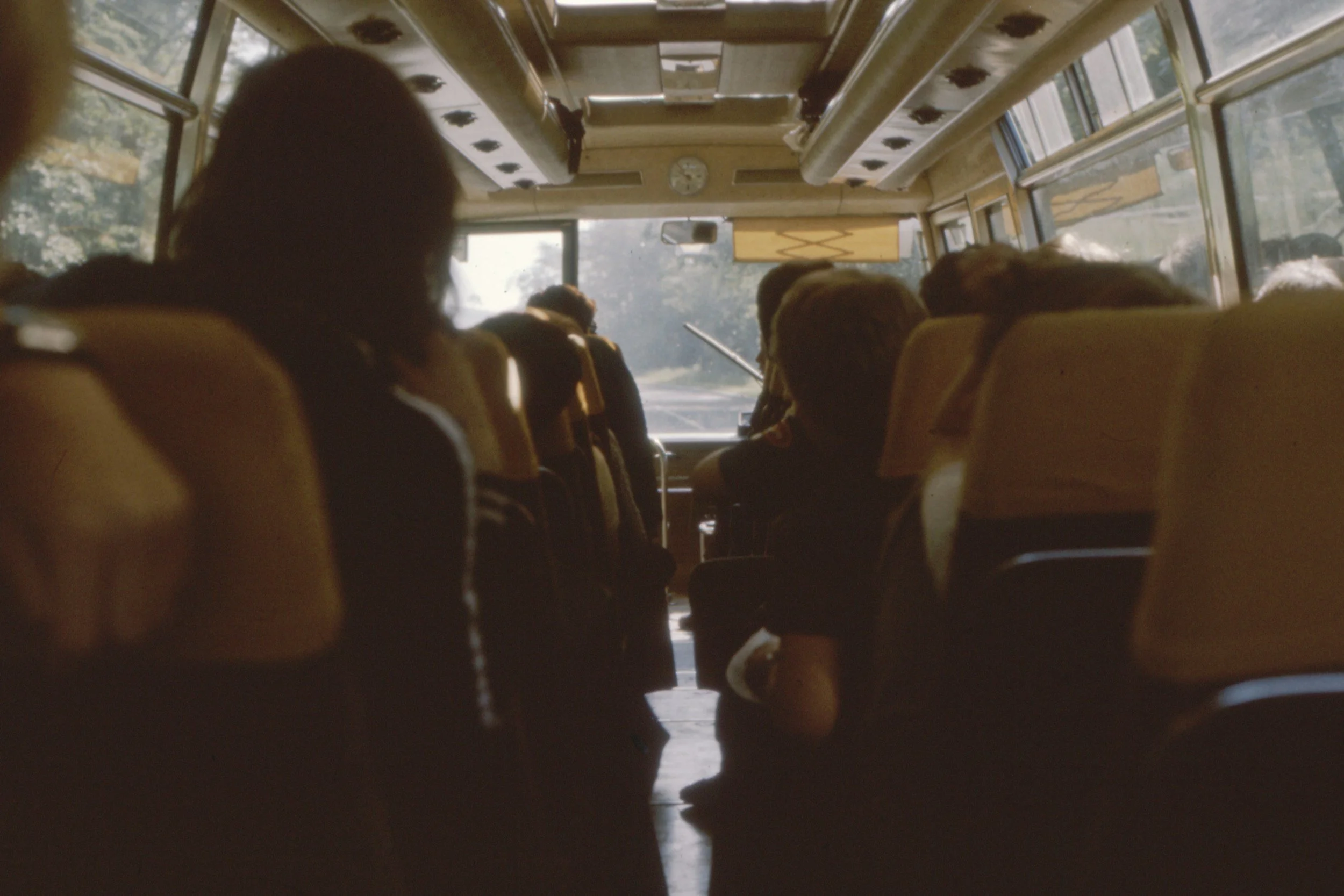
We stand together near the bus station, inhaling the smell of cow shit, watching miniature dust devils swirling around in the street like tiny tornados. Two hippie imposters, my boyfriend Don and I, wait for a Greyhound bus to take us from Stockton to Pasadena, California.

I.
It wasn’t cool to like the Backstreet Boys while attending high school in the late 1990s, and this may still be true today.
But I wasn’t cool. I didn’t care to get jiggy with it or weep to “Candle in the Wind.” The odes to drugs from Third Eye Blind and Marcy Playground were boring. I didn’t give any real shits about Lilith Fair’s tepid lineup, though I still went, quietly rolling my eyes through “Adia” by Sarah McLaughlin.

Thirty minutes from home, raindrops splattered on the windshield of my car and increased in intensity as I drove seventy-six miles per hour along the interstate. I knew the weather was supposed to turn severe later in the evening, but I thought I’d have time to make it back from my dentist appointment hours before any precipitation fell from the sky. The semi-truck ahead of me in the left lane kicked up additional water, so I flicked my wipers to high and focused my eyes on the road.

There I was, doing an assignment for a Bootcamp on confidence, writing a vision of what my world would look like if I had unlimited confidence.
I set out to write a vision of myself as a successful author of an inspiring and hilarious memoir. Between that and my editing income, I’d be doing so well that I could afford to buy a space to build a creative retreat. But when I put my pen to paper—I wrote about love. And instead of feeling empowered, I couldn’t decide if I should roll my eyes, puke, or cry.

Recently, scrolling through my news feed on Facebook, I came across a post by a girl from work. It was a picture of her and her mother side-by-side, same cute smile, same long, blonde hair, same eyes crinkled by their grins. She tagged it "#TWINS.” “Vote for me and my mom!" the caption said, with a link to a local radio station hosting a mother-daughter lookalike contest for Mother's Day.

When I was five, I got a pair of Wonder Woman Underoos, stars on blue bottoms, a golden eagle on the camisole, which my dad called a wife-beater. I blasted around the yard, kicking Nazis, saving drippy Steve Trevor. The world had clean edges. I was a goddess, a force. Wham! Pow! Look out bad guys. My mom called me inside; I was just in my underwear, and what would the neighbors think.

There is a place
with waxing armpits on video in the kitchen
a room where a man plays computer games
and liked brunettes over blondes

I lived in Pico Rivera when I was eight. I was among hundreds of Latinos that made up the majority of the population. We lived with my Mexican grandmother who grew weed in her garden for her arsenal of homemade medicines. Everything she had was homemade: her bras and underwear to her skirts, hand stitched with pockets added to them so she could carry her money and medicines around. Her brother lived in the shack besides ours, badly built by Mexicans with muddy pants and dirty work boots, placed in my grandmother’s back yard. We didn’t have a home of our own. I spent most of my childhood running around my grandmother’s garden and eating the dumpster dived food my great uncle would fish out of bins while my parents worked.
I realized I cannot hold these both in full. One is always compromised for the sake of the other.
All my life, I have held my relationships close and kept up pleasing appearances. I try to keep my Facebook posts honest but generally appealing, even when they are more politically charged. But my marginalized friends do not have the luxury for me to keep this up. They did not have it before and they certainly do not have it now that an intolerant, misogynist racist is about to lead our country. This longstanding current of hatred will not stop if I remain silent. It will not stop if I stay safe where everyone will still like me. It will not stop if I do not call out those who perpetuate this harmful way of thinking.
Hard conversations lie in our futures and I will lose some friends along the way; I already have. To my friends, I apologize for my silence. I cannot continue being a people-pleaser at the expense of those I love. And there is no time to spare in speaking out on behalf of those hate is trying to silence. This is where you’ll find me: organizing, agitating, and resisting.
-Paige Wetzel
This product gives you access to all four weeks of the workshop. Purchase one or more drop-in sessions here.
Build a habit in 20 sessions. In this 4 week workshop that meets Mondays through Fridays from 8:00-9:00 AM CST, we will focus on generating new writing—making headway on a current project, reviving an old project that’s been gathering dust, or writing based off of the daily prompts Leigh provides.
The first 45 minutes of class are a gentle, camera-off, silent writing session. The remaining 15 minutes are an opportunity to share excerpts of our work, reflect on progress made, and set intentions for the following day. Then we will read a passage together on the writing life and close each class with a new learning about habit formation. By the end of this course we’ll have a morning writing habit that is each our own to continue and build upon.
This listing is for an individual class. To purchase access for the full 4-week workshop, click here.
Build a habit in 20 sessions. In this 4 week workshop that meets Mondays through Fridays from 8:00-9:00 AM CST, we will focus on generating new writing—making headway on a current project, reviving an old project that’s been gathering dust, or writing based off of the daily prompts Leigh provides.
The first 45 minutes of class is a gentle, camera-off, silent writing session. The remaining 15 minutes are an opportunity to share excerpts of our work, reflect on progress made, and set intentions for the following day. Then we will read a passage together on the writing life and close each class with a new learning about habit formation. By the end of this course we’ll have a morning writing habit that is each our own to continue and build upon.
Many writers feel drawn to write about their lives but struggle with uncertainty: Why this story? Why now? And who is it really for? This workshop is designed to help writers move beyond doubt and toward clarity by focusing on the deeper meaning and purpose beneath their story.
In this interactive, craft-forward session, participants will be introduced to the Memoir Compass, a practical framework that helps writers articulate their motivation (why they are writing), mission (who the story serves), and message (what meaning or insight the story carries). Through guided reflection and writing exercises, participants will begin shaping a personal narrative rooted in intention rather than overwhelm.
This workshop is ideal for writers interested in memoir or personal narrative, as well as fiction writers drawing from lived experience, who want to move forward with greater confidence, focus, and direction.
Some of the most compelling creative nonfiction begins with the feelings we are tempted to avoid: anger, resentment, shame, fear, or the sense that we have an axe to grind. In this six-week workshop, writers will explore how to follow that emotional heat toward deeper, more honest work—without sacrificing compassion, complexity, or craft. Through close readings, writing exercises, discussion, and constructive feedback, we’ll consider how to transform strong feelings into writing that reaches beyond catharsis and connects with readers.
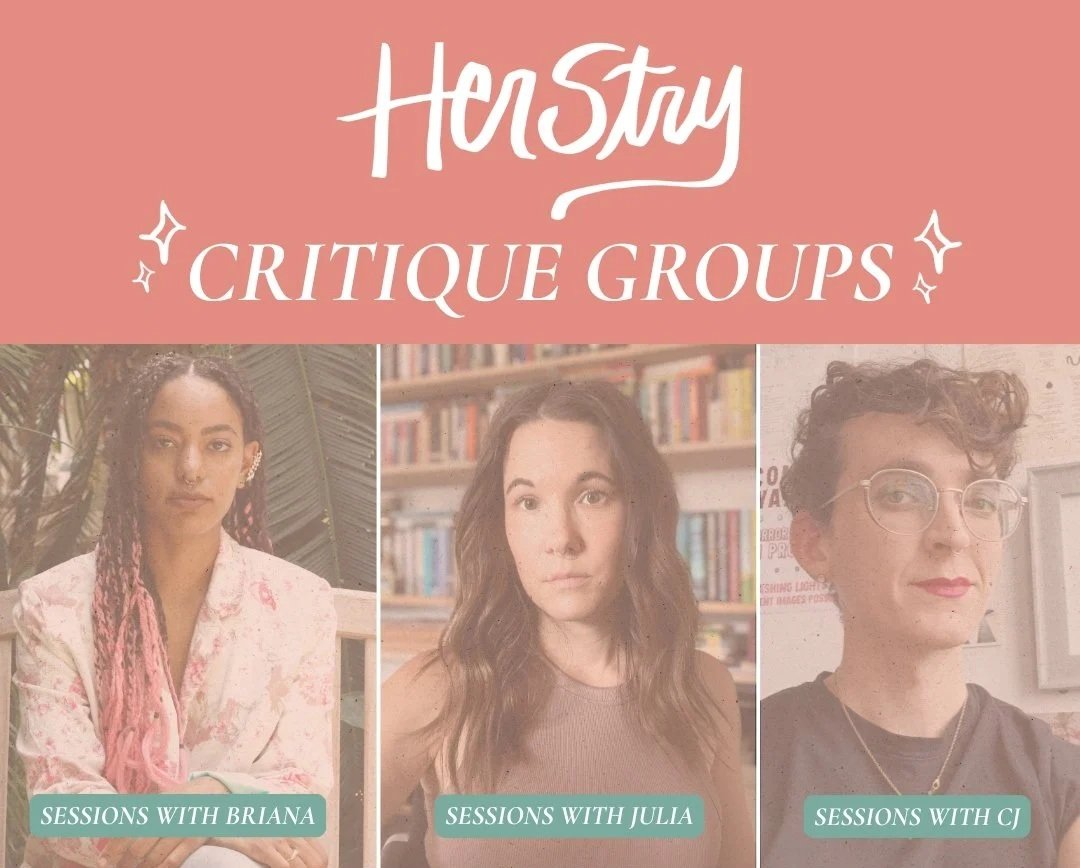
IT’S NO SECRET THAT FEEDBACK IS AN IMPORTANT PART OF THE WRITING PROCESS.
In fact, we argue that it might be the most important part of the process.
But it’s hard to find a writing community. It’s hard to find the people who are willing to take the time and the effort to read your work and give the feedback you really, truly deserves.
That’s where HerStry Critique Groups come in!
HerStry Critique Groups are small groups of 6 women who gather online for 6 weeks to share their writing, give constructive feedback and gain skills as writers.
Weekly online sessions last approximately ninety minutes, with three women sharing their work each week. Writers of all genres and levels are welcome and you may share both works of fiction and nonfiction.
Sessions take place on Mondays 7PM CT, Tuesdays 11AM CT, Fridays 11AM CT
WHAT’S INCLUDED IN THE HERSTRY CRITIQUE GROUPS?
Six 90 minute live workshop sessions
Three 20 minutes sessions in the “hot seat” to get you work critiqued
Written and verbal feedback from your fellow workshop participants
A weekly in depth edit and critique of your work from the group leader after each session
Weekly writing goals and accountability check ins
Full video recordings of each session to keep for your records
Say goodbye to the lonely, stuck in your head writing life!

LET’S WRITE!
From conception to submission. Let’s make summer sizzle with stories.
Writing a short story doesn’t happen in one session. It takes multiple drafts to get it exactly right, to create characters that come to life for the reader and a world they can’t stop thinking about. In this seven week course we will work on a single short story from conception to submission ready. The seven week session will include generative brainstorming sessions, short story craft talks, multiple workshops for feedback from fellow writers, and detailed line by line feedback and edits from your instructor. Plus, we’ll talk about submission venues, cover letters, and when to know if your story is ‘finished.’
IT’S NO SECRET THAT FEEDBACK IS AN IMPORTANT PART OF THE WRITING PROCESS.
In fact, we argue that it might be the most important part of the process.
But it’s hard to find a writing community. It’s hard to find the people who are willing to take the time and the effort to read your work and give the feedback you really, truly deserves.
That’s where HerStry Critique Groups come in!
HerStry Critique Groups are small groups of 6 women who gather online for 6 weeks to share their writing, give constructive feedback and gain skills as writers.
Weekly online sessions last approximately ninety minutes, with three women sharing their work each week. Writers of all genres and levels are welcome and you may share both works of fiction and nonfiction.
Sessions take place on Mondays 7PM CT, Tuesdays 11AM CT, Fridays 11AM CT
WHAT’S INCLUDED IN THE HERSTRY CRITIQUE GROUPS?
Six 90 minute live workshop sessions
Three 20 minutes sessions in the “hot seat” to get you work critiqued
Written and verbal feedback from your fellow workshop participants
A weekly in depth edit and critique of your work from the group leader after each session
Weekly writing goals and accountability check ins
Full video recordings of each session to keep for your records
Say goodbye to the lonely, stuck in your head writing life!
October 7, 14, 21, 28, November 4 and 18 CT
There is no class on November 11.
WRITING THE SEX SCENE.
Writing a sex scene can be delirious fun, a harrowing challenge, a literary milestone—possibly the most important part of building your short story or book. In our six weeks together, you’ll experience just about every possible emotion as you explore the erotic in different modes: comic, tender, harrowing, soul-shattering … because it really is all about the characters’ feelings, not just the mechanics. So we’ll talk about tone. Vocabulary. Metaphor. Sensory detail. How to get big emotions on the page … and when to pull back and let the reader’s imagination go to work.
This is a course for writers who want to explore the intersection between the novel and short stories, and would like to weave their short stories into a story cycle (or collection of "linked stories" or "composite novel"). This is also a class about the interaction of form and content, and how one influences the other. We will read works of interlinked stories by writers from diverse cultural and ethnic backgrounds, focusing on modern classics and contemporary practitioners of these hybrid forms. Weekly discussions will center on elements of craft, such as the expansion and compression of time, setting as an organizing and connecting principle, character development within and between stories, structure and plot for interconnected stories, and responding to literary influences in the same genre.
This six-week course guides writers through the literary submission process, offering insider insight and practical tools to help you get your work into the world. We’ll demystify everything from reading submission calls to writing cover letters and choosing the right journals. Along the way, we’ll workshop short bios, develop submission trackers, and build personalized plans that align with your voice and goals.
By the end of the course, you’ll walk away with a polished piece ready to send, a tailored submission list, and the confidence to navigate the lit mag world with clarity and purpose.
Ideal for writers of literary fiction, poetry, personal essay, memoir, and hybrid forms.

Paige lives in Nashville, where she attended grad school and now works for a local nonprofit. She currently works in job placement services, but is also interested in food justice and educating other white people about the realities of racism. In her free time she enjoys singing in a local chorus, baking, and teasing her cat.
The brick-arched doorway houses two twin wooden doors. It smells of early-summer piss. Under the marquee, a small blue and white sign reads, "Air Conditioned." But it's a lie: the club will be sweltering.