
All the World Is Waiting for You
When I was five, I got a pair of Wonder Woman Underoos, stars on blue bottoms, a golden eagle on the camisole, which my dad called a wife-beater. I blasted around the yard, kicking Nazis, saving drippy Steve Trevor. The world had clean edges. I was a goddess, a force. Wham! Pow! Look out bad guys. My mom called me inside; I was just in my underwear, and what would the neighbors think.
In high school, some college guy with Steve-Trevor shoulders asked me out on a date. I talked him up to my friends like he was proof I was cool. On our date, he tried to get me drunk, said things like: you seem like a girl who can handle herself, who knows what’s what. I nodded along, wanting him to think I was worldly or worthy or whatever. I had no idea. His hands pawed at my camisole, lightly at first, then with force. That night, I sat in a friend’s bathroom, staring out at a starless sky, my underwear drippy with blood and cum in her sink, wondering why this had to be the thing that made me a woman.
A decade later, I went to law school, fantasizing I would kick all the bad guys straight to jail where they could rot like Nazis. I imagined myself shining in navy blue suits, wowing the jury, winning over the judge. Except, I didn’t do any of that. All my friends chased big corporate jobs with big corporate salaries, and I wanted to be big too. We would say things like, everyone deserves a good lawyer, even billionaires. Corporate life was a wonder-less world. My daily was some douchebag with Steve-Trevor hair talking over me while we argued about which of our stupid-rich clients owed the other money. During the day, I stress-sweat through my camisole. At night, I dreamed my teeth fell out or I showed up at the office dressed only in my underwear.
I attended AWP for the first time this year. In my memory now, it is a fluorescent lit blur of searching for faces I recognize, of endless flyers and stacks of books and a lanyard around my neck. And the men. I can’t stop thinking about the men.
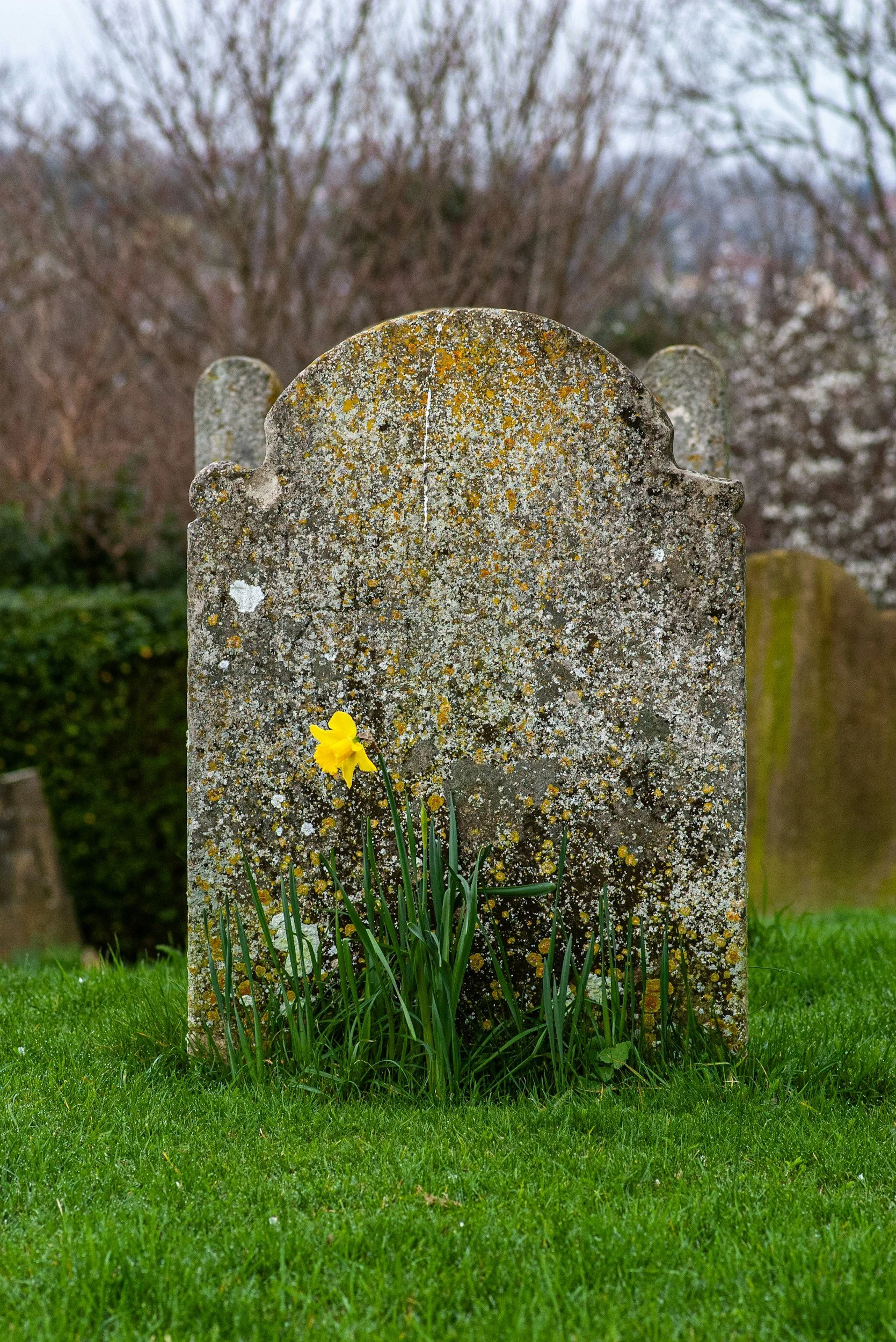
On Sundays, I take my grandmother to the cemetery to visit her mother. With her is a straw broom, small enough to carry in a reusable bag. When I was young, I would pull from that broom, break its straw to pieces, and throw them, watching as they spun to the ground like helicopter seeds. Now, in my grandmother’s hands, the broom brushes away dirt and moss and leaves from a headstone that shares my name.
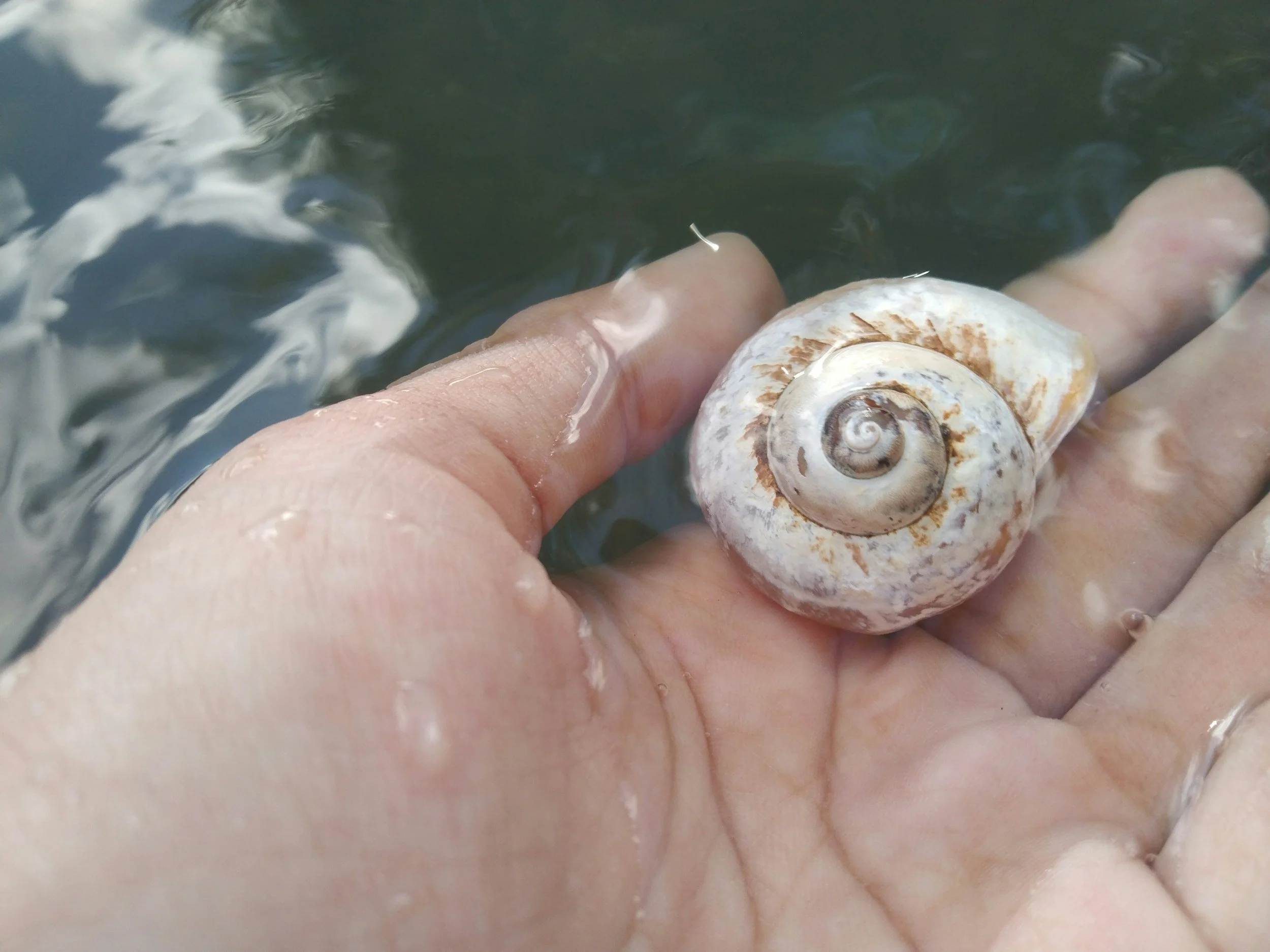
After running around in the heat of a South Carolina sun all day, I didn’t think there was anything that could scare you. We wandered from pier to pier, picking up nearly every shell on the shores of Myrtle Beach and kicking over abandoned sand castles. After a long day of pink streamer bike rides and arcade bubble gum, it was time to rinse off the day and rinse the sand out of our Kool-Aid dyed hair.

It was a perfect August day, and the Wolf River was clear and cool. The leaf canopy of spruce and cottonwood sparkled overhead, like shards of brilliant green glass backlit by intermittent bursts of sunlight.
Dave and I were trying out the twin red kayaks that his kids had given us the previous Christmas. Everyone agreed we had been working too hard, and the weight of a business we could no longer save was taking its toll.

Putting myself back together was a boring, organized process. A 1,000-piece puzzle left on the coffee table for months, or in this case, years. Finally sitting down to frame myself in sky and earth. Painstakingly searching the jumble for all those matching hooks and crevices. After the chaos of him, simply paying the bills on time was a cathartic experience. Routine was my remedy. Work away the day Monday through Friday. Come home when it’s dark. Stop at Walgreens to purchase a bottle of wine and pizza rolls. Cigarettes if needed. Home to one-and-a-half glasses of wine and the allowance of one orgasmic cigarette. The order was important.
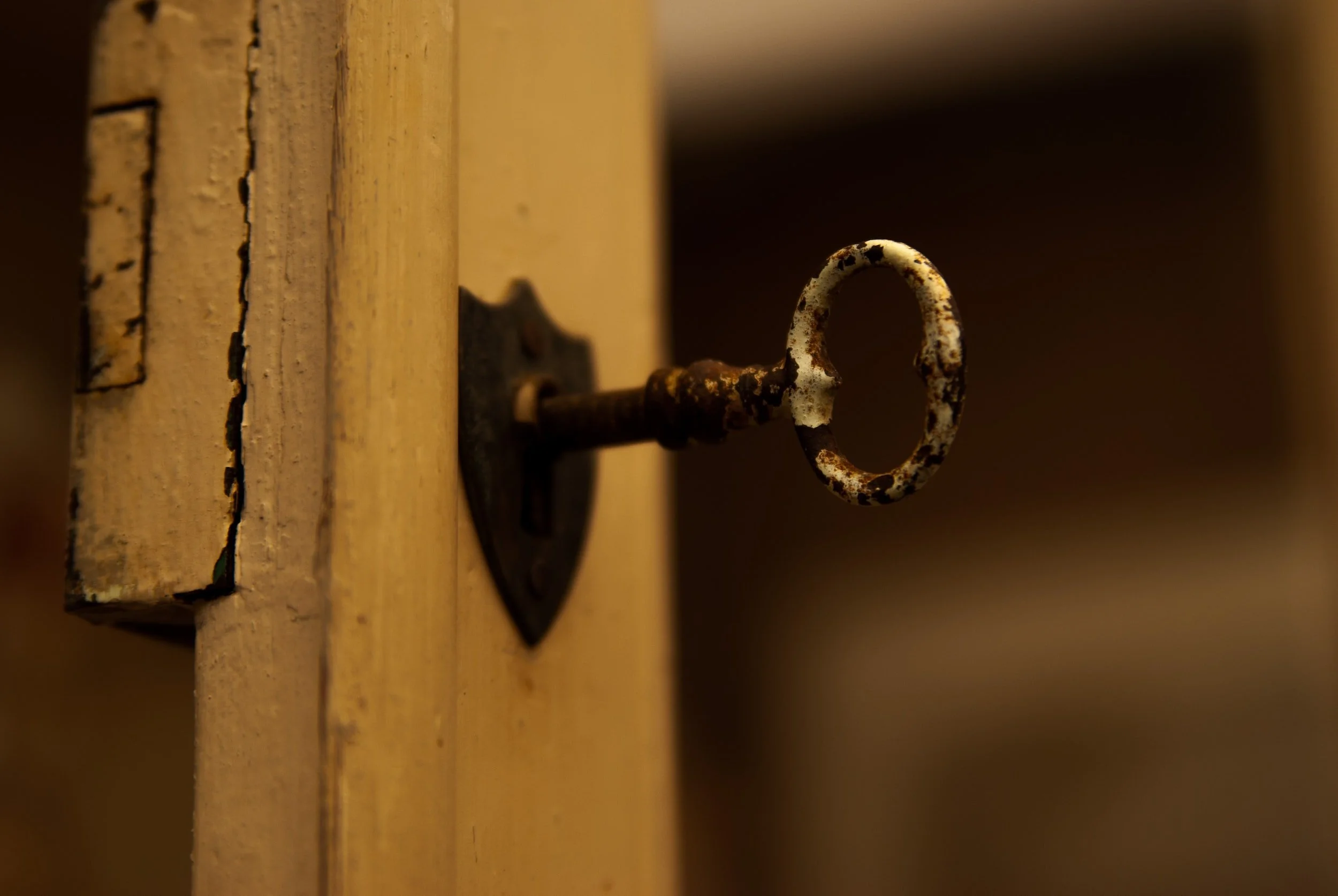
In the Bluebeard fairy tale, which enjoys variants across time and cultures, a boorish, rich, and mysterious man with a bluish countenance woos and takes several wives. After each whirlwind courtship and marriage, the new wife is given a key with which to breach a forbidden room. She’s instructed not to, but does so anyway, and discovers carnage; the bodies of Bluebeard’s previous wives whom he has beheaded, chopped to pieces, and/or hung from rafters or hooks.

Words may not have the ability to slough through flesh like a knife or a sharp shard of glass, but they can be used as weapons of emotional destruction. For me, a married woman's worst nightmare came to fruition when my mother-in-law stated her feelings about me with painful clarity.

“Shorter,” I said. “Take it all.”
January seemed a fitting moment for fresh starts. It wasn't born from some halfhearted resolution or unfounded faith in the promise of a new year. It wasn't shoved in with a promise to swear off chocolate or set the alarm an hour early every Monday through Friday.
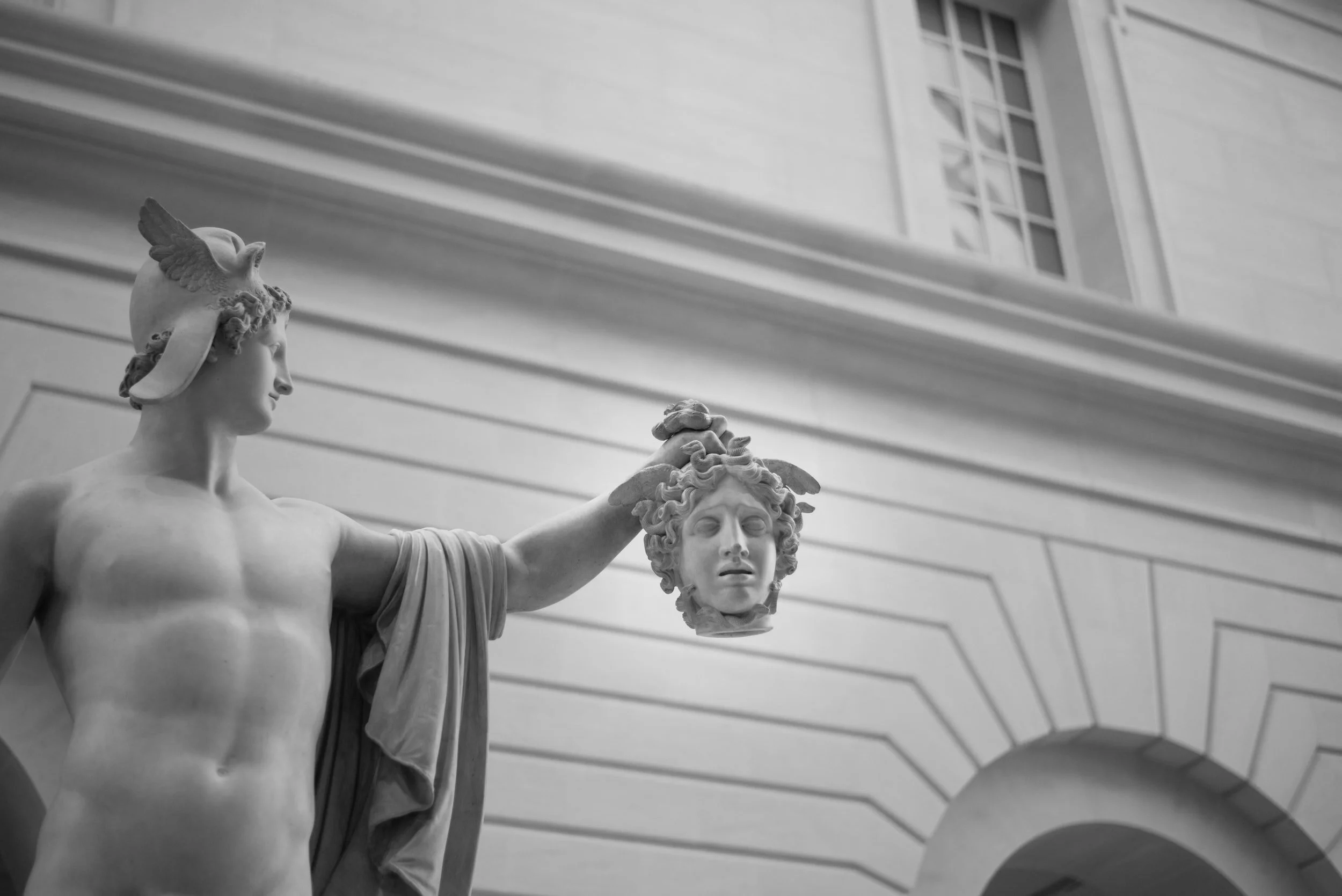
I want to write a story about the decapitation of glorious women. A story about the mighty falling. A story about heads tumbling in baskets. A story about the mouths that posthumously moved and eyes that blinked even after the head was severed. A story about the wigs that flew. A story about the heads that rolled.
I gave birth to a girl. Everyone said I could have it all: work, home, marriage, friends, baby—but I was exhausted. Other women managed. I was apparently less. My mom was delighted when I announced I was staying home, her smile audible when she called to say how relieved she was. It’s not giving up, she insisted, even though I was literally doing that. She said, you're finally free to become the woman you were always meant to be. I could have kicked the phone off the wall. A domestic goddess? Mom, that is so messed up. I wanted to shout—I am so much more—but I was already sobbing. Just another bleary-eyed, thirty-something with spit-up down her camisole pjs.
My youngest daughter doesn’t give a crap about Wonder Woman. Drippy polaroids of me in my Underoos don’t convey inherent awesomeness. She doesn’t want to be a goddess or impress some Steve Trevor. She wants to be a water-bender who is also a Pokémon trainer who is also a donut-selling librarian. She runs around our front yard yelling to her Mareep or her Charmander. I have no idea. The sky will fall before I call her inside. I stand at the window, eagle-eyed, listening to NPR. Supremacists have forced their way into the Capitol. No one tries to stop them. Outside, my daughter zips like a star.
-D.E. Hardy
This product gives you access to all four weeks of the workshop. Purchase one or more drop-in sessions here.
Build a habit in 20 sessions. In this 4 week workshop that meets Mondays through Fridays from 8:00-9:00 AM CST, we will focus on generating new writing—making headway on a current project, reviving an old project that’s been gathering dust, or writing based off of the daily prompts Leigh provides.
The first 45 minutes of class are a gentle, camera-off, silent writing session. The remaining 15 minutes are an opportunity to share excerpts of our work, reflect on progress made, and set intentions for the following day. Then we will read a passage together on the writing life and close each class with a new learning about habit formation. By the end of this course we’ll have a morning writing habit that is each our own to continue and build upon.
This listing is for an individual class. To purchase access for the full 4-week workshop, click here.
Build a habit in 20 sessions. In this 4 week workshop that meets Mondays through Fridays from 8:00-9:00 AM CST, we will focus on generating new writing—making headway on a current project, reviving an old project that’s been gathering dust, or writing based off of the daily prompts Leigh provides.
The first 45 minutes of class is a gentle, camera-off, silent writing session. The remaining 15 minutes are an opportunity to share excerpts of our work, reflect on progress made, and set intentions for the following day. Then we will read a passage together on the writing life and close each class with a new learning about habit formation. By the end of this course we’ll have a morning writing habit that is each our own to continue and build upon.
Many writers feel drawn to write about their lives but struggle with uncertainty: Why this story? Why now? And who is it really for? This workshop is designed to help writers move beyond doubt and toward clarity by focusing on the deeper meaning and purpose beneath their story.
In this interactive, craft-forward session, participants will be introduced to the Memoir Compass, a practical framework that helps writers articulate their motivation (why they are writing), mission (who the story serves), and message (what meaning or insight the story carries). Through guided reflection and writing exercises, participants will begin shaping a personal narrative rooted in intention rather than overwhelm.
This workshop is ideal for writers interested in memoir or personal narrative, as well as fiction writers drawing from lived experience, who want to move forward with greater confidence, focus, and direction.
Some of the most compelling creative nonfiction begins with the feelings we are tempted to avoid: anger, resentment, shame, fear, or the sense that we have an axe to grind. In this six-week workshop, writers will explore how to follow that emotional heat toward deeper, more honest work—without sacrificing compassion, complexity, or craft. Through close readings, writing exercises, discussion, and constructive feedback, we’ll consider how to transform strong feelings into writing that reaches beyond catharsis and connects with readers.
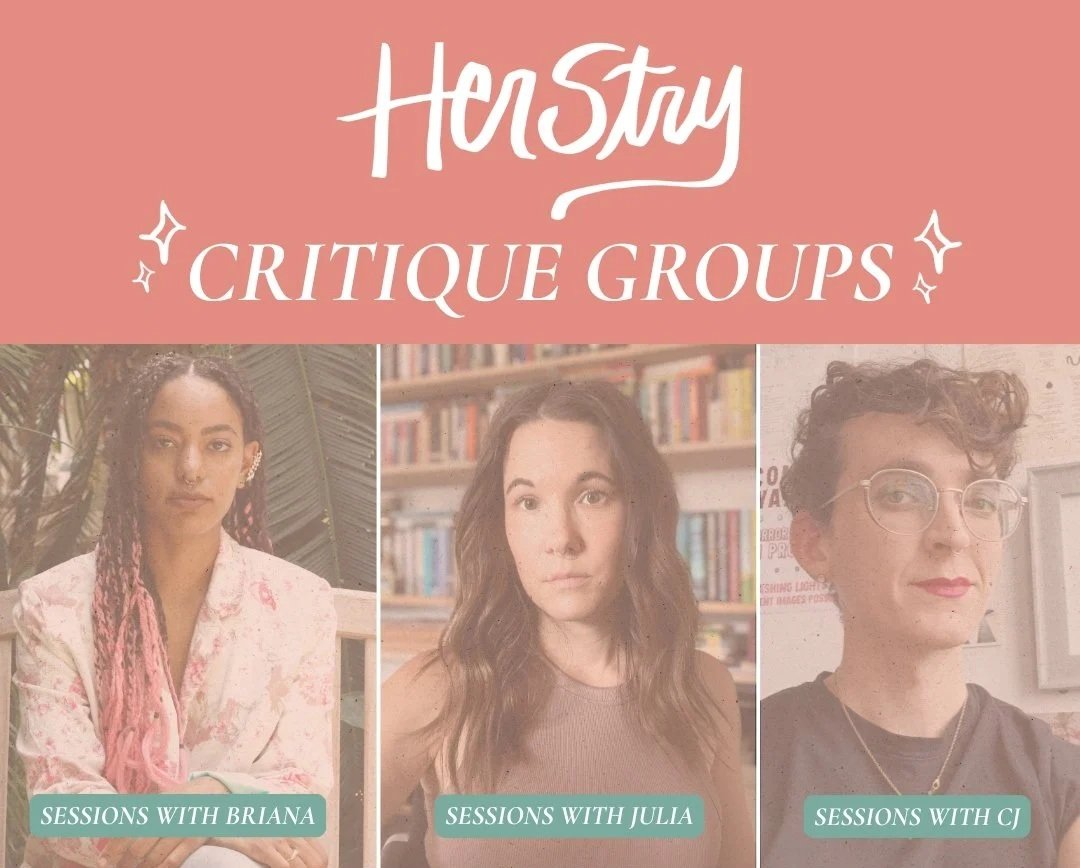
IT’S NO SECRET THAT FEEDBACK IS AN IMPORTANT PART OF THE WRITING PROCESS.
In fact, we argue that it might be the most important part of the process.
But it’s hard to find a writing community. It’s hard to find the people who are willing to take the time and the effort to read your work and give the feedback you really, truly deserves.
That’s where HerStry Critique Groups come in!
HerStry Critique Groups are small groups of 6 women who gather online for 6 weeks to share their writing, give constructive feedback and gain skills as writers.
Weekly online sessions last approximately ninety minutes, with three women sharing their work each week. Writers of all genres and levels are welcome and you may share both works of fiction and nonfiction.
Sessions take place on Mondays 7PM CT, Tuesdays 11AM CT, Fridays 11AM CT
WHAT’S INCLUDED IN THE HERSTRY CRITIQUE GROUPS?
Six 90 minute live workshop sessions
Three 20 minutes sessions in the “hot seat” to get you work critiqued
Written and verbal feedback from your fellow workshop participants
A weekly in depth edit and critique of your work from the group leader after each session
Weekly writing goals and accountability check ins
Full video recordings of each session to keep for your records
Say goodbye to the lonely, stuck in your head writing life!

LET’S WRITE!
From conception to submission. Let’s make summer sizzle with stories.
Writing a short story doesn’t happen in one session. It takes multiple drafts to get it exactly right, to create characters that come to life for the reader and a world they can’t stop thinking about. In this seven week course we will work on a single short story from conception to submission ready. The seven week session will include generative brainstorming sessions, short story craft talks, multiple workshops for feedback from fellow writers, and detailed line by line feedback and edits from your instructor. Plus, we’ll talk about submission venues, cover letters, and when to know if your story is ‘finished.’
IT’S NO SECRET THAT FEEDBACK IS AN IMPORTANT PART OF THE WRITING PROCESS.
In fact, we argue that it might be the most important part of the process.
But it’s hard to find a writing community. It’s hard to find the people who are willing to take the time and the effort to read your work and give the feedback you really, truly deserves.
That’s where HerStry Critique Groups come in!
HerStry Critique Groups are small groups of 6 women who gather online for 6 weeks to share their writing, give constructive feedback and gain skills as writers.
Weekly online sessions last approximately ninety minutes, with three women sharing their work each week. Writers of all genres and levels are welcome and you may share both works of fiction and nonfiction.
Sessions take place on Mondays 7PM CT, Tuesdays 11AM CT, Fridays 11AM CT
WHAT’S INCLUDED IN THE HERSTRY CRITIQUE GROUPS?
Six 90 minute live workshop sessions
Three 20 minutes sessions in the “hot seat” to get you work critiqued
Written and verbal feedback from your fellow workshop participants
A weekly in depth edit and critique of your work from the group leader after each session
Weekly writing goals and accountability check ins
Full video recordings of each session to keep for your records
Say goodbye to the lonely, stuck in your head writing life!
October 7, 14, 21, 28, November 4 and 18 CT
There is no class on November 11.
WRITING THE SEX SCENE.
Writing a sex scene can be delirious fun, a harrowing challenge, a literary milestone—possibly the most important part of building your short story or book. In our six weeks together, you’ll experience just about every possible emotion as you explore the erotic in different modes: comic, tender, harrowing, soul-shattering … because it really is all about the characters’ feelings, not just the mechanics. So we’ll talk about tone. Vocabulary. Metaphor. Sensory detail. How to get big emotions on the page … and when to pull back and let the reader’s imagination go to work.
This is a course for writers who want to explore the intersection between the novel and short stories, and would like to weave their short stories into a story cycle (or collection of "linked stories" or "composite novel"). This is also a class about the interaction of form and content, and how one influences the other. We will read works of interlinked stories by writers from diverse cultural and ethnic backgrounds, focusing on modern classics and contemporary practitioners of these hybrid forms. Weekly discussions will center on elements of craft, such as the expansion and compression of time, setting as an organizing and connecting principle, character development within and between stories, structure and plot for interconnected stories, and responding to literary influences in the same genre.
This six-week course guides writers through the literary submission process, offering insider insight and practical tools to help you get your work into the world. We’ll demystify everything from reading submission calls to writing cover letters and choosing the right journals. Along the way, we’ll workshop short bios, develop submission trackers, and build personalized plans that align with your voice and goals.
By the end of the course, you’ll walk away with a polished piece ready to send, a tailored submission list, and the confidence to navigate the lit mag world with clarity and purpose.
Ideal for writers of literary fiction, poetry, personal essay, memoir, and hybrid forms.
D.E. Hardy's work has appeared in New World Writing, Clockhouse Magazine (Pushcart Nomination), and Sixfold, among others. She is an MFA student at Antioch University and lives in the San Francisco Bay Area.
When I was a kid, my gender and race lived together, tightly tied in a braid on top of my head. My brothers and I share a skin tone that is pale in the winter, and cinnamon in the summer. Our father was the only black person in our rural town, and as far as we knew, we were the only mixed-race kids on Earth.