
Lately I’ve been thinking a lot about the intersection of vocation – or what I feel I am called to do, drawn to – and family life. I come from a large extended and loving Midwestern Catholic family. Figuring out what I am to do with my life and how I fit into my family is one part of what I’ve been thinking about. Biology of my female body is another. And here’s why:
Five of my friends are pregnant. When my mom was my age, she was pregnant with me, her oldest. When my grandmother was my age, she already had five kids and another on the way. I’ve always wanted to have a child, but it hasn’t been something I’ve really thought much about… until recently.
I just had a birthday. I turned twenty-six. I’m still young! I’ve always thought that I would start a family in my twenties like my family members. But recently, I’ve realized how different my life is than theirs. I did what my family and the culture encouraged and attended universities. I went to school for six years longer than both my mother and my grandmother. And so I also started my adult life six years after they did.
So biologically I’m behind them in starting a family and having kids of my own. But vocationally, I’m not sure what I ought to be doing yet. I keep feeling a desire to go away again, get out of the state, explore and have adventures before I “settle down.” But that doesn’t make sense in my family’s generation before me. So I’m paving the way to what an educated search for vocation looks like.
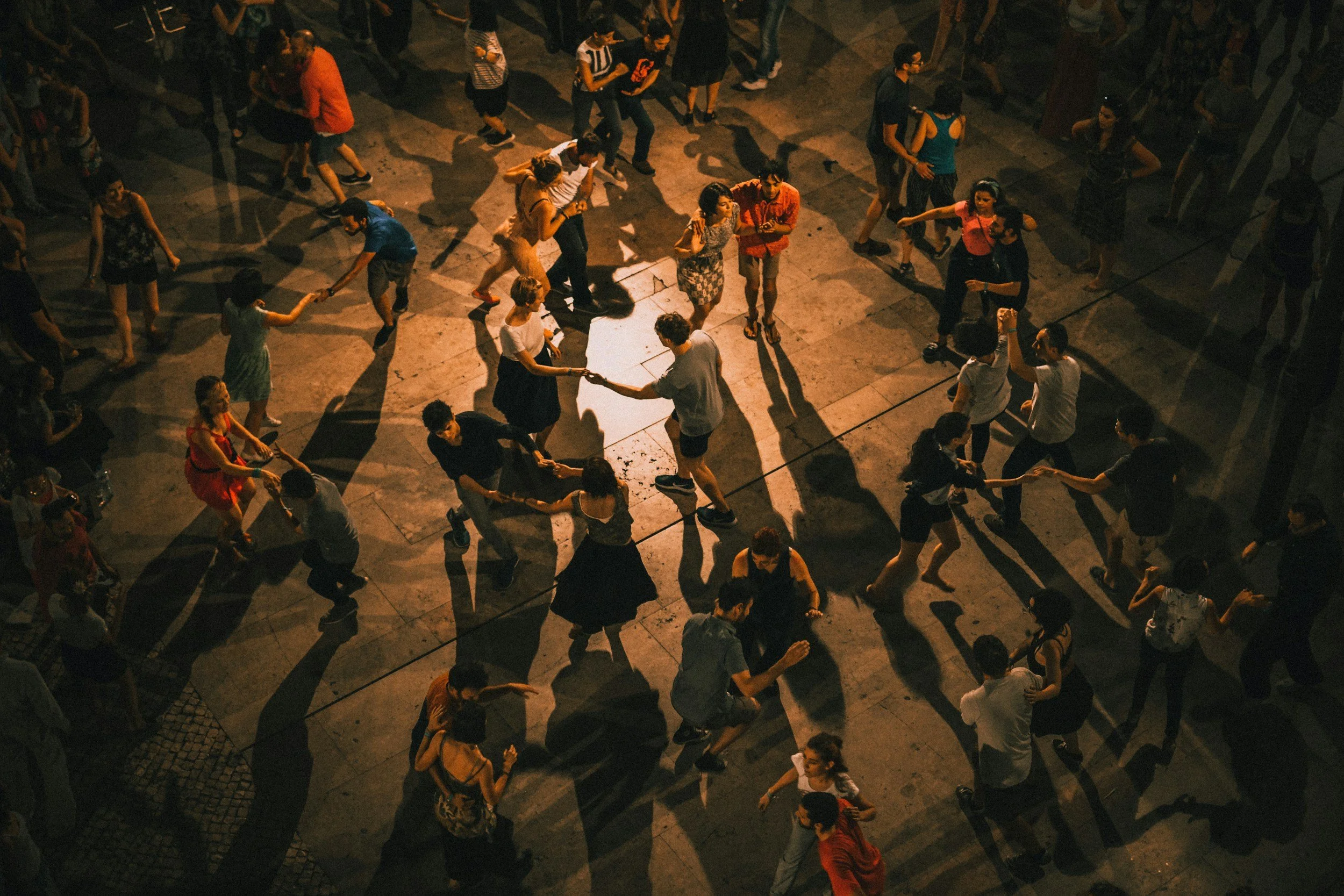
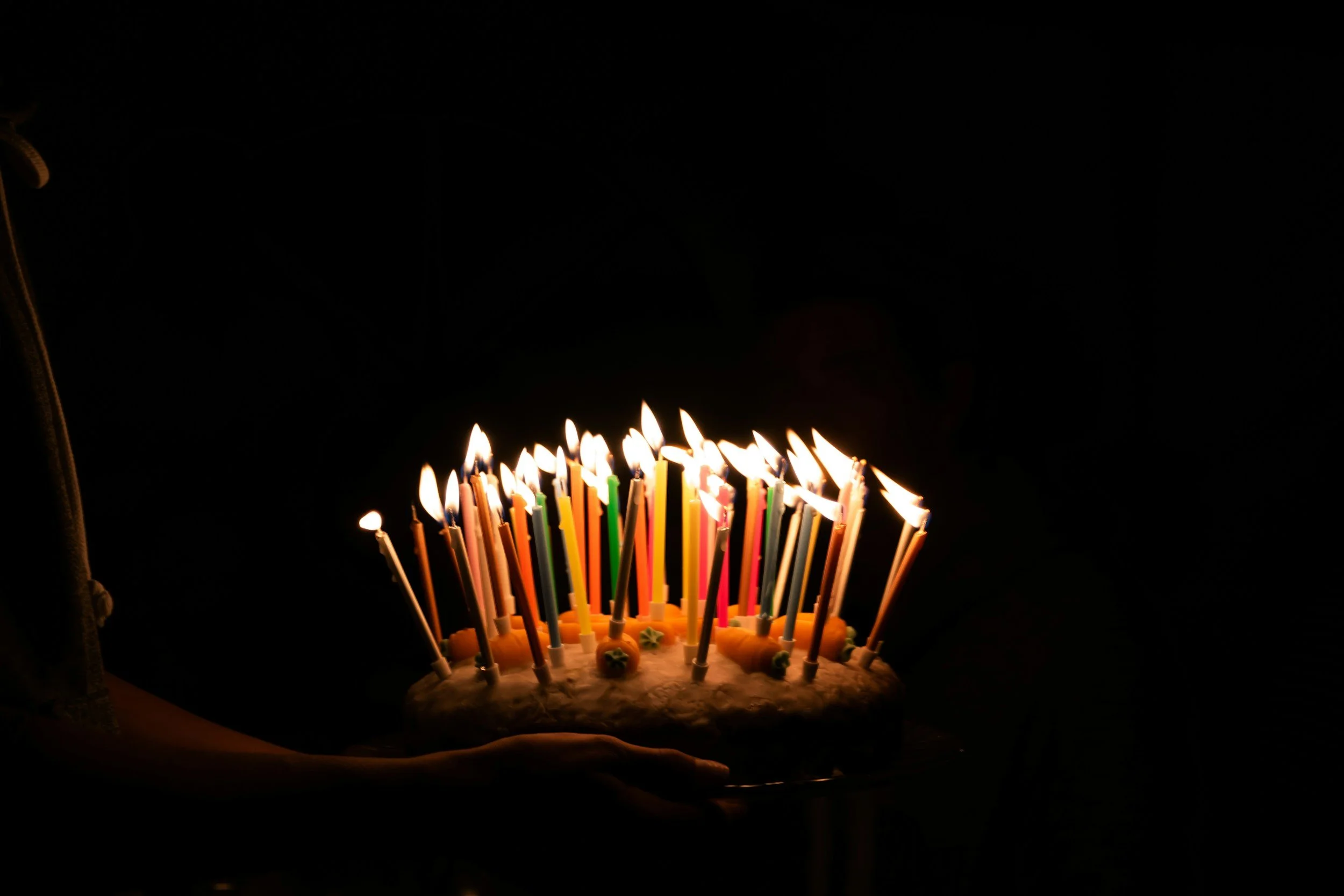
Midlife doesn’t announce itself with milestones — it arrives in contrasts. One moment, you’re lighting candles for a graduation. The next, you’re watching your mother shrink into a hospital gown.
Josh and I sat in the waiting room, an office building with a view of the Manhattan skyline. I stared at the other women, wondering what they were getting done. I wondered how many of them were here not by choice. How many of them had never contemplated getting fake breasts before they learned they had breast cancer. I couldn’t have been the only one. But I was definitely the only pregnant woman getting a boob job in the crowd.

It is 10:34 p.m. I am journaling about the difference between what I eat and how I taste it.
In other words, it’s not about the chocolate cake. It’s about the pool of saliva swirling through each bite. It’s about the tongue pressing crumb into ganache, the esophagus readying itself to carry each sweet offering down. It is about my body knowing it is safe. Safe to sit, to enjoy, to receive.

One Sunday in January, my twelve year-old and I had an hour between appointments in the Denver suburbs, and found ourselves at a mall. In the age of “add to cart,” we rarely shopped together, and she had grown so much in the previous several months that none of her clothes fit. As we wandered into H&M, my daughter’s eyes lit up. She grabbed armfuls of clothes, including a pair of acid washed jeans with a chain that went from the front pocket to a back belt loop, each link a tiny heart. Maybe they won’t fit, I thought hopefully, as I trailed behind her in a daze. The Friday before, she had refused to go to school, her second school of the year, and one that had seemed promising only a couple of weeks before. I felt like I was hiking along the edge of a cliff in the fog; I had no idea what was going to happen, or how close we were to the edge.

There was a corner in my house that I came to dread nearing, where our daughter’s diaper changing table was set up. It was at the opposite end in our bedroom, where on the other side was the big window facing the endless mountains and winding roads, which got us sold on this house as a newly married couple.

In the minutes after she was born, all of the lights came on. We watched her climb the wall of my body and land, exhausted, at the shore of my breast. Under the sharp white of hospital light, they did the weighing and measuring, and she screamed so that every number and value only reached my ears as alive, alive, more evidence of her realness, her presence. She sent howls up into a brightness that must have been like looking at the sun.
Every week she asked me how I felt and every week, while, in general things were “fine,” I always told her there was almost always a day, or a couple of hours a day, where despondence grabbed me and wouldn’t let go. It was as if someone, something, was wrestling me and trying to get me to give in, to tap out. We were in different weight classes though. I was the lightweight and the despondence was the heavyweight and I didn’t have any agility or tricks up my sleeve to counteract the weight disparity between us.

I stood in front of the gate, but the Delta screen didn’t make any sense. Why wouldn’t the airline have cleared out the Denver flight if the Nashville flight was due to board in the next 10 minutes? I looked for any indication that the departure gate had been changed; I found none.

Every Thanksgiving and Christmas we haul the extra table up from the basement: a cheap white pine table, the varnish yellow now, that we used in the kitchen until eventually it became too embarrassing. When we carry it upstairs, we do it in pieces, and once it's in the dining room the tabletop gets flipped over and lowered to the floor so someone--usually my husband or my son Sam--can attach the legs. As one of them works with screws and Allen wrenches, I read the legends inscribed by our kids on the underside of the table when they were little; the one we see first, in large red letters, is "Boo, Sam sucks a lot, by Nick."

And sometimes it’s more than just familial troubling. For example, right before the winter break I was eating lunch with a few of my college students studying nursing and health sciences (I’m their minister). Somehow we got on the topic of how they’re learning that once a woman is thirty years old the risk of pregnancy complications (and therefore different dis-abilities in these children) increases dramatically. I immediately thought of my age and current situation in life (working as a full-time minister and dating but not nearly ready to become a parent). Could I somehow get my life “in order” enough to have a baby before I’m thirty?
Now, it’s important to note that if I have a child, whatever child I have I’ll love with all my heart no matter how similar or different they may be. But this conversation brought up something more than worries about my (possible) future children’s health; it brought up curiosity about the human body and the encouragement of finding one’s life calling: Is my female body created in a way that awards pregnancy in my teens and early twenties? How do our culture, society, families and religions prepare us to become parents (or even adults!)? Is this time of exploration interrupting my body’s biological baby-making schedule?
So these questions I carry as I continue to explore. I’d like to make a family, similar to that of how I grew up. And I’d like to find my calling so I can feel like I’m using my talents and skills and passion to better the world. But I don’t want them to be two separate things that distract from the other. I know many people have done both. But how can I combine these without wasting away my biological clock?
-Breanna Mekuly
This product gives you access to all four weeks of the workshop. Purchase one or more drop-in sessions here.
Build a habit in 20 sessions. In this 4 week workshop that meets Mondays through Fridays from 8:00-9:00 AM CST, we will focus on generating new writing—making headway on a current project, reviving an old project that’s been gathering dust, or writing based off of the daily prompts Leigh provides.
The first 45 minutes of class are a gentle, camera-off, silent writing session. The remaining 15 minutes are an opportunity to share excerpts of our work, reflect on progress made, and set intentions for the following day. Then we will read a passage together on the writing life and close each class with a new learning about habit formation. By the end of this course we’ll have a morning writing habit that is each our own to continue and build upon.
This listing is for an individual class. To purchase access for the full 4-week workshop, click here.
Build a habit in 20 sessions. In this 4 week workshop that meets Mondays through Fridays from 8:00-9:00 AM CST, we will focus on generating new writing—making headway on a current project, reviving an old project that’s been gathering dust, or writing based off of the daily prompts Leigh provides.
The first 45 minutes of class is a gentle, camera-off, silent writing session. The remaining 15 minutes are an opportunity to share excerpts of our work, reflect on progress made, and set intentions for the following day. Then we will read a passage together on the writing life and close each class with a new learning about habit formation. By the end of this course we’ll have a morning writing habit that is each our own to continue and build upon.
Many writers feel drawn to write about their lives but struggle with uncertainty: Why this story? Why now? And who is it really for? This workshop is designed to help writers move beyond doubt and toward clarity by focusing on the deeper meaning and purpose beneath their story.
In this interactive, craft-forward session, participants will be introduced to the Memoir Compass, a practical framework that helps writers articulate their motivation (why they are writing), mission (who the story serves), and message (what meaning or insight the story carries). Through guided reflection and writing exercises, participants will begin shaping a personal narrative rooted in intention rather than overwhelm.
This workshop is ideal for writers interested in memoir or personal narrative, as well as fiction writers drawing from lived experience, who want to move forward with greater confidence, focus, and direction.
Some of the most compelling creative nonfiction begins with the feelings we are tempted to avoid: anger, resentment, shame, fear, or the sense that we have an axe to grind. In this six-week workshop, writers will explore how to follow that emotional heat toward deeper, more honest work—without sacrificing compassion, complexity, or craft. Through close readings, writing exercises, discussion, and constructive feedback, we’ll consider how to transform strong feelings into writing that reaches beyond catharsis and connects with readers.
IT’S NO SECRET THAT FEEDBACK IS AN IMPORTANT PART OF THE WRITING PROCESS.
In fact, we argue that it might be the most important part of the process.
But it’s hard to find a writing community. It’s hard to find the people who are willing to take the time and the effort to read your work and give the feedback you really, truly deserves.
That’s where HerStry Critique Groups come in!
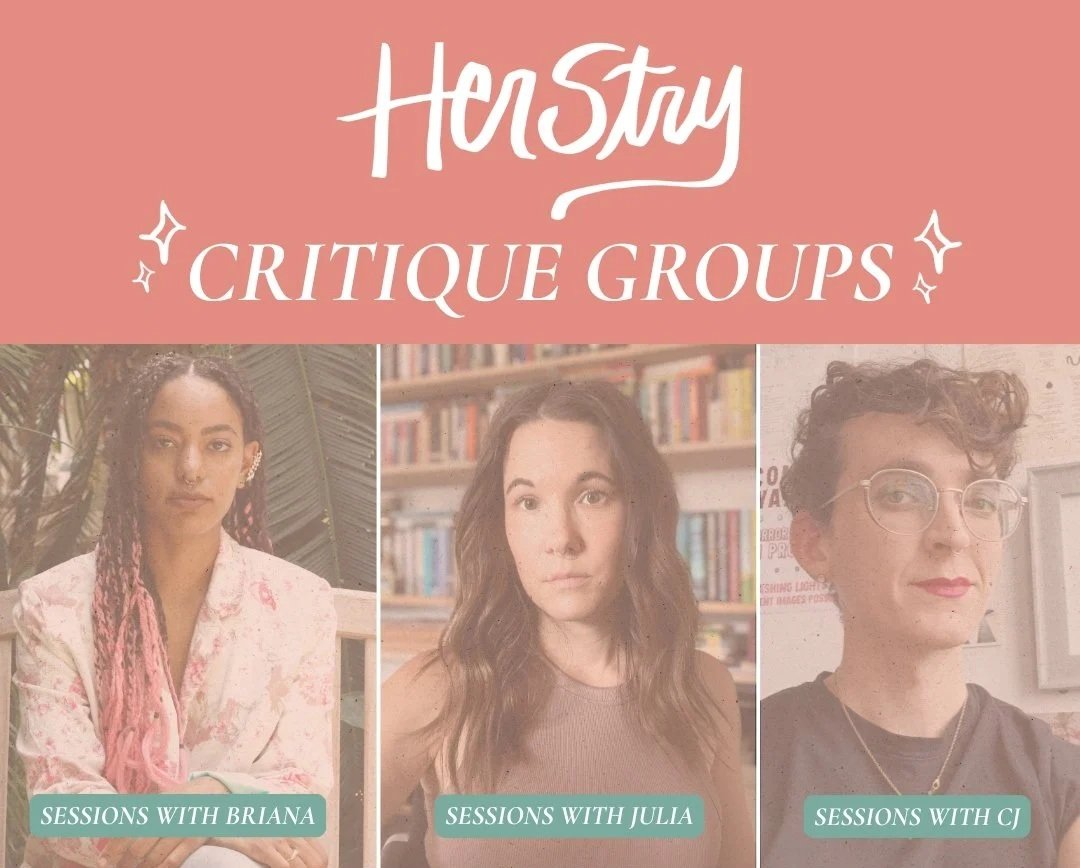
HerStry Critique Groups are small groups of 6 women who gather online for 6 weeks to share their writing, give constructive feedback and gain skills as writers.
Weekly online sessions last approximately ninety minutes, with three women sharing their work each week. Writers of all genres and levels are welcome and you may share both works of fiction and nonfiction.
Sessions take place on Mondays 7PM CT, Tuesdays 11AM CT, Fridays 11AM CT
WHAT’S INCLUDED IN THE HERSTRY CRITIQUE GROUPS?
Six 90 minute live workshop sessions
Three 20 minutes sessions in the “hot seat” to get you work critiqued
Written and verbal feedback from your fellow workshop participants
A weekly in depth edit and critique of your work from the group leader after each session
Weekly writing goals and accountability check ins
Full video recordings of each session to keep for your records
Say goodbye to the lonely, stuck in your head writing life!
LET’S WRITE!
From conception to submission. Let’s make summer sizzle with stories.
Writing a short story doesn’t happen in one session. It takes multiple drafts to get it exactly right, to create characters that come to life for the reader and a world they can’t stop thinking about. In this seven week course we will work on a single short story from conception to submission ready. The seven week session will include generative brainstorming sessions, short story craft talks, multiple workshops for feedback from fellow writers, and detailed line by line feedback and edits from your instructor. Plus, we’ll talk about submission venues, cover letters, and when to know if your story is ‘finished.’
IT’S NO SECRET THAT FEEDBACK IS AN IMPORTANT PART OF THE WRITING PROCESS.
In fact, we argue that it might be the most important part of the process.
But it’s hard to find a writing community. It’s hard to find the people who are willing to take the time and the effort to read your work and give the feedback you really, truly deserves.
That’s where HerStry Critique Groups come in!
HerStry Critique Groups are small groups of 6 women who gather online for 6 weeks to share their writing, give constructive feedback and gain skills as writers.
Weekly online sessions last approximately ninety minutes, with three women sharing their work each week. Writers of all genres and levels are welcome and you may share both works of fiction and nonfiction.
Sessions take place on Mondays 7PM CT, Tuesdays 11AM CT, Fridays 11AM CT
WHAT’S INCLUDED IN THE HERSTRY CRITIQUE GROUPS?
Six 90 minute live workshop sessions
Three 20 minutes sessions in the “hot seat” to get you work critiqued
Written and verbal feedback from your fellow workshop participants
A weekly in depth edit and critique of your work from the group leader after each session
Weekly writing goals and accountability check ins
Full video recordings of each session to keep for your records
Say goodbye to the lonely, stuck in your head writing life!
October 7, 14, 21, 28, November 4 and 18 CT
There is no class on November 11.
WRITING THE SEX SCENE.
Writing a sex scene can be delirious fun, a harrowing challenge, a literary milestone—possibly the most important part of building your short story or book. In our six weeks together, you’ll experience just about every possible emotion as you explore the erotic in different modes: comic, tender, harrowing, soul-shattering … because it really is all about the characters’ feelings, not just the mechanics. So we’ll talk about tone. Vocabulary. Metaphor. Sensory detail. How to get big emotions on the page … and when to pull back and let the reader’s imagination go to work.
This is a course for writers who want to explore the intersection between the novel and short stories, and would like to weave their short stories into a story cycle (or collection of "linked stories" or "composite novel"). This is also a class about the interaction of form and content, and how one influences the other. We will read works of interlinked stories by writers from diverse cultural and ethnic backgrounds, focusing on modern classics and contemporary practitioners of these hybrid forms. Weekly discussions will center on elements of craft, such as the expansion and compression of time, setting as an organizing and connecting principle, character development within and between stories, structure and plot for interconnected stories, and responding to literary influences in the same genre.
This six-week course guides writers through the literary submission process, offering insider insight and practical tools to help you get your work into the world. We’ll demystify everything from reading submission calls to writing cover letters and choosing the right journals. Along the way, we’ll workshop short bios, develop submission trackers, and build personalized plans that align with your voice and goals.
By the end of the course, you’ll walk away with a polished piece ready to send, a tailored submission list, and the confidence to navigate the lit mag world with clarity and purpose.
Ideal for writers of literary fiction, poetry, personal essay, memoir, and hybrid forms.