
In the fall Veronica Kirin wrote for HerStory describing her work as an ethnographer and the project she has created called the Untold Stories Project. Since she last wrote Veronica has been traveling around the country interviewing elders about what life was like before technology. It is Veronica's hope to preserve these stories so that future generations will know what life was like before everything was at the tips of their fingers.
***
I drove to 40 states during the month of November. I drove so many miles it took two rental cars due to oil change needs. Somehow I managed to finish $1k under my Kickstarter budget (thank you ramen noodles). I met so many people that names and faces began to blur. Thank god I recorded everything.
I guess this is what we do for passion. When there is something we believe in, we will gladly eat ramen noodles and sleep in the car in between meetings. We’ll drive 13 hours straight in order to make a connection and also eat Thanksgiving with one friend and 24 strangers. We’ll introduce ourselves to strangers needlessly, except for the need to talk about the mission.
In February of 2015 I started the Untold Stories Project. I realized that all this talk about society being changed by technology was being written by people who had lived their entire lives with technology. I’m an Anthropologist - I come at a problem from legacy knowledge. So I decided to run a Kickstarter (funded in September 2015) and hit the road, interviewing as diverse a population as I could in order to learn from those who have lived through this tech revolution. The goal of the interviews is a book to break through the noise.

I met you by the river the first time while the mist rose from the banks like it was trying to change elements. You were more fun to run from the cops with than anyone else I’d met, and man you made me reckless. I never had to test my legs though, the minivan did it for us while Jerry blasted through the blown speakers in the cornfield. You walked 2,000 miles up the country on trail and wrote me letters back home while I watched, sidelined. I could have walked myself from Georgia to Maine with you, but it was your own pilgrimage to undertake, your season spending nights under a green tarp.

You listened to Joni Mitchell’s Blue while you were abroad. Some say an unhealthy amount, but you beg to differ. Something about the timbre of her voice resonates with traveling, long-distance train rides and loneliness. Because that’s what the feeling was, right? Loneliness?

I balanced on the side of Mt. Yale, quietly crying into my knees. Rory hopped from stone to stone ahead of me, following my husband, Julio. Between only weighing thirteen pounds (mostly fluff) and having the start of cataracts—and being a dog—Rory did not notice the four thousand-foot drop on the other side of the rocks. Once she realized I was no longer a step behind her, she came plopping back to where I froze and wiggled her way onto my lap. Panting and licking my face, in her obliviousness, Rory pulled me out of my panic and helped me make it the rest of the way to Mt. Yale’s fourteen thousand two hundred-foot summit. I had stopped just a short scramble from the top because the trail was more exposed than I expected, and I was sure I would slip and plummet to my death. Predictably, I did not.
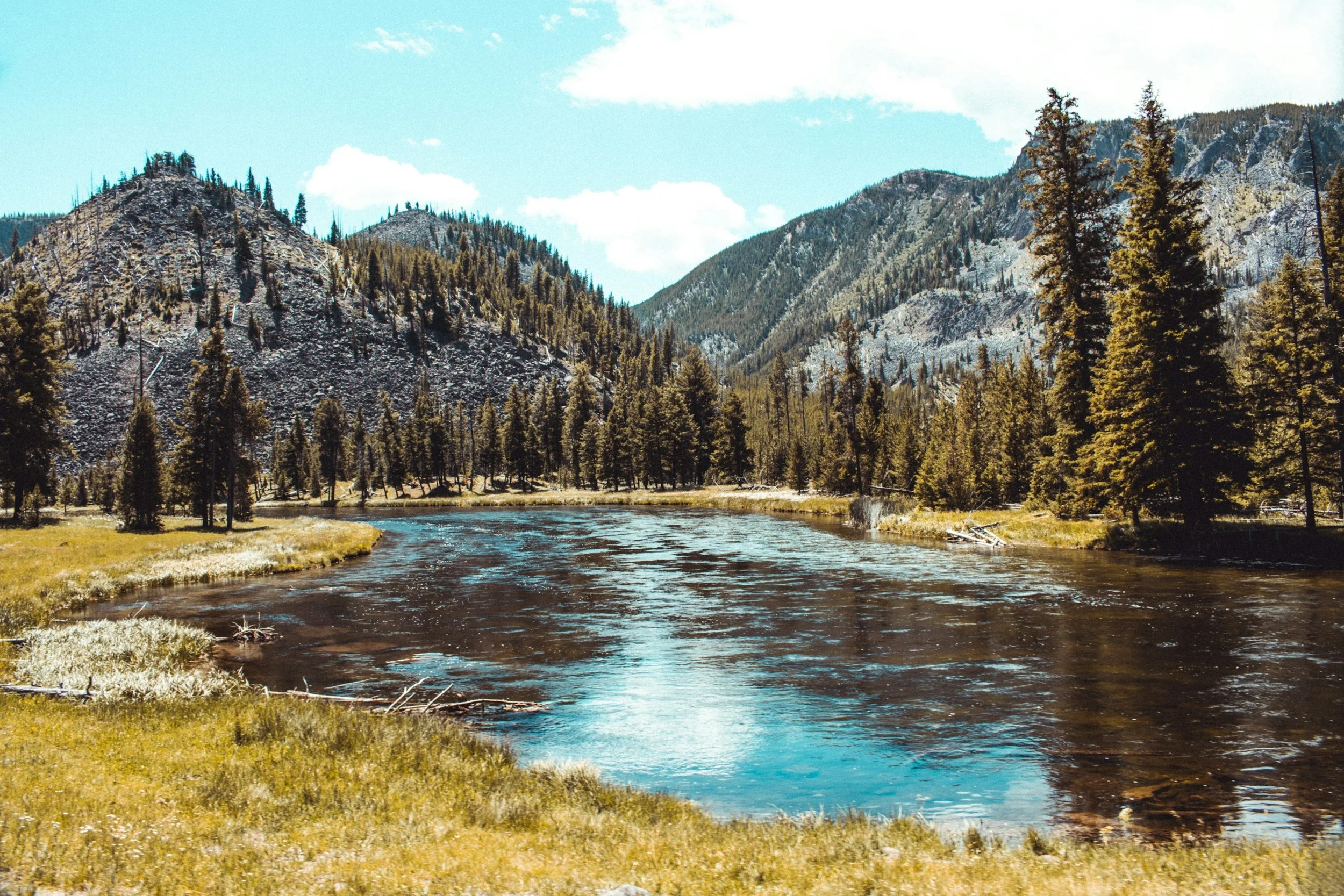
In June of 1993, I was twenty-three and pregnant—again. Despite having been on the pill for years and using a diaphragm correctly, this was the third time my body tried to make me a mother before I was ready. Nothing had changed since the last time it happened: I was still living in the Ocean Beach enclave of San Diego, still in a rocky relationship with Richard, still a part-time student inching my way toward a bachelor’s degree, still a waitress, still broke. Things were worse, in fact. My roommate informed me that she was moving to Guatemala, and as I couldn’t afford the whole apartment, I had to move out. Richard had just graduated college and planned to ride his motorcycle up the west coast to Seattle, so we decided to break up (again). When a co-worker heard me complaining about a lack of summer plans, he suggested a hospitality company that hired seasonal workers in Yellowstone National Park. Employment included room and board, so I applied, they accepted, and I packed my bags.

We found the perfect place to camp. At eleven-thousand feet in the mountains of Eastern Nepal—the sky filled with puffy white clouds and a panoramic view of Kanchenjunga, the third highest mountain in the world. My friend Elizabeth and I traveled with five porters, two cooks and a guide. The porters set up four tents—a toilet tent with a hole dug into the ground inside, a larger dining tent where the guys, after dinner, rolled out their sleeping bags and one tent each for Elizabeth and me. I threw my duffel bag into my tent and turned to look at Kanchenjunga. I knew these clouds, swirling, changing, growing darker, moving as if the hilltop itself was spinning.
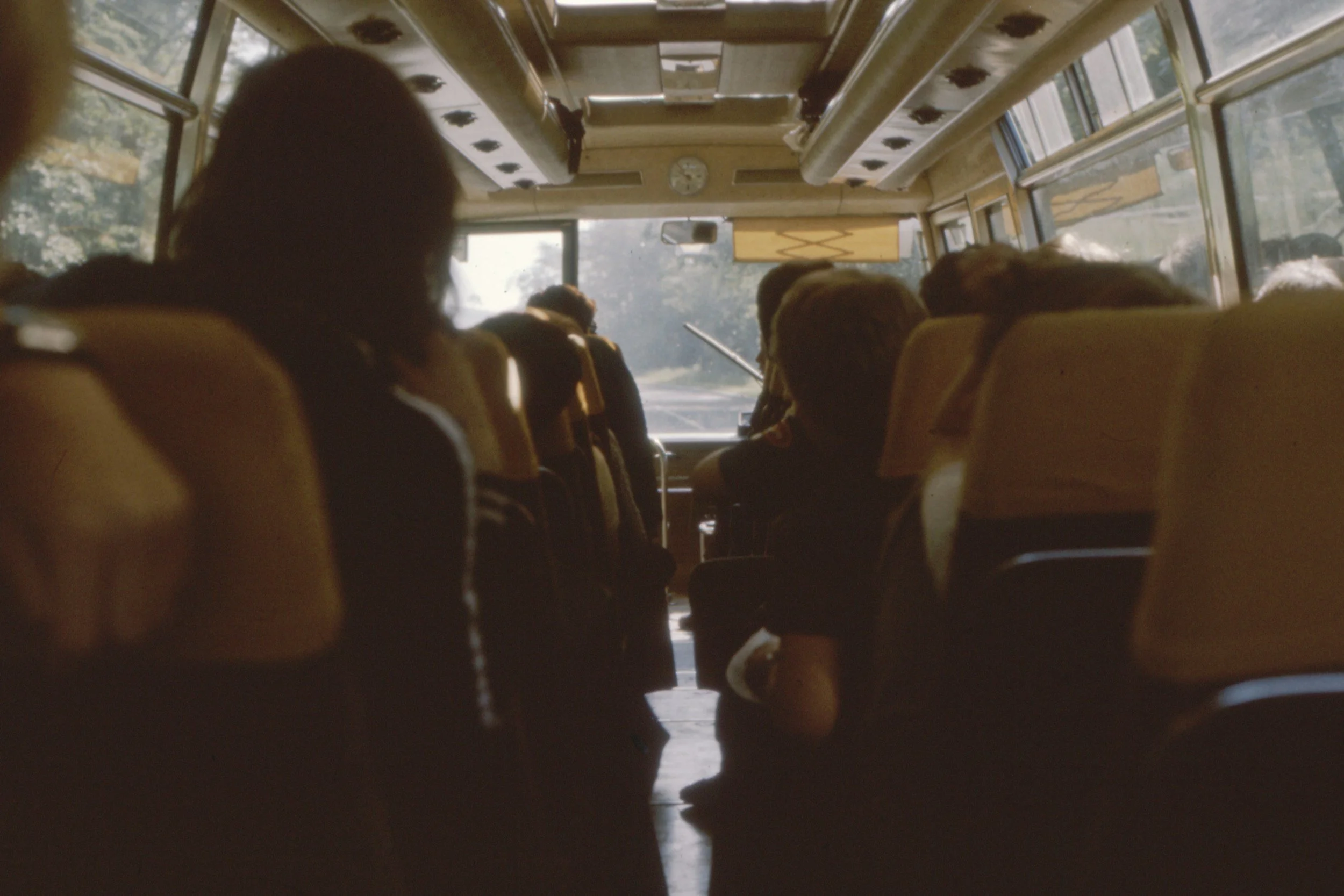
We stand together near the bus station, inhaling the smell of cow shit, watching miniature dust devils swirling around in the street like tiny tornados. Two hippie imposters, my boyfriend Don and I, wait for a Greyhound bus to take us from Stockton to Pasadena, California.

He’s never been there before, but my husband drives through Arizona like he’s a native. Our kids bicker in the backseat as he squints into the Southwestern sunshine.
The highway carves a groove into the hills. Forests of saguaro fade to arid plains. Endless interstate stretches through hours of tanned earth, unfurling at the feet of piney, snow-capped forests. Our rental car pushes higher and higher. We tug layers over jeans and t-shirts.

When I was a child, each summer, my mother took my sisters and me on a journey westward from our home in New Jersey to Minnesota, where my grandparents, cousins, aunts, and uncles lived. Although my sisters and I delighted in the prospects of seeing our relatives once again, what pleased us most was the train ride that lay ahead.

“So you’re the matriarch,” the bartender says as I join my daughter and granddaughter at the bar for a sunset drink.
Everyone I interviewed was born before 1940. As I hit the road, I didn’t know what to expect. I was scared, but also really excited, and (like most of us with a mission) really unaware of what I’d gotten myself into.
As people got wind of the project, I started getting more referrals for interviews. When I left my home in Michigan on November 2, I didn’t have anyone to interview in Montana. I started driving West, and by the time I’d been through Wisconsin, I had two women signed up in Missoula - both over 100 years of age. That kind of thing kept happening.
I interviewed daughters of miners, sons of farmers, Native Americans, carpenters, marriage counselors, former FBI agents, retired spy satellite engineers, mothers, fathers, sons, daughters, all really amazing people. I caught a glimpse into lives I never would have known. I came face to face with the fact that, while I believe myself to be well-read and educated, I know so little.
I also sometimes encountered drama; I interviewed a gentleman at a retirement community, and was told by the woman scheduled after him that he’s a chauvinist. This was a lesson in truths - the truth of someone being interviewed may be different than the truth of their gut reactions. But we have to trust the process in order to get anywhere, otherwise Anthropology, Psychology, and Sociology would have a hard time succeeding.
Today I write amid a rainy Spring day in Grand Rapids. Last week I was interviewed by a Business Journal about the progress of the book. This week I spoke with a marketing guru who specializes in books and authors. I also launched a pilot program so that families can interview their elders and the diversity of the project may continue to grow though I no longer can travel at that break-neck speed.
As for the book, it’s coming along. The chapters will be based off recurring themes I noticed during the interviews - I aggregated them on the Stats page of the website for the curious. Writing is a long road, publishing an even longer one. If you want to stay informed on the project, sign up on the website. My updates are sporadic, but they do happen!
Last, but not least, if you want a hand in naming the book, head over to the contact form on the site. I’d love to hear your thoughts. Thank you for your support!
-Veronica Kirin
This product gives you access to all four weeks of the workshop. Purchase one or more drop-in sessions here.
Build a habit in 20 sessions. In this 4 week workshop that meets Mondays through Fridays from 8:00-9:00 AM CST, we will focus on generating new writing—making headway on a current project, reviving an old project that’s been gathering dust, or writing based off of the daily prompts Leigh provides.
The first 45 minutes of class are a gentle, camera-off, silent writing session. The remaining 15 minutes are an opportunity to share excerpts of our work, reflect on progress made, and set intentions for the following day. Then we will read a passage together on the writing life and close each class with a new learning about habit formation. By the end of this course we’ll have a morning writing habit that is each our own to continue and build upon.
This listing is for an individual class. To purchase access for the full 4-week workshop, click here.
Build a habit in 20 sessions. In this 4 week workshop that meets Mondays through Fridays from 8:00-9:00 AM CST, we will focus on generating new writing—making headway on a current project, reviving an old project that’s been gathering dust, or writing based off of the daily prompts Leigh provides.
The first 45 minutes of class is a gentle, camera-off, silent writing session. The remaining 15 minutes are an opportunity to share excerpts of our work, reflect on progress made, and set intentions for the following day. Then we will read a passage together on the writing life and close each class with a new learning about habit formation. By the end of this course we’ll have a morning writing habit that is each our own to continue and build upon.
Many writers feel drawn to write about their lives but struggle with uncertainty: Why this story? Why now? And who is it really for? This workshop is designed to help writers move beyond doubt and toward clarity by focusing on the deeper meaning and purpose beneath their story.
In this interactive, craft-forward session, participants will be introduced to the Memoir Compass, a practical framework that helps writers articulate their motivation (why they are writing), mission (who the story serves), and message (what meaning or insight the story carries). Through guided reflection and writing exercises, participants will begin shaping a personal narrative rooted in intention rather than overwhelm.
This workshop is ideal for writers interested in memoir or personal narrative, as well as fiction writers drawing from lived experience, who want to move forward with greater confidence, focus, and direction.
Some of the most compelling creative nonfiction begins with the feelings we are tempted to avoid: anger, resentment, shame, fear, or the sense that we have an axe to grind. In this six-week workshop, writers will explore how to follow that emotional heat toward deeper, more honest work—without sacrificing compassion, complexity, or craft. Through close readings, writing exercises, discussion, and constructive feedback, we’ll consider how to transform strong feelings into writing that reaches beyond catharsis and connects with readers.
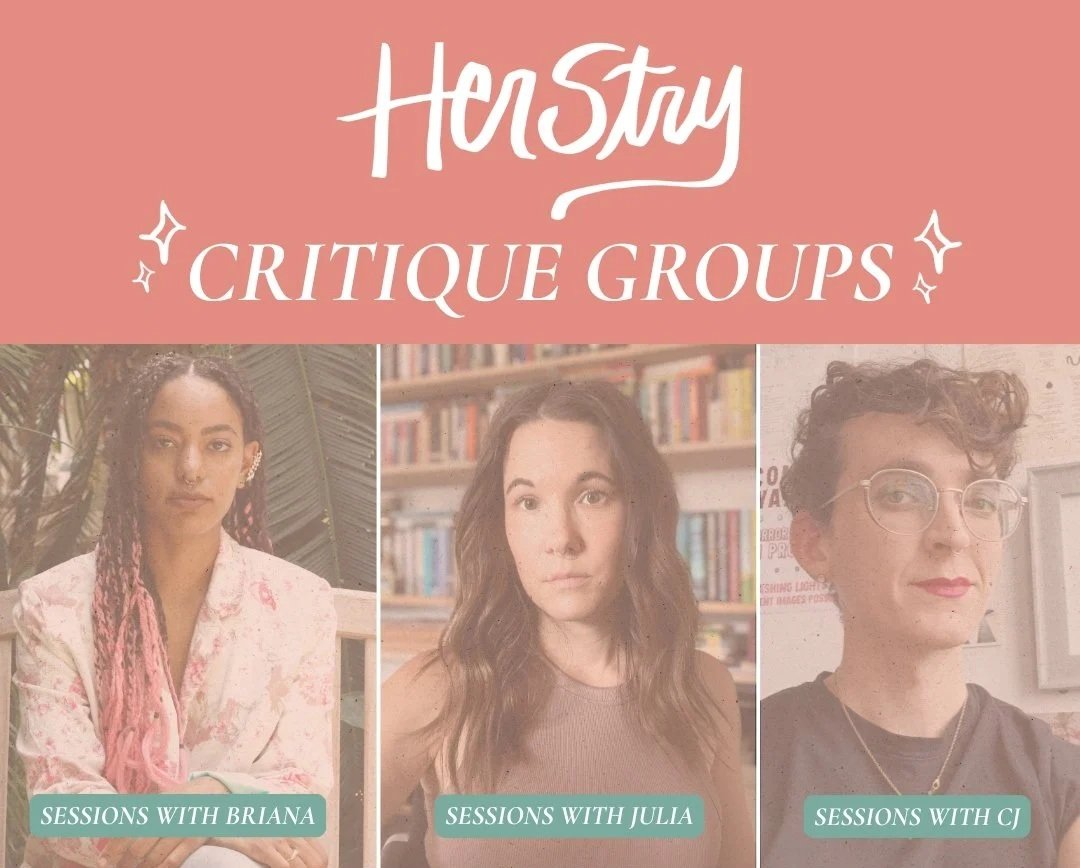
IT’S NO SECRET THAT FEEDBACK IS AN IMPORTANT PART OF THE WRITING PROCESS.
In fact, we argue that it might be the most important part of the process.
But it’s hard to find a writing community. It’s hard to find the people who are willing to take the time and the effort to read your work and give the feedback you really, truly deserves.
That’s where HerStry Critique Groups come in!
HerStry Critique Groups are small groups of 6 women who gather online for 6 weeks to share their writing, give constructive feedback and gain skills as writers.
Weekly online sessions last approximately ninety minutes, with three women sharing their work each week. Writers of all genres and levels are welcome and you may share both works of fiction and nonfiction.
Sessions take place on Mondays 7PM CT, Tuesdays 11AM CT, Fridays 11AM CT
WHAT’S INCLUDED IN THE HERSTRY CRITIQUE GROUPS?
Six 90 minute live workshop sessions
Three 20 minutes sessions in the “hot seat” to get you work critiqued
Written and verbal feedback from your fellow workshop participants
A weekly in depth edit and critique of your work from the group leader after each session
Weekly writing goals and accountability check ins
Full video recordings of each session to keep for your records
Say goodbye to the lonely, stuck in your head writing life!

LET’S WRITE!
From conception to submission. Let’s make summer sizzle with stories.
Writing a short story doesn’t happen in one session. It takes multiple drafts to get it exactly right, to create characters that come to life for the reader and a world they can’t stop thinking about. In this seven week course we will work on a single short story from conception to submission ready. The seven week session will include generative brainstorming sessions, short story craft talks, multiple workshops for feedback from fellow writers, and detailed line by line feedback and edits from your instructor. Plus, we’ll talk about submission venues, cover letters, and when to know if your story is ‘finished.’
IT’S NO SECRET THAT FEEDBACK IS AN IMPORTANT PART OF THE WRITING PROCESS.
In fact, we argue that it might be the most important part of the process.
But it’s hard to find a writing community. It’s hard to find the people who are willing to take the time and the effort to read your work and give the feedback you really, truly deserves.
That’s where HerStry Critique Groups come in!
HerStry Critique Groups are small groups of 6 women who gather online for 6 weeks to share their writing, give constructive feedback and gain skills as writers.
Weekly online sessions last approximately ninety minutes, with three women sharing their work each week. Writers of all genres and levels are welcome and you may share both works of fiction and nonfiction.
Sessions take place on Mondays 7PM CT, Tuesdays 11AM CT, Fridays 11AM CT
WHAT’S INCLUDED IN THE HERSTRY CRITIQUE GROUPS?
Six 90 minute live workshop sessions
Three 20 minutes sessions in the “hot seat” to get you work critiqued
Written and verbal feedback from your fellow workshop participants
A weekly in depth edit and critique of your work from the group leader after each session
Weekly writing goals and accountability check ins
Full video recordings of each session to keep for your records
Say goodbye to the lonely, stuck in your head writing life!

October 7, 14, 21, 28, November 4 and 18 CT
There is no class on November 11.
WRITING THE SEX SCENE.
Writing a sex scene can be delirious fun, a harrowing challenge, a literary milestone—possibly the most important part of building your short story or book. In our six weeks together, you’ll experience just about every possible emotion as you explore the erotic in different modes: comic, tender, harrowing, soul-shattering … because it really is all about the characters’ feelings, not just the mechanics. So we’ll talk about tone. Vocabulary. Metaphor. Sensory detail. How to get big emotions on the page … and when to pull back and let the reader’s imagination go to work.
This is a course for writers who want to explore the intersection between the novel and short stories, and would like to weave their short stories into a story cycle (or collection of "linked stories" or "composite novel"). This is also a class about the interaction of form and content, and how one influences the other. We will read works of interlinked stories by writers from diverse cultural and ethnic backgrounds, focusing on modern classics and contemporary practitioners of these hybrid forms. Weekly discussions will center on elements of craft, such as the expansion and compression of time, setting as an organizing and connecting principle, character development within and between stories, structure and plot for interconnected stories, and responding to literary influences in the same genre.
This six-week course guides writers through the literary submission process, offering insider insight and practical tools to help you get your work into the world. We’ll demystify everything from reading submission calls to writing cover letters and choosing the right journals. Along the way, we’ll workshop short bios, develop submission trackers, and build personalized plans that align with your voice and goals.
By the end of the course, you’ll walk away with a polished piece ready to send, a tailored submission list, and the confidence to navigate the lit mag world with clarity and purpose.
Ideal for writers of literary fiction, poetry, personal essay, memoir, and hybrid forms.
One dreary winter day, nearly two years into dating, he ended things rather oddly: “I don’t think you’ll be okay if we break up,” he explained, “which is why we have to break up.” Though confounding, I suppose it was not surprising—he often resented how much I seemed to need him.