
Fog Season at the Salish Sea
If not for the pup and the ritual of our morning walk, I might not have banked so much joy, watching her endearing hobby-horse bounce as she runs across the field. I would never have seen that barred owl swish overhead in a silent, majestic flight. I'd have missed the quiet presence of the setting moon and an infinity of stars disappearing into the pale blue.
No question, I would have remained in bed, reluctant to embrace the endless rains of autumn—on this blustery morning, rattling the old windows. But the pup and I have a daily commune with nature: rain or shine, fair winds or gales.
Pulling on jeans, wool socks, and a flannel shirt, I walk softly into the unlit kitchen to make coffee. The pup hears me fill my mug, jumps off the bed, and shakes herself awake.
I open the blinds and glance out the window to note the condition of dawn: still dark.
Slickers on, the pup and I head out into a dense mist. I don’t know it yet, but in a few minutes, I’ll wish I had worn my rain pants. The clouds are about to burst open and pour out their pails. But at this moment, I’m still full-coffee-mug optimistic.
I look to the horizon and note the condition of the day: soggy.
The pup tugs on her leash, and we head past the cemetery and onward to the rocky beach. There’s a lot of slippery kelp today, wet logs, wet everything. The pup points her nose in the air and sniffs for otters. Seagulls bob around floating driftwood.

LOVE
noun | \ lev : an intense feeling of deep affection; a great interest and pleasure in something.
LUST
noun | \ lest : very strong sexual desire.

I met you by the river the first time while the mist rose from the banks like it was trying to change elements. You were more fun to run from the cops with than anyone else I’d met, and man you made me reckless. I never had to test my legs though, the minivan did it for us while Jerry blasted through the blown speakers in the cornfield. You walked 2,000 miles up the country on trail and wrote me letters back home while I watched, sidelined. I could have walked myself from Georgia to Maine with you, but it was your own pilgrimage to undertake, your season spending nights under a green tarp.
Before she died, Nancy compiled a list of appropriate women she thought could be a good partner for me, which I told her was ridiculous. I was doing everything I could to keep her alive, nor did I like the women she had chosen for me. I had loved her for twenty-seven years. She would never be replaceable. My everything wasn’t enough; all I had of Nancy were her ashes. At sixty-one, I had vaulted into old age overnight, with grey roots grown inches during Nancy’s last months of hospice. I was the solo parent of two grieving teenage daughters, one who was depressed, the other defiant. My eros was exhausted, maybe dead even. But Nancy was not five months into her grave when I hooked up with Tami.

We had a tradition for birthdays: a call once it was midnight so that we’d be the first of everyone else to groggily whisper our well wishes for each other. It started as a promise from me that I’d do it every year for you, no matter what I was doing, who I was with, or how tired I was.

You listened to Joni Mitchell’s Blue while you were abroad. Some say an unhealthy amount, but you beg to differ. Something about the timbre of her voice resonates with traveling, long-distance train rides and loneliness. Because that’s what the feeling was, right? Loneliness?

One of the reasons I love children's books is that there's always an invitation to loosen and lighten up, be poured into, be lulled into a place of deeper reflection—to see yourself in mid-grapple. For that reason, happy to be nappy is much more than a children's story.
In June of 1993, I was twenty-three and pregnant—again. Despite having been on the pill for years and using a diaphragm correctly, this was the third time my body tried to make me a mother before I was ready. Nothing had changed since the last time it happened: I was still living in the Ocean Beach enclave of San Diego, still in a rocky relationship with Richard, still a part-time student inching my way toward a bachelor’s degree, still a waitress, still broke. Things were worse, in fact. My roommate informed me that she was moving to Guatemala, and as I couldn’t afford the whole apartment, I had to move out. Richard had just graduated college and planned to ride his motorcycle up the west coast to Seattle, so we decided to break up (again). When a co-worker heard me complaining about a lack of summer plans, he suggested a hospitality company that hired seasonal workers in Yellowstone National Park. Employment included room and board, so I applied, they accepted, and I packed my bags.

In the high dependency room, the room before graduating to the special care baby unit, I would cut your fingernails for the first time.
My mom took a bus to Hackney Central in East London, to buy the tiny, baby-doll sized fingernail clippers.
Grandma had traveled from Michigan, where I grew up, and was not used to big city living. For her, a bus ride to a very busy place, by herself, was a brave step for her. She then walked from the bus to the Woolworths on the corner.
She did it for me, because I couldn’t leave you.
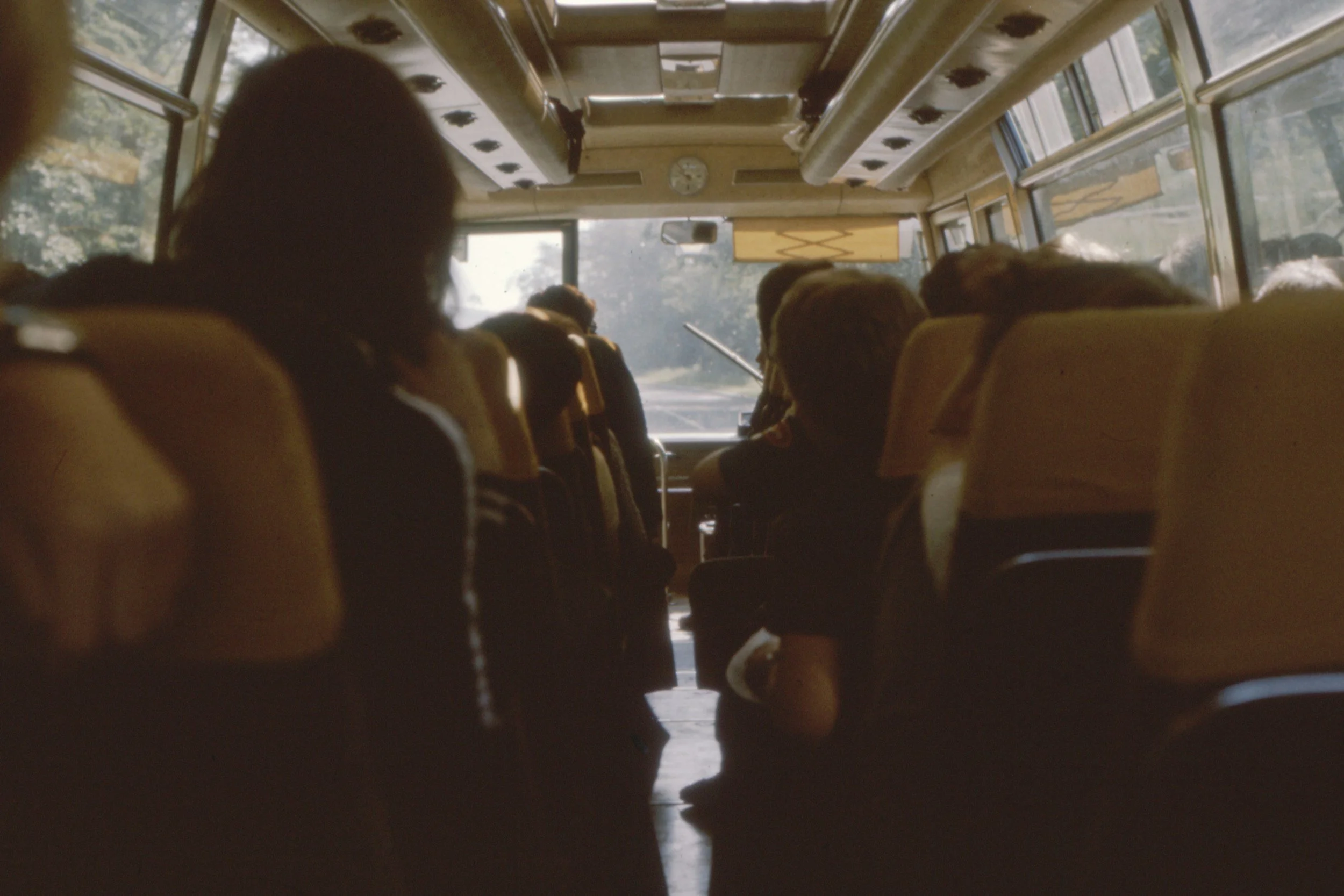
We stand together near the bus station, inhaling the smell of cow shit, watching miniature dust devils swirling around in the street like tiny tornados. Two hippie imposters, my boyfriend Don and I, wait for a Greyhound bus to take us from Stockton to Pasadena, California.

The evening before you came into this world we endured the longest blackest night.
Winter. The hibernal solstice. Our slice of Earth turning her back to the sun, head bowed, submitting to the dark.
That night imprinted its suffocating length onto my birthing body. Within the week, wrapped in tendrils of dread
postnatally deeply depressed.

It was time for our one rehearsal, the day of my daughter’s wedding. A group of family and friends who had been practicing alone now gathered, anticipating the thrill of voices blending and harmonizing, woven together by the glistening thread that is my daughter’s life force. In the run-up to this event, all said, “Yes, we will sing…We are honored to sing…We are thrilled to be part of this special surprise,” a touching tribute to a father long dead. All coming together from different places, different times, different experiences, to fuse in song.

Sometimes I wonder why lovers hold hands when they walk around. I wonder how long they have been dating. Are they in that new stage, where it feels like they have to hold on tight, constantly let the other person know that they are there, that they aren’t going anywhere, that they want to touch them, that they want to be touched. Or is it the older couples, the ones who have been together for longer that hold hands. A gesture they don’t even realize they’re doing, their fingers just mindlessly reaching for each other, keeping their connection as they pace around the city.

When they ask me, I tell them we came for the rain.
It’s easy that way. It makes them laugh. It’s the dog walkers who always want to know. A passing conversation in the park. They usually talk about Mochi’s long legs first. Like a mom with a new baby, I let them gush over him. No, he’s not a puppy, just small. Yes, he’s enthusiastic. I tell them he’s a rescue and an immigrant too. He was my carry-on luggage, stored safely below the seat in front of me from San Francisco to Dublin. We linger for a few minutes, as our dogs take the time to sniff. Then they ask, they always ask, why did we come?

You and I became acquainted nearly thirteen years ago. It wasn’t love at first sight. In fact, I was initially after another one just down the street. But that one had too many problems and I didn’t want such a big project. I noticed you on the same day that I said no to the other one, and so I came to see you. You were cute, in solid condition. Very old-school but nothing that a little modern touch couldn’t fix. I had been casually looking for a home for several months. I and my now ex-husband, that is. This felt a little different and we really needed something positive to look forward to. Something of a distraction, maybe.
I have my usual morning mishap: while standing too close to the water’s edge, a rushing wave submerges my boots and pant cuffs. I also have my normal reaction: a shrug, a smile.
These rituals are how we ordinarily greet the day: by facing the sea with our quiet thoughts and checking in with the world.
Good morning, sea.

We meander slowly down the beach. A bank of low-lying clouds shrouds distant mountains. Through the fog, a few cargo ships appear. Ghost ships. I focus on the tide line and hunt for flotsam: sea glass, pottery shards, bits of rope, broken buttons. Mostly hoping to spot the odd tumbled agate among the pebbles. I'd have more luck if sunlight helped illuminate their translucent bands. On this rainy day, agates elude me.
A heron flies past, low to the water, wing-beats equally up and down. Up and down. The coastal First Nations People consider the heron a good omen, reminding us to seek harmony with natural conditions. Go with the flow. Embrace the rain.
The pup and I leave the beach and cross the street. The sound of the sea fades behind as we enter the park. The ground is saturated, squishing under our feet. But oh, the grass is green! The moss, luminously so. Wind rushes up the street, shakes the trees, then stillness wraps us in a pocket of calm.
I take a sip of lukewarm coffee and note the condition of the neighborhood: still asleep.
About halfway through the park there's a little library book exchange. I stop to browse the latest offerings. A paperback catches my eye: The Sea by John Banville. Winner of the Man Booker Prize. Should I read this?
I crack open the book and read the first paragraph about strange tides and mewling seabirds. Yes, this book is most definitely coming home with me. Crows signal their approval in the chestnut trees, making a fuss. I unzip my rain jacket and tuck the book dry and warm against my chest.
We’re on the move faster now; the pup has suddenly remembered this is the way home to her breakfast bowl. But wait—she halts at the corner to sniff one specific blade of grass holding secrets to her invisible scented universe. We allow one long, slow minute to investigate. A bus and a city garbage truck go by. A hardy cyclist shears a puddle. Then onward, pulling toward the kibble.
We’re up the driveway faster now and in through the back gate. The hummingbird feeder is empty, but there's still suet left in the cage. Hungry backyard birds send it spinning in the rain. Juncos, sparrows, wrens, and one plump Spotted Towhee. I note this, too.
The pup points her nose to the door, then looks at me with her soft brown eyes. Affection floods my heart. I open the basement door to a rush of warmth, kitchen light, and my Love, who is waiting for us at the top of the stairs.
-Karin Hedetniemi
This product gives you access to all four weeks of the workshop. Purchase one or more drop-in sessions here.
Build a habit in 20 sessions. In this 4 week workshop that meets Mondays through Fridays from 8:00-9:00 AM CST, we will focus on generating new writing—making headway on a current project, reviving an old project that’s been gathering dust, or writing based off of the daily prompts Leigh provides.
The first 45 minutes of class are a gentle, camera-off, silent writing session. The remaining 15 minutes are an opportunity to share excerpts of our work, reflect on progress made, and set intentions for the following day. Then we will read a passage together on the writing life and close each class with a new learning about habit formation. By the end of this course we’ll have a morning writing habit that is each our own to continue and build upon.
This listing is for an individual class. To purchase access for the full 4-week workshop, click here.
Build a habit in 20 sessions. In this 4 week workshop that meets Mondays through Fridays from 8:00-9:00 AM CST, we will focus on generating new writing—making headway on a current project, reviving an old project that’s been gathering dust, or writing based off of the daily prompts Leigh provides.
The first 45 minutes of class is a gentle, camera-off, silent writing session. The remaining 15 minutes are an opportunity to share excerpts of our work, reflect on progress made, and set intentions for the following day. Then we will read a passage together on the writing life and close each class with a new learning about habit formation. By the end of this course we’ll have a morning writing habit that is each our own to continue and build upon.
Many writers feel drawn to write about their lives but struggle with uncertainty: Why this story? Why now? And who is it really for? This workshop is designed to help writers move beyond doubt and toward clarity by focusing on the deeper meaning and purpose beneath their story.
In this interactive, craft-forward session, participants will be introduced to the Memoir Compass, a practical framework that helps writers articulate their motivation (why they are writing), mission (who the story serves), and message (what meaning or insight the story carries). Through guided reflection and writing exercises, participants will begin shaping a personal narrative rooted in intention rather than overwhelm.
This workshop is ideal for writers interested in memoir or personal narrative, as well as fiction writers drawing from lived experience, who want to move forward with greater confidence, focus, and direction.
Some of the most compelling creative nonfiction begins with the feelings we are tempted to avoid: anger, resentment, shame, fear, or the sense that we have an axe to grind. In this six-week workshop, writers will explore how to follow that emotional heat toward deeper, more honest work—without sacrificing compassion, complexity, or craft. Through close readings, writing exercises, discussion, and constructive feedback, we’ll consider how to transform strong feelings into writing that reaches beyond catharsis and connects with readers.
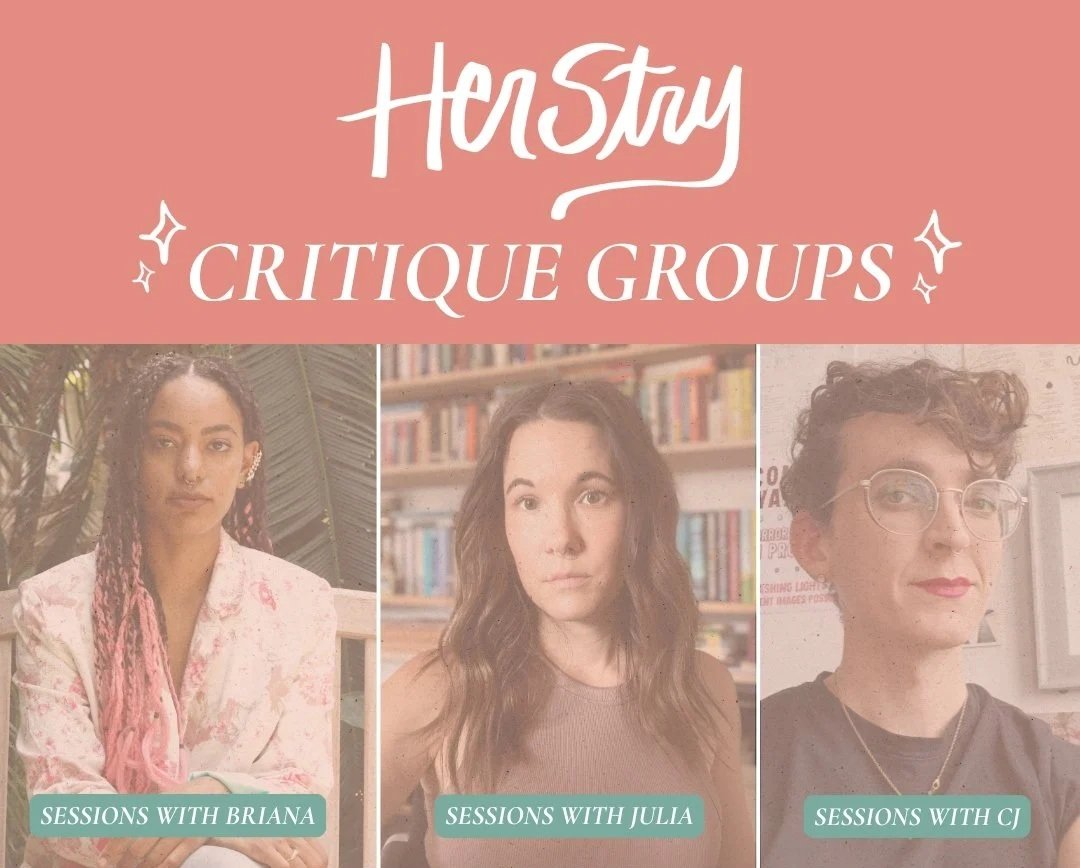
IT’S NO SECRET THAT FEEDBACK IS AN IMPORTANT PART OF THE WRITING PROCESS.
In fact, we argue that it might be the most important part of the process.
But it’s hard to find a writing community. It’s hard to find the people who are willing to take the time and the effort to read your work and give the feedback you really, truly deserves.
That’s where HerStry Critique Groups come in!
HerStry Critique Groups are small groups of 6 women who gather online for 6 weeks to share their writing, give constructive feedback and gain skills as writers.
Weekly online sessions last approximately ninety minutes, with three women sharing their work each week. Writers of all genres and levels are welcome and you may share both works of fiction and nonfiction.
Sessions take place on Mondays 7PM CT, Tuesdays 11AM CT, Fridays 11AM CT
WHAT’S INCLUDED IN THE HERSTRY CRITIQUE GROUPS?
Six 90 minute live workshop sessions
Three 20 minutes sessions in the “hot seat” to get you work critiqued
Written and verbal feedback from your fellow workshop participants
A weekly in depth edit and critique of your work from the group leader after each session
Weekly writing goals and accountability check ins
Full video recordings of each session to keep for your records
Say goodbye to the lonely, stuck in your head writing life!

LET’S WRITE!
From conception to submission. Let’s make summer sizzle with stories.
Writing a short story doesn’t happen in one session. It takes multiple drafts to get it exactly right, to create characters that come to life for the reader and a world they can’t stop thinking about. In this seven week course we will work on a single short story from conception to submission ready. The seven week session will include generative brainstorming sessions, short story craft talks, multiple workshops for feedback from fellow writers, and detailed line by line feedback and edits from your instructor. Plus, we’ll talk about submission venues, cover letters, and when to know if your story is ‘finished.’
IT’S NO SECRET THAT FEEDBACK IS AN IMPORTANT PART OF THE WRITING PROCESS.
In fact, we argue that it might be the most important part of the process.
But it’s hard to find a writing community. It’s hard to find the people who are willing to take the time and the effort to read your work and give the feedback you really, truly deserves.
That’s where HerStry Critique Groups come in!
HerStry Critique Groups are small groups of 6 women who gather online for 6 weeks to share their writing, give constructive feedback and gain skills as writers.
Weekly online sessions last approximately ninety minutes, with three women sharing their work each week. Writers of all genres and levels are welcome and you may share both works of fiction and nonfiction.
Sessions take place on Mondays 7PM CT, Tuesdays 11AM CT, Fridays 11AM CT
WHAT’S INCLUDED IN THE HERSTRY CRITIQUE GROUPS?
Six 90 minute live workshop sessions
Three 20 minutes sessions in the “hot seat” to get you work critiqued
Written and verbal feedback from your fellow workshop participants
A weekly in depth edit and critique of your work from the group leader after each session
Weekly writing goals and accountability check ins
Full video recordings of each session to keep for your records
Say goodbye to the lonely, stuck in your head writing life!
October 7, 14, 21, 28, November 4 and 18 CT
There is no class on November 11.
WRITING THE SEX SCENE.
Writing a sex scene can be delirious fun, a harrowing challenge, a literary milestone—possibly the most important part of building your short story or book. In our six weeks together, you’ll experience just about every possible emotion as you explore the erotic in different modes: comic, tender, harrowing, soul-shattering … because it really is all about the characters’ feelings, not just the mechanics. So we’ll talk about tone. Vocabulary. Metaphor. Sensory detail. How to get big emotions on the page … and when to pull back and let the reader’s imagination go to work.
This is a course for writers who want to explore the intersection between the novel and short stories, and would like to weave their short stories into a story cycle (or collection of "linked stories" or "composite novel"). This is also a class about the interaction of form and content, and how one influences the other. We will read works of interlinked stories by writers from diverse cultural and ethnic backgrounds, focusing on modern classics and contemporary practitioners of these hybrid forms. Weekly discussions will center on elements of craft, such as the expansion and compression of time, setting as an organizing and connecting principle, character development within and between stories, structure and plot for interconnected stories, and responding to literary influences in the same genre.
This six-week course guides writers through the literary submission process, offering insider insight and practical tools to help you get your work into the world. We’ll demystify everything from reading submission calls to writing cover letters and choosing the right journals. Along the way, we’ll workshop short bios, develop submission trackers, and build personalized plans that align with your voice and goals.
By the end of the course, you’ll walk away with a polished piece ready to send, a tailored submission list, and the confidence to navigate the lit mag world with clarity and purpose.
Ideal for writers of literary fiction, poetry, personal essay, memoir, and hybrid forms.
Tension feels tangible to a reader, an active experience. But from a craft perspective, tension is often a function of restraint, palpable from what is withheld, delayed or left unresolved. Why do some stories feel urgent even in stillness while others fall flat despite dramatic events? Our impulse to resolve tension often comes from a deeply human instinct to seek coherence and moral clarity, but resisting that instinct creates compelling narratives. When we let characters misbehave or allow ambiguity in their actions, we pull readers closer to them.
This course examines tension as a narrative force. We’ll consider how writers can counter the impulse to resolve too quickly, to justify wrongful acts or to redeem a character’s behavior. By looking at ways to sustain tension without escalation into spectacle, we’ll experiment with evoking it in the ordinary and the unspoken. The class will combine close reading, craft reflection and writing prompts to practice distinct approaches to writing tension. This course is designed for writers working in fiction, nonfiction, and hybrid forms who are interested in deepening the psychological and structural complexity of their work. Ultimately, tension is what compels the reader to turn the page.
In this generative writing workshop, ecologist and poet Anne Marie Wells will introduce participants to some of today's eco-poets and essayists and guide participants through a series of writing prompts that will use the outdoors and personal experience as inspiration for creative expression. No writing experience is necessary to participate.

Karin Hedetniemi is a writer and photographer from Vancouver Island, Canada. Her creative work is published in Lunch Ticket, Hinterland, The London Reader, Prairie Fire, and other literary journals. In 2020, Karin won the nonfiction prize from the Royal City Literary Arts Society. She lives in a cottage near the foggy sea with her husband, two pups, and jars full of seaglass . Find her at AGoldenHour.com or on Twitter @karinhedet.
Dear Ezra,
I know we’ve never met…
And yet my hungry mind keeps feeding me
slow-burning images of you in your kitchen.