
On the Occasion of My Fourth Root Canal
Who would have thought we’d be back here again? Me, blinded by your headlamp, white-knuckling a tooth-shaped stress toy with your name and number printed on it. You, on your swivel stool, tapping your running shoes to the eighties soft rock that seeps through the walls like the smell of the salmon your assistant reheated for lunch.
It’s a trick question, of course. We both know you predicted this. In fact, your exact words were, “If you don’t stop clenching your jaw while you sleep, you’ll be back here in no time.”
And here we are. In no time.
Sitting in your exam chair, I’m ready for my fourth root canal. My jaw is clamped open. My mouth is sealed off with a dental dam. I am mentally prepared for your needles, your drills, and your judgment.
You scan my chart, noting the three prior root canals, seven fillings, five crowns, two rounds of gum surgery, a metal rod implant, and custom night guard. (I hope it’s in there somewhere that I’ve replaced the eight hundred dollar night guard four times. Dogs really are the best).
You act appalled, but I can smell the dopamine high my dental records give you. You’re practically feral. I hope one day you’ll invite me over to your home gym that I pretty much paid for. Today’s procedure alone should cover a new set of Louis Vuitton dumbbells. You’re welcome, by the way. I’m so glad my anxiety is working for someone.

Before she died, Nancy compiled a list of appropriate women she thought could be a good partner for me, which I told her was ridiculous. I was doing everything I could to keep her alive, nor did I like the women she had chosen for me. I had loved her for twenty-seven years. She would never be replaceable. My everything wasn’t enough; all I had of Nancy were her ashes. At sixty-one, I had vaulted into old age overnight, with grey roots grown inches during Nancy’s last months of hospice. I was the solo parent of two grieving teenage daughters, one who was depressed, the other defiant. My eros was exhausted, maybe dead even. But Nancy was not five months into her grave when I hooked up with Tami.

My friend Marianne died last week. We met through a writers' group that started through the local public library and continued on Zoom during the pandemic. In the beginning, the group was fluid, writers, coming and going, sometimes for weeks, sometimes longer, usually without explanation. But in time, the regulars emerged, with a few of the original members as the bedrock. Marianne was one of those.

A couple of months ago you were going to several Overeaters Anonymous meetings a week, sometimes every day. But when Elaine told you she couldn’t sponsor you anymore after your suicide attempt, and when she and a friend whom she also sponsored asked you not to attend a couple of their regular meetings, and after your therapist came to the facility you were hospitalized in to tell you she couldn’t work with you anymore, you stopped going to meetings altogether.

We’re a few hours in when something starts to go wrong with the epidural. Not all at once, but a creeping awareness of sensation starts to tug at my attention as I lie there and look at the trees outside, and read, and make small talk with my husband.
At first, I ignore it. But then I start to get nervous.
“I can wiggle my left toes,” I say, not really to anyone. Observationally.

Barbie. Everyone’s favorite (or favorite-to-loathe) doll-slash-role model-slash-best friend-slash-impossible ideal-slash-icon of cultural demise. Even though I’ve always harbored a fairly incurious attitude toward the Barbie-as-perfection phenomenon, I nevertheless loved playing with my inanimate, buxom, rubbery friends. I didn’t compare myself to them, and they didn’t dictate my self worth. They were just one population in an only child’s universe of dessert-scented dolls, bathtub mermaids, and little plastic people who lived in a furnished tree.
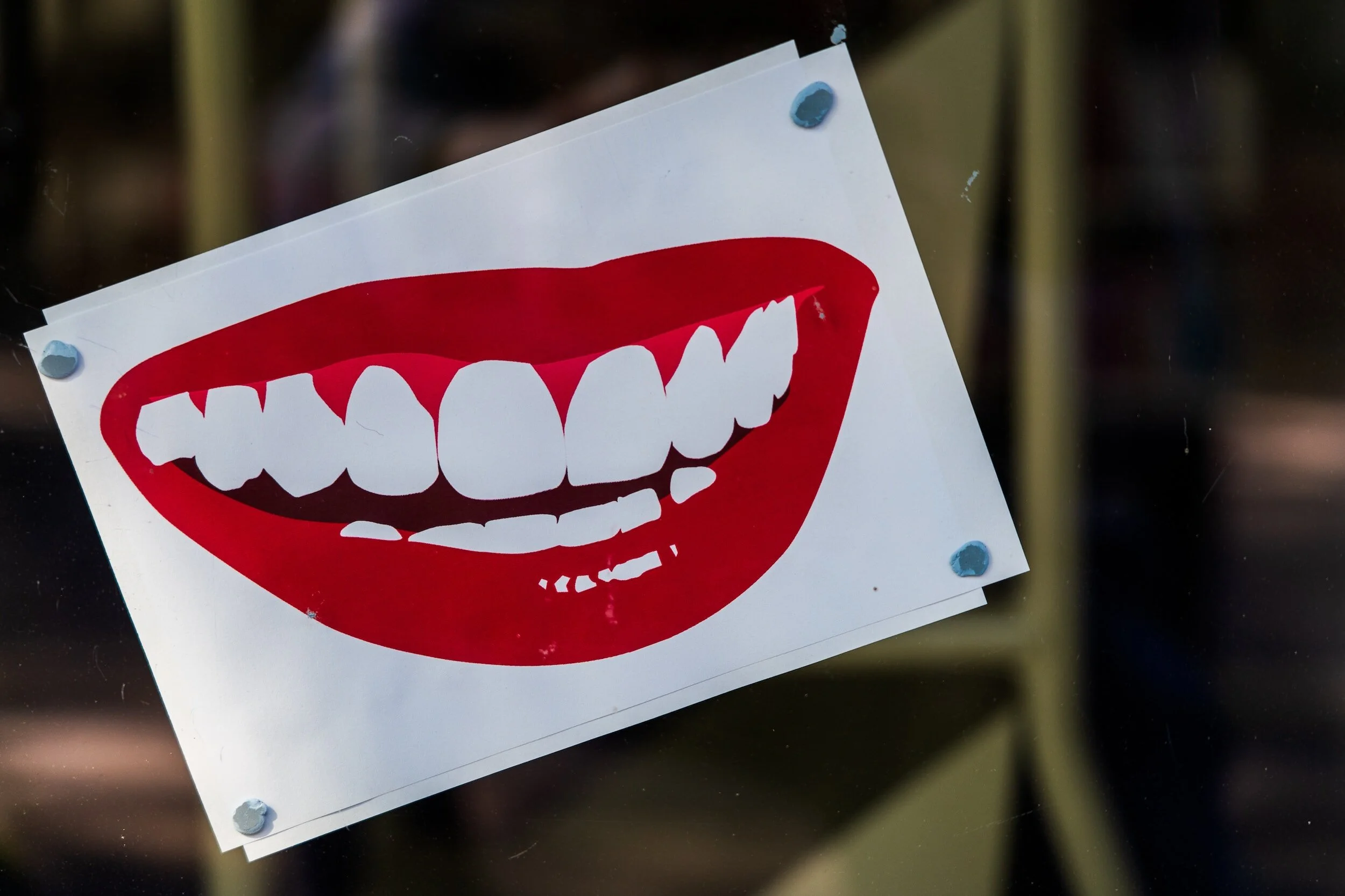
Who would have thought we’d be back here again? Me, blinded by your headlamp, white-knuckling a tooth-shaped stress toy with your name and number printed on it. You, on your swivel stool, tapping your running shoes to the eighties soft rock that seeps through the walls like the smell of the salmon your assistant reheated for lunch.

I have a problem with many words in the English language, the most recent and personally applicable being “menopause.” Apparently, the term is a Greek mashup of “month” and “cease.” I’d have less of a problem if the English term were “menocease,” since “menopause” suggests that something about the female body—my body in this case—is “pausing” and will, ASAP, resume its regularly scheduled programming. But, that’s not the case. My body is going off the air.

She was doing Pilates when she saw the first sign. She should have noticed. It was like last summer when the cop stopped her, leaned into the window, and asked if she’d seen the “STOP” sign. Of course she hadn’t, she told him; if she had seen it she’d have stopped. But that, too, was no kind of explanation.

And to feel that the light is a rabbit-light,
In which everything is meant for you
And nothing need be explained;

Some Girls
In 1966, a teenage girl walked into a fancy salon in London, England wanting a simple shampoo and set. Instead, persuaded by the owner, she had her long locks cut into a short crop. After the cut, a picture was taken, revealing an almost waif-ish yet intriguing schoolgirl: pretty, wide-eyed, and made up beyond her years. Barry Lategan, the photographer, said of the girl, “She was gawky, but she had a sort of elegance…I think it was the eyes…she had such a presence.”

My brother props his long legs on the dashboard of Dad’s pristine Honda. He presses his feet in their sweaty black socks into the windshield hard enough to leave `a smudge, a crime our eighty-five year-old father swoops on like a hawk.

My friends and I share six-word memoirs, which are supposed to be a story in a nutshell. This was the one I wrote yesterday: “Naked, I paraded through the jimjilbang.” I sent this stingy, six-word sentence out to them with no further explanation. Let them wonder. But for you, I’ll flesh it out: I recently visited a Korean bathhouse, and here’s a crash course in all things jimjilbang.

I haven’t bled in five months. Each time this happens I wonder, am I done? Was that it? Have I finally crossed the threshold into after, whatever that means?

My birthday is December 30, five days after Jesus’s and one day before New Year’s Eve. It is the perfect day to be born if, like me, you prefer your birthday slide by unnoticed. I never had to bring any classroom cupcakes. Not a single black streamer hung from my office door on my fortieth, which suited me just fine.
Being frazzled isn’t so much a peak that I sometimes reach, but a plateau where I hang out all day while I deal with life’s little things, like working, parenting, and calling Spectrum customer service. And now that I’m well into my mammogram years, deep into colonoscopy territory, and getting more ads for the shingles vaccine than SoulCycle, I need a better way to burn off anxiety. I know you’re all for soft foods, but gnawing on carrot sticks, ice cubes, and frozen candy bars burns more stress and still leaves me with plenty to spare.
After my head hits the pillow, my mouth pulls all-nighters on the super-important topics I don’t spend enough time worrying about during the day. My stolen bank card. Fire ants. Being ghosted by a friend. Single-use plastics. That time I said, “You, too,” when a waiter told me to enjoy my meal. Women’s rights. The head of cauliflower in the back of my fridge. It’s a looping soundtrack for the clench-grind two-step my mouth moves to all night.
I was actually starting to think I had it under control—if a twenty-seven-step relax-before-bedtime routine counts as under control. But then the Big Five walked into my life: Gray Hair, Crow’s Feet, Chicken Neck, Trouble Sleeping, and Saggy Boobs. They just showed up one day, a Greek chorus of reminders that I’m not just losing bone density, but relevance.
Sure, you say grinding my teeth while I sleep is “bad,” but try being a woman over fifty who wants to get the attention of the bartender, or even the guy behind the pizza counter at Whole Foods. Now I’ve got to color, lift, fill, smooth, and sooth—which is about as effective as bringing a tiny jar of seven hundred and fifty dollar black diamond truffle facial serum to a gunfight, but it’s something. So yes, my mouth may be in trouble, but other parts of my body are screaming for attention. (It actually sounds a lot more like popping, cracking, and, occasionally, ringing, but you get the idea).
I know it seems like I’m not listening to you. My x-rays appear to back that up. Once you remove the latex, before the lidocaine wears off and the extra-strength ibuprofen kicks in, you’ll remind me to reduce my stress and lay off hard foods, and I will disappoint you again.
I swear I’ll listen. I always do. But my kids just moved back in, three of my clients left me for ChatGPT, the oceans are rising, and my therapist is retiring. The only thing I care about is getting my hands on that Snickers bar waiting for me in back of the freezer.
So yes, I will be back here. In no time.
-Karen Scholl
This product gives you access to all four weeks of the workshop. Purchase one or more drop-in sessions here.
Build a habit in 20 sessions. In this 4 week workshop that meets Mondays through Fridays from 8:00-9:00 AM CST, we will focus on generating new writing—making headway on a current project, reviving an old project that’s been gathering dust, or writing based off of the daily prompts Leigh provides.
The first 45 minutes of class are a gentle, camera-off, silent writing session. The remaining 15 minutes are an opportunity to share excerpts of our work, reflect on progress made, and set intentions for the following day. Then we will read a passage together on the writing life and close each class with a new learning about habit formation. By the end of this course we’ll have a morning writing habit that is each our own to continue and build upon.
This listing is for an individual class. To purchase access for the full 4-week workshop, click here.
Build a habit in 20 sessions. In this 4 week workshop that meets Mondays through Fridays from 8:00-9:00 AM CST, we will focus on generating new writing—making headway on a current project, reviving an old project that’s been gathering dust, or writing based off of the daily prompts Leigh provides.
The first 45 minutes of class is a gentle, camera-off, silent writing session. The remaining 15 minutes are an opportunity to share excerpts of our work, reflect on progress made, and set intentions for the following day. Then we will read a passage together on the writing life and close each class with a new learning about habit formation. By the end of this course we’ll have a morning writing habit that is each our own to continue and build upon.
Many writers feel drawn to write about their lives but struggle with uncertainty: Why this story? Why now? And who is it really for? This workshop is designed to help writers move beyond doubt and toward clarity by focusing on the deeper meaning and purpose beneath their story.
In this interactive, craft-forward session, participants will be introduced to the Memoir Compass, a practical framework that helps writers articulate their motivation (why they are writing), mission (who the story serves), and message (what meaning or insight the story carries). Through guided reflection and writing exercises, participants will begin shaping a personal narrative rooted in intention rather than overwhelm.
This workshop is ideal for writers interested in memoir or personal narrative, as well as fiction writers drawing from lived experience, who want to move forward with greater confidence, focus, and direction.
Some of the most compelling creative nonfiction begins with the feelings we are tempted to avoid: anger, resentment, shame, fear, or the sense that we have an axe to grind. In this six-week workshop, writers will explore how to follow that emotional heat toward deeper, more honest work—without sacrificing compassion, complexity, or craft. Through close readings, writing exercises, discussion, and constructive feedback, we’ll consider how to transform strong feelings into writing that reaches beyond catharsis and connects with readers.

IT’S NO SECRET THAT FEEDBACK IS AN IMPORTANT PART OF THE WRITING PROCESS.
In fact, we argue that it might be the most important part of the process.
But it’s hard to find a writing community. It’s hard to find the people who are willing to take the time and the effort to read your work and give the feedback you really, truly deserves.
That’s where HerStry Critique Groups come in!
HerStry Critique Groups are small groups of 6 women who gather online for 6 weeks to share their writing, give constructive feedback and gain skills as writers.
Weekly online sessions last approximately ninety minutes, with three women sharing their work each week. Writers of all genres and levels are welcome and you may share both works of fiction and nonfiction.
Sessions take place on Mondays 7PM CT, Tuesdays 11AM CT, Fridays 11AM CT
WHAT’S INCLUDED IN THE HERSTRY CRITIQUE GROUPS?
Six 90 minute live workshop sessions
Three 20 minutes sessions in the “hot seat” to get you work critiqued
Written and verbal feedback from your fellow workshop participants
A weekly in depth edit and critique of your work from the group leader after each session
Weekly writing goals and accountability check ins
Full video recordings of each session to keep for your records
Say goodbye to the lonely, stuck in your head writing life!

LET’S WRITE!
From conception to submission. Let’s make summer sizzle with stories.
Writing a short story doesn’t happen in one session. It takes multiple drafts to get it exactly right, to create characters that come to life for the reader and a world they can’t stop thinking about. In this seven week course we will work on a single short story from conception to submission ready. The seven week session will include generative brainstorming sessions, short story craft talks, multiple workshops for feedback from fellow writers, and detailed line by line feedback and edits from your instructor. Plus, we’ll talk about submission venues, cover letters, and when to know if your story is ‘finished.’
IT’S NO SECRET THAT FEEDBACK IS AN IMPORTANT PART OF THE WRITING PROCESS.
In fact, we argue that it might be the most important part of the process.
But it’s hard to find a writing community. It’s hard to find the people who are willing to take the time and the effort to read your work and give the feedback you really, truly deserves.
That’s where HerStry Critique Groups come in!
HerStry Critique Groups are small groups of 6 women who gather online for 6 weeks to share their writing, give constructive feedback and gain skills as writers.
Weekly online sessions last approximately ninety minutes, with three women sharing their work each week. Writers of all genres and levels are welcome and you may share both works of fiction and nonfiction.
Sessions take place on Mondays 7PM CT, Tuesdays 11AM CT, Fridays 11AM CT
WHAT’S INCLUDED IN THE HERSTRY CRITIQUE GROUPS?
Six 90 minute live workshop sessions
Three 20 minutes sessions in the “hot seat” to get you work critiqued
Written and verbal feedback from your fellow workshop participants
A weekly in depth edit and critique of your work from the group leader after each session
Weekly writing goals and accountability check ins
Full video recordings of each session to keep for your records
Say goodbye to the lonely, stuck in your head writing life!
October 7, 14, 21, 28, November 4 and 18 CT
There is no class on November 11.
WRITING THE SEX SCENE.
Writing a sex scene can be delirious fun, a harrowing challenge, a literary milestone—possibly the most important part of building your short story or book. In our six weeks together, you’ll experience just about every possible emotion as you explore the erotic in different modes: comic, tender, harrowing, soul-shattering … because it really is all about the characters’ feelings, not just the mechanics. So we’ll talk about tone. Vocabulary. Metaphor. Sensory detail. How to get big emotions on the page … and when to pull back and let the reader’s imagination go to work.
This is a course for writers who want to explore the intersection between the novel and short stories, and would like to weave their short stories into a story cycle (or collection of "linked stories" or "composite novel"). This is also a class about the interaction of form and content, and how one influences the other. We will read works of interlinked stories by writers from diverse cultural and ethnic backgrounds, focusing on modern classics and contemporary practitioners of these hybrid forms. Weekly discussions will center on elements of craft, such as the expansion and compression of time, setting as an organizing and connecting principle, character development within and between stories, structure and plot for interconnected stories, and responding to literary influences in the same genre.
This six-week course guides writers through the literary submission process, offering insider insight and practical tools to help you get your work into the world. We’ll demystify everything from reading submission calls to writing cover letters and choosing the right journals. Along the way, we’ll workshop short bios, develop submission trackers, and build personalized plans that align with your voice and goals.
By the end of the course, you’ll walk away with a polished piece ready to send, a tailored submission list, and the confidence to navigate the lit mag world with clarity and purpose.
Ideal for writers of literary fiction, poetry, personal essay, memoir, and hybrid forms.
Tension feels tangible to a reader, an active experience. But from a craft perspective, tension is often a function of restraint, palpable from what is withheld, delayed or left unresolved. Why do some stories feel urgent even in stillness while others fall flat despite dramatic events? Our impulse to resolve tension often comes from a deeply human instinct to seek coherence and moral clarity, but resisting that instinct creates compelling narratives. When we let characters misbehave or allow ambiguity in their actions, we pull readers closer to them.
This course examines tension as a narrative force. We’ll consider how writers can counter the impulse to resolve too quickly, to justify wrongful acts or to redeem a character’s behavior. By looking at ways to sustain tension without escalation into spectacle, we’ll experiment with evoking it in the ordinary and the unspoken. The class will combine close reading, craft reflection and writing prompts to practice distinct approaches to writing tension. This course is designed for writers working in fiction, nonfiction, and hybrid forms who are interested in deepening the psychological and structural complexity of their work. Ultimately, tension is what compels the reader to turn the page.
In this generative writing workshop, ecologist and poet Anne Marie Wells will introduce participants to some of today's eco-poets and essayists and guide participants through a series of writing prompts that will use the outdoors and personal experience as inspiration for creative expression. No writing experience is necessary to participate.

Karen Scholl is a copywriter and recovering soccer mom living the dream in a flyover state. When she's not drafting web copy or video scripts, she writes about the relatable craziness of everyday life.

She opens the cupboard above the sink and stretches her body as far as it can go. The glasses and bowls have moved closer to the edge of the shelves since I was here last.