
This post was originally published on BrownGirlMagazine.com and republished with permission.
“I’m so excited mama!” exclaims my three-year-old son after an exhausting day of shopping. “I’m so excited for Christmas.”
These words bring a flood of thoughts to my mind. Being a Muslim American, this is the first time I will have to explain to him the Muslim perspective on the most prominent display of religion in the US, Christmas.
I attempt to gather my thoughts, trying not to overreact, and casually remark, “That’s nice, dear, but you know that Muslims do not celebrate Christmas.”
His reply amazes me: “Yeah, I know that.”
A sigh of relief overcomes me. Somewhere between the toddler tantrums and dinner table battles, he may have actually listened to my attempts to impart religious wisdom. Growing up in the US, the holiday season always created a bit of joy inside me; maybe it was the large display of wrapped presents outside our local mall, or the lighting of the holiday tree at the local community center, or just the smell of pumpkin spice everything!
More recently, I’ve found myself singing Christmas carols while at work. How could I expect my American-born, Muslim-raised son not to have questions?
Although Muslims do not celebrate the birth of Jesus, peace be upon him. We do have a profound respect for Prophet Jesus. He is considered a noble prophet, born to one of the most pious women in history, Mary.

The NICU carried a low, steady hum that seemed to live inside the walls. Machines breathed in rhythm. Monitors blinked in soft pulses. My daughter, Charlie, lay beneath a warmer that cast a pale glow across her skin. She was six weeks early and small enough for my hands to meet around her torso.

I am a mother and a daughter. But I was not mothered—at least not in any traditional sense. Five months after they met, my parents were married: She’d just turned twenty-one; he was six months younger. They bought a house with red stairs, a half-block from the beach in Santa Monica. Five years later, in 1970, they had me. But in March 1973 my mother divorced my father, and a few months later, she called to tell him that she was leaving me at her parents’ house in Berkeley. The next day, my maternal grandmother met my father at the Oakland airport with me in her arms. My mother cut off all communication with her family and friends.

I found out I was pregnant at three in the morning after the Spring Equinox Witches’ Market. Spring still felt very far away, I was still in my big Canadian coat, still wearing rubber gloves under my winter cycling gloves to break the wind, which the man in the Leith Walk bike shop taught me to do. Before I accepted the new job in Edinburgh, my husband and I talked endlessly about the weather. Was it really as bad as we imagined? Could we really live up there?

Four days after the passing of my father-in-law, my wife and I welcomed our foster son. He came to us at five months old, barely sitting up on his own, and deliciously full of baby rolls. Twenty months later, he left our home and went to live with his biological mother for the first time in his life. We were parents for almost two years, but that title was taken from us.
Not all transitions come with clarity.
Some arrive as quiet unraveling.
The day he left for graduate school, the air in the house felt different.
Not heavy. Not sad. Just…suspended. Like everything was still waiting for something to happen, even though it already had.

The insertion of my daughter’s feeding tube was sold as a simple procedure- up the nose and down the throat, swallow, swallow, swallow, the nurse explained. Like threading a piece of spaghetti through your face!

I glanced at my cell and saw a confusing text from Dad: Does Shoshana know? We have to tell her. My gut seized. Something was wrong. My parents split when I was an infant but kept in touch, long after I grew estranged from my mother and extended family. Dad occasionally provided updates on their recent calamities. Surely, this was one of them. I called him. Nothing. C'mon. I called again and this time he picked up. No hellos.
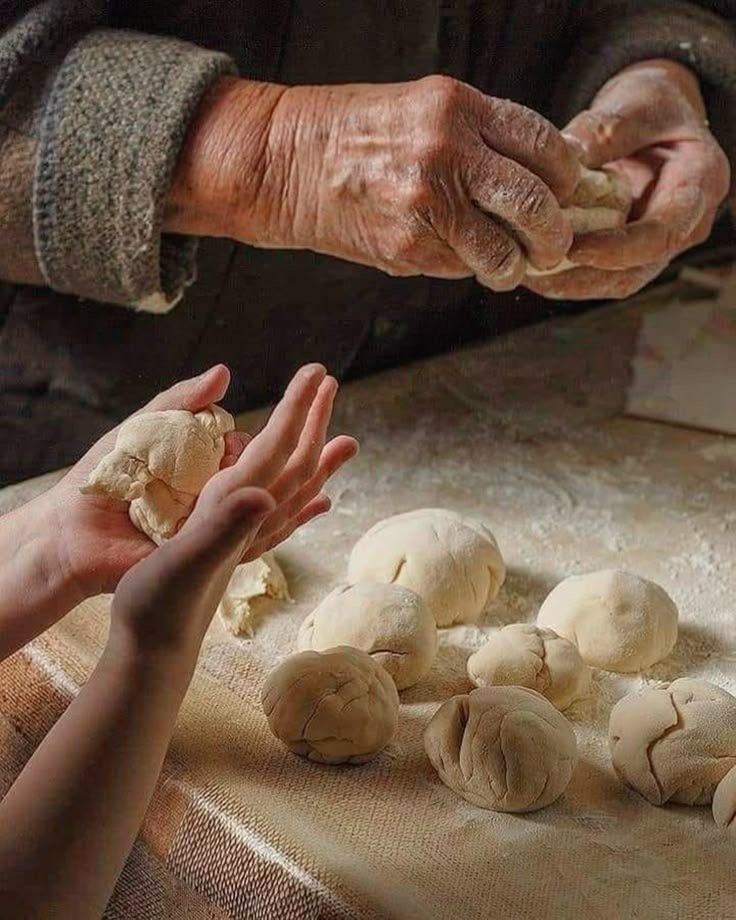
I expected to like being a mother.
I expected to be good at being a mother.
I expected to raise children who would appreciate that I wasn’t an embarrassment, not obese or out of style, or driving an old beat up Buick.

Before Thomas was born, I’d had two miscarriages. Both early according to the calendar, but both late enough to fill me with a deep, empty sorrow. When my first pregnancy had been confirmed, I felt euphoric. I had a miracle within me, a new soul the world had never known. And then it was suddenly gone, fading away in pools of blood until nothing of the wonder was left at all.
In fact, the Holy Qur’an states,
“When the angel said, ‘O Mary, Allah gives thee glad tidings of a word from Him; his name shall be Messiah, Jesus, son of Mary, honored in this world and the next, and of those who granted nearness to God.’” (3:45)

Muslims have such a deep regard for the Prophet Jesus that the Holy Qur’an points to his second coming in the latter days. He has been given such a high regard that out of all the prophets, Jesus was the only one given the status of a second coming.
The rest of my afternoon was spent enlightening my son on stories of Prophet Jesus and his honorable character. I focused on the similarities between Muslim and Christian faiths. I explained the common theme of all religions is to help us build good moral character within ourselves, and that each has a unique way to celebrate its traditions.
Our conversation ends with my son’s last request,
“So next year, can we get a Christmas tree?"
-Mansoora Bhatti
This product gives you access to all four weeks of the workshop. Purchase one or more drop-in sessions here.
Build a habit in 20 sessions. In this 4 week workshop that meets Mondays through Fridays from 8:00-9:00 AM CST, we will focus on generating new writing—making headway on a current project, reviving an old project that’s been gathering dust, or writing based off of the daily prompts Leigh provides.
The first 45 minutes of class are a gentle, camera-off, silent writing session. The remaining 15 minutes are an opportunity to share excerpts of our work, reflect on progress made, and set intentions for the following day. Then we will read a passage together on the writing life and close each class with a new learning about habit formation. By the end of this course we’ll have a morning writing habit that is each our own to continue and build upon.
This listing is for an individual class. To purchase access for the full 4-week workshop, click here.
Build a habit in 20 sessions. In this 4 week workshop that meets Mondays through Fridays from 8:00-9:00 AM CST, we will focus on generating new writing—making headway on a current project, reviving an old project that’s been gathering dust, or writing based off of the daily prompts Leigh provides.
The first 45 minutes of class is a gentle, camera-off, silent writing session. The remaining 15 minutes are an opportunity to share excerpts of our work, reflect on progress made, and set intentions for the following day. Then we will read a passage together on the writing life and close each class with a new learning about habit formation. By the end of this course we’ll have a morning writing habit that is each our own to continue and build upon.
Many writers feel drawn to write about their lives but struggle with uncertainty: Why this story? Why now? And who is it really for? This workshop is designed to help writers move beyond doubt and toward clarity by focusing on the deeper meaning and purpose beneath their story.
In this interactive, craft-forward session, participants will be introduced to the Memoir Compass, a practical framework that helps writers articulate their motivation (why they are writing), mission (who the story serves), and message (what meaning or insight the story carries). Through guided reflection and writing exercises, participants will begin shaping a personal narrative rooted in intention rather than overwhelm.
This workshop is ideal for writers interested in memoir or personal narrative, as well as fiction writers drawing from lived experience, who want to move forward with greater confidence, focus, and direction.
Some of the most compelling creative nonfiction begins with the feelings we are tempted to avoid: anger, resentment, shame, fear, or the sense that we have an axe to grind. In this six-week workshop, writers will explore how to follow that emotional heat toward deeper, more honest work—without sacrificing compassion, complexity, or craft. Through close readings, writing exercises, discussion, and constructive feedback, we’ll consider how to transform strong feelings into writing that reaches beyond catharsis and connects with readers.
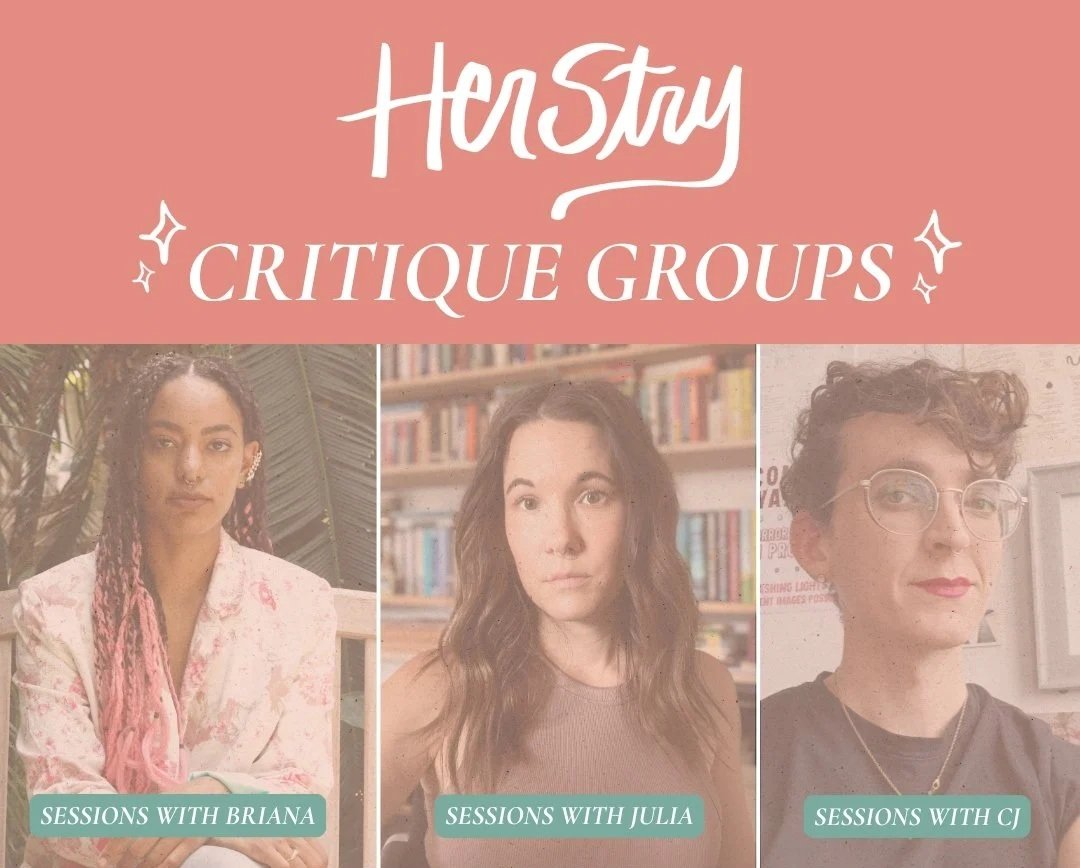
IT’S NO SECRET THAT FEEDBACK IS AN IMPORTANT PART OF THE WRITING PROCESS.
In fact, we argue that it might be the most important part of the process.
But it’s hard to find a writing community. It’s hard to find the people who are willing to take the time and the effort to read your work and give the feedback you really, truly deserves.
That’s where HerStry Critique Groups come in!
HerStry Critique Groups are small groups of 6 women who gather online for 6 weeks to share their writing, give constructive feedback and gain skills as writers.
Weekly online sessions last approximately ninety minutes, with three women sharing their work each week. Writers of all genres and levels are welcome and you may share both works of fiction and nonfiction.
Sessions take place on Mondays 7PM CT, Tuesdays 11AM CT, Fridays 11AM CT
WHAT’S INCLUDED IN THE HERSTRY CRITIQUE GROUPS?
Six 90 minute live workshop sessions
Three 20 minutes sessions in the “hot seat” to get you work critiqued
Written and verbal feedback from your fellow workshop participants
A weekly in depth edit and critique of your work from the group leader after each session
Weekly writing goals and accountability check ins
Full video recordings of each session to keep for your records
Say goodbye to the lonely, stuck in your head writing life!

LET’S WRITE!
From conception to submission. Let’s make summer sizzle with stories.
Writing a short story doesn’t happen in one session. It takes multiple drafts to get it exactly right, to create characters that come to life for the reader and a world they can’t stop thinking about. In this seven week course we will work on a single short story from conception to submission ready. The seven week session will include generative brainstorming sessions, short story craft talks, multiple workshops for feedback from fellow writers, and detailed line by line feedback and edits from your instructor. Plus, we’ll talk about submission venues, cover letters, and when to know if your story is ‘finished.’
IT’S NO SECRET THAT FEEDBACK IS AN IMPORTANT PART OF THE WRITING PROCESS.
In fact, we argue that it might be the most important part of the process.
But it’s hard to find a writing community. It’s hard to find the people who are willing to take the time and the effort to read your work and give the feedback you really, truly deserves.
That’s where HerStry Critique Groups come in!
HerStry Critique Groups are small groups of 6 women who gather online for 6 weeks to share their writing, give constructive feedback and gain skills as writers.
Weekly online sessions last approximately ninety minutes, with three women sharing their work each week. Writers of all genres and levels are welcome and you may share both works of fiction and nonfiction.
Sessions take place on Mondays 7PM CT, Tuesdays 11AM CT, Fridays 11AM CT
WHAT’S INCLUDED IN THE HERSTRY CRITIQUE GROUPS?
Six 90 minute live workshop sessions
Three 20 minutes sessions in the “hot seat” to get you work critiqued
Written and verbal feedback from your fellow workshop participants
A weekly in depth edit and critique of your work from the group leader after each session
Weekly writing goals and accountability check ins
Full video recordings of each session to keep for your records
Say goodbye to the lonely, stuck in your head writing life!

October 7, 14, 21, 28, November 4 and 18 CT
There is no class on November 11.
WRITING THE SEX SCENE.
Writing a sex scene can be delirious fun, a harrowing challenge, a literary milestone—possibly the most important part of building your short story or book. In our six weeks together, you’ll experience just about every possible emotion as you explore the erotic in different modes: comic, tender, harrowing, soul-shattering … because it really is all about the characters’ feelings, not just the mechanics. So we’ll talk about tone. Vocabulary. Metaphor. Sensory detail. How to get big emotions on the page … and when to pull back and let the reader’s imagination go to work.
This is a course for writers who want to explore the intersection between the novel and short stories, and would like to weave their short stories into a story cycle (or collection of "linked stories" or "composite novel"). This is also a class about the interaction of form and content, and how one influences the other. We will read works of interlinked stories by writers from diverse cultural and ethnic backgrounds, focusing on modern classics and contemporary practitioners of these hybrid forms. Weekly discussions will center on elements of craft, such as the expansion and compression of time, setting as an organizing and connecting principle, character development within and between stories, structure and plot for interconnected stories, and responding to literary influences in the same genre.
This six-week course guides writers through the literary submission process, offering insider insight and practical tools to help you get your work into the world. We’ll demystify everything from reading submission calls to writing cover letters and choosing the right journals. Along the way, we’ll workshop short bios, develop submission trackers, and build personalized plans that align with your voice and goals.
By the end of the course, you’ll walk away with a polished piece ready to send, a tailored submission list, and the confidence to navigate the lit mag world with clarity and purpose.
Ideal for writers of literary fiction, poetry, personal essay, memoir, and hybrid forms.
The slumbering house cradles the echo of your footsteps as you wander its sleepy halls. Sleep should have come for you hours ago, but your anticipation has successfully warded off any chances. The contractions come so lightly and irregular that you wonder if it’s even labor. Perhaps it is the Braxton-Hicks you read about.