The Bone, 1985
How many Seventeen articles do I need to read to get it right? “The makeup should look natural, like it’s not there. The idea is to enhance, not pronounce.” That’s what the people in the article say.Then why is there a swipe of color, same shade as a watermelon Jolly Rancher, shooting up, straight and wide, from the middle of my cheek? It’s an important spot on the face, is what they say. They also say I’m supposed to start the swoop up with my blush brush, just underneath where I should feel a bone, my cheekbone, and go slow and with great precision up the side of my face. I should finish next to my ear and then take my pointer finger and smudge lightly so everything all blends in together. It’s all supposed to look sun-kissed, soft and like it’s not there.
Problem is, I can’t find the bone.
That’s why I’m practicing. And getting ready.
*
Practice, practice, practice.
I’ll practice the way I’ll walk. And talk. And smile.
I’ll practice having fun.
I’ll practice saying, “I’ll be right back, I have to pee.”
I’ll practice tossing my high heels off using my big toe.
I’ll practice how to kiss, touch, push and pull.
How to rub, lean, open and close.
I’ll practice blinking and not blinking.
I’ll practice asking for things:
Ma, can I stay out ‘til 1:30? I’ll be with Missy and Michele, I swear.
Dad, can I have off tomorrow or just work the later shift?
God, can I please not have my period this weekend?

Dear Ezra,
I know we’ve never met…
And yet my hungry mind keeps feeding me
slow-burning images of you in your kitchen.
December 22nd
One day after winter solstice
Five hours, forty-four minutes and twenty-seven seconds of daylight
Sunrise: 10:13 a.m.
Sunset: 3:41 p.m.
LOVE
noun | \ lev : an intense feeling of deep affection; a great interest and pleasure in something.
LUST
noun | \ lest : very strong sexual desire.
One dreary winter day, nearly two years into dating, he ended things rather oddly: “I don’t think you’ll be okay if we break up,” he explained, “which is why we have to break up.” Though confounding, I suppose it was not surprising—he often resented how much I seemed to need him.
A mass of white caps on a disheveled sea crisscrosses the horizon, the aftermath of a hurricane that skidded up the western face of Baja from Cabo past Punta Hughes. The storm made a westerly turn on its northern trajectory, just far enough off the coast to send a small amount of rain and mountainous surf to our small pueblo. Wave after wave, a tight fetch. a disorganized army of marching swell lines with little space between them, and out the far points, close-out walls of water.
Midlife doesn’t announce itself with milestones — it arrives in contrasts. One moment, you’re lighting candles for a graduation. The next, you’re watching your mother shrink into a hospital gown.
*
There’s no way I’m losing my virginity after the prom. Not to Felix. Yeah, he’s my date and he’s a Swiss exchange student who looks totally Italian but he also carries his cash in the kind of rubber change purse that opens when you squeeze both ends. It’s the kind my grandpa uses for his shiny pennies.
There’s no way. I decided this last Wednesday.
After the prom here’s what’s going to happen: In the girls’ locker room I’ll change into whatever outfit I decide to wear (I can’t believe I still haven’t made up my mind: “What are you wearing after?”) and the black bra with the front clasp that Michele said she’d let me borrow. I’ll put my dress, which will probably be sweaty from all the dancing, in the fancy shopping bag I saved from last week when I went to Bamberger’s with my mom. She got me a gingham halter top and two jean skirts, one red and one regular jean color. All on sale!
I’m not sure if I’ll wash my make-up off in the locker room sink. The water smells weird in there. We’ll see.
Maybe in the car, we’ll chew Juicy Fruit and listen to Yaz.
Felix, can you kiss me like they do in Switzerland?
Then we’ll go to the diner.
Can I please have a root beer and a bowl of beef barley? Oh, and a rice pudding.
*
But now, I’ll keep practicing. With the blush brush, the swoop, the smudging.
So I can get ready for the prom.
-Kathy Curto
Many writers feel drawn to write about their lives but struggle with uncertainty: Why this story? Why now? And who is it really for? This workshop is designed to help writers move beyond doubt and toward clarity by focusing on the deeper meaning and purpose beneath their story.
In this interactive, craft-forward session, participants will be introduced to the Memoir Compass, a practical framework that helps writers articulate their motivation (why they are writing), mission (who the story serves), and message (what meaning or insight the story carries). Through guided reflection and writing exercises, participants will begin shaping a personal narrative rooted in intention rather than overwhelm.
This workshop is ideal for writers interested in memoir or personal narrative, as well as fiction writers drawing from lived experience, who want to move forward with greater confidence, focus, and direction.
Some of the most compelling creative nonfiction begins with the feelings we are tempted to avoid: anger, resentment, shame, fear, or the sense that we have an axe to grind. In this six-week workshop, writers will explore how to follow that emotional heat toward deeper, more honest work—without sacrificing compassion, complexity, or craft. Through close readings, writing exercises, discussion, and constructive feedback, we’ll consider how to transform strong feelings into writing that reaches beyond catharsis and connects with readers.
IT’S NO SECRET THAT FEEDBACK IS AN IMPORTANT PART OF THE WRITING PROCESS.
In fact, we argue that it might be the most important part of the process.
But it’s hard to find a writing community. It’s hard to find the people who are willing to take the time and the effort to read your work and give the feedback you really, truly deserves.
That’s where HerStry Critique Groups come in!
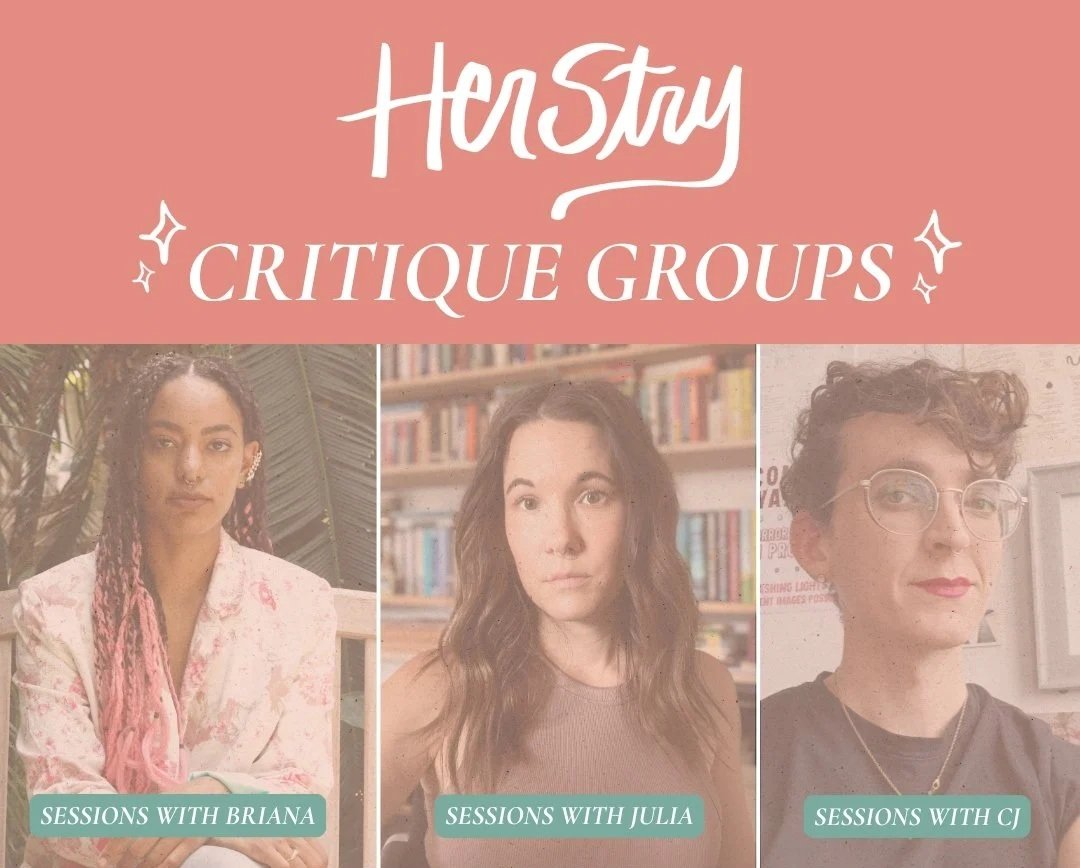
HerStry Critique Groups are small groups of 6 women who gather online for 6 weeks to share their writing, give constructive feedback and gain skills as writers.
Weekly online sessions last approximately ninety minutes, with three women sharing their work each week. Writers of all genres and levels are welcome and you may share both works of fiction and nonfiction.
Sessions take place on Mondays 7PM CT, Tuesdays 11AM CT, Fridays 11AM CT
WHAT’S INCLUDED IN THE HERSTRY CRITIQUE GROUPS?
Six 90 minute live workshop sessions
Three 20 minutes sessions in the “hot seat” to get you work critiqued
Written and verbal feedback from your fellow workshop participants
A weekly in depth edit and critique of your work from the group leader after each session
Weekly writing goals and accountability check ins
Full video recordings of each session to keep for your records
Say goodbye to the lonely, stuck in your head writing life!
LET’S WRITE!
From conception to submission. Let’s make summer sizzle with stories.
Writing a short story doesn’t happen in one session. It takes multiple drafts to get it exactly right, to create characters that come to life for the reader and a world they can’t stop thinking about. In this seven week course we will work on a single short story from conception to submission ready. The seven week session will include generative brainstorming sessions, short story craft talks, multiple workshops for feedback from fellow writers, and detailed line by line feedback and edits from your instructor. Plus, we’ll talk about submission venues, cover letters, and when to know if your story is ‘finished.’
IT’S NO SECRET THAT FEEDBACK IS AN IMPORTANT PART OF THE WRITING PROCESS.
In fact, we argue that it might be the most important part of the process.
But it’s hard to find a writing community. It’s hard to find the people who are willing to take the time and the effort to read your work and give the feedback you really, truly deserves.
That’s where HerStry Critique Groups come in!
HerStry Critique Groups are small groups of 6 women who gather online for 6 weeks to share their writing, give constructive feedback and gain skills as writers.
Weekly online sessions last approximately ninety minutes, with three women sharing their work each week. Writers of all genres and levels are welcome and you may share both works of fiction and nonfiction.
Sessions take place on Mondays 7PM CT, Tuesdays 11AM CT, Fridays 11AM CT
WHAT’S INCLUDED IN THE HERSTRY CRITIQUE GROUPS?
Six 90 minute live workshop sessions
Three 20 minutes sessions in the “hot seat” to get you work critiqued
Written and verbal feedback from your fellow workshop participants
A weekly in depth edit and critique of your work from the group leader after each session
Weekly writing goals and accountability check ins
Full video recordings of each session to keep for your records
Say goodbye to the lonely, stuck in your head writing life!
October 7, 14, 21, 28, November 4 and 18 CT
There is no class on November 11.
WRITING THE SEX SCENE.
Writing a sex scene can be delirious fun, a harrowing challenge, a literary milestone—possibly the most important part of building your short story or book. In our six weeks together, you’ll experience just about every possible emotion as you explore the erotic in different modes: comic, tender, harrowing, soul-shattering … because it really is all about the characters’ feelings, not just the mechanics. So we’ll talk about tone. Vocabulary. Metaphor. Sensory detail. How to get big emotions on the page … and when to pull back and let the reader’s imagination go to work.
This is a course for writers who want to explore the intersection between the novel and short stories, and would like to weave their short stories into a story cycle (or collection of "linked stories" or "composite novel"). This is also a class about the interaction of form and content, and how one influences the other. We will read works of interlinked stories by writers from diverse cultural and ethnic backgrounds, focusing on modern classics and contemporary practitioners of these hybrid forms. Weekly discussions will center on elements of craft, such as the expansion and compression of time, setting as an organizing and connecting principle, character development within and between stories, structure and plot for interconnected stories, and responding to literary influences in the same genre.
This six-week course guides writers through the literary submission process, offering insider insight and practical tools to help you get your work into the world. We’ll demystify everything from reading submission calls to writing cover letters and choosing the right journals. Along the way, we’ll workshop short bios, develop submission trackers, and build personalized plans that align with your voice and goals.
By the end of the course, you’ll walk away with a polished piece ready to send, a tailored submission list, and the confidence to navigate the lit mag world with clarity and purpose.
Ideal for writers of literary fiction, poetry, personal essay, memoir, and hybrid forms.
Tension feels tangible to a reader, an active experience. But from a craft perspective, tension is often a function of restraint, palpable from what is withheld, delayed or left unresolved. Why do some stories feel urgent even in stillness while others fall flat despite dramatic events? Our impulse to resolve tension often comes from a deeply human instinct to seek coherence and moral clarity, but resisting that instinct creates compelling narratives. When we let characters misbehave or allow ambiguity in their actions, we pull readers closer to them.
This course examines tension as a narrative force. We’ll consider how writers can counter the impulse to resolve too quickly, to justify wrongful acts or to redeem a character’s behavior. By looking at ways to sustain tension without escalation into spectacle, we’ll experiment with evoking it in the ordinary and the unspoken. The class will combine close reading, craft reflection and writing prompts to practice distinct approaches to writing tension. This course is designed for writers working in fiction, nonfiction, and hybrid forms who are interested in deepening the psychological and structural complexity of their work. Ultimately, tension is what compels the reader to turn the page.
In this generative writing workshop, ecologist and poet Anne Marie Wells will introduce participants to some of today's eco-poets and essayists and guide participants through a series of writing prompts that will use the outdoors and personal experience as inspiration for creative expression. No writing experience is necessary to participate.
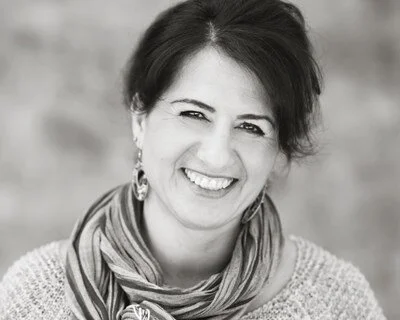
Kathy Curto teaches at The Writing Institute at Sarah Lawrence College and Montclair State University. She is the author of Not for Nothing-Glimpses into a Jersey Girlhood, published by Bordighera Press. Her work has been featured in The New York Times, on NPR, in the essay collection, Listen to Your Mother: What She Said Then, What We’re Saying Now, and in Toho Journal, Barrelhouse, La Voce di New York, Drift, Talking Writing, The Inquisitive Eater, Voices in Italian Americana, Ovunque Siamo and Lumina. She has been the recipient of the Kathryn Gurfein Writing Fellowship, the Montclair State University Engaged Teaching Fellowship and also serves on the faculty of the Joe Papaleo Writers’ Workshop in Cetara, Italy. Kathy and her family live in the Hudson Valley. Please visit her site: www.kathycurto.com.