
An Accumulation of Silences
I’m toddling down our road, stumbling my way over the loose rocks and gravel in my light-up Barbie shoes. The journey seems long, arduous, and I am panting from exertion. Our house is still in view, the apple tree in the front yard partially blocking the front door. Shuffling my pants down to my ankles, I squat to pee. I ditch the pants and shoes and patter down the road, more slowly now on the sensitive soles of my chubby feet. I hear my mother’s call from the porch and streak now, as fast as I can, away from the house. A few moments later, I hear her footsteps behind me, and she catches me by the arm. Blushing deeply from embarrassment at my squirming, naked body in her arms, she forces a smile and waves politely at the neighbors. She whispers through gritted teeth, “Where are your clothes?”
I’m walking next to my father in mismatched clothes I picked out myself, a striped, orange top and pink-and-green polka dot pants. My tangled hair, embellished with a few stray sticks and leaves, swings across my back, glistening white in the sun. We are going to the chicken coop or the forest or hunting for morel mushrooms. Holding a half-gnawed apple in each hand, I’m singing at the top of my lungs. “You are my sunshine, my only sunshine . . .” My father loves when I sing. I beam up at him, but all I can see are the wrinkles of a smile in the shadow of his brows and baseball cap. I finish an apple and reach for his hand. His palm is rough, calloused, and I rub the white lines formed from the aftermath of chopping firewood, willing them smooth. I wonder when my hands will start to change like his, when I will make him proud with my strength. We are walking somewhere, have a fixed destination, but I can’t remember what it is. Maybe he never told me.
I’m standing next to my father, watching, as he explains why he ties a hen upside down to a string between two posts for slaughter. He waits for the hen to stop flapping her wings, tells me she will calm from the rush of blood to her brain. When she stills, he grabs her head gently and slices it off in one clean stroke. The blood doesn’t spatter how I imagined but leaves circles on the ground as the body sways and drains. My mother dips each carcass into a vat of boiling water and starts to pluck off the feathers. The smell of steamed feathers, raw flesh, and blood makes me nauseous, but I know better than to complain. I play with the feet of the deceased, claw at the ground to unearth stones, make tracks that lead to and from the house.
I’m sledding down a roadside snowbank across from our house as the light starts to dim. All four of us siblings are taking turns with the two sleds when I hear a familiar jingle in the distance. As my eyes adjust to the light, I make out the shape of Yukon, our neighbor’s husky, trotting down the road toward us. I have only ever seen him from a distance, lunging and snapping on his chain as we ride past on our bikes. We all scramble up the small bank and huddle under the sled, whispering to each other. As the jingle nears, we grow quiet, still, hoping he leaves us alone. He pauses in front of us, almost a statue. A low growl breaks the silence. Someone starts to cry, maybe me. My older brother realizes we can’t wait to see what’s next. He jumps up, brandishing the sled above his head like a weapon and runs at the dog, yelling “Go home, get outta here” as the rest of us race to the house. I don’t look back to see if he is okay. The dog, skittish in the dark, backs off long enough for us to make it to the door, tumbling over each other to get inside. My parents laugh at our entrance, their eyes twinkling. They tell us we are overreacting.
I’m harboring a secret from my parents because I don’t think they will believe me. Every night, as he wraps his arms around my waist, I leave myself.
I’m wrapped in the arms of a Brazilian boy, Bimba, on a beautiful evening in Sao Paulo. We are leaning against a small fruit tree in the front yard of the orphanage and the stars are barely visible, but the moon is full and bright, casting a perfect glow on this moment. It is everything a girl could wish for a first kiss. I laugh nervously, after his lips leave mine, thankful that my searing blush is not visible in the moonlight. I lay my head on his chest, soak his shirt with my tears, and breathe in the smell of sweat and musky cologne and foreign flowers knowing that tomorrow I leave to return to the States. I may never smell him or this place again. I cherish the memory for three years until my sister returns at the same age to that same spot and shares her first kiss with that same boy, now a man. My heart squeezes, then breaks.
I’m squished in the corner of a bus seat on the way from my soccer game. Tired but not sleepy, I lean my head against the window and watch my breath fog and fade on the glass. The scent of shoes and grass and sweat and men fills my nostrils, both familiar and unnerving. Derek, one of the freshmen, slides in next to me, asks if I want to play a game. I tell him no, or that I’m too tired. He is cute, but his carefree overconfidence scares me. I am a senior. I have a boyfriend, but he is not on the team. The game is “Are You Nervous?” I have never played before, and I naively assume it is a new version of “Would You Rather?” It is not. The touch of his hand on my thigh is gentle, soft, his thumb stroking the tender scrape next to my knee, but his fingertips are coals searing my skin. Are you nervous? My voice sticks in my throat, and I can’t remember the rules, can’t remember which word stops the game. The question is repeated over and over as his hand crawls up my legs, sliding the hem of my shorts with it. I offer yes and no, say please, stop. It’s just a game, but I cower in the dark.
I’m pressed in a dark corner, my back crushed against the hard cement and the cobwebs, while a man with tousled blonde hair kneels between my legs. I shake with the cold, with the fear of exposure, with the desire to say no. We met at a Christian youth concert where he snaked his hands around my waist, tried to slide them into my pants as I batted him away, my body battling between fear and intrigue. He is handsome and confident and the kind of person I hadn’t yet learned that you don’t say no to. We had walked, held hands, made small talk. No kissing, no touching. Then he dragged me into the bushes. At breakfast in the dining hall the next morning, I see him pointing at me, trading smirks and high fives with his friends. I squeeze my eyes shut and focus on trying to disappear.
I’m racing, focused on weaving my way between the red and blue poles on the slalom course. I can hear my family cheering at the bottom of the slope, urging me forward, but I’m not here for them; I’m here for sharp bite of the poles as they crash into my shins and then snap forward into the snow. I am reckless, constantly on the edge of falling, but I take first place. I take more pride in the black and blue watercolor of my legs than the medal, in pushing on my mottled skin to feel the throb of life.
I’m lying on a bed, a bitter flavor in my mouth, likely a mix of orange juice and vodka and dog saliva from when my date let his dog drink from my glass at the start of the night. I can’t explain why I am in this man’s bed, a man I met an hour earlier for a blind date, who I agreed to meet at his house because he attended the same small conservative Christian college as me. There is a movie playing in the background, but I can’t remember what we started and can’t make out the words. I can smell Little Ceasars pepperoni pizza on his fingers and breath as I stare out the window. He has been kind, gentle, has asked me if I am sure. I am too numb to respond.
I’m pacing with a boy on the top floor of a new building on campus, and I can’t feel my fingers. We aren’t supposed to be here, the building isn’t open yet, and the access door locked behind us as we explored, caging us inside a cement room with no ceiling. It is snowing, soft gentle flakes, and the boy is making jokes about what we will need to do to stay warm. I smile and laugh because I don’t want him to touch me, but I also don’t want to die of the cold. We take turns climbing the mountains of ductwork and machinery in the middle of the room to try and call for help. I carve “ON ROOF. HELP.” with a stick on a scrap piece of cardboard left behind by the workers, but it is too light to be thrown to the edge. Two hours later, another student sees the boy waving his arms above the rooftop, realizes something is wrong, and comes to let us out. I’m grateful, but I’m also angry; I wish I could have saved myself.
I’m biking down a path with one of my roommates, a tall, thin boy with shaggy hair who loves music and sings like an angel and understands me in way I didn’t know was possible. I watch his hair blow in the wind, catch his smile as he looks back at me and eggs me on to catch him, and I desperately want to love him. The subject is never broached, and we remain platonic. His final Facebook message confesses that he considered the possibilities of us, too, but the physical attraction was never there for him. He is determined to remain friends. “There isn’t anyone else like you in the world.”
I’m holding hands with a German boy, Pascal, in the igloo I built in front of the hostel in Anchorage, Alaska. It is cold, 20 below, but we agreed to spend the night out here to celebrate my creation. Our friend, Brandon, is playing guitar at the cave entrance, and the soft glow of the hostel lights dance on the icy walls of our shelter. I can’t see Pascal’s face as we lay side by side in our sleeping bags, but he notices my shivering, my discomfort. He shifts slightly to lean his body toward mine and offers his gloves to warm my hands. I have only known him for two days, and I’m surprised he is willing to take on discomfort for my sake. We fall asleep holding hands, and I think this must be love.
I’m curled up with a man that doesn’t love me, and I start to shiver every time he leaves our tent to puke in the side of the yard. He holds my hands upon his return, shares his body heat to combat the thinness of my sleeping bag. He recently lost his father to cancer, is recovering from grief, and thinks maybe I could fill that hole for now; but he won’t let himself do that to me. He prefers thinner girls, girls with brown eyes, girls who are Eleanor, the girl he wants but can’t have and still lives on the other side of the world in London. We hold hands and whisper and hitchhike to Talkeetna and say goodbye without his lips ever touching mine.
I’m climbing over a man’s body to get to my side of the bed, a man with whom I have no romantic relationship, and all I want to do is kiss him. We are roommates, both training to be teachers in rural Alaska, and I offered to share my small room in the hostel for the summer to save on costs. We eat together, bike to work together, drink at Chilkoot Charlie’s together, and sleep side by side. When I imagine the future, it is always with him. I never say those words out loud, and he follows his own dreams.
I’m standing on the edge of a cliff in Elim, Alaska, letting a storm rage around my body. Wind whips the hood of my raincoat off over and over, and I eventually let it take me, let the water seep under all my layers until my skin puckers and prickles and I shiver. Still, I stay. I root my feet to the ground just behind the precipice, tensing the muscles in my body to prevent myself from being blown over. The storm howls around me, and I realize I can’t even see my apartments in teacher housing anymore, even though it is only a few yards behind me. I have never seen weather like this, have never felt such pelting rain. Tipping my head to the sky, I laugh, relishing the drops on my teeth, my tongue.
I am happy, here, alone.
-Rachel McKinley
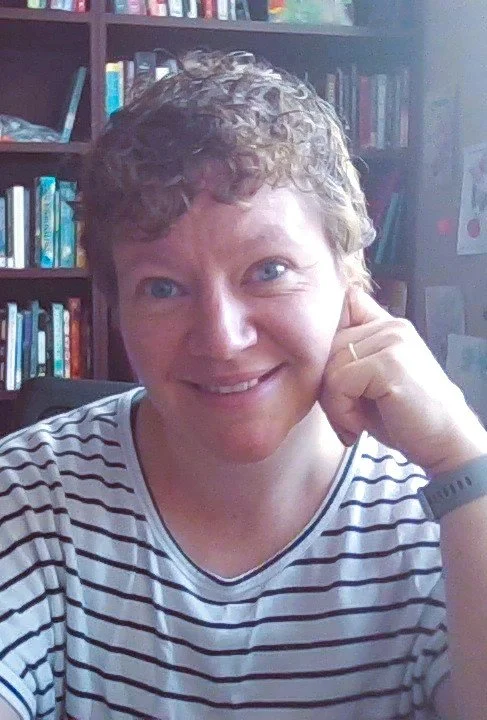
Rachel McKinley is an Assistant Professor of English at Chadron State College. Her work has appeared or is forthcoming in Cirque, Fourth River, Southern Quill, and Plan B: A Journal of Reproductive Justice. Her place-based writing explores the intersection between beauty and heartbreak of the natural world and explores what it means to be desperately alive and full of wonder
I left on a clear October Monday. Seated at the bulkhead, my elbow rested next to a man who asked if I was going to Chicago for business. I lied, nodding my head yes. Ambivalence prevented me from updating my second-generation iPod earlier in the day, leaving Missy Elliott and Usher to comfort me. A leathery skinned smoker picked me up at baggage claim. She drove me forty-five minutes to our rural destination while I imagined what happens when car doors open and bodies land on I-55 at seventy-five miles per hour.