
Picked Out
In fifth grade, our lunch periods were at different times. My best friend Samantha—Sam—ate while I had Social Studies. One day, I slipped out of class on a bathroom pass and into the cafeteria, where sound and color collided. I scanned the crowded room until the blur resolved into Sam—her thick black braid ending in a baby-pink scrunchie at the small of her back, a whole head shorter than everyone else at the long table. She squealed when she saw me, as if it had been years, not hours, since we’d last been together. Sam nudged the girl beside her, who slid over without question. I squeezed in, the other kids at the table shielding me from the lunchroom monitor as Sam and I whispered, knees pressed together. Having different lunch periods once felt like the worst thing that had ever happened to me.
DJ planted herself at the next table, alone. Her tray of food was untouched. She was already on her third carton of chocolate milk while she stared at me. Neon plastic barrettes strained at her scalp, fastening tight braids, the kind meant for a little girl.
DJ was bigger and older than us. The rumor was she'd been held back at least three times. She was a regular on the pine bench outside the principal’s office. She almost never spoke in class or handed in homework, as if she’d already accepted that the world had decided who she was allowed to be.
“Y’all look like sisters,” she said then, almost sweetly.
Sam and I had been called sisters before. We were even given the same nickname in fourth grade—Shorty—and it had stuck. We were the two smallest kids in our class, and instead of bristling, we claimed it. Bigger kids would routinely pick us up and place us next to each other, just because they could. One of our favorite things to do was walk with our arms hooked over each other’s shoulders and stagger across the playground, pretending to be drunk like our dads’ military friends at barbecues—loud, loose, leaning too hard on whoever was handy.
“We are sisters,” Sam said, beaming. She pulled me closer.
“No, you’re not,” DJ said. “But you do both got them chinky, chinky eyes.”
Heat rushed up my neck. I knew without looking that the tops of my ears were red. Our mothers were both from the Philippines. We’d both been born there. I had always loved that it was something we shared.
“We do not,” I spat, not knowing how else to respond.
DJ tilted her head. “You can’t be sisters. You ride my bus,” she said to me. “And I ain’t seen you on it.” She pointed her finger at Sam. Her nails had all been bitten to the quick. The raw edges looked painful.
“I’m little,” Sam said, unfazed. “You probably just missed me. Right, Shorty?”
The other kids at our table were watching—waiting. We all knew not to mess with DJ. Still, I couldn’t betray Sam. I wished that she was my sister, that I could ride the bus with her, sleep at her house each night.
Lunch trays clanged. Forks scraped. I could hear my heartbeat, loud, lodged in my throat.
“Right,” I said, slipping my arm around Sam, letting my wrist go loose on her shoulder, practiced. Like nothing mattered. “You just didn’t see her. We’re so short!”
DJ licked her lips, slow. “Is that a fact? Well. If I don’t see you both on the bus this afternoon,” she said, “whoever I do see is getting it.”
Getting it. I had never been beaten up before.
“Not a problem,” Sam sang-spoke. She flipped her braid over her shoulder and tightened the scrunchie.
For her, I thought.
The inside of my mouth turned to paper.
My heartbeat stilled, dropped to my gut, settled there like a stone.
Sam’s bus went the long way toward North Charleston. It traveled past big houses with driveways that circled instead of stopping. Past lush lawns too smooth to run across. The houses set farther back from the road—reserved, quiet. Even the bus itself was newer, freshly washed, as if it were headed somewhere important.
My bus sputtered, cutting straight through town, from one busy road to the next. Past apartment buildings and townhouses. Dry cleaners and gas stations. Little houses close together, porches low to the ground. From the window, they resembled the little green houses from our Monopoly set. The stops came quicker. The bus emptied fast.
I’d ridden Sam’s bus once on a Friday for a sleepover at her house. When I hopped off in her subdivision, I wondered if I looked like I could live there too, or if my fake Keds gave me away. I’d used a blue marker to draw the logo on the back. It was probably worse than if I had left it blank. I wanted to pass for someone whose street curved gently, whose front yard didn’t slope toward danger. But I felt like everyone could tell I came from a road where cars flew past like they were being chased.
On paper, our families seemed almost identical. White military dads. Filipino moms. I had an older brother; Sam had two older sisters. Sam’s sisters were grown and gone; she moved through her house like an only child. My brother Rob was a grade ahead of me, in his own orbit.
Sam’s dad spoke like a newscaster—no contractions, as if there might be an audience listening—and wore his polo shirts stiff, the collars up, and ironed jeans when he wasn’t in uniform. At dinner, he asked about Sam’s school day and listened patiently, chuckling along, recalling names and details, weighing in, as if they were colleagues.
My dad’s Kentucky accent stood out in South Carolina, thickening at night with his second tumbler of whiskey and soda. At home, he wore grease-stained blue jean overalls or his hickory-striped, paint-smudged bib overalls—clothes meant to do physical work in. We could tell the time by his sounds: the garage door rumbling open, the stereo flicking on, tools clattering down. “Daylight is burning,” he’d say, already moving.
Sam’s mom had completed nursing school in the Philippines. Her Metro Manila accent landed light, almost melodic, when she shared grown-up secrets with us. She and Sam traded outfits and she called out “Girls, girls!” when she wanted our attention. One Saturday, Sam’s mom took us to the mall, let us loose for four hours, and gave us spending money. I came home with stacks of jelly bracelets and gag gifts from Spencer’s to trick and tease my brother with—Dumpster Dippers, fake gum and candy that tasted terrible on purpose. It felt like I had won a prize.
My mom grew up in the provinces. She had cried for a week when she was forced to quit school in the sixth grade to work after her father’s stroke left him paralyzed. She plowed and hand-planted rice in muddy paddies; climbed neighbors’ trees to steal fruit she sold at the open-air market; carried baskets of clothes to wash by hand in the river. When she got older, she left her barrio to work in other people’s homes—as a nanny, a cook, a maid.
My mom’s Kapampangan accent settled deeper on her tongue. She spoke the way she cooked—Filipino and Southern, two accents fighting to get along in one mouth. Peanut butter cookies, fork tines crisscrossed, cooling on wax paper on our Formica counter. The wooden mixing spoon set aside for me to lick. Ice cream pressed into a folded slice of white bread—the recess snack from her youth—not the paper-wrapped kind with chocolate wafers I took for granted. Sam’s mother did not bake her cookies. She bought them from a bakery.
It was at fourth-grade Open House, while we trailed our parents, when they met for the first time. We wanted them to hit it off to better our chances for playdates and sleepovers. I listened as Sam’s dad talked about the house fire back in the Philippines, how nearly everything they owned had burned.
“Still—lucky,” he said, knocking on a wooden shelf as he passed it. “Our family wasn’t hurt.”
Sam leaned close to me. “Everything I have still has tags on it. All brand names,” she whispered. She mimed opening a closet door, walking in, running her hands along a row of hangers, smooth and satisfied.
My skin flushed. I nodded like this was normal, like I had a similar wardrobe waiting at home. I thought about my own closet, the wooden accordion doors, the way outfits arrived one at a time, spaced out by holidays and birthdays. I often wore my brother’s hand-me-downs, even though he was a boy. I pictured Sam’s closet, everything new and waiting.
The thought sat there.
“I want a closet full of new things,” I said.
I hadn’t meant to say it out loud.
My mom’s head snapped toward me. She fired off a sharp rebuke in Kapampangan, then in Tagalog so Sam’s mom would understand. The mothers laughed behind their hands, suddenly conspiratorial, as if they were the students at Open House. I was sure there had been a bad word in there somewhere about me, but at least they were laughing.
“You should be ashamed of yourself,” my dad said, shaking his head in apology at his new military dad friend.
Sam had lost everything, and still I envied her. My parents kept looking at me, stunned—not just that I’d said what I said, but that I was theirs.
I didn’t understand how the world was sorting us. Only that it already was.
I wasn’t one to sweat, even in P. E. class. But I was sweating from lunch all the way through to the final bell, and by the time I caught sight of the yellow school bus, my shirt and shorts clung to me. I shivered in the South Carolina heat. I had begged Sam to come home with me, but she had ballet class.
I stood at the gaping bus door, its dark mouth ready to swallow me.
I froze, staring at the black rubber steps, the ridges worn smooth.
A boy pressed his hand into my back.
I gripped the cold metal rail and climbed.
Please, please, please, God, don’t let her be on the bus.
I turned into the aisle.
The folding door hissed closed behind me.
“Well, well, well,” DJ clucked, seeing me get on the bus alone. She was taking up a whole seat in the middle of the bus. The broad smile on her face did not match her hard stare. “If it isn’t the sister. Where’s your little friend? She is just your friend, right? I knew she didn’t ride this bus.”
My legs locked. The boy behind me pushed me forward again.
DJ stood, solid as a mountain, and drove her fist into my stomach.
Stars burst behind my eyes. My body forgot how to breathe.
I teetered backward into the boy who pushed me; he jumped away.
I hit the floor, hoping that I was still breathing, and stared up at the bus ceiling, at the flat gray wads of Hubba Bubba pressed against it like fossils.
I could hear the roar of the engine. The voices blurred into one long sound, like water rushing through old pipes. Someone laughed. The bus lurched forward, the driver unaware. No one helped me get up. Hot tears slid sideways into my ears. I couldn’t lift my head. The ceiling wavered; the gum spots multiplied.
Then my brother’s face blocked the ceiling and he pulled me up.
When my dad got home, my brother told him what happened. Somehow, my dad knew exactly who DJ was, what house she lived in. He drove me there and got out of the car. A man who looked like an older version of DJ stood in the yard and turned off his push lawn mower, shielding his eyes. His smile dropped as my dad spoke. He disappeared inside and came back with DJ.
From the car, she looked smaller next to her dad. He yelled at her, hand clamped on her shoulder. DJ’s face was set. She didn’t cry.
Her gaze found my window. I hoped the sun’s glare hid me from view. She had never looked small to me before.
I was eleven years old and I didn’t want to stand out. But I wanted to be special—for someone to make me feel special—and Sam did that. Middle school wasn’t until next year, but we were already absorbing hierarchies into our bloodstream, who was who, who was above who. Deciphering how to fit in felt more urgent than the equations on the chalkboards. The sorting, the social order—it permeated everything—beginning with the accents spoken at home and which bus brought you to a school where the teachers might single you out as gifted or send you out of class to sit on a bench awaiting discipline. It seemed so unfair that DJ hit me when it was Sam who had lied.
The next day I worried about what to say when Sam asked about the bus ride.
Would she expect me to have fought back? Would she want to confront DJ herself? Would she worry she might be next? Would she laugh it off? Would she think I was brave—or a tattletale? Even though it was Rob who told my dad, and my dad who told DJ’s.
I had done nothing. Maybe that was the problem. I had lied by letting Sam lie. We weren’t sisters, but we had chosen each other. That felt sacred. It made me feel special, and I was punished for it. DJ did not have a best friend. She was never tenderly chosen. She was already sorted. Picked out. Punished before she ever swung her fist.
I spotted Sam in the hallway at break. She was in the middle of a half circle of girls, all wearing makeup and biker shorts under skirts with bright colored tops. She was reading aloud from a note someone had written to her, pausing for giggles. Sam was my best friend, but it seemed like she had her pick of them. It seemed like all those laughing girls had chosen her.
I leaned against my locker, hugging my Trapper Keeper close. Girls teased their bangs higher around me, spraying sharp hisses of Aqua Net clouds into the fluorescent light. The mist drifted down and settled on my face, sticky and perfumed, as if I’d been lightly shellacked.
Finally, Sam’s eyes found me.
“Jane! Shorty!” she called, walking over.
She used my locker mirror to reapply her Dr. Pepper Lip Smacker.
All of a sudden, it was obvious that she wasn’t going to ask me.
I flipped my Trapper Keeper flap open and closed, the Velcro closure making a loud ripping sound until she stilled my hands. Lockers slammed and sneakers squeaked on the waxed linoleum floor.
“So, DJ saw that you weren’t on my bus.”
“Shut up.” Sam’s eyes widened and she grabbed hold of my forearm, squeezing. Her face looked delighted. Like someone watching fireworks at the grand finale. My stomach dropped to my knees.
“Don’t leave me hanging,” she said.
I spotted the principal’s bench over her shoulder. DJ was taking up half of it, her knees open wide. I wondered if it was because of what she had done to me.
“It was fine,” I said.
She smiled.
“I told you it would be!” she chirped.
The bell rang. Sam hugged me hard and took off down the hall. I went the other way.
Don’t look, don’t look, I told myself even as I did.
DJ was studying her nails. She peeled a hangnail, sucked the blood from her finger, and met my eyes. One of her barrettes slipped free and fell between us. I bent to pick it up. The neon green plastic teeth bit into my palm. I opened my hand and offered it to her. When she took it, the corner of her mouth ticked up—half smile, half smirk. I turned to go.
I heard her say, “Thank you.”
It didn’t sound sarcastic.
I kept walking.
-Jane Ann Valentine
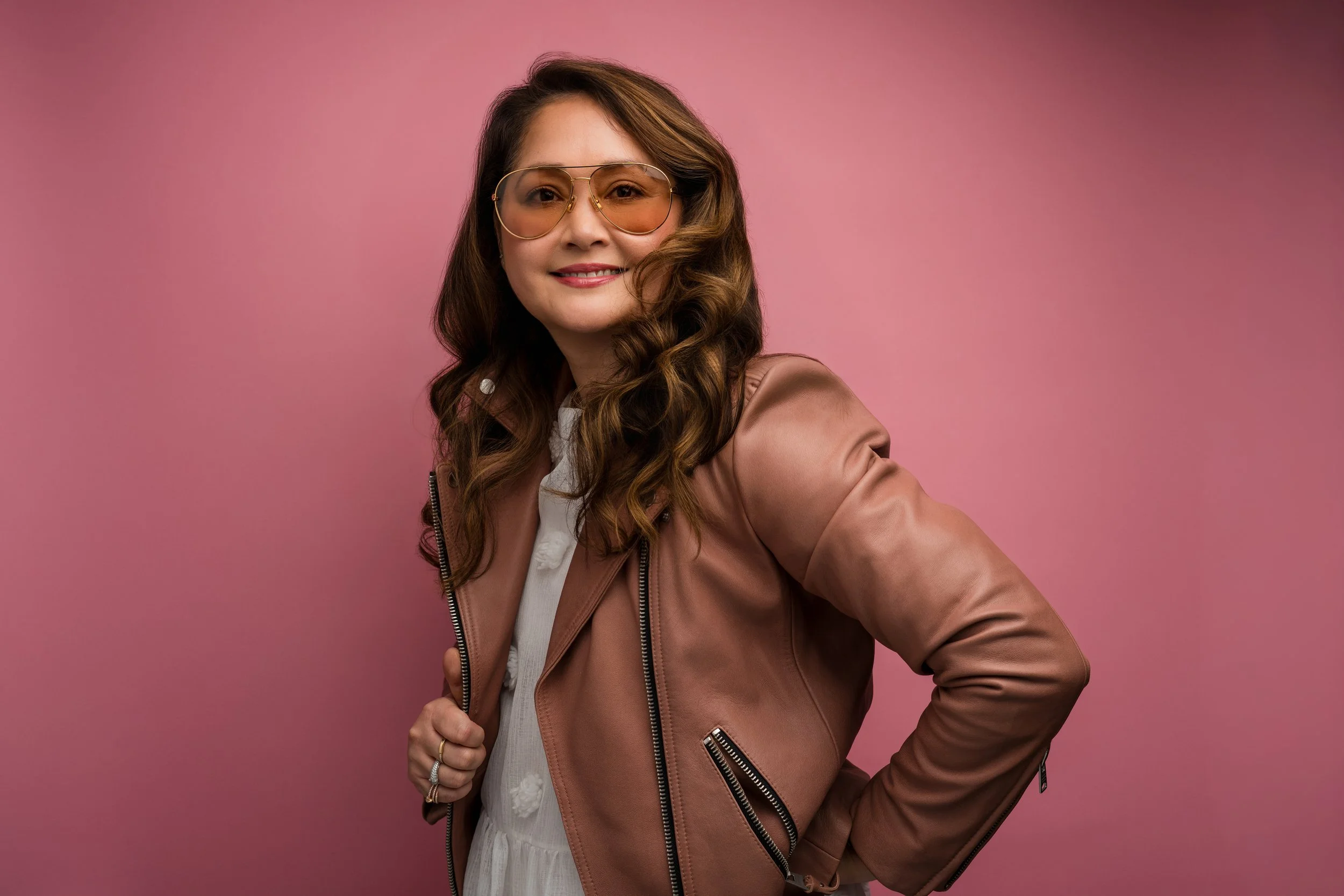
Jane Ann Valentine is a writer of personal essays and memoir whose work explores girlhood, family, silence, and the subtle forces that shape identity. She is currently at work on a novel and has a forthcoming essay on mixed-race identity in Middleground Magazine. Her nonfiction received the 2025 Summer Nonfiction Prize from Barely South Review.
I left on a clear October Monday. Seated at the bulkhead, my elbow rested next to a man who asked if I was going to Chicago for business. I lied, nodding my head yes. Ambivalence prevented me from updating my second-generation iPod earlier in the day, leaving Missy Elliott and Usher to comfort me. A leathery skinned smoker picked me up at baggage claim. She drove me forty-five minutes to our rural destination while I imagined what happens when car doors open and bodies land on I-55 at seventy-five miles per hour.