
“Have you thought about going on a diet,” he asks me. “You’re not fat, but you’re not exactly thin.”
I am fourteen, standing in my father’s kitchen. I will grow another two inches over the next three years.
I am not fat, but I’m not thin.
My father’s words burrow deep into my mind; they hollow out a space for themselves and make a new home where my unbridled self-confidence once lived. A girl who once strode the streets, chest out, head high, collapses in on herself. She now shuffles along, eyes cast down. At home, I begin eating in private. I shove Little Debbie Oatmeal Creme Pies one, two, three into my mouth. I eat and eat and eat, hoping to fill the hole his words have left, but my sorrow is insatiable. There were so many other ways he could have finished that sentence, but instead he chose judgement, critique, violence.
Have you thought about where you want to go for a bike ride with me?
Have you thought about what you want for Christmas? Get me your list.
Have you thought about the enormity of the universe and how we are mere specks within it? Here’s a sandwich. Eat up. You look a little peckish.
My eating is defiance. When I want to stop, I can’t. I don’t want to give him the pleasure of success.
My mother doesn’t say anything about my weight. Instead, she asks me about my heart. My feelings. My quietness. This collapsing in on myself. She holds me a little closer. Kisses my head a little more tenderly. I never tell her what he said but she knows something is changing.
At fifteen, my mother brings home an exercise bicycle for herself. I drag it into my bedroom, set it up in front of the television and begin pedaling. I pedal away the creme pies. The pizza slices. The bags of red pistachios. The gummy bears. As I pedal, I watch Newhart and Quantum Leap. I escape into fantasy. Begin writing lyrics to bad songs. Begin writing stanzas to bad poems. I need a place to put this betrayal. All I wanted was for my father to see me. To cherish me. To consider me a marvel. To delight in me. But all he saw was my body and how I filled it with food he believed I didn’t need. And how he found me lacking as a result.
I try to pedal the feelings away and while it works to make my body smaller, it never diminishes the sense of hollowness he left behind with his words. The phone doesn’t ring. He doesn’t wish me a happy birthday. I don’t exist to him except as disappointment, at least that’s what I’m left believing.

It goes on like this for years. Men commenting on my body, ogling me.
In college, I attend my first frat party. Jarrett Laskey greets me at the door.
“We’re offering free breast exams if you ladies are interested,” he leers at me and my girlfriends.
Without thinking I reply, “That’s disgusting. My mother just died from breast cancer.”
His face falls and he is chastened. Immediately he apologizes. Profusely. Endlessly. It’s not enough. I’ll never forget.
My body is not here for men’s pleasure. But it will never stop them from trying to make me their own.
I live with an endless parade of opinions that carve themselves into me like tribal tattoos, an initiation into Western womanhood. I am told I’m prettier with long hair. With glasses. Without glasses. A boyfriend is shocked when his pants are too big on me. He is taller. Bigger. But when he looks at my beautiful, sturdy twenty-year-old body, my ample curves become an indictment—on size, on value, on worth—or at least that is what I’m left believing.
I starve myself into submission. My father worries I’m not eating enough. He doesn’t understand I’m doing this for him. For his love. For the love of every man. He once told me that I am worth more to the world when I’m thin, although not in so many words. He doesn’t understand that my body is not my own. The possession began with his name. It continues with the gaze of every boy, every man who scans my body and imagines me naked, in bed, beneath them, on top of them.
As I get older, my depression returns. My compulsive eating returns, too. I lie about whether I’ve eaten. I eat beyond comfort. I hide empty food bags in the bottom of the trash can. My therapist suggests I go on antidepressants, which I do. My metabolism tanks and I gain sixty pounds in less than a year. My boyfriend comments on my weight and it devastates me.
“You know, you’ve gained a lot of weight since we’ve started dating,” he muses as we lay awkwardly in a post-coital pretzel in Toronto.
It’s my father’s words all over again. Pointless observation. Quiet accusation.
The same sullen defiance sets in.
“I’ll show you fat,” I think, as I shove another mint Milano in my mouth.
The unsolicited critiques continue, both silent and verbal. I am not acceptable as I am. I must conform. I must be smaller.
Over the years, I meet with registered dietitians. A naturopath. Doctor after doctor.
“Have you tried a Mediterranean diet?”
“Have you tried Intermittent Fasting?”
“Have you tried cottage cheese?”
I have tried and tried and tried. I work out three to four times a week. I run until my shins burn. I diet. I exercise. I cry when nothing changes. My boyfriend becomes my husband. We fight about my weight. He marries me for my personality. Eventually he stops touching me. I wonder if I’ll die never being touched again.
My fat body makes me invisible—at least until my fat body, its very existence, offends someone in some way. In waiting rooms. On trains. On planes. Or simply walking down the street.
“I’m stuck between two chubbies,” texts the tiny stranger on our flight. I pull myself into myself. Shrinking into the chair, leaning closer to the window. Trying to make myself disappear, hurt and humiliated.
“Fat Ass, Fat Ass, Fat Ass…” Two teenage boys drive down my street, where they verbally barrage me just feet from my home, as I am walking my dog. A reminder that there is nowhere safe for me to simply be.
The messages from society are clear: You take up too much space. You are disgusting. You should be ashamed. You are nothing and no one worthy of my respect. As a fat person, everyone has an opinion on my health. As a woman, everyone has an opinion on my worth. Everyone everywhere suddenly becomes an expert. The messages of my unworthiness, my failure as a human, are baked—no pun intended—into every thin-fluencer’s post. Every fitness center’s messaging. Every ad that promotes a special diet to get “bikini ready.” There is no excuse for me to look this way other than I must be lazy, a glutton. My fat body is sin itself.
“You need to be thin to have value,” they say. To offer the illusion of health. Unless, of course, you cheat. If you get a shot, you’re a cheater. If you get a shot, you’ll get “Ozempic arms.” If you get a shot, the side effects are no different than anorexia. If you get a shot, your weight loss doesn’t count. It only counts if you earn it and you only earn it if you starve. If you cut yourself open. If you push yourself too hard. If you suffer. As if suffering at the hands of a judgmental and cruel world as a fat woman isn’t enough.
“You’re a fat pig, you know that? A fat pig. You’re a fat pig.” The woman says this to me via the reflection of her car door mirror.
I am sitting in line at the Starbucks drive thru. The line begins to move and the car in front of me doesn’t proceed to the speaker. I toot my horn. Eventually the driver moves forward and places her order. After she pays, she rolls down her window and hurls her hate at me. To her, I am an animal. Not even human. Because I tooted my horn to let her know that there were three, four, five cars waiting for her and I wasn’t sure she knew it was her turn.
“You’re a fat pig,” she proclaims. I wish I had offered a clever response. But how do I laugh at vitriol? How do I retaliate without sinking down, down, down to her level? I don’t. Instead I cry. And cry. And cry. I am forty-nine and I have just been verbally assaulted by a stranger at a Starbucks drive thru. I do not deserve to be in this world. I do not deserve to exist. Not just because I tooted my horn but because I’m fat.
A pig. A pig. A pig.
Friends tell me to rise above it. To ignore it. “Don’t let it bring you down,” they say. “You are a star,” they say. “I am,” I think. A collapsing star, my grief and shame a black hole that threatens to swallow my sovereignty. I am afraid to go outside, not forever but for long enough that it matters. I gather myself up to move on, but the damage is done. Her words replay in my mind each day, a growing bezoar of self-recrimination lest I ever forget the folly of my fat body.
“You are deserving of love,” they remind me. Not just friends or family. But fat liberationists. Fat activists. Health at Every Size practitioners. It is unfathomable that anyone should have to remind me I am deserving of love, that my body is deserving of love. It is absurd to imagine these words have to be uttered or affirmed, thus implying there was ever a doubt to the contrary. What kind of world do we live in when we have to reassure one another that someone deserves to be loved for their body shape, size, color, gender expression, or sexual preference?
When did that even become a question?
We live in a country that hates fat people. We live in a world that hates women. We live in a world that seemingly hates anyone who doesn’t conform to its narrow view of acceptable shape, size, gender, sexuality.
Because through our existence, our bodies are defiance—visible reminders that we cannot be controlled.
We cannot be tamed.
We do not conform.
We broke the mold and our very existence breaks their ideology.
I know my body scares them. My spirit scares them. My voice scares them. My very existence scares them because the truth is quite simple:
My body is not here for your pleasure.
It is not here for your critique or your pity.
It is not here for your judgement or control.
My body is not here for you at all.
My body is here to listen to the song of the sparrow. To touch the softness of grass. To taste the bitter-sweetness of morning coffee. To speak the truest thing. It’s here to love deeply, laugh loudly. To feel the gentle, persistent rhythm of the beating of its own heart. To hold another in its arms. To dance until it's sweating. To climb a mountain, to move through water like a swan. It is here to witness suffering, to ease suffering, to guard, protect, and rage. It is here to create and destroy. It will feel shame, yes, but it will also feel intense pleasure, great joy, and unfathomable grief.
My body is here to hold a soul that will witness every part of the world through its eyes—the ordinary, the extraordinary, and the heartbreaking—allowing it to experience the everyday miracle of simply being alive.
My body. Mine. For my pleasure, not yours.
Fat ass, fat belly, heavy breasts, full heart.
-Jessica Steward
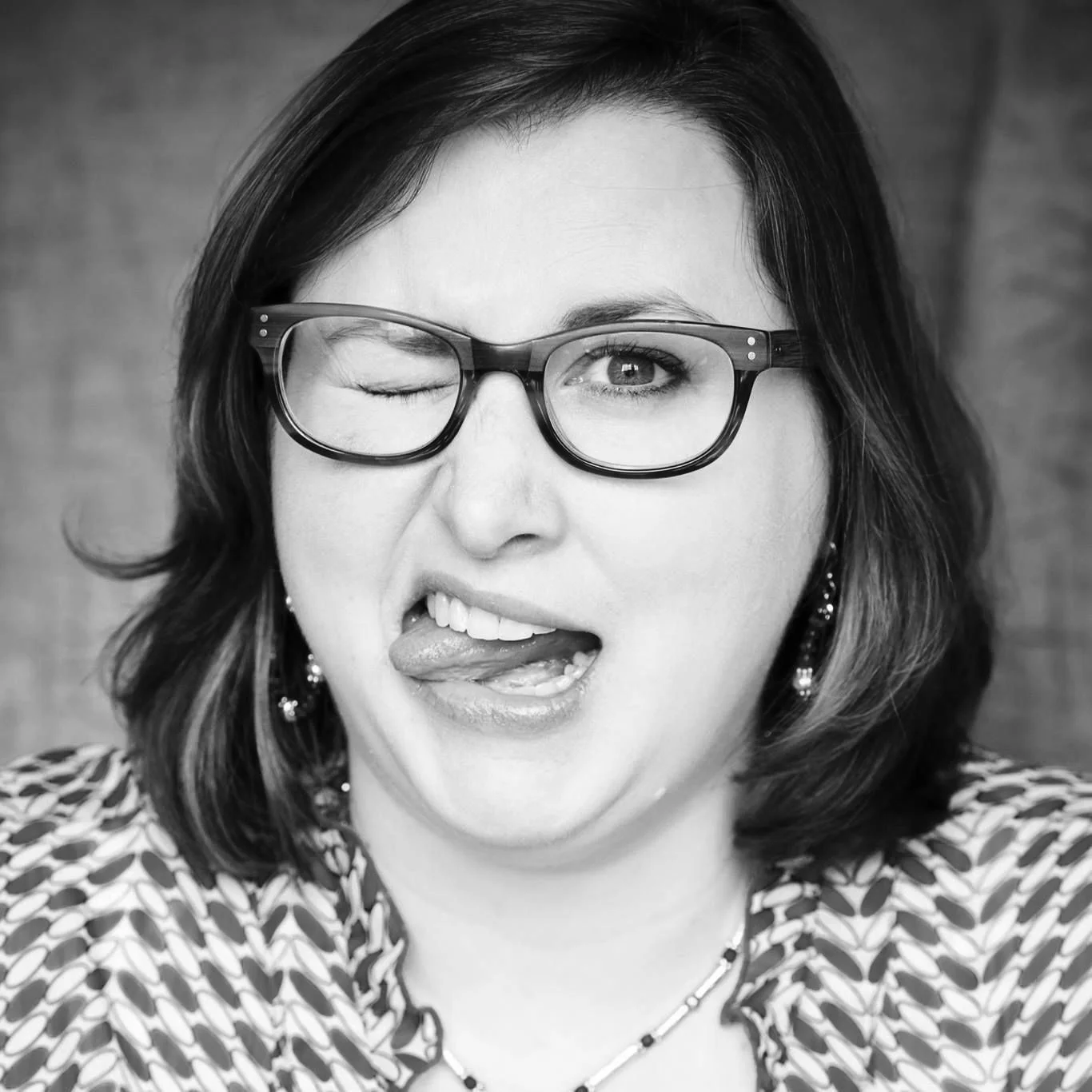
Jessica Steward is an interfaith minister and has an MFA in Creative Writing from Chatham University. Rev. Steward's mission is to help her readers answer the question, “who do I want to be in this world?” A Pittsburgh native, she now lives in Massachusetts with her husband and two dogs.

I left on a clear October Monday. Seated at the bulkhead, my elbow rested next to a man who asked if I was going to Chicago for business. I lied, nodding my head yes. Ambivalence prevented me from updating my second-generation iPod earlier in the day, leaving Missy Elliott and Usher to comfort me. A leathery skinned smoker picked me up at baggage claim. She drove me forty-five minutes to our rural destination while I imagined what happens when car doors open and bodies land on I-55 at seventy-five miles per hour.