
How My Breasts Let Me Down
“Okay, I’m going to lift up your breast and place it here,” the technician announces, firmly lifting up what remains of my poor right breast – having endured two lumpectomies and radiation - and stretching it over the arm of the mammography machine. She cranks the machine – bzzz, bzzz, bzzz - and it compresses my breast, flattening it. I close my eyes, refusing to look at my poor stretched and smashed breast. It hurts. I wince. She doesn’t seem to notice.
“Now, turn your head to the left, and don’t breathe! Hold it!” she says as she runs over to the control panel, and presses the button to take the image. The machine makes a different noise to actually take the x-ray – tick, tick, tick, faster and faster, and then a final long bzzzzzzz.
I am frozen, in pain, not breathing.
“Okay, you can breathe now!” she says.
I breathe.
As the pain subsides and my brain starts functioning again, I wonder: if my breasts were larger, would it hurt less? Or would it hurt no matter what size they were? I’m in so much discomfort that I forget momentarily what this painful procedure is actually testing for: changes in my breasts that could mean another breast cancer.
*
As a pre-adolescent, I always assumed that my breasts would grow to at least an adequate size. Coming of age in the 1970s, not only was straight hair with side wings the fashion – something my thick curly hair could never achieve – but breasts that were supposed to be large and perky. I had seen the copies of Playboy magazine that I surreptitiously peeked at in the bathroom at my grandparent’s beach house, and I knew what adult women’s breasts were supposed to look like. However, as time went on, it became clear to me that I was to remain small-breasted, to my chagrin and regret. Is it possible to be let down by a body part?
Never a conventional beauty by any stretch of the imagination, I was, however, naturally quite thin, so I took some consolation in that, since my breasts were apparently not going to cooperate. At least part of me was conforming to fashion. Although with tube tops and hip hugger jeans being all the rage when I was 14 or 15, I wasn’t exactly winning in the fashion department. My breasts were too small to hold up the flimsy material of the tube tops, and my hips weren’t wide enough to support hip hugger jeans. My body had let me down again.
*
As a public health researcher, I look for answers in books and journal articles. Dr. Susan Love was a surgeon and a pioneer in women’s breast research. I wish she had written her book back when I was a teen, because she is very reassuring about the relationship between breast size and function. She asks:
“Is there such a thing as a ‘normal’ breast? Medically speaking yes: a normal breast is one capable of producing milk. Beyond that, no. The range of size and shape of breasts is wide and individual. Most of us haven’t seen many other women’s breasts, and we’ve all grown up with the image of ‘ideal’ breasts that permeates our society. But few of us fit that image, and there’s no reason we should. Breasts can be very large or very small…breast size is genetically determined and depends chiefly on the percentage of fat to other tissue in the breasts.” Dr. Susan Love’s Breast Book, page 3
*
My breasts didn’t grow any larger through my 20s, so I learned to dress with a focus on other parts of my body. Enhancing my breast size by wearing a padded or pushup bra wasn’t something I was interested in. Not that I hadn’t tried them out – I had – but they were so uncomfortable. It just wasn’t worth it.
At 38, my son arrived, and suddenly there was a new agenda for my breasts: food source for a tiny baby. It was terrifying to realize that my body was supposed to create enough milk so that my baby could grow and develop normally. I was determined to breastfeed successfully, and everything seemed to be working well until he started crying inconsolably after feedings at about 6 weeks of age. This led to a very fraught time: arguing with my husband over whether we should try formula; hearing his cries every evening while I tried to relax in the bathtub; not knowing whether this was normal, or problematic. Don’t all babies cry a lot? When we went to the doctor for his next check up, the pediatrician firmly stated: “Your body is not making enough milk for him. You need to nurse and then supplement with formula.” Horrified that I had been unintentionally starving my baby, I religiously obeyed her advice. Breast and then bottle. Breast and then bottle. Once I started supplementing, he was much happier and started gaining the necessary weight. But I still had so many questions. Why wasn’t I producing enough milk? Was it because my breasts were small? I felt like my body had let me down once again.
*
I didn’t know about Dr. Love’s book when I was struggling with breastfeeding issues. If I had come across it at that time, her wise words would have soothed my fears:
“Some women have too little milk. In most cases this can be alleviated by feeding more often – a feeding every two hours generally helps. If such a rigorous schedule proves impossible for you, it may be time to stop breast feeding and turn to formula – or at least combine breast- and bottle-feeding. Sometimes even frequent feeding doesn’t help. For some reason, the woman’s body simply doesn’t make enough milk, no matter what she does. Many women feel guilty when this happens, as though they’ve failed in their ‘motherly duties’. They haven’t – it’s a biological idiosyncrasy, not a personal flaw.” Dr. Susan Love’s Breast Book, page 22
*
“Okay, now we’re going to work on your left breast. I’m going to place it on the tray. Turn your feet to the right, place your left arm over the machine like this, yup, that’s it, and we’re almost there.”
She cranks the mammography machine – bzzz, bzzz, bzzz – and it compresses my left breast. Even though this breast only had one small surgery and no radiation, it still hurts.
“Okay, hold your breath and don’t move!”
I don’t breathe. I don’t move.
“Good job, you can breathe now!”
I breathe.
I think about how I was encouraged to have a lumpectomy ten years after my initial diagnosis on this breast even though the finding was precancerous and not a big deal. I didn’t want to go ahead with it, but the medical professionals at the breast center really encouraged –no, they really didn’t give me a choice – to have the procedure. I thought everything would be fine, until apparently I stopped breathing during the operation. That was not fine. I’ll never forget waking up from anesthesia with the surgical team at the foot of my bed, their faces gray and concerned. In the end, everything turned out alright – I started breathing again, they completed the surgery, and there was no damage to my lungs – but due to this complication, I don’t want to go through another breast surgery again. Ever.
*
My mother developed breast cancer when she was 49, and for some reason I had a gut feeling that I would as well. I’ll never forget receiving a phone call from her – it was the day of the Challenger space shuttle explosion in 1986 – explaining that she had been diagnosed with breast cancer, and would be getting a mastectomy on one of her breasts the next day. This was the first I’d heard about this, and I was stunned by this news. Why hadn’t she told me about this sooner? How long had she known that she had breast cancer? However, I was a young person living in Boston working a temp job and she was in Florida, and there was little I could do but call and be supportive. A week after the surgery, she learned that the cancer had not spread to her lymph nodes, which was a huge relief. In 1986, all that was done for breast cancer that hadn’t spread was mastectomy. The option of reconstruction wasn’t even considered. So my mother has one normal breast and one flat breast, and has lived that way for many years.
When I was 47 – 23 years later, in December of 2008 – my doctor felt a lump in my right breast that I hadn’t noticed myself, during a routine exam. She tried to extract some fluid from the lump with a needle – “maybe it’s just a cyst”, she said – but no fluid came out. “You’ll need some additional imaging,” she announced cheerfully, and I really didn’t understand what was about to happen. I guess I was in denial. A few weeks later, I went to the imaging appointment alone at a hospital downtown, leaving my husband and young son at home playing football in the yard.
The staff at the breast center did a mammogram, followed by an ultrasound of the breast that had the lump. The technician kept running the wand over the lump in my breast, over and over, and the pressure of the wand on my breast felt terribly uncomfortable. The doctor was very vague about what the lump meant. “It could be many things. We’ll have to do a biopsy to find out exactly what it is,” he said. “Let’s schedule that soon.” But once he left the room, the technician turned to me and said: “I’ve been doing this for 20 years. This is breast cancer. I’m so sorry.” I started to cry. She handed me a small cardboard box containing tissues that were so thin and wispy they could barely hold my tears.
*
I bought my first copy of Susan Love’s book when I was diagnosed with breast cancer. She first published her book in 1990, and updated it every five years with new information about research, treatment, and her wise, wise commentary and advice. Her words reflect what many women feel upon finding out they have a breast cancer diagnosis.
The first thing most women think when they’re diagnosed with breast cancer is, “Will I die?” This is quickly followed by, “Will I lose my breast?” … First there is shock. Particularly if you’re relatively young and have never had a life-threatening illness, it’s difficult to believe you have something as serious as cancer… You or your doctor have found a painless little lump, or your routine mammogram shows something peculiar – and the next thing you know you’re being told you’ve got breast cancer… You also feel anger – even fury – at your body, which has betrayed you in such a deceitful fashion.” Dr. Susan Love’s Breast Book, page 257-258
*
“I need to do one more view of your right breast,” the technician announces. “One of the images is a little fuzzy. Can you take your right arm out of the robe again?”
Really? I have to do more? I think. I don’t want to do more.
She pulls on my breast, stretching it over the arm of the machine. I wince. It really hurts.
“I’m sorry,” she says, but continues to stretch my breast and then compresses it. Bzzz, bzzz, bzzz.
“Hold your breath! Don’t breathe!” she says, as she runs to the controls.
I close my eyes. I don’t breathe. I don’t move.
“You can breathe now! Okay, the image looks good. We are all done.”
*
The biopsy of the lump led to a diagnosis of stage 2A invasive ductal carcinoma, a form of breast cancer that, while early and treatable, meant over a year of anxiety, treatment, missteps, and ultimately, tentative recovery. One of my clearest and most upsetting memories of that time was arguing with the young, attractive oncologist who, in spite of scores on a particular test that showed I wouldn’t benefit very much from chemotherapy, was encouraging me to pursue just that. I was extremely frightened of chemotherapy, and I knew I didn’t need it based on those scores. We went back and forth for quite a while until she finally backed down, but it was very stressful for me to be in conflict with someone who was supposed to be supporting me through my treatment.
Treatment was very different in 2009 than what my mother had received in 1986, and I had to endure two lumpectomies in the same breast, radiation therapy for 6 weeks, participation in a clinical trial that left me exhausted, nauseous, and depressed for months, and daily medication for 5 years as well as twice yearly mammograms and breast MRIs. After all that, I was, for all intents and purposes, “cured,” but for many years after, the anxiety of recurrence remained.
As a result of the breast cancer, lumpectomies, and radiation, my right breast is much smaller than my left, and quite misshapen. You can’t see this when I am dressed, but when I catch myself in the mirror after a shower, I am very aware of the differences between my left, now somewhat droopy but normal breast, and my right shrunken and misshapen one, with a weird pushed-in nipple. It’s not my body that let me down as much as the impact of all these surgeries and procedures. My poor body is the victim of all these treatments. There was no way to fight back.
I no longer have as much anxiety about recurrence as I used to, although it still sits in the back of my mind sometimes, prickling me. Contrary to popular belief, you are never really cured of breast cancer; you are always waiting for more cancer to show up in your body. Mammograms don’t prevent breast cancer; they just catch breast cancer at an early stage, hopefully at a stage early enough to prevent metastasis. I wish more energy was put into preventing breast cancer in the first place instead of just finding it once it’s already there.
Now, at 64, my body is mostly healthy, a condition for which I am grateful. But I’m still left with many questions about my breasts. Why did I never develop larger breasts? Why did I not make enough milk to breastfeed my son? Why did I develop breast cancer? Did my body let me down, or was it forces outside my body that impacted these things? Was it just genetics, something passed down to me; was it due to something that I could control like my diet or the amount of exercise I did or did not do; or something out of my control like the many unresearched toxic chemicals in the environment? I have so many questions, and very few concrete answers.
*
After my breast cancer diagnosis, I wasn’t satisfied with the conventional “reasons” for why women get breast cancer, such as never breastfeeding (I had), genetic mutations (I didn’t have them), or drinking alcohol (well, okay, I did do that). I became interested in learning more about the environmental causes of breast cancer. I found out about a research organization not far from where I live that studies this very issue. I learned:
In the aftermath of World War II, industry began producing large quantities of synthetic chemicals—including pesticides, plastics, solvents, and other substances—with little regard for safety. These chemicals made their way into our everyday products and into our environment. Since then, tens of thousands of chemicals have been produced and sold, the vast majority of which have not been tested for their effects on human health. Even when testing is done by regulatory agencies, current methods do not adequately consider the effects of chemicals on the breast.
Over the last couple of decades, studies have shown that chemicals can trigger breast cancer in many different ways. They can damage DNA, causing a cancerous tumor to form; they can make breast cells grow uncontrollably; and they can change the way the breast develops, leaving it more vulnerable to carcinogens. (Silent Spring Institute)
*
“Do you think they will ever come up with a 3-D version of this machine?” I ask the technician, rubbing some of the sore places under my breasts.
“What do you mean?” she asks.
“Something that is in the shape of a breast. Something that doesn’t force your breasts into a 2-dimentional shape when they’re actually 3-dimentional. Something that doesn’t hurt so much.”
“That would be great,” she says, shrugging. “But I don’t think it will happen anytime soon.”
I take off the useless hospital-supplied robe, put on my clothes, and walk down the long corridor, out into the lobby, and take the elevator down to my car. I definitely deserve ice cream after this experience. Mammogram machines are something that can be improved, in my opinion. Should be improved. Must be improved. And soon.
As I get into my car, I continue to think. Maybe it’s not my breasts that let me down after all. Maybe it’s the false messages I get from society – that my breasts should be bigger, should produce more milk naturally, and shouldn’t become cancerous – as if I actually had something to do with those things. In fact, I can’t take responsibility for any of those things.
Maybe it’s part of a larger societal problem: that women are often blamed for things that are out of their control. Maybe the problem isn’t mammograms, but society itself.
I get into my car, drive up the long ramp that leads outside, and into the sunshine. Lots to ponder. Over ice cream, for sure.
Works Cited
Love, Susan. Dr. Susan Love’s Breast Book, Fifth Edition. Da Capo Press. 2010. Pp. 3, 22, 257-258
Breast Cancer and the Environment. Silent Spring Institute. https://silentspring.org/resources/breast-cancer-and-environment Accessed Nov. 21, 2025.
-Adena Cohen-Bearak
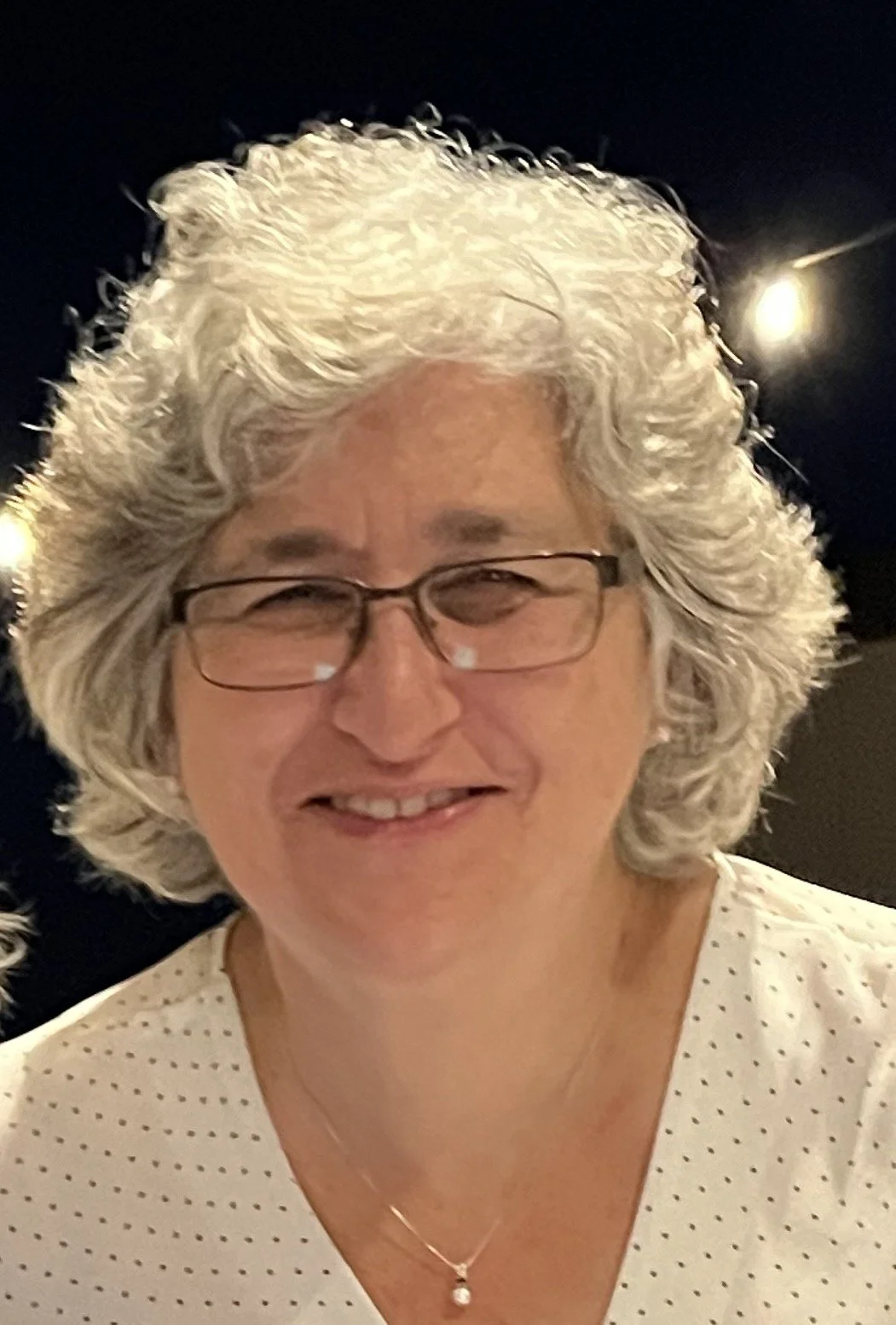
Adena Cohen-Bearak worked first in the field of health education and then in public health research, combined for close to 40 years. She recently retired and is now enrolled at the Solstice MFA Program in Creative Nonfiction at Lasell University in Newton. She and her husband Arnie lost their son Jordan 3 years ago after a long struggle with mental health issues. Much of her writing is exploring and working through her experience of parenting a young adult with these challenging issues.

I left on a clear October Monday. Seated at the bulkhead, my elbow rested next to a man who asked if I was going to Chicago for business. I lied, nodding my head yes. Ambivalence prevented me from updating my second-generation iPod earlier in the day, leaving Missy Elliott and Usher to comfort me. A leathery skinned smoker picked me up at baggage claim. She drove me forty-five minutes to our rural destination while I imagined what happens when car doors open and bodies land on I-55 at seventy-five miles per hour.