
Where the End is Just Beginning
It is a Spring day in the mid-1980s. An elderly man gets his wallet and sets off on his customary walk to buy sweeties for his grandchildren.
But today’s walk will be different from the previous 25-minute walks he has taken, once a month, for years – because, having made it to the shop and bought the sweeties, he simply won’t be able to find the way back. The police will bring him back home hours later, when his wife and adult children have noticed his unexplained absence. He will be somewhat embarrassed and concerned enough to go to the doctor’s.
The reason will be far more serious than forgetfulness or a case of bad sense of direction. Because for him, it will be the first warning something that something unusual is happening in his brain. That one by one, in that deep, mysterious forest of his brain, over the next decade, all the trees will slowly wither and die, stripping him of his sense of identity, his memories, his future.
Alzheimer’s is one of the cruellest diseases. Over a decade, it reduced my grandfather, an active and proud man, someone who knew how to carry basic electrical and furniture repairs, into a shadow of his former being, a shell that was able of receiving love and care but had difficulties conveying those feelings.

It was a perfect August day, and the Wolf River was clear and cool. The leaf canopy of spruce and cottonwood sparkled overhead, like shards of brilliant green glass backlit by intermittent bursts of sunlight.
Dave and I were trying out the twin red kayaks that his kids had given us the previous Christmas. Everyone agreed we had been working too hard, and the weight of a business we could no longer save was taking its toll.
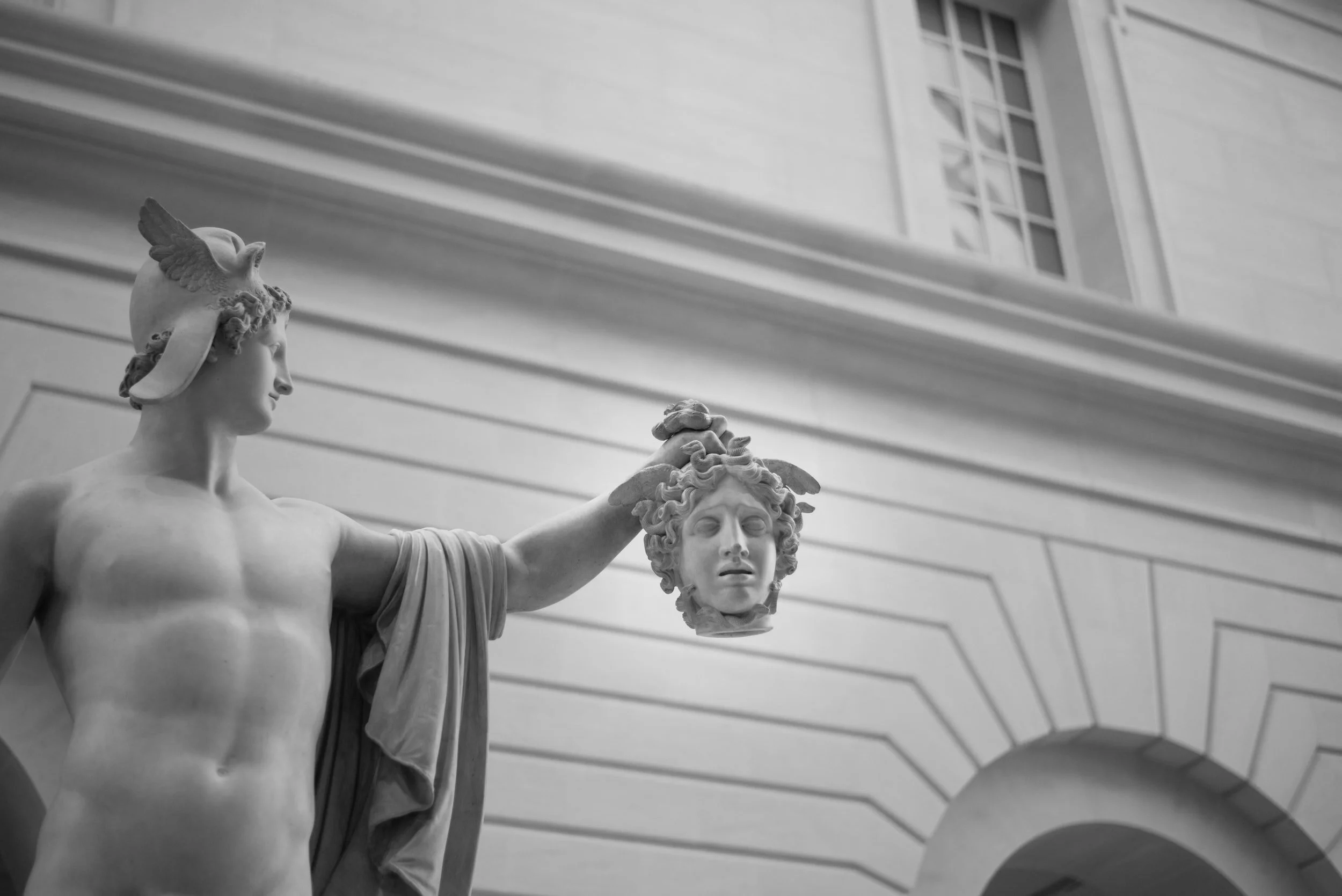
I want to write a story about the decapitation of glorious women. A story about the mighty falling. A story about heads tumbling in baskets. A story about the mouths that posthumously moved and eyes that blinked even after the head was severed. A story about the wigs that flew. A story about the heads that rolled.

I’m always sweating. I get on the subway—I’m sweating. I clock in at work—I’m sweating. I’m asking the server where the bathroom is—and woohoo, I’m sweating.

In 1970 one drop of rain hitting the ground every ten inches constituted a ten-inch rain in Tempe, Arizona, home of Arizona State University and me, my freshman year in college. Wetback referred to a co-ed who made out on the arid soil after the sprinklers ran in the morning, not migrant workers. People spit on soldiers coming back from Viet Nam. The Women’s Movement quaked on the cusp of exploding. And me? Well, before Titanic, before Leonardo Di Caprio declared himself King of the World, I stood atop the footbridge over University Boulevard and surveyed the student-lemmings who marched along the sidewalk.

You write the thing in a flurry in November. You write it in response to a journal’s call for submissions. The journal has feminism in the name. You consider yourself feminist in the “women are equal (and also kickass)” way, but you’ve never written a *feminist* essay before.

The other day, I was walking outside to eat my lunch. I prefer to eat outside as it gives me an opportunity to see the sun, get some fresh air, and get away from the noise that permeates an open work space. The path I take to the outside takes me through the cafeteria/eating hall area.

“Come on Beth, while Urkie’s not looking, let’s do a magic carpet ride even though she told us not to.” My cousin Carolyn’s magic carpet ride meant my sitting on top of one of our grandmother’s assortment of throw rugs and Carolyn pulling me at top speed up and down the hallways and other wooden floor rooms of Grandmother’s boarding house in Birmingham.

Dressed in a salwar kameez, I twirled and danced inside my room. I loved my long red tunic, the loose flowing pants and the sweeping scarf looped around my neck

I don’t miss him, but what I do miss is sitting on the cold sand of the beach in October, when the wind shivered my young bones, and I would huddle against him, burying my face into his cigarette, scented pullover. He would cross his arms for his own warmth, with a Marlboro Gold hanging from his blue lips. He never wore a jacket and even after all this time, this is the only way I can remember him.
His condition had a catastrophic impact in the family, leading to disagreement and personal struggles. My grandmother struggled to grasp the enormity of what was happening to her husband.
In the final months of his life, he was trapped in a life he no longer understood. In the end, his mind regressed, and he forgot everything. He forgot who he was and whom he was married to, sobbing when told that his own mother had died years ago – a fact that thereafter would be hidden from him. Because sometimes, lies can be gentler and more necessary than the truth.
My grandfather died in December 1994, my last academic year at secondary school, just before a new era opened up in front of me: university, work, travel, new friendships. Avenues to opportunities that my grandparents - a company chauffeur and a former housemaid working since she was a child, later turned housewife and mum of five - wouldn’t even have dreamed of. Life isn’t always fair.
Now my four grandparents, two sets of aunts and uncles and various other relatives have stepped beyond the threshold of mortality, into that great unknown, a place where I hope they are reunited with their soulmates, looking down onto some of our happy moments from the distance. Their loss reminds me of my own parents’ fragility, as they now stand on the threshold of their 80s, and health issues begin to take their toll. They won’t always be here (or there, I should say), and dealing with that realisation is part of being an adult – accepting love and loss are a natural part of our lives.
And so I say a silent prayer that the years around the corner will be as long and free from pain as possible, with as much love, light and laughter as possible, before the seasons change and they join others in a place where the end is just the beginning. Amen.
-Eva Oliver
This product gives you access to all four weeks of the workshop. Purchase one or more drop-in sessions here.
Build a habit in 20 sessions. In this 4 week workshop that meets Mondays through Fridays from 8:00-9:00 AM CST, we will focus on generating new writing—making headway on a current project, reviving an old project that’s been gathering dust, or writing based off of the daily prompts Leigh provides.
The first 45 minutes of class are a gentle, camera-off, silent writing session. The remaining 15 minutes are an opportunity to share excerpts of our work, reflect on progress made, and set intentions for the following day. Then we will read a passage together on the writing life and close each class with a new learning about habit formation. By the end of this course we’ll have a morning writing habit that is each our own to continue and build upon.
This listing is for an individual class. To purchase access for the full 4-week workshop, click here.
Build a habit in 20 sessions. In this 4 week workshop that meets Mondays through Fridays from 8:00-9:00 AM CST, we will focus on generating new writing—making headway on a current project, reviving an old project that’s been gathering dust, or writing based off of the daily prompts Leigh provides.
The first 45 minutes of class is a gentle, camera-off, silent writing session. The remaining 15 minutes are an opportunity to share excerpts of our work, reflect on progress made, and set intentions for the following day. Then we will read a passage together on the writing life and close each class with a new learning about habit formation. By the end of this course we’ll have a morning writing habit that is each our own to continue and build upon.
Many writers feel drawn to write about their lives but struggle with uncertainty: Why this story? Why now? And who is it really for? This workshop is designed to help writers move beyond doubt and toward clarity by focusing on the deeper meaning and purpose beneath their story.
In this interactive, craft-forward session, participants will be introduced to the Memoir Compass, a practical framework that helps writers articulate their motivation (why they are writing), mission (who the story serves), and message (what meaning or insight the story carries). Through guided reflection and writing exercises, participants will begin shaping a personal narrative rooted in intention rather than overwhelm.
This workshop is ideal for writers interested in memoir or personal narrative, as well as fiction writers drawing from lived experience, who want to move forward with greater confidence, focus, and direction.
Some of the most compelling creative nonfiction begins with the feelings we are tempted to avoid: anger, resentment, shame, fear, or the sense that we have an axe to grind. In this six-week workshop, writers will explore how to follow that emotional heat toward deeper, more honest work—without sacrificing compassion, complexity, or craft. Through close readings, writing exercises, discussion, and constructive feedback, we’ll consider how to transform strong feelings into writing that reaches beyond catharsis and connects with readers.
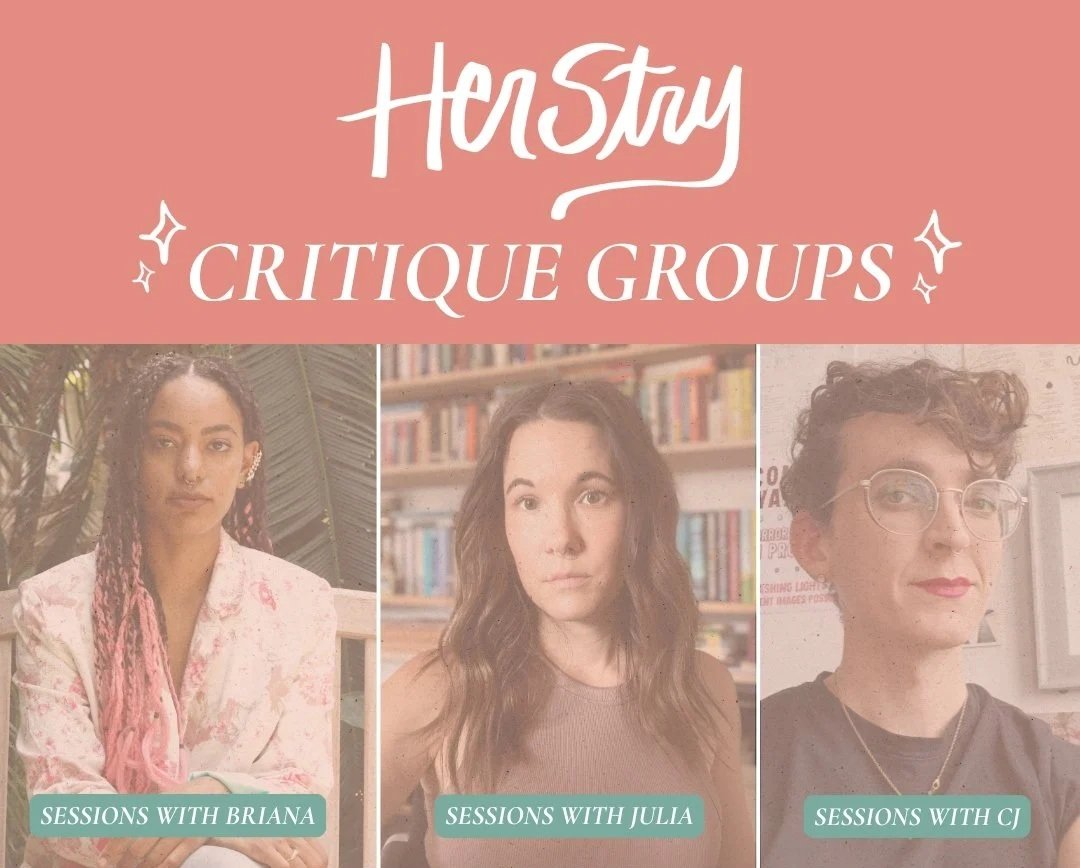
IT’S NO SECRET THAT FEEDBACK IS AN IMPORTANT PART OF THE WRITING PROCESS.
In fact, we argue that it might be the most important part of the process.
But it’s hard to find a writing community. It’s hard to find the people who are willing to take the time and the effort to read your work and give the feedback you really, truly deserves.
That’s where HerStry Critique Groups come in!
HerStry Critique Groups are small groups of 6 women who gather online for 6 weeks to share their writing, give constructive feedback and gain skills as writers.
Weekly online sessions last approximately ninety minutes, with three women sharing their work each week. Writers of all genres and levels are welcome and you may share both works of fiction and nonfiction.
Sessions take place on Mondays 7PM CT, Tuesdays 11AM CT, Fridays 11AM CT
WHAT’S INCLUDED IN THE HERSTRY CRITIQUE GROUPS?
Six 90 minute live workshop sessions
Three 20 minutes sessions in the “hot seat” to get you work critiqued
Written and verbal feedback from your fellow workshop participants
A weekly in depth edit and critique of your work from the group leader after each session
Weekly writing goals and accountability check ins
Full video recordings of each session to keep for your records
Say goodbye to the lonely, stuck in your head writing life!
LET’S WRITE!
From conception to submission. Let’s make summer sizzle with stories.
Writing a short story doesn’t happen in one session. It takes multiple drafts to get it exactly right, to create characters that come to life for the reader and a world they can’t stop thinking about. In this seven week course we will work on a single short story from conception to submission ready. The seven week session will include generative brainstorming sessions, short story craft talks, multiple workshops for feedback from fellow writers, and detailed line by line feedback and edits from your instructor. Plus, we’ll talk about submission venues, cover letters, and when to know if your story is ‘finished.’
IT’S NO SECRET THAT FEEDBACK IS AN IMPORTANT PART OF THE WRITING PROCESS.
In fact, we argue that it might be the most important part of the process.
But it’s hard to find a writing community. It’s hard to find the people who are willing to take the time and the effort to read your work and give the feedback you really, truly deserves.
That’s where HerStry Critique Groups come in!
HerStry Critique Groups are small groups of 6 women who gather online for 6 weeks to share their writing, give constructive feedback and gain skills as writers.
Weekly online sessions last approximately ninety minutes, with three women sharing their work each week. Writers of all genres and levels are welcome and you may share both works of fiction and nonfiction.
Sessions take place on Mondays 7PM CT, Tuesdays 11AM CT, Fridays 11AM CT
WHAT’S INCLUDED IN THE HERSTRY CRITIQUE GROUPS?
Six 90 minute live workshop sessions
Three 20 minutes sessions in the “hot seat” to get you work critiqued
Written and verbal feedback from your fellow workshop participants
A weekly in depth edit and critique of your work from the group leader after each session
Weekly writing goals and accountability check ins
Full video recordings of each session to keep for your records
Say goodbye to the lonely, stuck in your head writing life!
October 7, 14, 21, 28, November 4 and 18 CT
There is no class on November 11.
WRITING THE SEX SCENE.
Writing a sex scene can be delirious fun, a harrowing challenge, a literary milestone—possibly the most important part of building your short story or book. In our six weeks together, you’ll experience just about every possible emotion as you explore the erotic in different modes: comic, tender, harrowing, soul-shattering … because it really is all about the characters’ feelings, not just the mechanics. So we’ll talk about tone. Vocabulary. Metaphor. Sensory detail. How to get big emotions on the page … and when to pull back and let the reader’s imagination go to work.
This is a course for writers who want to explore the intersection between the novel and short stories, and would like to weave their short stories into a story cycle (or collection of "linked stories" or "composite novel"). This is also a class about the interaction of form and content, and how one influences the other. We will read works of interlinked stories by writers from diverse cultural and ethnic backgrounds, focusing on modern classics and contemporary practitioners of these hybrid forms. Weekly discussions will center on elements of craft, such as the expansion and compression of time, setting as an organizing and connecting principle, character development within and between stories, structure and plot for interconnected stories, and responding to literary influences in the same genre.
This six-week course guides writers through the literary submission process, offering insider insight and practical tools to help you get your work into the world. We’ll demystify everything from reading submission calls to writing cover letters and choosing the right journals. Along the way, we’ll workshop short bios, develop submission trackers, and build personalized plans that align with your voice and goals.
By the end of the course, you’ll walk away with a polished piece ready to send, a tailored submission list, and the confidence to navigate the lit mag world with clarity and purpose.
Ideal for writers of literary fiction, poetry, personal essay, memoir, and hybrid forms.

Eva Oliver is a communications professional and mum. She lives in the UK with her family. She has been writing all her life, both in Spanish (her mother tongue) and English. Eva often delves into non-fiction and memoir to explore issues around identity, disabilities and inclusion, and the challenges that our society faces. She blogs on The Critical Thought https://thecriticalthought.wordpress.com/
I locked myself in the bathroom. Even though I made myself untouchable, unreachable, all I wanted was to be saved. As I laid down on the tiles, facing up towards the dangling florescent light, I craved death. I don’t mean absence of living—quite the opposite actually. What I really wanted was death to what was inside of me, to the illness that spread from my brain into my entire body, the illness at the core of all the pain and torture I put upon myself. I craved death because I wanted a life, a different life.