
Monkey
I once saw a monkey jerking it.
It was at the zoo, of course, where several blue faced baboons swung over plaster tree trunks and romped across a funny little walkway modeled after a hanging bridge. As much as schools want zoo visits to be positive, educational experiences that transform the lives of young people forever, what has stuck with me in a lifetime's worth of field trips is deflated polar bears, hobbled cheetahs, and a monkey ignoring all the other monkeys to beat his meat.
I think a lot about the animals in the zoo actually. Are they unhappy? I imagine it’s depressing to have your marrow-deep instincts defined by other, more intelligent animals who not only decide your needs but parcel, package, and portion them back to you with toys and treats.
I wonder if zoo animals have the capacity to give a shit. Do they, bred in captivity, look at the multitudes roaring in at them, look at the frayed hemp ropes and fatuous innards of their enclosures and know in their soul that something is wrong? Or am I simply anthropomorphizing them?
Attributing my human emotions to these citizens of plain, jungle, and ice flow. Maybe they don't know any better, and rending prey is not so different than being fattened by hand. Can the cheetah long to run if he only has room to pace? I get home from work and have nothing but me time. I can watch whatever I want: makeup tutorials, ten ways to get him addicted to you, a review of the latest Disney venture. I watch someone complaining about other people complaining and I leave a comment complaining that there is too much complaining.

I’ve always been a good patient—keep my jaw open even when it aches for the dentist, never flinch from the needle of a vaccine, and have thick, easy-to-find veins for blood draws. Maybe I learned it in high school on the soccer field; complain, and be benched. Maybe I carried it in my DNA, passed down from stoic Norwegian farmers; suffering is inevitable, better to keep your mouth shut and your eyes towards God.
My mother remembers one less, but I remember seven. Seven places I called home outside of Nanny’s trailer. Each move had its own life and timeline complete with characters and climate, seemingly separate from the world happening at Nanny’s. Seven times I packed my “101 Dalmatians” suitcase and cardboard boxes of pictures. I gained a little more makeup for each move: a new sheen lip gloss, glitter nail polish with chunky stars, Hot Topic eyeshadow, the limited edition Gerard Way palette that glowed bright red. Puberty marked by moves.

My cellmate at the correctional center that I had been transferred to six weeks after the guilty verdict, or cellie as we called them, was trying to teach me how to survive my final transfer—prison. Lucky for me. She claimed to have spent four years there. But this time she was only going to empty instant espresso packets down her throat and pace around the tiny box with her swishing Rapunzel hair in jail instead of prison.

The city lights blurred as I drove to the hospital. Mt. Spokane sat on the horizon, its slopes and lifts hidden in darkness, a silent witness to my brother’s sudden fall. Hours earlier, he'd grabbed his snowboard and driven to the top. Now, he lay braced and broken.
Part of me rehearsed the what-ifs, ran scripts about what could have been. I pushed these thoughts away, wiping the blur from my eyes. I couldn't create a second emergency. But few drivers were out, streets icy from a fresh storm.

All of them had been so sudden. Death. Now you see them, now you don’t. That was my experience of the deceased, the ones closest to me. Mother, father, sister, brother, brother. With you through their time on earth, then gone in a flash. Departing like lightning.
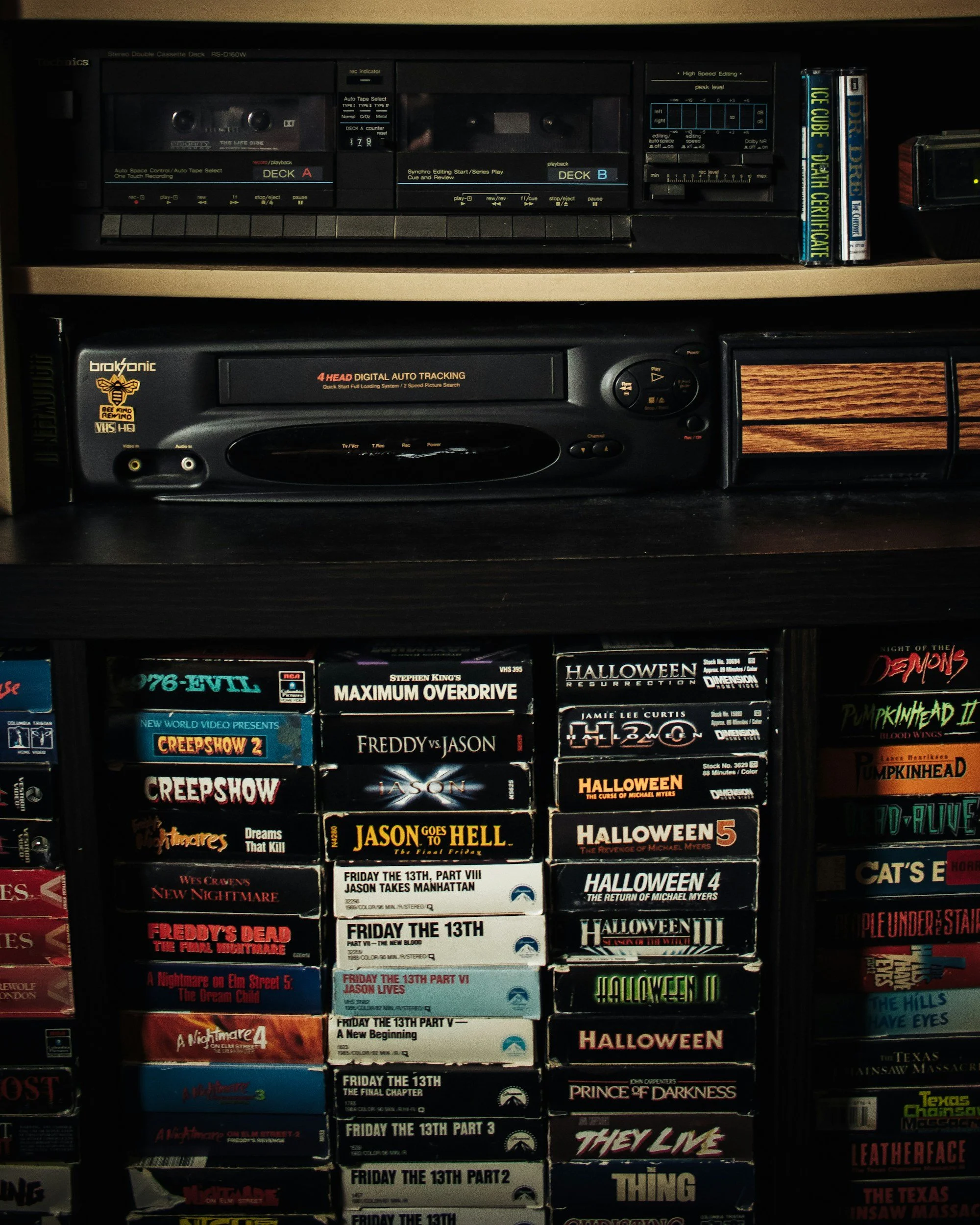
On my thirteenth Halloween I stayed over at my dad’s apartment on the other side of town, and for hours, well into the morning, we watched a live taping of a paranormal investigation on the Discovery Channel. The host was blond and the psychic had an earring and they were somewhere historic in the UK. The night-vision camera gave the TV an eerie green glow, the blond host had big eyes like a doll; we were rapt with attention. There were sightings of children who’d passed and mothers in cloaks and fathers who walked about in suits. Tapping and knocking and tiny objects making incremental movements. Orbs abound. EVP recordings.

Mary Catherine was sixteen when she was diagnosed with liver cancer and barely twenty-one when she died. I traveled to the depths of despair after she was gone. I found my way back by convincing myself I’d never have to return.
I was wrong.
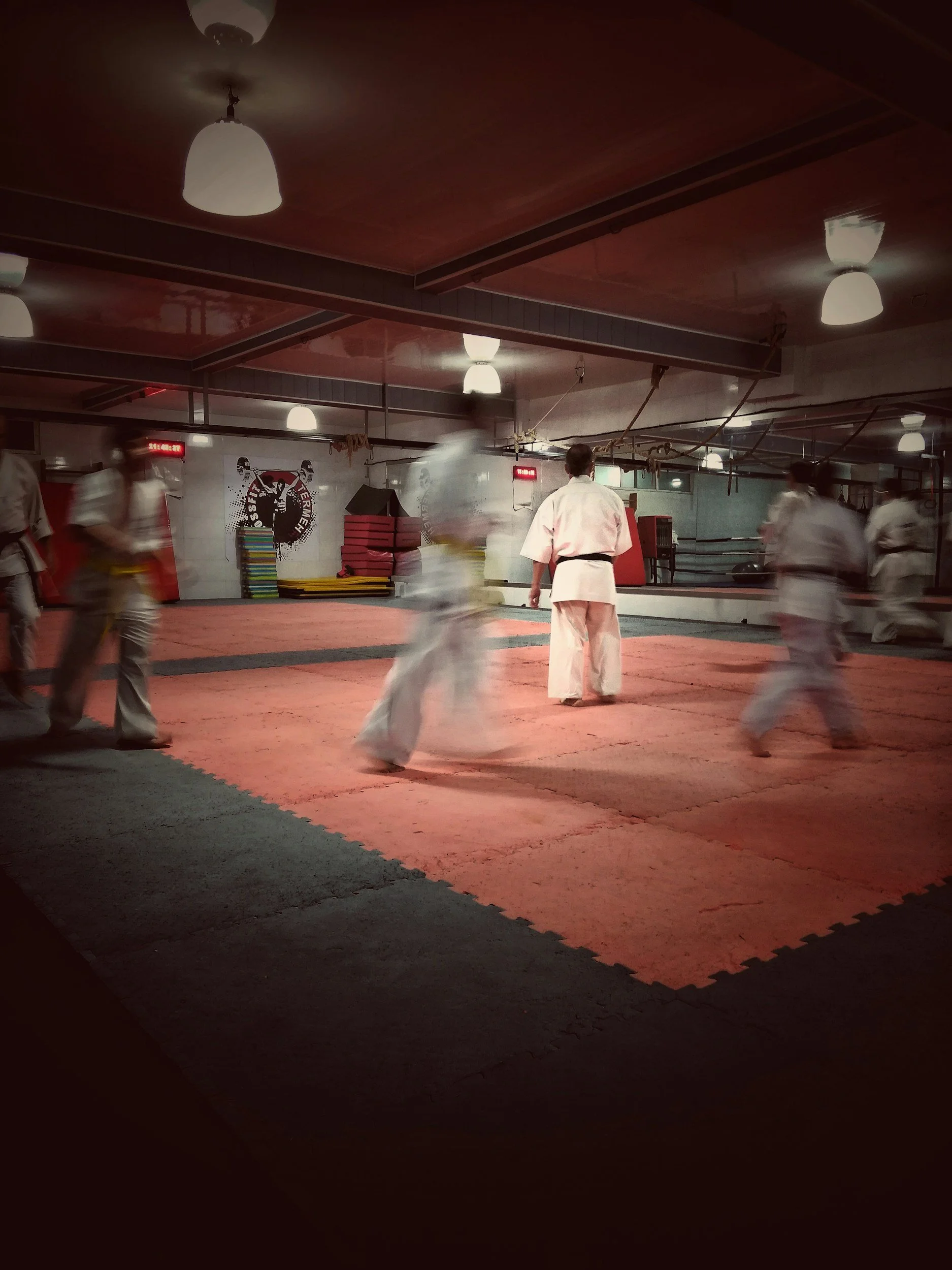
Looking through the gallery of the dojang I take a seat and fixed my eyes on my son. Justin bowed and stepped onto the mat. He had perfected his poomsae and was nervously excited to complete his belt test in hopes of being promoted from a yellow to orange belt after months of practice. Proud parents flowed into the room in anticipation of the event. A tide of chatter rose above a sea of phones that was primed to capture each child’s accomplishment.
Two YouTubers I've never met give me both sides of an argument I am not a part of. It is very entertaining. Their videos are interrupted constantly by ads for wrinkle cream and home delivery cheeseburgers and cars that cost what I gross in a year.
I go Incognito on Chrome.
It only takes a minute.
Afterwards I stare at the slant of my ceiling and watch the walls bruise with twilight. My housemates are home–marked present and accounted for by the strips of light under their doors–but the living room and kitchen are as dark and empty now as they will be come midnight.
Maybe I'll have a bath or drive down to the gas station for another pack of American Spirits, but probably I'll just roll to my side and see what's trending on Netflix and squint into the cold, blue light from my phone while my room slowly turns black around me.
— Brittany Meador
This product gives you access to all four weeks of the workshop. Purchase one or more drop-in sessions here.
Build a habit in 20 sessions. In this 4 week workshop that meets Mondays through Fridays from 8:00-9:00 AM CST, we will focus on generating new writing—making headway on a current project, reviving an old project that’s been gathering dust, or writing based off of the daily prompts Leigh provides.
The first 45 minutes of class are a gentle, camera-off, silent writing session. The remaining 15 minutes are an opportunity to share excerpts of our work, reflect on progress made, and set intentions for the following day. Then we will read a passage together on the writing life and close each class with a new learning about habit formation. By the end of this course we’ll have a morning writing habit that is each our own to continue and build upon.
This listing is for an individual class. To purchase access for the full 4-week workshop, click here.
Build a habit in 20 sessions. In this 4 week workshop that meets Mondays through Fridays from 8:00-9:00 AM CST, we will focus on generating new writing—making headway on a current project, reviving an old project that’s been gathering dust, or writing based off of the daily prompts Leigh provides.
The first 45 minutes of class is a gentle, camera-off, silent writing session. The remaining 15 minutes are an opportunity to share excerpts of our work, reflect on progress made, and set intentions for the following day. Then we will read a passage together on the writing life and close each class with a new learning about habit formation. By the end of this course we’ll have a morning writing habit that is each our own to continue and build upon.
Many writers feel drawn to write about their lives but struggle with uncertainty: Why this story? Why now? And who is it really for? This workshop is designed to help writers move beyond doubt and toward clarity by focusing on the deeper meaning and purpose beneath their story.
In this interactive, craft-forward session, participants will be introduced to the Memoir Compass, a practical framework that helps writers articulate their motivation (why they are writing), mission (who the story serves), and message (what meaning or insight the story carries). Through guided reflection and writing exercises, participants will begin shaping a personal narrative rooted in intention rather than overwhelm.
This workshop is ideal for writers interested in memoir or personal narrative, as well as fiction writers drawing from lived experience, who want to move forward with greater confidence, focus, and direction.
Some of the most compelling creative nonfiction begins with the feelings we are tempted to avoid: anger, resentment, shame, fear, or the sense that we have an axe to grind. In this six-week workshop, writers will explore how to follow that emotional heat toward deeper, more honest work—without sacrificing compassion, complexity, or craft. Through close readings, writing exercises, discussion, and constructive feedback, we’ll consider how to transform strong feelings into writing that reaches beyond catharsis and connects with readers.
IT’S NO SECRET THAT FEEDBACK IS AN IMPORTANT PART OF THE WRITING PROCESS.
In fact, we argue that it might be the most important part of the process.
But it’s hard to find a writing community. It’s hard to find the people who are willing to take the time and the effort to read your work and give the feedback you really, truly deserves.
That’s where HerStry Critique Groups come in!
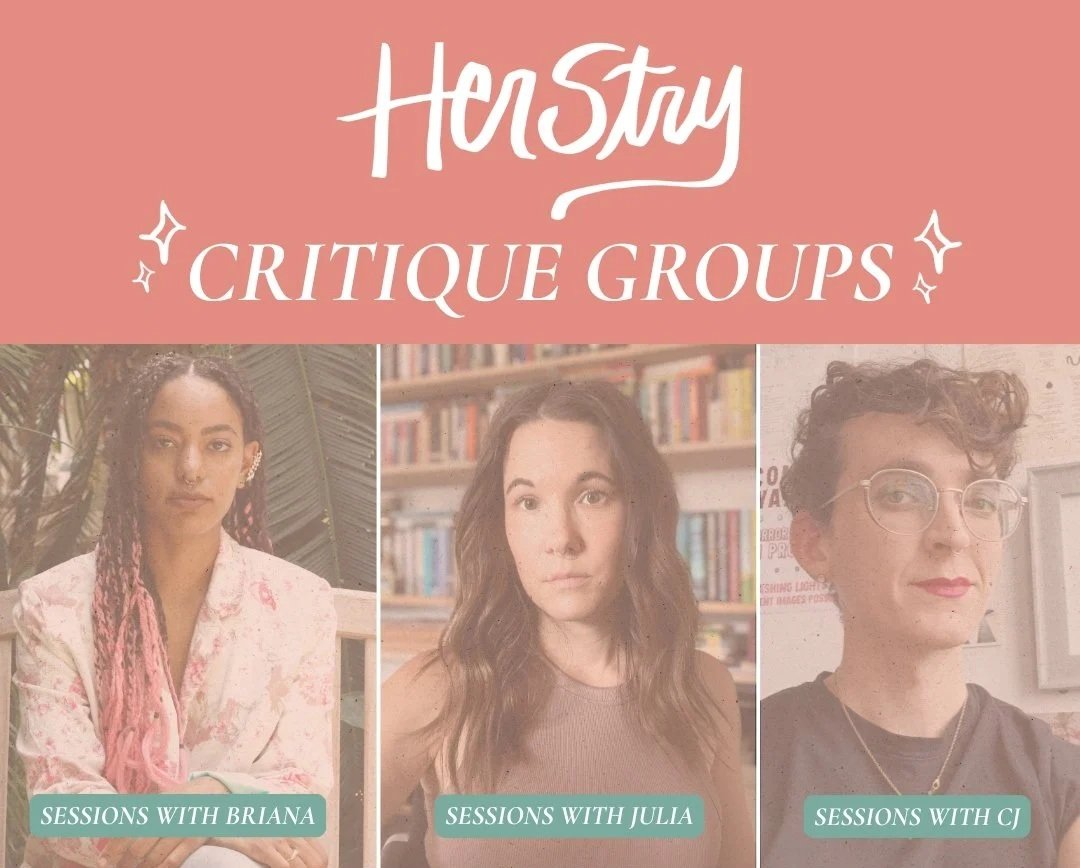
HerStry Critique Groups are small groups of 6 women who gather online for 6 weeks to share their writing, give constructive feedback and gain skills as writers.
Weekly online sessions last approximately ninety minutes, with three women sharing their work each week. Writers of all genres and levels are welcome and you may share both works of fiction and nonfiction.
Sessions take place on Mondays 7PM CT, Tuesdays 11AM CT, Fridays 11AM CT
WHAT’S INCLUDED IN THE HERSTRY CRITIQUE GROUPS?
Six 90 minute live workshop sessions
Three 20 minutes sessions in the “hot seat” to get you work critiqued
Written and verbal feedback from your fellow workshop participants
A weekly in depth edit and critique of your work from the group leader after each session
Weekly writing goals and accountability check ins
Full video recordings of each session to keep for your records
Say goodbye to the lonely, stuck in your head writing life!
LET’S WRITE!
From conception to submission. Let’s make summer sizzle with stories.
Writing a short story doesn’t happen in one session. It takes multiple drafts to get it exactly right, to create characters that come to life for the reader and a world they can’t stop thinking about. In this seven week course we will work on a single short story from conception to submission ready. The seven week session will include generative brainstorming sessions, short story craft talks, multiple workshops for feedback from fellow writers, and detailed line by line feedback and edits from your instructor. Plus, we’ll talk about submission venues, cover letters, and when to know if your story is ‘finished.’
IT’S NO SECRET THAT FEEDBACK IS AN IMPORTANT PART OF THE WRITING PROCESS.
In fact, we argue that it might be the most important part of the process.
But it’s hard to find a writing community. It’s hard to find the people who are willing to take the time and the effort to read your work and give the feedback you really, truly deserves.
That’s where HerStry Critique Groups come in!
HerStry Critique Groups are small groups of 6 women who gather online for 6 weeks to share their writing, give constructive feedback and gain skills as writers.
Weekly online sessions last approximately ninety minutes, with three women sharing their work each week. Writers of all genres and levels are welcome and you may share both works of fiction and nonfiction.
Sessions take place on Mondays 7PM CT, Tuesdays 11AM CT, Fridays 11AM CT
WHAT’S INCLUDED IN THE HERSTRY CRITIQUE GROUPS?
Six 90 minute live workshop sessions
Three 20 minutes sessions in the “hot seat” to get you work critiqued
Written and verbal feedback from your fellow workshop participants
A weekly in depth edit and critique of your work from the group leader after each session
Weekly writing goals and accountability check ins
Full video recordings of each session to keep for your records
Say goodbye to the lonely, stuck in your head writing life!
October 7, 14, 21, 28, November 4 and 18 CT
There is no class on November 11.
WRITING THE SEX SCENE.
Writing a sex scene can be delirious fun, a harrowing challenge, a literary milestone—possibly the most important part of building your short story or book. In our six weeks together, you’ll experience just about every possible emotion as you explore the erotic in different modes: comic, tender, harrowing, soul-shattering … because it really is all about the characters’ feelings, not just the mechanics. So we’ll talk about tone. Vocabulary. Metaphor. Sensory detail. How to get big emotions on the page … and when to pull back and let the reader’s imagination go to work.
This is a course for writers who want to explore the intersection between the novel and short stories, and would like to weave their short stories into a story cycle (or collection of "linked stories" or "composite novel"). This is also a class about the interaction of form and content, and how one influences the other. We will read works of interlinked stories by writers from diverse cultural and ethnic backgrounds, focusing on modern classics and contemporary practitioners of these hybrid forms. Weekly discussions will center on elements of craft, such as the expansion and compression of time, setting as an organizing and connecting principle, character development within and between stories, structure and plot for interconnected stories, and responding to literary influences in the same genre.
This six-week course guides writers through the literary submission process, offering insider insight and practical tools to help you get your work into the world. We’ll demystify everything from reading submission calls to writing cover letters and choosing the right journals. Along the way, we’ll workshop short bios, develop submission trackers, and build personalized plans that align with your voice and goals.
By the end of the course, you’ll walk away with a polished piece ready to send, a tailored submission list, and the confidence to navigate the lit mag world with clarity and purpose.
Ideal for writers of literary fiction, poetry, personal essay, memoir, and hybrid forms.

Brittany Meador is a spoken word poet and amateur lexicographer from the red rocks of Arizona. She is constantly inspired by commonplace occurrences like snatches of grocery store chatter and the way a stranger holds their pen. Most recently, she was published in the winter issue of Sixfold Literary Magazine. Her favorite word is trenchant.
I left on a clear October Monday. Seated at the bulkhead, my elbow rested next to a man who asked if I was going to Chicago for business. I lied, nodding my head yes. Ambivalence prevented me from updating my second-generation iPod earlier in the day, leaving Missy Elliott and Usher to comfort me. A leathery skinned smoker picked me up at baggage claim. She drove me forty-five minutes to our rural destination while I imagined what happens when car doors open and bodies land on I-55 at seventy-five miles per hour.