
My parents were horrified to learn that I had been conceived.
Which—honestly—raises questions. Had no one explained biology to them?
They were in Spain. My father worked on a ship. My mother became violently ill—hyperemesis gravidarum, dehydration, relentless vomiting. Sick enough to be taken off the ship and admitted to a hospital. Miserable enough to beg them to end the pregnancy so she could return to her husband.
The hospital refused.
They were Catholic.
This would be murder.
Dehydration, however, was negotiable.
They gave her IV fluids, medication, and moral certainty, then sent her back to India—still pregnant.
Lesson one: I was unwanted.
Back in India, she considered abortion again. But families are excellent at delays, especially when a woman’s body is involved. By the time everyone finished discussing her decision, the worst of the nausea had passed.
The worst is over,” she thought.
“Let me see who this child is.”
“They’re persistent, I’ll give them that.”
Ultrasound technology in India in the early 1980s was rudimentary. Thankfully so. Sex-determination laws wouldn’t arrive until 1994. Progress, as it turns out, is sometimes best when it shows up late.
I was born in 1981.
After a difficult labor and an eventual C-section, the doctor and my father waited before telling my mother what she had delivered. They said she needed time to recover.
I was a girl. A plot twist no one had ordered.
Lesson two: If you must be an unwanted child, it helps if you are a boy.
Growing up, my mother was essentially a single parent. My father was at sea ten months a year. My brother and I fought the way siblings do—loudly, dramatically, over nothing.
After one particularly petty argument, he said, “I wish I had a brother instead.”
Without missing a beat, I replied, “I wish I had a sister instead.”
My mother, who had been deaf to every opinion we had ever voiced, intervened immediately.
“No way,” she said. “Are you trying to kill me?”
This was not a metaphor.












Lesson two, reinforced.
Years later, my father died. That was when I learned that only a man can perform last rites in Hinduism. Daughters, apparently, do not belong to their parents. They belong to their in-laws.
All those years my parents worried about dowry.
It didn’t matter that I went to medical school.
Education, it turns out, does not appreciate the way gold does.
It didn’t matter that I married a man who doesn’t believe in religion—or its rules.
College promised freedom, at least the way Indian movies do. What it delivered were buses—DTC buses—crowded with hands that poked, prodded, grabbed and left you disgusted.
Prior to that there had been safety. Stepping into the world came with a daily reminder from mother- don’t lose your virginity—with or without consent.
Every path came with a warning label.
None came with safety.
Lesson three: freedom and safety were never offered together.
I tried to walk the middle road.
I married for love—to someone who had never experienced discrimination and therefore did not recognize it when it appeared. His confusion was sincere. It was also impressive.
When I became a doctor, my worth improved. I was loved a little more. Relatives who once mocked me now called for advice. Being needed did what being human never could.
Lesson four: being unwanted doesn’t disappear when you become useful.
Residency took me to the United States—a new world, allegedly freer. Racism announced itself early, quietly, even in applications. There were lists: immigrant-friendly hospitals, immigrant-unfriendly ones.
In the place that accepted me, I learned quickly what survived and what didn’t.
Accents and skin colors were tolerated. Opinions and baggage were not.
Gratitude was expected.
I learned how to nod.
How to soften my voice.
How to disappear just enough to be called professional.
Lesson five: silence travels farther than honesty when you need permission to stay.
It took until my forties to unlearn that.
That’s when I learned to speak plainly. To take up space. To stop apologizing for existing in rooms I had earned my way into.
Lesson six: women blossom when they learn to trust themselves.
Over time, in addition to these lessons and skills, I learnt another important truth-
Lesson seven: destiny is not inherited. It’s built.
And now my daughter is here.
When I look at her, I see not only who she is—but who I might have been if I had not been taught, again and again, that my existence was an inconvenience.
She is not a compromise.
She is not a burden.
She is not an apology.
Turns out persistence wasn’t my flaw. It was my first qualification.
-Toshita Kumar
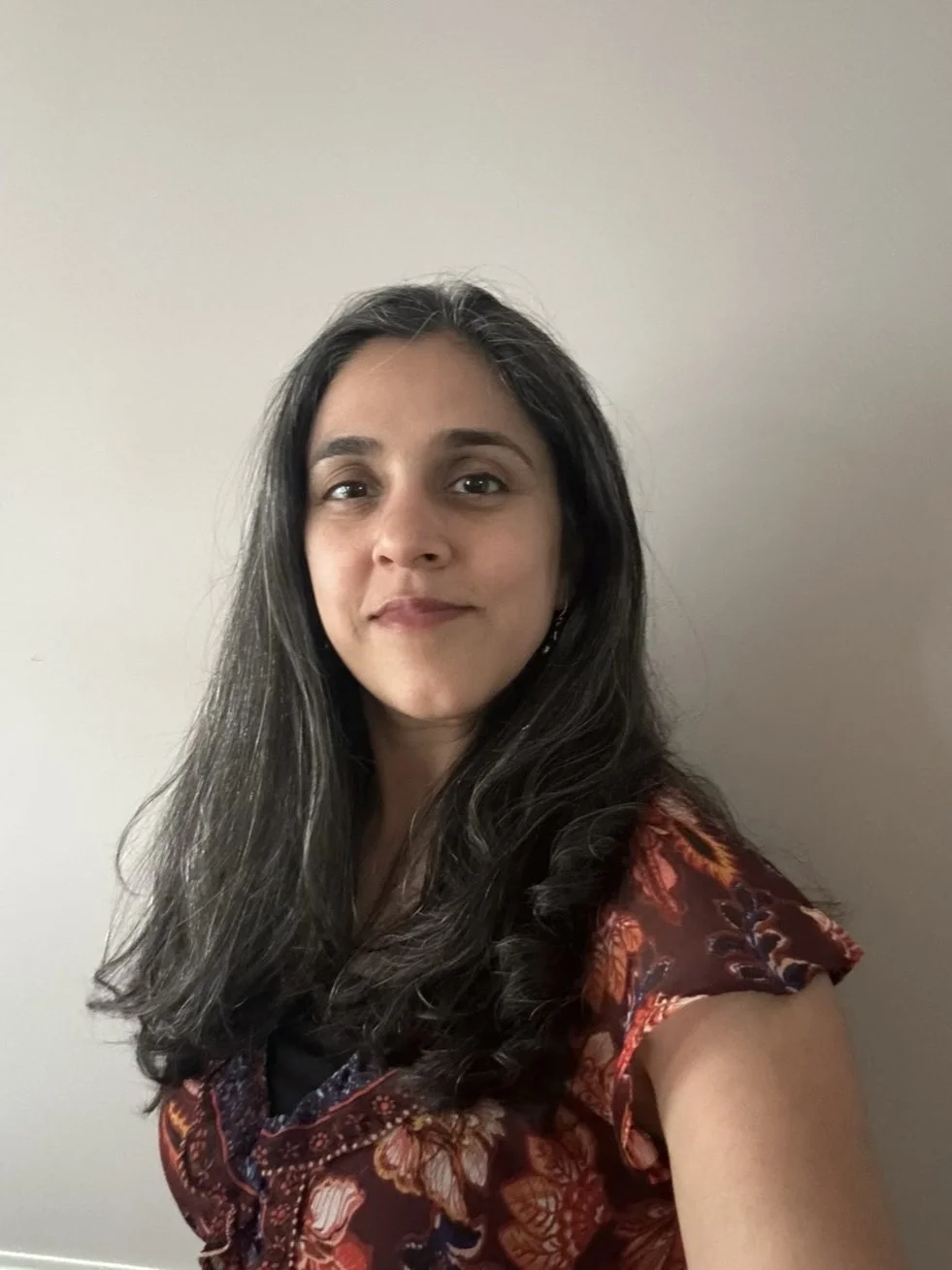
Toshita Kumar is a physician specializing in pulmonary, critical care, and sleep medicine in Connecticut. Her writing explores medicine, memory, grief, and immigrant identity, often examining the stories we tell ourselves about illness, belonging, and resilience. She sees writing as an extension of her work as a physician—a way to make sense of the moments that medicine alone cannot fully explain. Her work has appeared in Pulse Voices, Intima, Doximity, Poetry Habitat, Northeast Journal, and elsewhere. When she is not caring for patients, she is writing, reading, or painting watercolor landscapes.
My parents were horrified to learn that I had been conceived.
Which—honestly—raises questions. Had no one explained biology to them?
They were in Spain. My father worked on a ship. My mother became violently ill—hyperemesis gravidarum, dehydration, relentless vomiting. Sick enough to be taken off the ship and admitted to a hospital. Miserable enough to beg them to end the pregnancy so she could return to her husband.