
Grand Mother
She opens the cupboard above the sink and stretches her body as far as it can go. The glasses and bowls have moved closer to the edge of the shelves since I was here last.
“Easier to reach,” my grandmother says, noticing me notice them.
I suddenly feel too tall for this kitchen where Mom would bring my sister and me on her way to work, where we would help Neni make khourabia and manti with our curious little hands.
I turn my attention to Aznavour. The old tape player is somehow still alive. It has been infusing the air with this six-language potpourri of songs that have cradled every one of our milestones since my grandparents transplanted themselves from Cairo to Canada. My brain hurries to fill the silence between songs with the notes and lyrics that will come next.
“I’m tired today,” Neni reveals in a tone I know too well, because it’s the tone I use when I feel betrayed by my body.
I also see myself in the way she slams her backside into her rattan chair, a controlled descent much too difficult to orchestrate with joints and nerves that are playing out of tune. I shouldn’t be able to relate—I am fifty-five years younger than she is, only I’ve aged before aging.
There is barely space on the table for my cup and saucer among all the pastries she’s laid out. She bakes every day to keep her hands busy and her mind sharp between the crossword puzzles she does in her third language. Mostly, she bakes to keep her tins stocked for unexpected drop-ins. It’s bad-mannered to have a barren pantry and fridge, as her mom taught her, as she taught my mom. As children of the diaspora, we’ve grown up with measured abundance, the kind that sprouts from survival and sacrifice. But as she outlasts her siblings and her friends, there are fewer visits and always too much food.
I have to tell her again what gluten is and why it hurts me, but she places a roll of choreg on my plate anyway. “It’s sweet bread, it can’t hurt,” she says. At least, when I transfer it onto her plate, she softens into a smile almost as soon as she frowns. Maybe this time, I won’t offend her by not touching any of her impeccable pastries. She only recently conceded to not baking me cake or cookies when she comes over. Her programming doesn’t allow her to show up empty-handed, though, so she settles on baking carrot muffins for my husband, Ethan, instead.
She stands up as soon as we sit. My restlessness has a source. I watch her cut through the sunbeams in her floral skirt as she goes to the window. She adjusts the blinds to halt the light from eroding her mahogany furniture and Egyptian carpet. They haven’t aged as noticeably as we have. She checks on her plants as though it’s urgent and points to the one I put in her custody. She tells me how she feeds their soil to keep them fertile and full and flowering, and how she recently managed to coax an offshoot into becoming a whole new plant.
This is our first lunch since my hysterectomy. She hasn’t mentioned it yet, and if it weren’t for her sidelong stares, I’d be wondering if she’s forgotten. I’ve grown used to her furtive peeks at my belly, even her searing comments about its babyless bloat, as if I’m responsible for this illness I’ve hauled in my cells since they hatched. But today’s glances are different—she’s weighing anything I lift and biting her lower lip, mourning more than I am.
Neni sighs, but what she says next is not supposed to be about me.
“I’m not like I used to be. And I did a lot yesterday.”
My grandmother’s days have forever been segmented into pushing herself and paying for it. She plows through her self-imposed tasks as though she’ll be rewarded for her progress at bedtime, her prize proportional to the pain she hushed. Her look-what-I-managed-to-dos alarm me, not only because she climbs rickety chairs to dust chandeliers and to silence smoke detectors that go off from her broiled eggplant, or because she regularly flips her queen-size mattress on her own with her bad hip, or washes the floors on her fleshless knees, but because I can’t imagine having the tenacity to make it to ninety-four, especially without Ethan to carry what I can’t.
Resilience has been the cornerstone of our family’s narrative for generations. Displaced from their native villages in Armenia, my elders made a life for themselves in Egypt, until the climate there, too, became oppressive for Christians. My grandparents traded the desert for knee-deep snow with a single wooden crate to their name and a fierce work ethic that allowed them to provide for my then ten-year-old mom and all the family members who gradually sought refuge around their table. Their severed roots bound tightly to new ones. Resilience meant endlessly enduring, thrusting grief under the rug to adapt and belong.
For Neni, it’s not enough of a badge of honor to be living independently in her nineties in the condo she bought as a new widow forty years ago—a condo that wasn’t even for sale until she insisted it be sold to her because of the way the sun caressed it in the afternoons. Her value lies in keeping it immaculate, in thwarting its aging along with her own. Every three weeks, she calls a cleaning person to help, but her pathological perfectionism has her following the stranger from room to room to train them to clean to her standards. She even cleans before they arrive, as she would for a dinner guest, then probes for validation on how pristine her home is, compared to other people’s homes. Resilience is competition with self and other.
Though my grandmother craves validation, she is stingy in offering it. Praise—much like rest—must be earned. Even on Sundays, as she sits in the fragrant shade of Mom’s lilac tree, there is no pause to her critical tongue. Her disapproval lives in the line of her lips when she criticizes our curls for being unkempt or for revealing too much white. She fears that people will talk about our appearance and our choices, without realizing that she is the one who does most of the talking. Her blunt edges have her collecting grudges from a growing list of people who’ve become weary of the neverenoughness. She is the matriarch who nourishes without nurturing.
This obligatory grit I’ve grown up witnessing is so deeply entrenched in my own perceptions of success that I never questioned it—until I collapsed. Since my teens, I’ve lived on triple speed to make up for the time my illness had me bedridden or pinned to the toilet. I let the looming clock of academia and of belittling doctors obsessed with my ovaries pressure me into choosing progress over peace. I heard myself say yes to working on vacation, to freezing my eggs, to postponing my ultimatums. Sleep was secondary. I’d hold my breath for such long periods that it hurt my lungs to resume breathing. I ate when I remembered I hadn’t yet eaten, or when Ethan grew tired of waiting for me to finish “just one last thing”.
I was proud of this identity I was filling into, this quiet way of acknowledging privilege and repaying my family’s sacrifices. But with every surgery, miscarriage, rejection, and devastation that I collected, I began to resent resilience. The trope of the strong woman and of the selfless mother suddenly repulsed me. Resilience and fragility are not the opposites they are marketed to be. No, wind storms have shown me that the most resilient trees can still snap overnight. On the threshold of a promising career after a grueling PhD, I quit academia. I let my grandmother down by deviating from the straight line that was meant to be drawn between what I studied and what I became. At an age when doctors insisted I was too young to give up on fertility, I quit IVF treatments. I chose to be selfish and enlisted an egg donor and a surrogate to meet Ethan halfway in his longing for fatherhood, long before I evicted my uterus from my weed-ridden body.
I am still unlearning this thrill of chronically overcoming. As I affectionately watch Neni, I get to know my own ableism much more intimately, like sitting face to face with it at dinner, understanding where it comes from and how it can be safely dismantled. It took me years of grief to understand that a resilient person is a peaceful one. Resilience is strategic surrender.
“Are you constipated?” Neni asks as I take a sip of my Armenian coffee, getting close to the gritty sludge at the bottom from which futures are told.
“A little, from all the medications,” I say, without telling her I feel relieved to have pruned part of the poison, to have freed myself from the weight of my bulging uterus and of the expectations tangled with it.
But setting myself free also means ending my lineage and dishonoring our fragile culture. Survivor’s guilt contaminates my convictions. I feel my shame surge when I contrast my choices with my family’s ways. I’ve never felt Armenian enough. I secretly struggle with deciphering our alphabet, its two distinct symbols for each sound—another Noah’s ark. I married outside not only our culture but our religion, and now I’ve outsourced both the egg and the womb.
“Please don’t tell her. She won’t understand,” Mom begs me to keep my surrogacy journey a secret from Neni. Her core wounds have been triggering a growing intolerance of my grandmother’s acidic nature. Years ago, Neni had reacted sorely when a cousin had had twins, asking me if they “did it artificially” and then frowning, appalled, when I’d confirmed they’d done IVF. Her reaction reminded me of my conversations with locals in southern Italy about farming and fruits and fertility, and their disdain for unnatural methods of growing anything. When I told a friend I’d been itching to tell Neni about our surrogate, my friend had joked, “Tell her that Ethan had an affair or that you adopted. Those are the only two options she’ll understand!”
Still, I’m tempted to try my truth. After years of our weekly evening calls, Neni has been getting the hang of my non-academic career and its benefits. She even surprises me with clever entrepreneurial advice on keeping old clients and recruiting new ones and urges me to raise my prices. When I’d told her about my upcoming hysterectomy, her voice grew strangely tender. “Your life is abundant in other ways,” she shrugged. “There are very few kids in our family—we haven’t been lucky in that way.” Then, in her self-celebrating manner that always makes my mom roll her eyes, she recounted her own suffering with unrelenting bleeding that had ultimately led to her own hysterectomy. The condition was unnamed, of course, but I know to recognize adenomyosis and endometriosis lurking in one’s sentences. I was grateful she didn’t ask what Ethan thinks of all this, implying that I’m ravaging his dreams by saving mine.
After lunch, I push my chair and stand, gathering a couple of dishes.
“Don’t!” She stands too. Don’t lift, don’t do too much, don’t get tired. She dispenses advice she has trouble taking.
But I’ve noticed she’s started to pace herself, too. She’s started to say no to outings that are too loud or too demanding, to places where there’s no A/C or easy restroom access. She’s been taking taxis instead of walking and spreading out her errands to have a rest-day in between. She’s been forcing herself to sit with her feet up after spending thirty minutes on her stationary bike or after exerting herself in her latest baking-decluttering-cleaning frenzy. I see her tiny, impermanent shifts, though she’s still quick to label others lazy when they sit still. It’s not possible to overwrite her script, but there might be time to challenge some rituals.
Through my illness and her ageing, we’ve been teaching each other to hold space for the parts of ourselves that give us a sense of purpose, but without hustling at all costs. Maybe resilience is simply leaving the dishes in the sink for an extra hour or fighting the urge to pluck imperfect petals off our plants. Maybe it’s opening our heart to the person we are, instead of the person we should be or ought to have been.
Ethan sat our nephews down a couple of months ago and explained to them that, to protect my health, we found two very kind people to donate some pieces of the puzzle to help us grow our family. He explained it so perfectly, we were all crying by the time he was done. “Maybe you can try the same speech on Neni,” Mom was suddenly curious about how it might go. After all, as we grow old, we seem to become like children again, even with a century of life experience in our veins.
Neni takes out the Jello from her spotless fridge and we settle with our elbows on the table again. I fill my lungs and start telling her about Sage. In a narrative similar to Ethan’s but a tentative voice, I explain how one finds a surrogate, how everything is regulated, and how science allows the embryos to hatch outside a womb. I supplement the gaps in my stunted Armenian vocabulary with English and French words. I feel myself beaming when I tell her about Sage’s personality, about her integrity and grace, of how she takes care of us and why we trust her, and that this chance encounter is quietly unfolding into something earth-shatteringly beautiful.
Neni is quiet for a while, her lips in a tight line. She moves pastries from one container to another, stacks our bowls, and folds her napkin again and again. I can tell from her narrowed eyes that the idea of surrogacy is unsettling. She wants to say something, and it won’t be positive.
The clock is loud over our heads for a while, until the daycare across the street erupts with shrieking voices. We both turn our gaze to the window.
“When do I get to meet her?” Neni asks, jarring me back to the present. Her tone is sharp, the way she makes it when she wants you to know she’s displeased, but her eyes has softened nearly imperceptibly.
Maybe when we pretend to accept, acceptance follows.
I can’t wait to tell her about Bettina, our egg donor, too.
-Kristina Kasparian
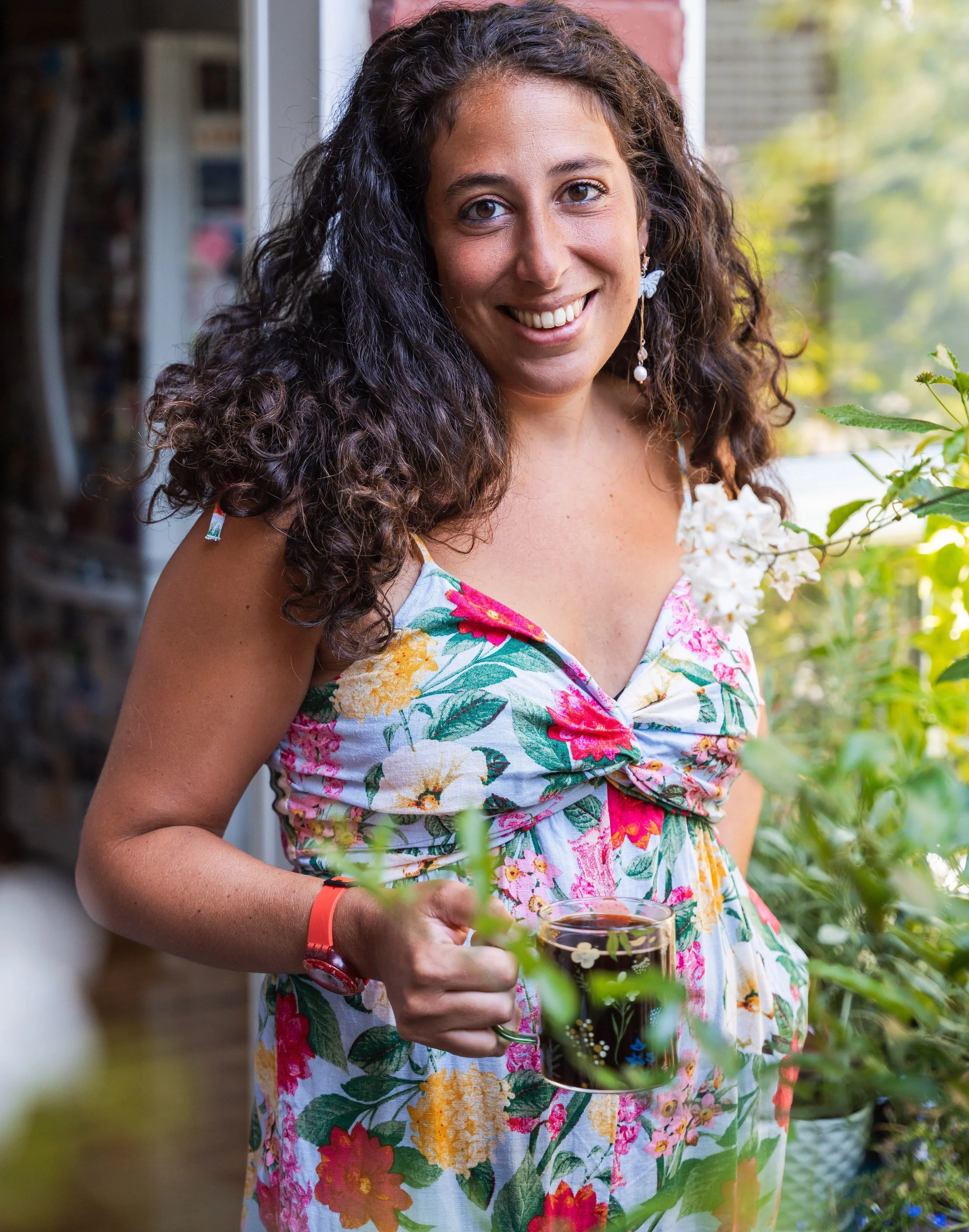
Kristina Kasparian is a writer, health activist, and entrepreneur with a PhD in neurolinguistics. Her writing about identity, wellness, and social justice has been published by Roxane Gay, Electric Literature, HuffPost, Longreads, Newsweek, Catapult, Fodor's, Elle, the Globe & Mail, and elsewhere. She is a two-time finalist of Roxane Gay's Audacious Book Club Essay Contest, a two-time finalist of CRAFT's Memoir Prize, and was shortlisted for the Eunice Williams Nonfiction Prize. Connect with her on Instagram @alba.a.new.dawn or on Substack @kristinakasparian.