
The First Time I Felt Flawed
When I was in the second grade, I was a carefree child with no real worries that I can recall. I spent my days in my head dreaming up stories, which I now know is characteristic of my personality as an INFP on the Myers-Briggs Type Indicator. I was also an avid reader by this time, quickly consuming any book I could get my hands on.
In the third grade, my parents presented me with a book right before bed during the time we usually said our nightly prayers. It was called, “God, I Need to Talk to You About Paying Attention.” This completely shocked nine-year-old me because no one ever once told me I had a problem paying attention.
This was the first time in my young life that I remember feeling like I was flawed in some fundamental way, but it wouldn’t be the last. I can’t say for sure that this was the catalyst; however, a self-driven quest for perfection would follow me for years and act as a stumbling block every time I would have a new idea. Creative ideas would bubble out, yet it was the implementation stage where I lacked confidence.
Around this time I began keeping a diary, and rarely was I seen out and about without a notebook. If I had a thought or idea, there needed to be a place to collect it. I’ve had hundreds of notebooks in my life—my constant friends that listened to every unfulfilled dream. How could I fulfill a dream when I couldn’t execute it perfectly?

A mass of white caps on a disheveled sea crisscrosses the horizon, the aftermath of a hurricane that skidded up the western face of Baja from Cabo past Punta Hughes. The storm made a westerly turn on its northern trajectory, just far enough off the coast to send a small amount of rain and mountainous surf to our small pueblo. Wave after wave, a tight fetch. a disorganized army of marching swell lines with little space between them, and out the far points, close-out walls of water.

It is 10:34 p.m. I am journaling about the difference between what I eat and how I taste it.
In other words, it’s not about the chocolate cake. It’s about the pool of saliva swirling through each bite. It’s about the tongue pressing crumb into ganache, the esophagus readying itself to carry each sweet offering down. It is about my body knowing it is safe. Safe to sit, to enjoy, to receive.

A few summers ago, I sat next to my dog on a pile of ice-coated rocks in the Brooks Range of Alaska, afraid that my soon-to-be-husband had fallen off a cliff.
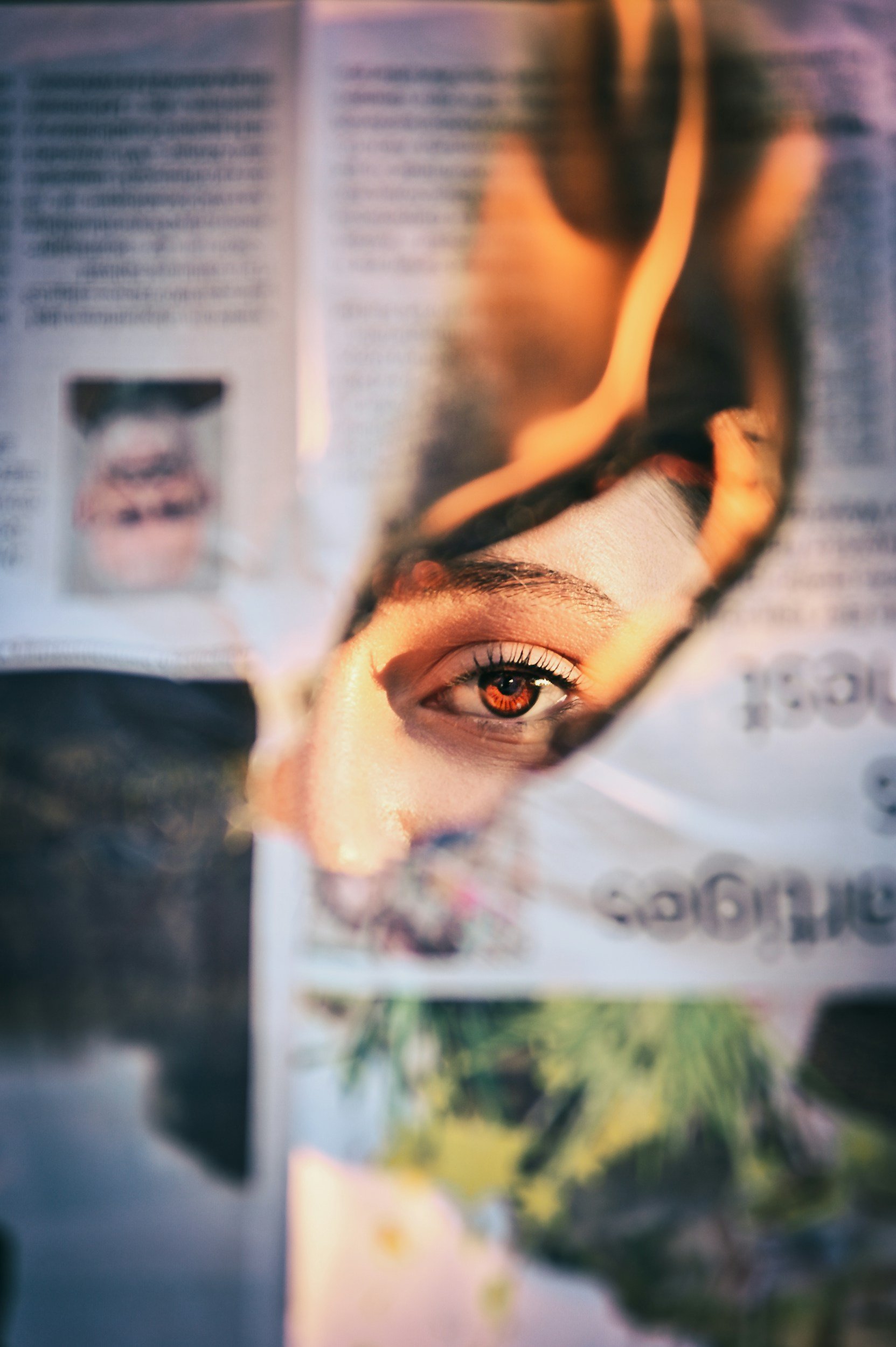
I read an article in our local newspaper about a high school coach who had just been fired for abusing his male students. I was in my early forties, and remember taking in the article (yes, back in the day when people still read an actual newspaper) and contemplating the unpleasant information that a football coach in a city just north of where I lived had inappropriately touched his male students. My next thought was, Oh, that happened to me.

One of the reasons I love children's books is that there's always an invitation to loosen and lighten up, be poured into, be lulled into a place of deeper reflection—to see yourself in mid-grapple. For that reason, happy to be nappy is much more than a children's story.

I grew up listening to my mom criticize her stomach. Having children had done this, she would say as she ran her hand over her loose stomach. Being pregnant and giving birth had changed her body forever, leaving behind stretch marks and large breasts and a stomach that jiggled and bulged. She didn’t like how her stomach looked, but she didn’t starve herself or excessively exercise. In every fitting room we shared, she commented. If only I could get rid of this, she’d say as she patted her stomach. Look at this, she said, as she shook her head and looked at her side profile in the dressing room mirror. If I didn’t have all this, these would fit better, she would say, while pulling down the pair of pants that didn’t fit. She saw, and continues to see, her stomach as a negative, a defect.

A couple of months ago you were going to several Overeaters Anonymous meetings a week, sometimes every day. But when Elaine told you she couldn’t sponsor you anymore after your suicide attempt, and when she and a friend whom she also sponsored asked you not to attend a couple of their regular meetings, and after your therapist came to the facility you were hospitalized in to tell you she couldn’t work with you anymore, you stopped going to meetings altogether.

Sometimes I wonder why lovers hold hands when they walk around. I wonder how long they have been dating. Are they in that new stage, where it feels like they have to hold on tight, constantly let the other person know that they are there, that they aren’t going anywhere, that they want to touch them, that they want to be touched. Or is it the older couples, the ones who have been together for longer that hold hands. A gesture they don’t even realize they’re doing, their fingers just mindlessly reaching for each other, keeping their connection as they pace around the city.
She was doing Pilates when she saw the first sign. She should have noticed. It was like last summer when the cop stopped her, leaned into the window, and asked if she’d seen the “STOP” sign. Of course she hadn’t, she told him; if she had seen it she’d have stopped. But that, too, was no kind of explanation.
I asked my mom about that book recently—why had they given that to me? It turns out my teacher had casually mentioned something about my attention span at a parent-teacher conference and suggested the book. However, my mom told me that was the only time a teacher ever said I had a problem with paying attention, and that I probably never really had a problem at all.
I agree. I don’t think I ever had a problem “paying attention.” Perhaps I just paid attention to too many things—at least in my teacher’s eyes. As an INFP, my interests were (and are) vast, and my imagination continues to run wild. Perhaps the subject she was teaching was not as interesting to me as the adventures I was dreaming up in my mind.
It’s a testament to how something so small, like giving a nine-year-old a self-improvement book, can impact a child so profoundly. What if she had never suggested the book to my parents—would I have charted the same course?
In any case, I am not angry with that teacher. Something else she did greatly impacted me that year, this time in a positive way. This same teacher who had said I had a problem paying attention—which set me off on this pattern of feeling flawed and imperfect—also told me I was meant to be a writer.
She was right about one of the things.
-Jen Johnston
This product gives you access to all four weeks of the workshop. Purchase one or more drop-in sessions here.
Build a habit in 20 sessions. In this 4 week workshop that meets Mondays through Fridays from 8:00-9:00 AM CST, we will focus on generating new writing—making headway on a current project, reviving an old project that’s been gathering dust, or writing based off of the daily prompts Leigh provides.
The first 45 minutes of class are a gentle, camera-off, silent writing session. The remaining 15 minutes are an opportunity to share excerpts of our work, reflect on progress made, and set intentions for the following day. Then we will read a passage together on the writing life and close each class with a new learning about habit formation. By the end of this course we’ll have a morning writing habit that is each our own to continue and build upon.
This listing is for an individual class. To purchase access for the full 4-week workshop, click here.
Build a habit in 20 sessions. In this 4 week workshop that meets Mondays through Fridays from 8:00-9:00 AM CST, we will focus on generating new writing—making headway on a current project, reviving an old project that’s been gathering dust, or writing based off of the daily prompts Leigh provides.
The first 45 minutes of class is a gentle, camera-off, silent writing session. The remaining 15 minutes are an opportunity to share excerpts of our work, reflect on progress made, and set intentions for the following day. Then we will read a passage together on the writing life and close each class with a new learning about habit formation. By the end of this course we’ll have a morning writing habit that is each our own to continue and build upon.
Many writers feel drawn to write about their lives but struggle with uncertainty: Why this story? Why now? And who is it really for? This workshop is designed to help writers move beyond doubt and toward clarity by focusing on the deeper meaning and purpose beneath their story.
In this interactive, craft-forward session, participants will be introduced to the Memoir Compass, a practical framework that helps writers articulate their motivation (why they are writing), mission (who the story serves), and message (what meaning or insight the story carries). Through guided reflection and writing exercises, participants will begin shaping a personal narrative rooted in intention rather than overwhelm.
This workshop is ideal for writers interested in memoir or personal narrative, as well as fiction writers drawing from lived experience, who want to move forward with greater confidence, focus, and direction.
Some of the most compelling creative nonfiction begins with the feelings we are tempted to avoid: anger, resentment, shame, fear, or the sense that we have an axe to grind. In this six-week workshop, writers will explore how to follow that emotional heat toward deeper, more honest work—without sacrificing compassion, complexity, or craft. Through close readings, writing exercises, discussion, and constructive feedback, we’ll consider how to transform strong feelings into writing that reaches beyond catharsis and connects with readers.
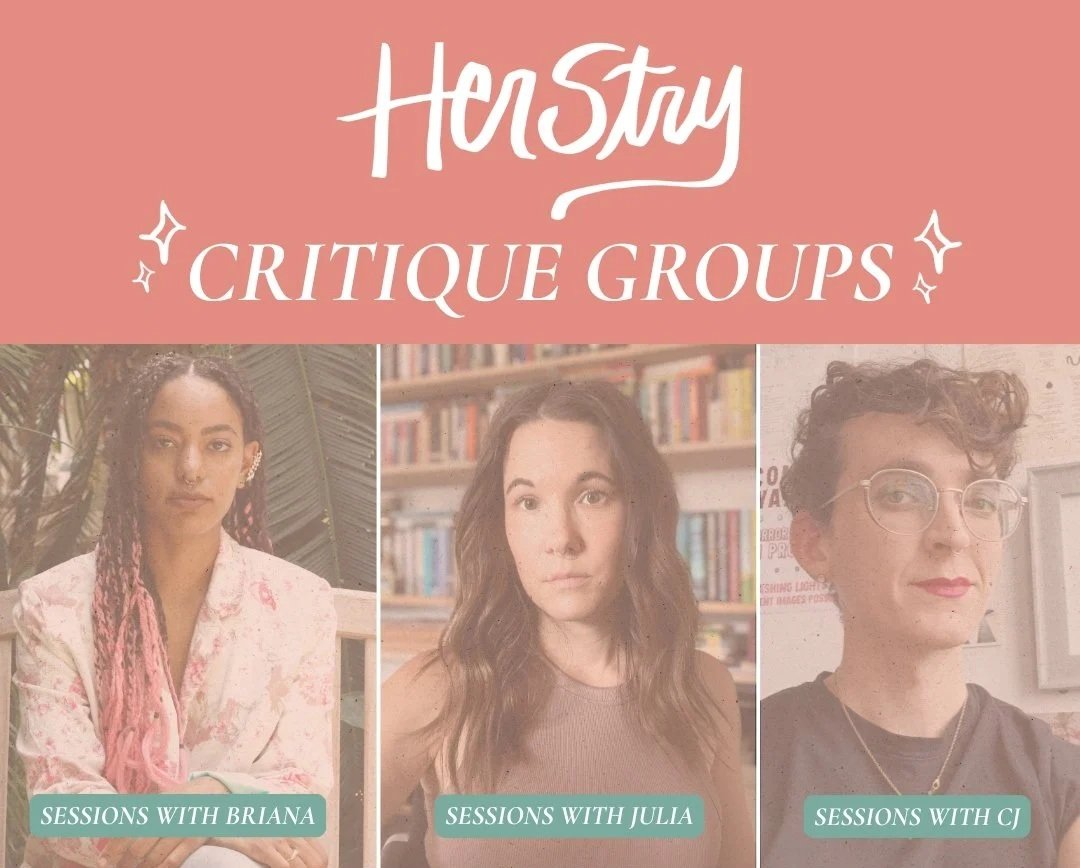
IT’S NO SECRET THAT FEEDBACK IS AN IMPORTANT PART OF THE WRITING PROCESS.
In fact, we argue that it might be the most important part of the process.
But it’s hard to find a writing community. It’s hard to find the people who are willing to take the time and the effort to read your work and give the feedback you really, truly deserves.
That’s where HerStry Critique Groups come in!
HerStry Critique Groups are small groups of 6 women who gather online for 6 weeks to share their writing, give constructive feedback and gain skills as writers.
Weekly online sessions last approximately ninety minutes, with three women sharing their work each week. Writers of all genres and levels are welcome and you may share both works of fiction and nonfiction.
Sessions take place on Mondays 7PM CT, Tuesdays 11AM CT, Fridays 11AM CT
WHAT’S INCLUDED IN THE HERSTRY CRITIQUE GROUPS?
Six 90 minute live workshop sessions
Three 20 minutes sessions in the “hot seat” to get you work critiqued
Written and verbal feedback from your fellow workshop participants
A weekly in depth edit and critique of your work from the group leader after each session
Weekly writing goals and accountability check ins
Full video recordings of each session to keep for your records
Say goodbye to the lonely, stuck in your head writing life!
LET’S WRITE!
From conception to submission. Let’s make summer sizzle with stories.
Writing a short story doesn’t happen in one session. It takes multiple drafts to get it exactly right, to create characters that come to life for the reader and a world they can’t stop thinking about. In this seven week course we will work on a single short story from conception to submission ready. The seven week session will include generative brainstorming sessions, short story craft talks, multiple workshops for feedback from fellow writers, and detailed line by line feedback and edits from your instructor. Plus, we’ll talk about submission venues, cover letters, and when to know if your story is ‘finished.’
IT’S NO SECRET THAT FEEDBACK IS AN IMPORTANT PART OF THE WRITING PROCESS.
In fact, we argue that it might be the most important part of the process.
But it’s hard to find a writing community. It’s hard to find the people who are willing to take the time and the effort to read your work and give the feedback you really, truly deserves.
That’s where HerStry Critique Groups come in!
HerStry Critique Groups are small groups of 6 women who gather online for 6 weeks to share their writing, give constructive feedback and gain skills as writers.
Weekly online sessions last approximately ninety minutes, with three women sharing their work each week. Writers of all genres and levels are welcome and you may share both works of fiction and nonfiction.
Sessions take place on Mondays 7PM CT, Tuesdays 11AM CT, Fridays 11AM CT
WHAT’S INCLUDED IN THE HERSTRY CRITIQUE GROUPS?
Six 90 minute live workshop sessions
Three 20 minutes sessions in the “hot seat” to get you work critiqued
Written and verbal feedback from your fellow workshop participants
A weekly in depth edit and critique of your work from the group leader after each session
Weekly writing goals and accountability check ins
Full video recordings of each session to keep for your records
Say goodbye to the lonely, stuck in your head writing life!
October 7, 14, 21, 28, November 4 and 18 CT
There is no class on November 11.
WRITING THE SEX SCENE.
Writing a sex scene can be delirious fun, a harrowing challenge, a literary milestone—possibly the most important part of building your short story or book. In our six weeks together, you’ll experience just about every possible emotion as you explore the erotic in different modes: comic, tender, harrowing, soul-shattering … because it really is all about the characters’ feelings, not just the mechanics. So we’ll talk about tone. Vocabulary. Metaphor. Sensory detail. How to get big emotions on the page … and when to pull back and let the reader’s imagination go to work.
This is a course for writers who want to explore the intersection between the novel and short stories, and would like to weave their short stories into a story cycle (or collection of "linked stories" or "composite novel"). This is also a class about the interaction of form and content, and how one influences the other. We will read works of interlinked stories by writers from diverse cultural and ethnic backgrounds, focusing on modern classics and contemporary practitioners of these hybrid forms. Weekly discussions will center on elements of craft, such as the expansion and compression of time, setting as an organizing and connecting principle, character development within and between stories, structure and plot for interconnected stories, and responding to literary influences in the same genre.
This six-week course guides writers through the literary submission process, offering insider insight and practical tools to help you get your work into the world. We’ll demystify everything from reading submission calls to writing cover letters and choosing the right journals. Along the way, we’ll workshop short bios, develop submission trackers, and build personalized plans that align with your voice and goals.
By the end of the course, you’ll walk away with a polished piece ready to send, a tailored submission list, and the confidence to navigate the lit mag world with clarity and purpose.
Ideal for writers of literary fiction, poetry, personal essay, memoir, and hybrid forms.

Jen Johnston, CHHC is an introverted wellness writer on a journey of self-discovery. You can connect with her on Twitter (@JenJohnstonCHHC) or on Instagram (@JenWholeVibes).
One dreary winter day, nearly two years into dating, he ended things rather oddly: “I don’t think you’ll be okay if we break up,” he explained, “which is why we have to break up.” Though confounding, I suppose it was not surprising—he often resented how much I seemed to need him.