
The bathroom light hummed above me, too bright and too sharp, like it was trying to expose something I was not ready to see. Two pink lines. My breath caught in my throat, suspended in the thick, humming air. My hands stayed steady, but something inside me shifted; a hairline crack under pressure. I stared at the test as if staring hard enough might undo it, might turn the lines back into the uncertainty I had been clinging to. For a moment, everything went still. Not peaceful stillness, the kind that comes right before something breaks. It was the kind of stillness that feels like a held breath, a pause in the universe, a moment when the world waits to see what you will do next. I remember thinking, this cannot be real. And then, almost immediately after: Of course it is.
The truth is that my body had already whispered the answer days before. The bone-deep fatigue. The heaviness in my chest that was not quite fear but was not anything else either. The way food tasted wrong, or too strong, or like nothing at all. The way my dreams had become crowded and restless. But knowing and knowing are different. One is a suspicion you can shove into a dark corner. The other is two pink lines that refuse to be ignored. I sat on the cold edge of the toilet seat, the tile pressing chill into the backs of my legs and tried to swallow the moment whole. But it was too big. It rearranged the furniture inside my mind without asking permission. It shifted the walls, the floor, the ceiling. It changed the shape of the room around me.
And beneath the shock, beneath the numbness, was the memory of what had happened with my ex. Not the horrific details, those stayed locked away, but the aftermath. The folding in on myself. The way I tried to pretend my body was still mine. The way I avoided mirrors because they felt like witnesses. I had spent weeks trying to outrun the truth of that night. Now the truth was growing inside me. It felt like a cruel echo, a reminder that the past was not finished with me, that it had found a new way to speak.
People talk about pregnancy like it is supposed to be soft and glowing, a gentle unfolding into a new chapter of life. But for survivors of sexual trauma, pregnancy can feel like stepping back onto a battlefield you thought you had escaped. Research from the American College of Obstetricians and Gynecologists shows that survivors often experience heightened anxiety, dissociation, and a need for control during pregnancy and birth, especially during invasive procedures or moments when the body becomes a site of scrutiny rather than safety. A study in the Journal of Perinatal and Neonatal Nursing found that survivors are significantly more likely to experience panic responses during prenatal care, even when nothing is technically wrong. The body remembers what the mind tries to forget. The body keeps its own calendar, its own archive, its own language.
I did not have the language for any of this then. All I knew was that every doctor’s appointment made my skin feel too tight. Lying back on an exam table made my throat close. The snap of latex gloves sent my heart racing in a way I could not explain without unraveling. I remember one appointment in particular: the fluorescent lights buzzing overhead, the paper gown crinkling against my skin, the doctor’s voice too calm, too practiced. When he said, “Just relax,” my body did the opposite. My vision tunneled. My palms went cold. I nodded anyway, pretending I was fine because pretending felt safer than explaining. Pretending felt like armor.
There were other moments like that, small, ordinary interactions that became landmines. A nurse placing her hand on my knee to steady me before a blood draw. A medical assistant closing the door behind her with a soft click that felt too final. Even the scale in the hallway, the one I had to step on at every visit, made my stomach twist. I hated the way it required me to stand still, to be observed, to surrender control of even the smallest part of myself. None of these things were dangerous, but my body reacted as if they were. My body braced for an impact that never came.
Later, when I began researching trauma-informed pregnancy care, I found words for what I had experienced. I learned about programs like Cleveland Clinic’s M-POWER initiative, designed specifically for pregnant survivors of trauma. Their approach centers on consent, control, and emotional safety; three things I had not realized I had been starving for until I read about them. I learned that I was not dramatic or broken. I was responding exactly the way a nervous system responds when it has been taught that the body is not a safe place to live. I learned that my reactions were not failures. They were evidence of survival.











But back then, in those early weeks, all I had was the test, the silence, and the slow, creeping awareness that nothing about my life would ever be the same. I walked around in a fog, moving through my days as if I were underwater. Sounds felt muffled. Colors felt too bright. My own reflection looked like someone I was still getting to know. I kept touching my stomach without meaning to, as if checking whether the truth was still there.
I did not tell anyone for a while. Not because I did not trust the people who loved me, but because saying it out loud felt like stepping off a cliff. I felt like I was floating somewhere above the bathroom tiles, watching a girl who had no idea how to be pregnant, especially not like this. I felt suspended between two versions of myself, the one I had been and the one I was becoming, and I did not know how to bridge the distance between them.
Yet in that suspended space, something unexpected stirred. A small, stubborn part of me, the part that had survived the assault and kept going even when I did not want to, began to speak. Not loudly. Not confidently. But enough to be heard. You are still here, it said. You are still you. It was not comfort. It was a tether. It was a reminder that survival had already taken root inside me once, and it could do so again.
I started reading everything I could about trauma and pregnancy. Studies about bodily autonomy. Articles about dissociation during labor. Stories from women who had walked this path before me. Their words felt like a steadying hand between my shoulder blades. My therapist, who happened to specialize in trauma-informed care, told me, “Your reactions make sense. Your body is trying to protect you.” For the first time, I believed her. For the first time, I felt the possibility that I was not broken beyond repair.
She helped me understand the mechanics of my fear, how trauma rewires the nervous system, how pregnancy can trigger old wounds because it involves rapid bodily change, vulnerability, and a loss of control. In one session, she asked me to describe what it felt like in my body when I thought about giving birth. I remember staring at the carpet in her office, tracing the pattern with my eyes, and saying, “Like I am walking back into a room I barely survived leaving.” She nodded, not with pity but with recognition. “Then we will find a way,” she said, “to make that room safer.”
There were moments of beauty, too, small ones, almost shy in the way they appeared. The first time I heard the heartbeat, for example. I expected to panic. I expected to float away from myself. Instead, I cried. Not out of fear, but out of something softer. The sound was fast and insistent, like a tiny drum reminding me that life can grow even in the ruins. The room smelled faintly of antiseptic and lavender from the diffuser that was plugged into the wall. The gel on my stomach was cold, but the moment was warm. I remember tightly gripping the edge of the exam table, grounding myself in the rhythm of that impossible little sound. It felt like a thread pulling me gently back into my own body.
Another moment came later, during an ultrasound. The technician dimmed the lights, and for once the darkness felt comforting instead of threatening. The screen flickered to life, and there it was, a shape, a movement, a presence. I watched the tiny flutter of limbs, the rise and fall of something that was becoming someone. For a moment, the fear loosened its grip. For a moment, I felt connected to my body instead of being trapped inside it. I felt the possibility of something new, something tender, something that did not erase the past but did not belong to it either.
There were moments of grief, too. Grief for the girl I had been before the assault. Grief for the version of pregnancy I would never have. Grief for the innocence taken long before the test turned positive. Some nights, I would lay awake with my hand on my stomach, feeling both protective and terrified. I wondered what kind of mother I could be when parts of me still felt so unfinished, so tender, so raw. I wondered whether the child would inherit my fear, my vigilance, and my scars. I wondered whether I could teach them safety when I was still learning it myself.
But there was also resilience. A slow rebuilding. First a reclaiming. Then a relearning. Then a quiet trust returning. I learned to inhabit my body again, inch by inch. I learned to ask for what I needed at appointments: a female provider, a slower pace, a warning before touch. I learned that I could say no. That I could say stop. That I could say, “I need a minute,” and the world would not collapse. I learned that boundaries were not walls. They were doors I could open and close on my own terms.
Pregnancy did not fix me. It did not erase the trauma. But it forced me to confront the parts of myself I had been avoiding. It made me ask hard questions about safety, identity, and the kind of mother I wanted to be. It taught me that healing is not linear; it spirals, looping back to old wounds with new strength. It taught me that I could hold fear and hope in the same hand. It also showed me how strong and independent I truly was.
When I think back to that day now, the humming light, the cold tile, the two pink lines, I do not see a verdict anymore. I see a beginning. A painful, complicated, unexpected beginning, but a beginning nonetheless. The day the test turned positive was the day everything I thought I knew about myself cracked open. But cracks let light in. Cracks make space for something new to grow. Cracks are how seeds take root.
This story matters because it is not just mine. It belongs to every survivor who has stared at a pregnancy test and felt the world tilt. To every person who has carried trauma into a doctor’s office and hoped someone would see them, really see them. To anyone who has ever had to rebuild themselves from the inside out. I am telling my story now because I am ready. Because silence protects no one. Because healing is not a straight line, but it is possible. And because somewhere out there, someone is holding a test with two pink lines, feeling the ground shift beneath them, and they deserve to know they are not alone.
-Alicia Fournier
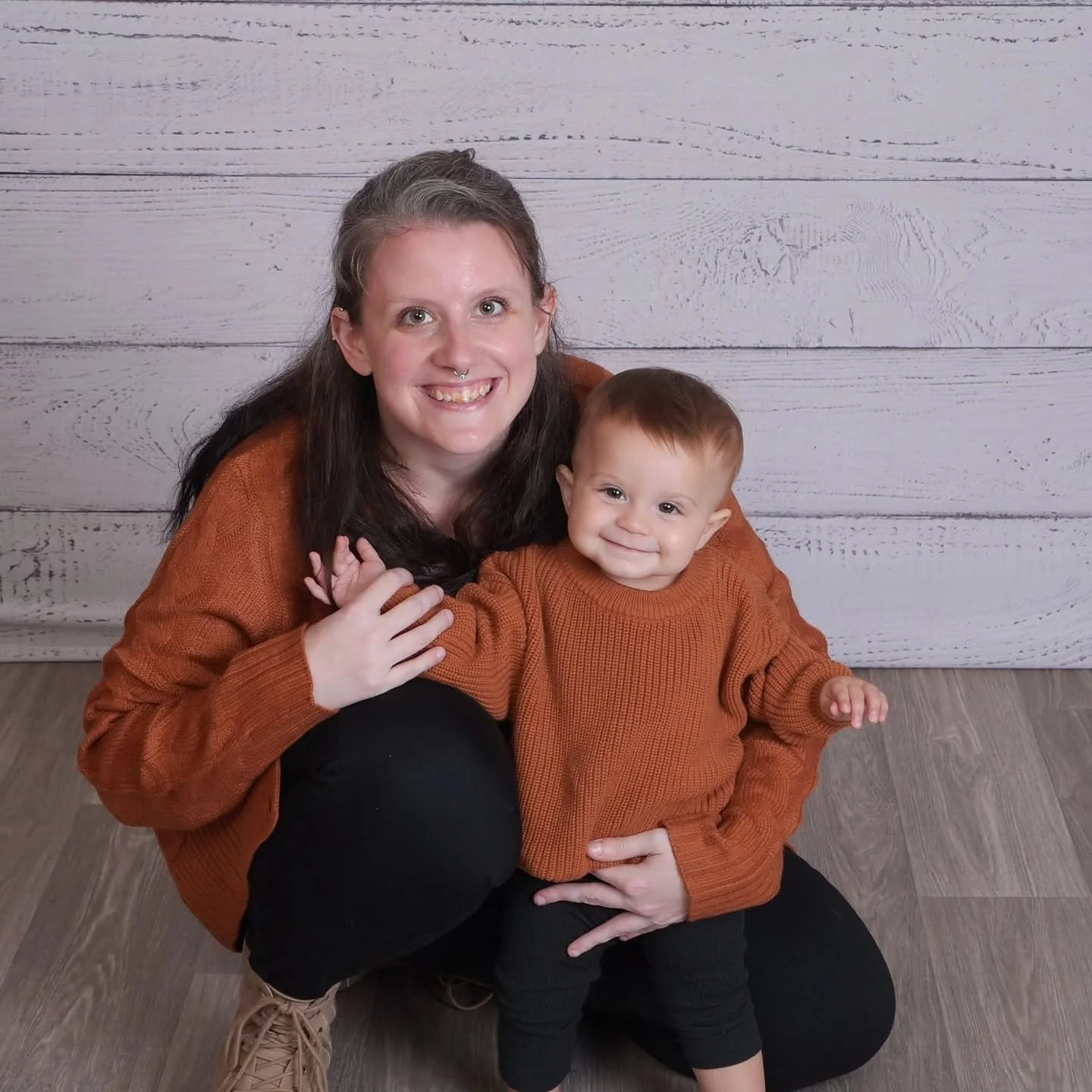
Alicia Fournier is an aspiring writer currently enrolled in the Creative Writing and English program at Southern New Hampshire University. As a mid-thirties single mom to an almost four-year-old daughter, she strives to speak her truth regarding all of life's experiences: working in the veterinary field, becoming a single mom after experiencing domestic violence, and navigating life's challenges while balancing motherhood for the first time. She resides in western Massachusetts with her daughter and their troublesome feline, Milton.

The bathroom light hummed above me, too bright and too sharp, like it was trying to expose something I was not ready to see. Two pink lines. My breath caught in my throat, suspended in the thick, humming air. My hands stayed steady, but something inside me shifted; a hairline crack under pressure. I stared at the test as if staring hard enough might undo it, might turn the lines back into the uncertainty I had been clinging to. For a moment, everything went still. Not peaceful stillness, the kind that comes right before something breaks. It was the kind of stillness that feels like a held breath, a pause in the universe, a moment when the world waits to see what you will do next. I remember thinking, this cannot be real. And then, almost immediately after: Of course it is.