
The Quietest Storm
My daughter doesn’t say my name.
She knows it. I’ve heard her whisper it at night, alone on her toddler bed, when the house is still and the moment asks nothing of her. But she can’t shape it on command. The word stays stuck somewhere behind her lips, waiting.
At four years old, Frankie has a vast vocabulary of single words: “ball,” “up,” and the always entertaining “no.” Occasionally, she’ll string together two words, like “more juice,” though it arrives like a bird that lands and flies away before I can reach it. She doesn’t speak in phrases. Her thoughts stretch further than her voice can follow.
So she sings. Wordless melodies drift from her bedroom, soft and strange, stitched together from humming and echoes of things she’s heard. She speaks through her eyes, her hands, and her laughter. Her language fills the house, not with sentences but with sound. It comes through the baby monitor at night, rises from her car seat as we drive past trees, and bubbles up during bath time in a tune only she understands.
It’s everywhere now. A current beneath our days. Not quite silence. Not quite speech. Something in between.
Every day is a puzzle. Not just the kind with picture pieces scattered across the floor, but the kind that lives inside her. What hurts, what she needs, what she’s trying to tell me with her eyes, her hands, her sudden tears. I’ve become fluent in her nonverbal cues: the twist of her fingers, the pitch of her hums, the way she hands me her water cup and stares hard, willing me to guess correctly this time.
Frankie loves to jump on the couch. Not just little hops, but wild, airborne leaps that make the cushions buckle and the frame groan. She throws her arms up, lands hard, then scrambles to do it again. Her joy is boundless, contagious.
But when I tell her to stop, to get down, to please be careful, she just laughs. A bright, delighted laugh, as if we’re playing a game I forgot we started. She doesn’t understand the words, If you fall, you’ll get hurt. They’re too abstract. Too far removed from what she knows—the thrill of bouncing, the rhythm of her feet, the sound of my voice, more melody than meaning.
I lift her down, and she fights me. Not with anger, but with confusion. Her body goes rigid. She whines. Sometimes she cries. I imagine what it must feel like to be told no without knowing why, to live in a world where rules fall from the sky without explanation. I try again. I squat to her level, point to the edge of the couch, tap my head, and mime a fall. She watches me, blank. Then she climbs back up and jumps.
This is what parenting her is like. Repeating, demonstrating, guessing. Trying to translate danger into something she can hold in her hands. But there are days when all I can do is catch her. Over and over, I catch her.
People tell me, “She’ll talk when she’s ready,” as if I haven’t already lost sleep wondering if she ever will. I nod and smile like that’s a comfort, but it isn’t. Not when I watch her at playgrounds, hovering near other children but unsure how to join in. Not when strangers speak over her, assuming she’s younger, less aware. Not when I lie awake replaying every decision—screen time, food dyes, baby Tylenol, vaccinations—searching for someone to blame.
There is no blame. There’s just this winding road we walk, together but apart, her world a mystery I’m desperate to enter.
At her last dental appointment, we sat in the open bay where half a dozen other parents and children waited their turn. Frankie was nervous, clinging to me, humming softly in her usual way. When the hygienist called her name, she walked back bravely. But the minute the dentist tried to recline the chair, she whimpered. Then came the moaning—her way of signaling discomfort, fear, the words she doesn’t have.
The dentist glanced at me, then at the others nearby, and said, loud enough for the whole room to hear, “She moans like she has autism.”
The air went still. No one spoke. A few parents looked over. I froze, my face flushed. I wanted to say something—anything—but I couldn’t find the words fast enough. Shame pressed hot against my chest. Not because there’s shame in autism, but because of the way he said it: like an explanation, a dismissal, a box he could shove her into so he didn’t have to listen any closer.
I held Frankie and rubbed small circles on her back, her safe signal. She squeezed back.
That’s what people don’t see. That she does communicate. That she understands more than they give her credit for. That she heard him, too.
I know one day it will click for her. One day, the words will come together and pour out, all at once or bit by bit. And in that way, I’m lucky. I hold on to that. Because I know so many parents who won’t get that day. Whose children may never speak. Their silence is different, heavier in ways I can’t fully imagine.
But that doesn’t mean this isn’t hard. That doesn’t mean I don’t ache for the sound of her voice.
Still, there are moments. She’ll take my face in her hands and rest her forehead against mine. She’ll laugh until she snorts at something I said, and I’ll think, She understood that. There is love here. Giggles. Eye contact. Music. Progress, inch by inch.
But I’d be lying if I said it didn’t ache—this not knowing, this constant reaching.
Most days, I just want to hear her call me Mommy.
Some nights, after the house quiets and the day’s questions fade, she climbs onto my bed with her tablet. She settles against the pillows, legs crossed, her small fingers tapping through videos and games. I lie beside her, sometimes watching her screen, sometimes just watching her.
She hums a little tune, one she’s made up, something between a lullaby and a secret.
I whisper, “I love you.” She doesn’t say it back. She never has.
Instead, she looks at me—really looks at me—as if she sees the love I have for her inside my chest.
And that’s the thing I’ve come to understand: love doesn’t always arrive in the ways we expect. It doesn’t always speak.
Sometimes, it hums through the silence. Sometimes, it jumps on the couch and giggles when told no. Sometimes, it moans in fear in a dentist’s chair and needs you to hold the line steady.
And sometimes, it lies beside you on the bed, a soft screen glowing between you, and reaches for your face—not with words, but with absolute knowing.
And you reach back.
-Bethany Bruno
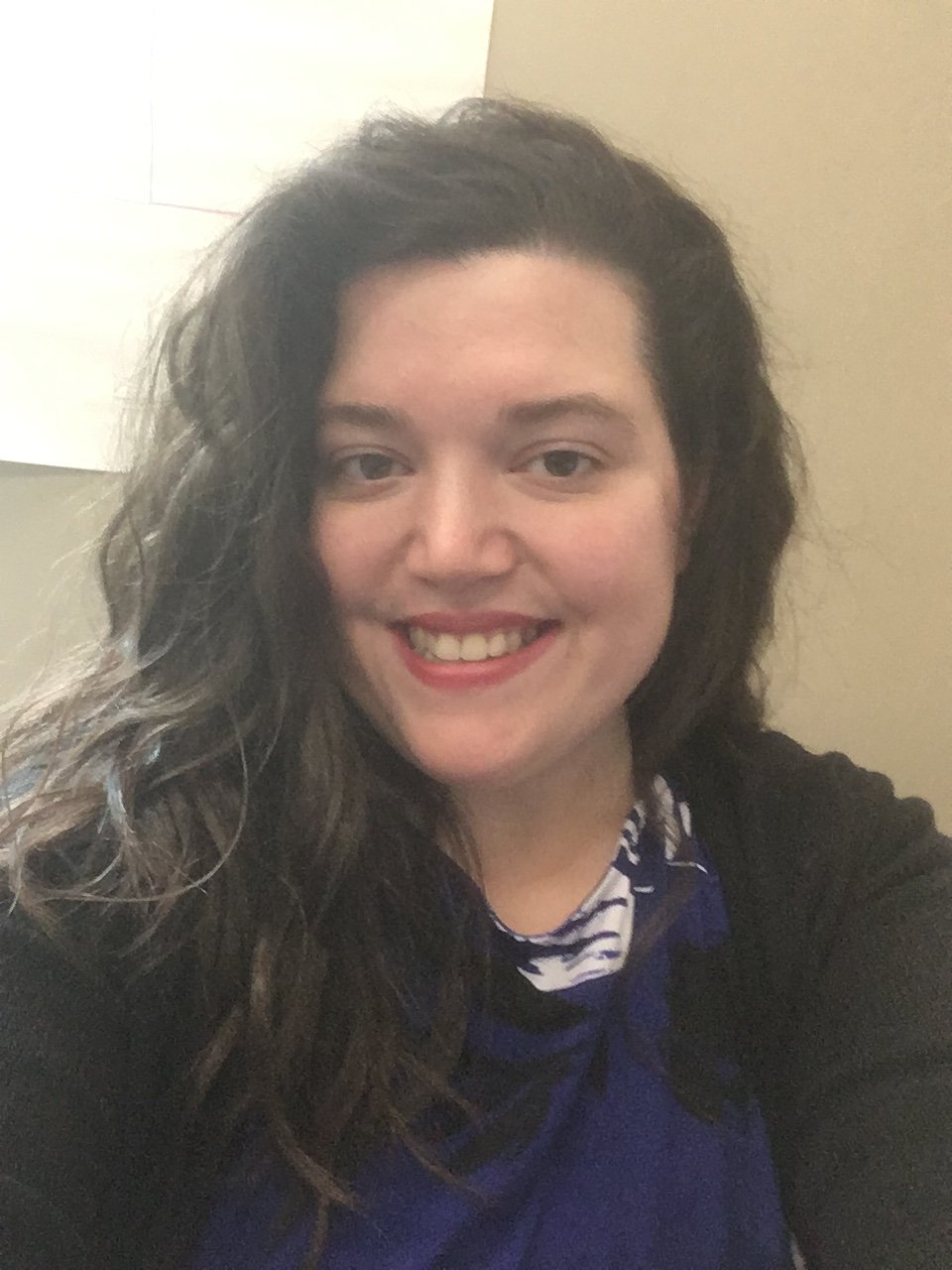
Bethany Bruno is a Floridian author whose writing echoes the language, history, and quiet beauty of her home state. Born in Hollywood and raised in Port St. Lucie, she earned a BA in English from Flagler College and an MA from the University of North Florida. Her work has been featured in over sixty literary journals and magazines, including The Sun, The MacGuffin, and The Louisville Review. When she’s not writing or chasing down forgotten corners of history, Bethany spends her favorite moments in impromptu “dance mode” parties, board book bedtime stories, and fits of laughter with her husband and silly daughters. Visit www.bethanybrunowriter.com for more.