Pieces
Just after the pandemic, I went to New York City with my aunt Mimi. We had planned the trip as a way for me to learn everything I could about my mother, who died thirty-five years ago from an aggressive form of breast cancer. It was the hottest day on record for the month of May and we sat in an air-conditioned restaurant in Greenwich Village.
Mimi listed things my mother loved: dancing, parties, fashion, Bailey’s Irish Cream.
I asked her to do this because at the age of fifty, I was finally trying to find something we have in common, a thing that would connect us. I spent most of my life since she died not asking, thinking I knew who she was, thinking I was nothing like her, afraid, maybe, to be curious.
“Come on,” I said, reaching for my beer, something my mother hated. “There must be some way we’re alike.”
Mimi tried again: Rare steak, talking on the phone, attention, New York City.
I don’t like any of those things, including New York City, which makes me feel both too big and too small at the same time. Mimi loves New York, can navigate like a resident even though she hasn’t been one in almost fifty years. When I was fifteen, just after my mom died, Mimi brought me here, took me to museums, introduced me to Indian food, snuck me into the Lone Star Cafe where we saw Keith Richards. People thought we were sisters.
The restaurant was only a few blocks away from where she and my mom grew up. The day before, we had visited the schools they went to, the apartment buildings they lived in, the street where Mom broke her arm running to hug a friend, the fenced in basketball court where Mom used to flirt with a teenage Kareem Abdul-Jabbar, the church where she married my dad. Mimi sipped her wine and told me that I look like her. I don’t see it. She was small, wide-eyed, fashionable; I am less small, less wide-eyed, less fashionable. My whole life everyone has told me I look just like my father.
Mimi said Mom lit up every space she entered, like the sun, and that boys, all the boys, including my father, loved her fast and hard. She said she filled up every corner, that she felt the world so deeply she made everyone else feel it too. She said she wasn’t afraid of anything, that she protected her siblings when my grandfather was drunk, wrote poetry, drove across the country in a convertible, said yes more than no, cut her hair short when everyone else was wearing it long, rode horses in the rain, fell in love a lot. That she lived more in her three decades than most people do in a lifetime.
“You are alike, you know,” she said.
But I don’t know. I’m not at all like the sun. I think before I act. I avoid conflict. I’m an observer. I’m in bed before 9:00 p.m. most nights. I’m more earth than fire. A moon, maybe, an asteroid, a piece of exploded planet floating through the universe.
***
Recently, I texted Mimi because I decided to start hormone replacement therapy. My feet hurt, I was irritable, I couldn’t remember words, and hot flashes kept me from sleeping through the night. It was either perimenopause or just living into my 50s, something I don’t truly think I ever expected. Either way, I wanted Mimi’s opinion.
She reminded me that Mom’s cancer was hormone dependent, and that her doctors told her to get an oophorectomy to remove her ovaries to slow the growth. I had to Google oophorectomy.
My whole life I have been afraid of hormones without really understanding them, the same way I was afraid of the expanding universe, of sinkholes, of math. I was not allowed to go on birth control pills, had to have yearly mammograms starting at age twenty, and saw a breast care specialist every six months for a few decades. I get called back in for follow-up ultrasounds about every other mammogram because I have “extremely dense” breasts. Before each appointment, I rehearse my reaction to finally getting the news. It’s part inevitable nod, part disappointed head shake, part laughter that communicates how okay I am with it all, how relieved I am in a strange way that I can stop worrying now, for fuck’s sake. I cry before and after every one of those appointments, usually alone in my car.
I like my breasts even though I shouldn’t, considering how they have been treated like time bombs my whole life. They are one of my better physical features. They were fairly small through college, solid B cups, and I thought that they would stay that size. Mom wore a B cup and most of my relatives have fairly average sized breasts. But they grew throughout my thirties and forties and are now just shy of D. Mimi has really large breasts, as did my maternal grandmother. Perhaps my own mother’s would have grown if she had lived long enough.
Mimi told me that they—she, my father, my grandmother, some of the doctors—always thought Mom’s cancer was an anomaly. There’s no family history, and since her death, no new relatives have been diagnosed. They all had theories about the cause: Preservatives in food throughout the 60s, X-rays from a broken arm during puberty, chemicals in pesticides sprayed on fields near where she learned to walk.
It could have been anything, Mimi said, and it’s likely not genetic. My mom was born in Egypt, and living in Cairo during the 1948 Israeli Arab war meant that there were chemicals in the air, in her little lungs, entering her bloodstream, laying dormant. They had shrapnel land on their patio once, Mimi told me. I picture my mother, diapered, picking up a shard of metal, clutching it to her flat chest like a kitten, bombs going off in the distance.
Next month, I have an appointment with a genetic counselor to talk about whether I should consider getting tested for the cancer gene. I’m not sure I want to know. I’ve lived my whole life assuming I will get breast cancer, anticipating the day in the way you anticipate a visit from a relative you haven’t seen in ages. I imagine it sleeping, hiding behind some organ or other, or floating lazily through my bloodstream. I used to think that if I bumped something hard enough it would dislodge the cancer, wake it up, and then it would be my fault.
*
On our second night in NYC, Mimi told me she was abducted when she was nine years old. She was coming home from school alone, a tiny thing, no bigger than a six year old. There was a man who had been hanging around Washington Square Park, smiling at her, leaving her alone, but nodding hello. And then one day he walked with her, talked to her about ice castles, asked if she wanted to see one. She doesn’t remember if she answered him, if she wanted to see the ice castles or even believed there were such things in his apartment, but she remembers him stopping in front of a door, a nice brownstone apartment building on Sullivan Street, and before she had time to react, he grabbed her, tossed her over his shoulder like a duffle, ducked her through the doorway, and ran towards his apartment door. She remembers that she screamed and that there were neighbors coming down the stairs, and before he could get his door open, he dropped her. She ran. She told no one.
I asked her why she didn’t tell anyone and she said she was afraid. She thought her parents would be disappointed in her. There was a lot going on at home, she said. She didn’t want to cause trouble, she said. And anyway, it was probably her fault, she said.
Many years after she was grabbed, when I was eight years old and my mother was still alive and drinking Bailey’s and writing poetry, six year old Etan Patz went missing in that same neighborhood where Mimi was abducted. For decades she worried it was the same man, that it was her fault he was still free to abduct, that if she had just told someone, Etan Patz would have made it to the bus stop.
I imagine Mimi as a little girl, crouched inside the cabinet where she used to hide when her father was drinking. I imagine her with her arms over her head as she listened to my mother—still a child herself—feet firmly planted in front of the cabinet, screaming at their father, matching his volume with her small voice. I imagine her thinking about telling her mother, her father, her sister, her brother, thinking about saying how scared she had been. I imagine them circling around her, hugging her, protecting her, the way she circled around me after Mom died. I wonder what that would have changed for her, because I know it changed everything for me.
“Your mom would never have let it happen to her,” Mimi told me, meaning she wouldn’t have allowed herself to be abducted. “And she never would have kept quiet about it,” she said, as if in comparison to her own weakness, as if she was somehow less strong because she kept it a secret for so long. But I think if hiding in a cabinet is a strategy that keeps you safe, if being the quiet one, the observer, the low-maintenance one works to maintain balance in a family desperately in need of balance, if keeping secrets feels like the only thing to do when you’re nine and scared of so much more than strange men promising ice castles, then maybe that’s pretty fucking brave.
***
During the pandemic, Mimi and I started a business together, even though we lived thousands of miles apart. We made fabric coasters and sold them online. We texted every day, problem-solved over Zoom, uploaded photos of our products, and gave hundreds of households a safe place to set their cocktails in a world that was anything but safe. We laughed about providing a necessary service. Since everyone was staying home and drinking more, we needed to protect the coffee tables of the world! Hell, coaster-making may not be curing cancer, we laughed, but it’s preventing damage to wood furniture everywhere.
We didn’t make a lot of money, but we pledged to spend every dime on a trip to New York City as soon as the pandemic was over.
A lot happened during the pandemic. Mimi’s brother, my uncle Ben, died of a heart attack, all alone in a tiny apartment in Lawrenceburg, Indiana. I missed three mammograms. The school I work at closed, opened virtually, closed again, reopened hybridly, closed again, then reopened. We learned to breathe through masks. My father died. People bought coasters.
Mimi and I made enough money selling coasters to pay for our trip to New York, and then we shut down the business because life picked back up and the world tried to get back to normal after trauma, as it does.
***
On our last full day in New York, Mimi took me to Sullivan Street. We were on our way to breakfast and she stopped at the corner and told me that she hadn’t been down this street since the abduction, that she always found another street to walk on.
“Do you want to walk down it?” I asked her. She thought about it for a few seconds and then said yes. We hooked our arms together at the elbow and started walking.
Mimi was the one who held me the night Mom died. She’s the one who I suspect stayed living in Vermont long after she wanted to leave because she knew I needed her. She’s the one I talked to when I was thinking about having sex for the first time, the one I cried with when I had my heart broken, the one I sat up with all night when her mother was dying, the one I called first when my dad died, the one I still text almost daily about stupid things like word games, important things like menopause, scary things like mammograms. She’s the one who calls me Emmy Feathers, who loves my husband Bill almost as much as I do, who knows my dogs are my babies, who trusts me with her secrets and who listens to mine.
We walked up and down the block three times looking for the doorway. She remembered it vividly, how it opened into a tiny foyer with a hallway and a staircase running up the right side. The buildings were all old, all just as she remembered them, but we couldn’t find the right doorway. I asked if she was sure this was the right block, the right street. They all look the same to me, but she said she was sure. Pretty sure. And then she laughed.
“Oh, well,” she said. “Maybe I got it wrong.”
I think maybe I got it wrong, too. I have spent so much time thinking about how different I am from my mother, searching for pieces of her that will help me make sense of me, and finding nothing that we share. And all along, the thing we have in common has been right beside me.
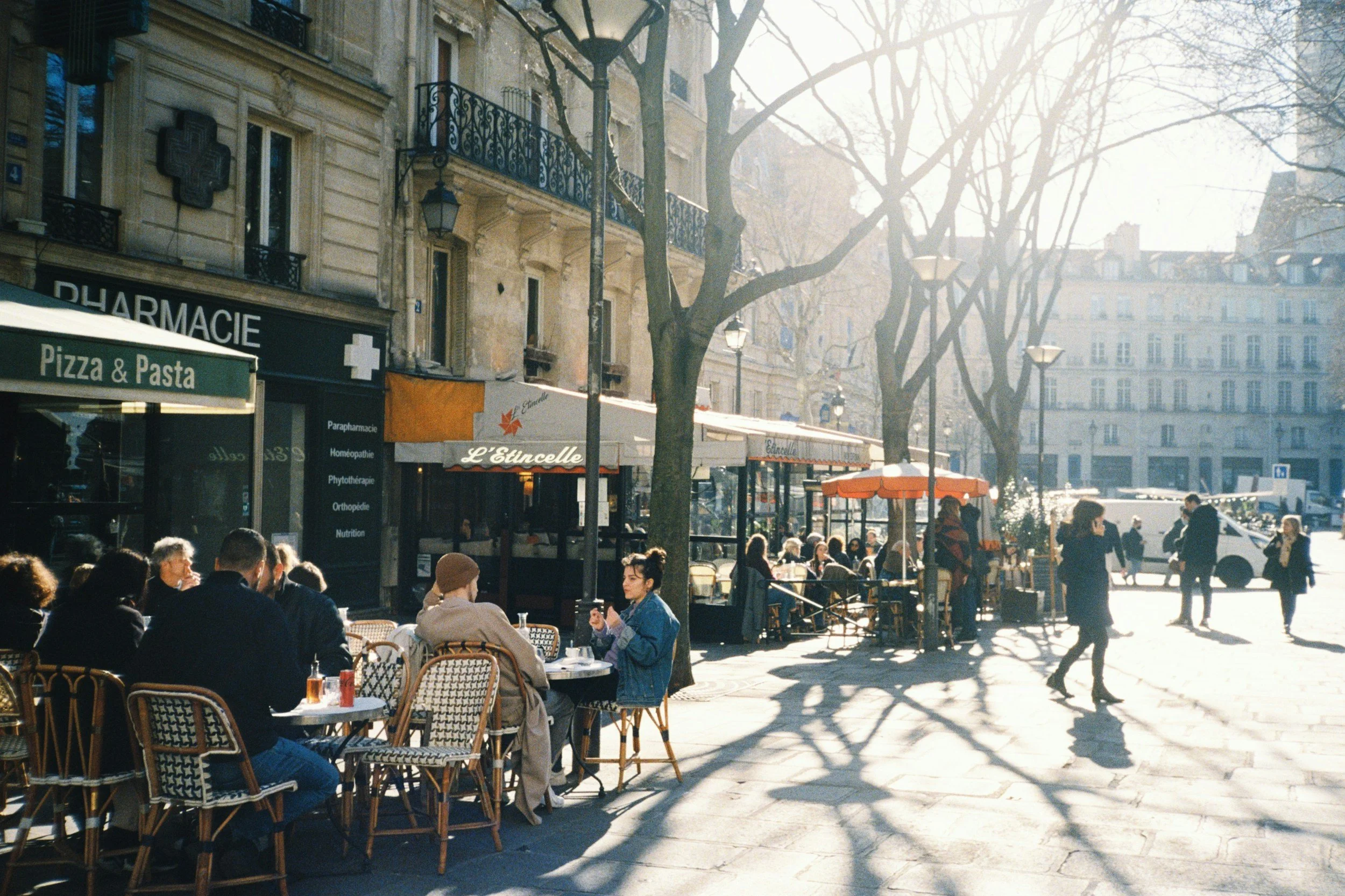
Our last night in New York was perfect. We walked until our feet hurt and then had cocktails in a Spanish restaurant where the waitstaff was just arriving and the bartender was still slicing citrus. He called us ladies and acted as if we were twenty-year old sisters. We had reservations at a restaurant a few blocks away, and it started to rain so we tried to run, but neither of us were made for running so we just laughed and showed up at the restaurant wet. We had another drink, ate shrimp and clam fritters and halibut and monkfish. When we left the rain had stopped, so we walked back to the hotel, way too far to walk after such a long day, but she still had so many stories to share, and I think we both just wanted to be in the middle of it all, the city she loved, for a little bit longer.
-Emily Rinkema
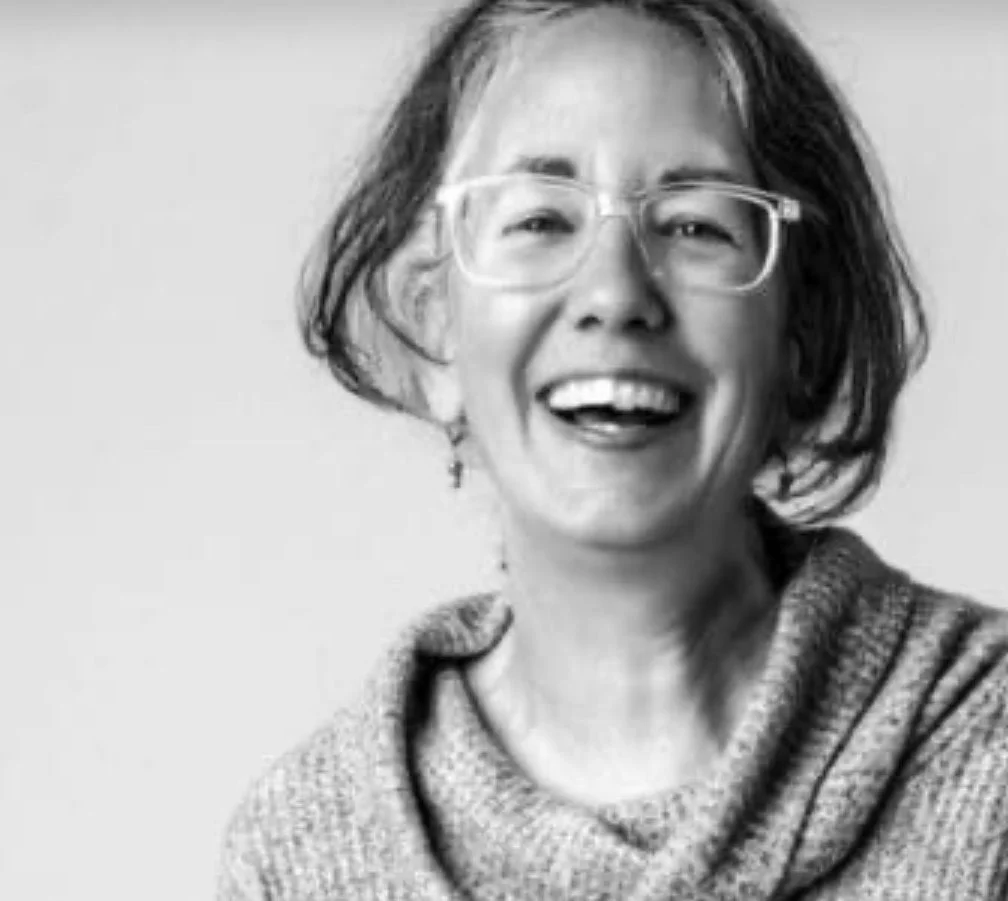
Emily Rinkema lives and writes in northern Vermont, USA. Her writing has recently appeared in The Sun Magazine, Variant Lit, Flash Frog, Fictive Dream, Ghost Parachute, and Wigleaf, and she won the 2024 Cambridge Prize and the 2024 Lascaux Prize for flash fiction. You can read her work at https://emilyrinkema.wixsite.com/my-site or follow her on X, BS, or IG (@emilyrinkema).