
This is ambrosia, the woman exclaims as she savors a rosemary scone. Better than sex! The woman’s honeyed locks reach languidly down her back, forming a single undulating wave that sways in stark contrast to the stiff wooden chair she sits upon while she speaks. Her voice is surprisingly gravely, and as she gesticulates her round cheeks grow rosy with delight. We’ve just emerged from a silent retreat and she is seemingly bubbling over from a rich reservoir of attention, the type only cultivated in silence.
Earlier, before the three-day stretch of complete silence officially commenced, she told a fellow student that it’s impossible to know what the experience will be like until you’re in it. Each time is different, she said. The silence is your teacher. We first-timers nodded our heads and settled for an attempt to channel this woman’s wisdom, understanding implicitly that her boisterous proclamations rose out of a sturdiness, some deep and unspoken capacity to endure. We found our seats on firm, greying cushions as an uneasy quiet fell over the room, each of us suddenly aware that we were awaiting a fate. Something was coming, a silent force, but from where? Within us? Outside of us? What would it bring?
That first days-long dive into silence was like a complete rewriting, like my car had been detailed after years of accumulating dust and crumbs and debris. I was practically giddy. Joy! Discovery! Beauty! Precision! On a walk through the garden, I discovered dill so pungent my eyes watered, which made me wonder if I was being moved to tears or if I was just actually present to the sensation for the first time. Zucchini leaves stretched out confidently, fluttering their elephantine leaves, while the late summer blooms held their little green fists closed, still clenched with potential. But it was a stray and tangled vine that made me pause. I traced its roots down to their origin outside the fence, marveling at how the vine had crept and curled its way over and around and then up, up, up to the top of the fence where it dangled its ruby prize: a single raspberry. A gasp escaped from my lips, this little audible exclamation mark.
My brain purred as I made my way through the rest of the garden, feeling each foot meet the ground as I had been taught. And yet despite my slow ambling there was an intensity to the experience, a tumbling-out feeling, a buzzing, bright saturation of sensation. I’ve never taken a psychedelic, but I’ve read enough first-hand accounts to know that this was something like a good trip. That deep reset, a feeling that something has moved through your neural pathways, cleaning and clearing and clarifying, until everything is teeming with both meaning and sensation. I left with a temporary but profound sensitivity to the human experience.
I returned for a second summer of silence. Almost immediately, my surroundings, which had opened so generously before me the previous summer, now felt menacing, but not more so than the main threat, which arose from within. Old OCD sprung up, like it had been storing its energy under the damp leaves of my life, and the silence was spring, except instead of unfurling green new growth, the browned decay of rumination, perseveration, desperation took root.
I stood under a towering bamboo forest—well-maintained but invasive, nonetheless—pleading for the previous summer’s bounty. In a way, I felt my brain had betrayed me. If the first retreat was analogous to a good trip, then this was most certainly a bad one. What happened to that euphoric immersion? And, worse, how could I not have anticipated that that same sensational precision, when directed at that which is painful, irrational, ugly, is nearly unbearable?
The experience is different every time. You never know what you’re going to get. That time, I emerged back into the world fragile, raw.


*
That summer foreshadowed late winter, which brought with it COVID-19 and the accompanying existential precarity. In between, some time during the fall of 2019, I was immersed back in the bustle of my life and buffered by a steady hum of stimuli. I watched a video of a meditation teacher passing out breathing sticks to kindergarten children. She reminded them, regarding the color they received, “You get what you get and you don’t get upset.”
“You get what you get and you don’t get upset!” the children cheerily parroted. A helpful and distracting singsong for the eager kindergartners, developmentally attuned to predict patterns, to perceive indicators of fairness, or the lack thereof. I sat motionless, momentarily awed by their trust, their acceptance of the exchange.
Just a few months later I would sit in a circle with fourteen-year-olds, trying to explain that the school was being closed and they had to go home. That no, we don’t know for how long, and that yes, we need to leave right now, but no, it won’t be forever, and yes, it’s normal to be nervous. I would watch an eighth grader wail as she packed up her locker, the only one who was really alive to the experience, who knew that this was a time to grieve, that as the locker slammed so did the before, and that whatever the after was, it would be fundamentally and irrevocably different.
*
Years later, when I am pregnant with my second child, these memories flicker through my mind. I’ve now survived the pandemic, with its long tail, alongside the children that I taught. I’ve somehow also birthed one human being already, experiencing the absolute earth shattering, body-breaking, soul-expanding transcendence of bringing a child into the world. I’ve known the wild awesome elation of ushering her to this side of the portal. I’ve beamed with pride introducing her to those I love.
But I am acutely aware of the singularity of that experience, too. And there’s something about the numb, stilted stillness of February, this shortest month that never ends, something about the heaviness in my pelvis, the density in my mind, the sluggish slowness of our synchronized movements, something about this season’s unwelcome reminder that there’s no skipping the dark winter months, no rushing a baby to be born, no willing your mind in the direction of euphoria without acknowledging the capacity for fear, for desperation, for spiraling out of control, that makes me reconsider the compliant kindergartener, nodding her head, waiting in anticipation, still holding her hope—now a private endeavor—for a favorite color.
In these final terrifyingly tender moments I lay languid on the couch or charge recklessly into activity, vacillating jarringly between both states, unable to find comfort in either (it’s as if restless leg syndrome has inhabited my whole body, I am so tired and yet the patter of anticipation, of a body no longer able to sustain its passenger, tugs naggingly at my psyche as much as my strained ligaments, making rest impossible). On an icy walk with my toddler in the stroller, belly unceremoniously stuffed under a parka, my neighbor frantically texting me, Someone just fell on the road there. Please be careful! I try and fail to escape what I know to be true: I am unlikely to emerge unscathed.
The second time, I wait and wait and wait. Then, suddenly, this child descends, torpedoing her way into the world. The pain is corporeal, but also overwhelmingly psychic. A deluge: Coping with the fact that I can’t cope. Loosening my grip on my first baby being my only baby. Understanding that I need to be psychologically intact for her, forced once again into facing my own vulnerability (a problem for me ever since getting pregnant the first time – never in my life has buckling my own seatbelt felt so urgent). Reckoning with my own permeability, a body’s ability to tear itself in two.
I feel like a child who has turned her back to a wave and finds herself smashed into the sand, desperately clawing for both solid ground and the blue breath of sky, unsure in which direction to reach. The pull of the tide is so forceful, so quick, there’s no time to strategize. The only option is to endure, panicked and flailing and humiliated, trying to grasp the hands now reaching down to help. I emerge coughing and wheezing, exposed and shivering, looking around sheepishly, trying to understand.
When this happened to me as a child, my dad plucked me out of the ocean by my hair, an act both brutal and necessary. My own mother wrapped me in a towel, wiping the snot from my nose.
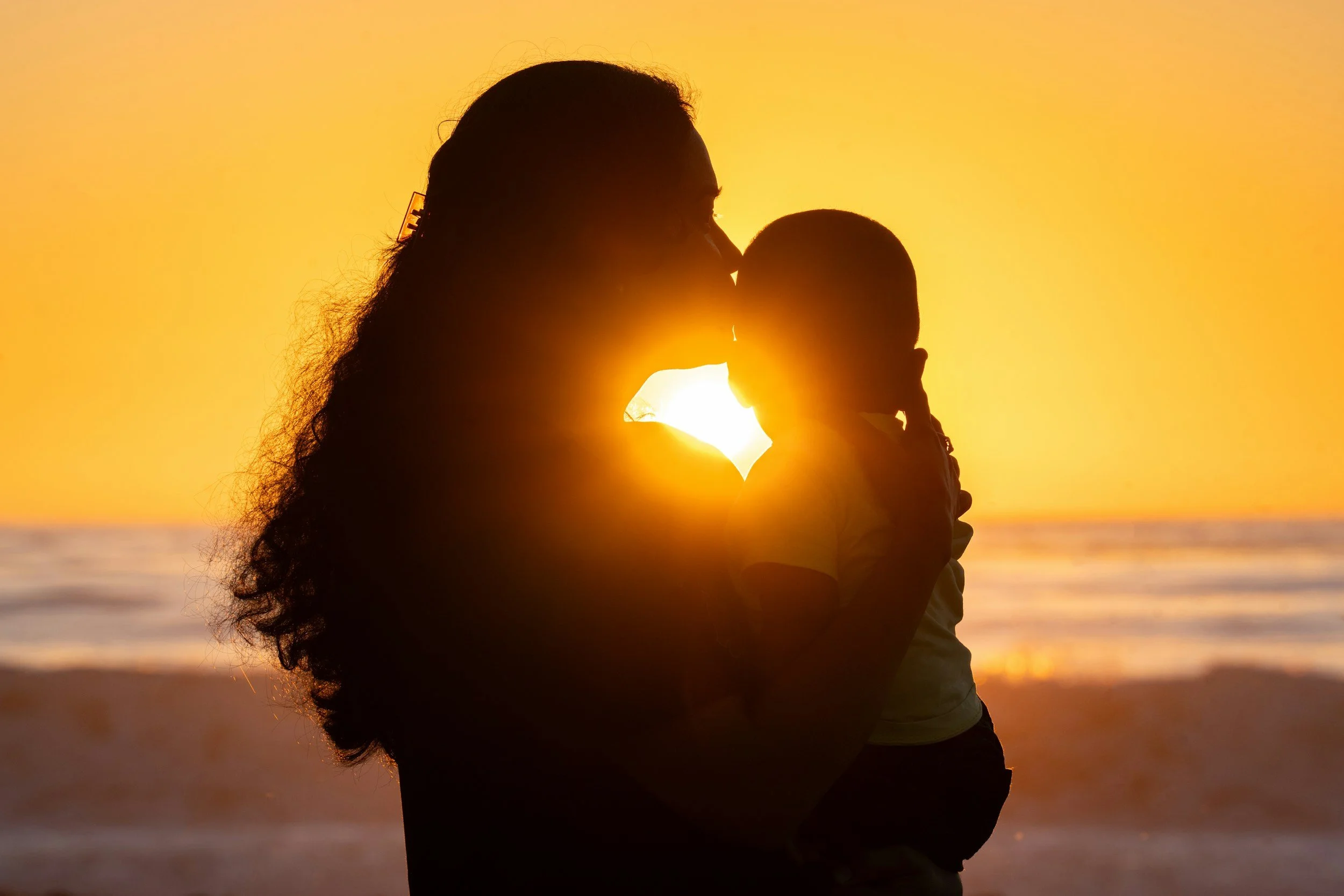
Now I am the mother, and here is my baby. Blankets are placed on us. Body fluids are wiped away. We are raw and new and gasping for air and looking around wildly, ears still pricked, eyes wide, every sensation heightened such that even the ambient whir of a TV show from the corner of our hospital room is somehow an unbearable intrusion. We turn it off.
In the quiet, the tide recedes and our eyes stay trained on the gray glittering ocean, all its glory and destruction. You get what you get.
And now we’re here, falling in love with each other. Holding our fragile parts. Blinking and beeping and whispering hello. Ambrosia.
-Liza Ruggiero
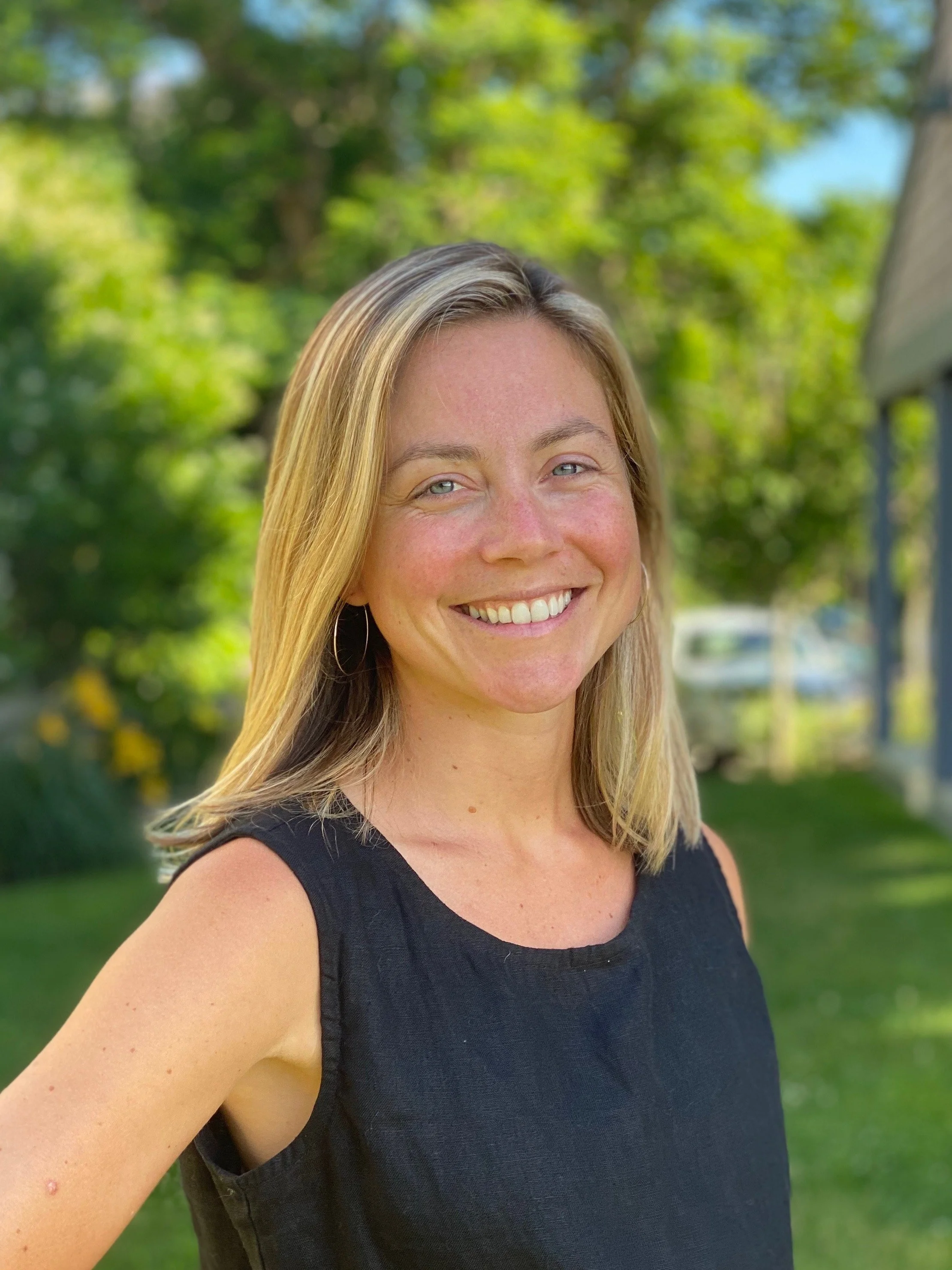
Liza Ruggiero is a coach, facilitator, writer, and educator whose work focuses on cultivating inner growth, self-compassion, and greater self-awareness. Liza runs Heartwork Leadership Practice, where she works with individuals experiencing life transitions—adolescents, emerging adults, career changers, and new parents—to help them craft a life that is rich and full of meaning. When not working, writing, or playing with her children, you will find Liza in her garden.
This is ambrosia, the woman exclaims as she savors a rosemary scone. Better than sex! The woman’s honeyed locks reach languidly down her back, forming a single undulating wave that sways in stark contrast to the stiff wooden chair she sits upon while she speaks. Her voice is surprisingly gravely, and as she gesticulates her round cheeks grow rosy with delight. We’ve just emerged from a silent retreat and she is seemingly bubbling over from a rich reservoir of attention, the type only cultivated in silence.