
At Last
I used to believe risk would announce itself with fanfare—a cliff edge, a trembling ultimatum, something you could point to as the hinge on which your life turned.
In childhood I imagined risk as a sort of mythic test: a figure standing in the threshold, asking if I was brave enough to continue. I thought it would feel loud. Definite. Something that glowed red at the edges and warned me, Pay attention—this is important.
But most of the risks that have shaped me were quiet ones. They were doorways I walked through not realizing the room on the other side would alter the map of my life. They were moments so small at the time that only in hindsight did I understand: Oh. That was the beginning.
The first real risk I ever took—the first one with teeth, with heat, with the power to bruise something soft inside me—happened when I was in my early twenties. It started, as these things often do, with music.
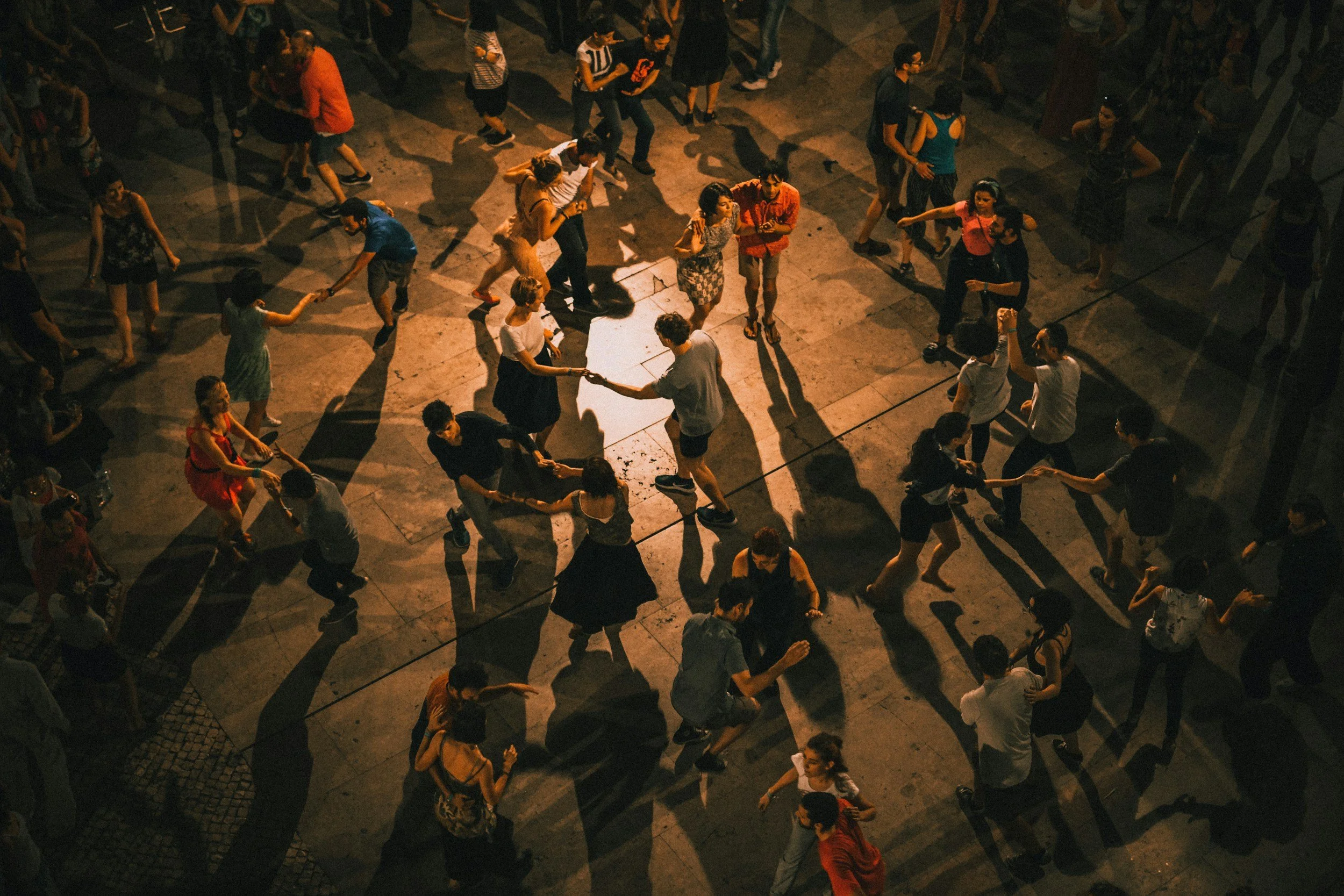
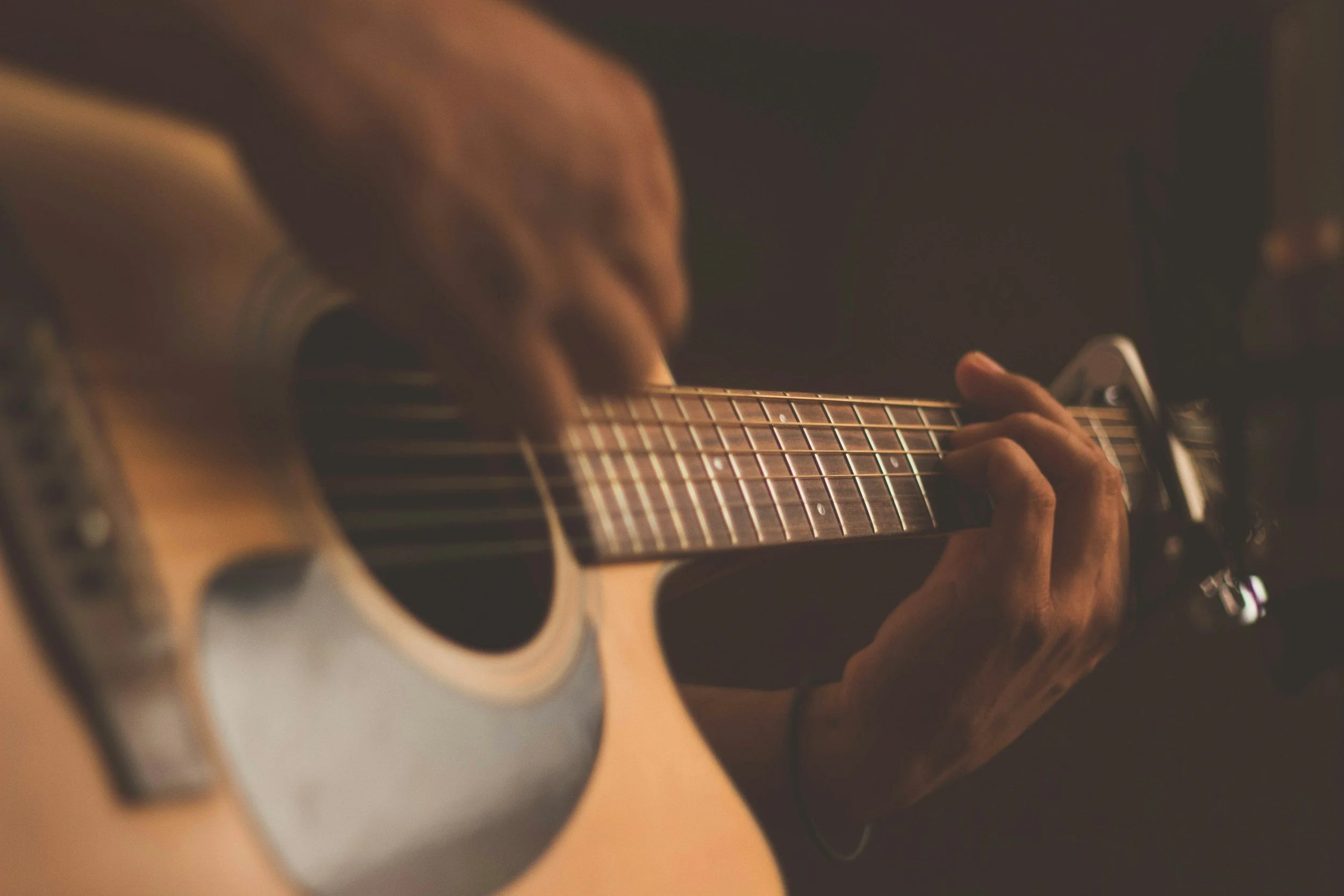
“At Last” by Etta James was playing at a friend’s house one night. I can’t remember the reason we were there, or who all the other guests were. There was cheap wine and someone’s half-deflated birthday balloons on the floor, and the kind of lighting that made everyone look both softer and slightly unreal. The speakers crackled on the high notes, but no one bothered fixing it.
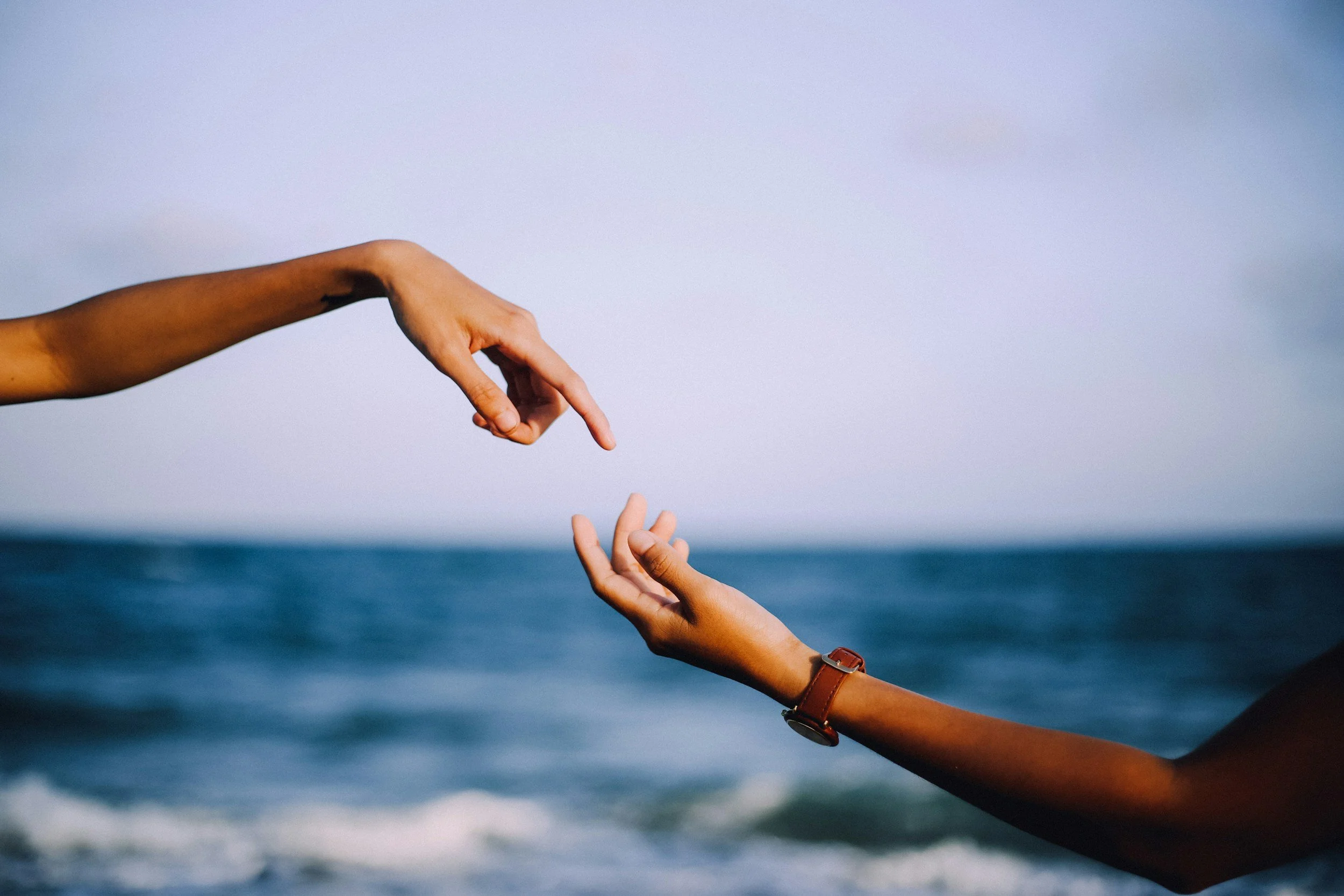
Mike walked up with that smile—the one tilted a little as though he wasn’t sure if he was allowed to be as happy as he suddenly was. He held out his hand like he was offering me something fragile. I took it without thinking, and before I knew it, we were dancing.
It wasn’t a grand dance. Neither of us were particularly graceful. Our steps didn’t match, and he kept apologizing for stepping on my toes, even when he hadn’t. But something in that moment shifted something inside of me, the way a landmass is permanently altered after an earthquake. I remember the warmth of his palms at my waist, the way he kept glancing down as though to confirm I was real, the faint scent of laundry detergent clinging to his shirt. The song moved through us the way a tide moves through a shoreline—unhurried, inevitable.
I didn’t know it then, but I was risking something enormous just by letting him hold me.
There are certain people who arrive at exactly the right moment in your life, and their presence, however fleeting, reorganizes something fundamental in you.
Before Mike, I had never been looked at in a way that made me feel coherent. In a recent podcast episode (Last Meals by Mythical Kitchen), Brennan Lee Mulligan stated, "Part of what a ghost feels like to me is, the second I'm gone, I vanish. And all memory fades, and you don't stick in anyone's mind." For me, in my late teens and early twenties, this was exactly what I felt. I had been admired, or noticed, or considered interesting, but never seen. Not the way Mike saw me: as though my contradictions didn’t need smoothing, as though the unfinished parts of me weren’t liabilities but possibilities.
Those early months were like standing in front of a mirror for the first time and realizing the reflection was someone I wanted to get to know. He didn’t create my identity, but he illuminated pieces of it I hadn’t understood how to name. He gave me a sense of being someone worth caring for—not because he said the right things, but because he listened in a way that made me brave enough to shape myself aloud.
The funny thing is that I didn’t recognize it as identity formation at the time. I thought I was just falling in love. But love, in those early years, is also a workshop. You build yourself in the presence of another person. You try on versions of yourself like coats. You learn what fits. What doesn’t. Who you want to become when someone is watching, and who you are when they aren’t.
Looking back, I see that the risk wasn't just letting him hold me on that dance floor. It was letting myself grow in the space created by being held.
There is a myth about first love—not the Hollywood myth, not the soulmate narrative, but a subtler one, an archetype older than those polished stories.
It is the myth of awakening, the moment where tenderness becomes a doorway. The idea that you will not walk out of that moment the same person you were when you entered it.
We were young—so young that our bodies still held the buoyancy of adolescence, still believed themselves invincible. And youth has its own mythology, its own laws: that love is a discovery, that heartbreak is theoretical, that the world will mirror back to you the intensity you feel inside.
Loving someone in your early twenties feels like stepping into a story that has been waiting for you, even if you don’t yet know how it ends.
Mike was not extraordinary in the ways stories tend to privilege—not dramatic, not tortured, not brilliant in a way people wrote poems about. But he was extraordinary to me.
He asked me questions no one else thought to ask. He was gentle with the quieter parts of me. He made room for silences without trying to fill them. His attention felt like sunlight through a window I hadn't realized was shut.
With him, I learned the earliest version of vulnerability: the risk of being known.
It is a tender, terrifying thing to let someone see you clearly. And even more terrifying to realize how much you want them to.
First love is a risk for which no one prepares you.
It feels, at the time, like a step onto holy ground—something sacred that must be protected. I didn’t imagine that anything could fracture it. I couldn’t fathom a world in which that warmth would be replaced by something colder, something shaped like loss.
And then, like so many young couples, we fell apart.
It didn’t happen suddenly. It was a series of small fractures—miscommunications, exhaustion, both of us trying to be adults before we had the emotional vocabulary for it.
And then the final wound: he cheated.
The irony is that he wasn’t even in the same state when it happened. I had moved across the country to be back home with my family after a mental health episode, about two thousand miles away. Distance has its own way of testing the seams of a relationship.
He went to a friend’s housewarming party, one I know only through the way he described it to me later: too loud, too crowded, too many strangers clinging to the kitchen island like barnacles. He drank more than he meant to. Someone he knew—girl I had never disliked, because he had never disliked my male friends — leaned in to say something over the music. He kissed her. Or she kissed him. Or they found each other in that slurred, pointless way drunk people do when they feel small and human and far from time does what it does best: it moves forward, dragging you with it whether you’re ready or not. But memories have their own gravity. They resurface in ways you can’t predict, as insistent as tides.
There is a house in my neighborhood: a blue one, with white trim and a slow-growing lemon tree in the front yard. By the door hangs a small plaque that reads At Last in gentle, looping cursive. The first time I saw it, years after Mike and I ended, something inside me stilled. I stood in front of the house for a moment too long, feeling a flicker of recognition I couldn’t name.

It wasn’t longing. It wasn’t grief. It was the echo of a younger self tapping on the inside of my ribcage, whispering, Do you remember?
I remember. I always do. I think I always will.
Sometimes when I walk past that house, I imagine the people who live there.
Whether the sign means what I think it means. Whether it has anything to do with the song at all, or whether my heart simply stitched its own meaning onto it. Human beings are meaning-makers. We see a threshold and call it a symbol. We see a door and mistake it for an omen. We hear a song and believe it belongs to us.
Every time I see it, I feel the same small tug—a bruise pressed absentmindedly, a tenderness that has outlived its reason. I don’t believe in cosmic messages, not in the overt sense. But symbols have a way of attaching themselves to the places where our past selves still breathe.
Sometimes I think the universe speaks in whispers rather than shouts, and the plaque is one of those whispers—a soft reminder not of him, but of who I was when that song first wrapped its arms around my chest.
What does it mean to take a risk? I ask myself this often.
Maybe it means trusting someone with the most fragile parts of you. Maybe it means believing in a future you cannot yet see. Maybe it means forgiving someone even when the world tells you it would be easier not to. Maybe it means letting the wound be a teacher instead of something that breaks you.
The risk wasn’t loving Mike. The risk was what I allowed that love to do to me—how it made me softer in some places, braver in others. How it rewrote the internal map I used to navigate the world.
When we ended, I thought the lesson was: Don’t risk this again. But that wasn’t the truth. The truth arrived slowly, over years, through other relationships, other losses, other quiet reckonings.
The truth was: You survived. You’re still capable of tenderness.
The wound didn’t fossilize me. It enlarged something.
And here is the surprising part: risk shifts as you age. In your early twenties, it feels like the possibility of devastation. Now, in my later twenties, risk has become something else entirely—the decision not to barricade yourself. The willingness to remain porous in a world that rewards callousness. The courage to attempt love again and again with a heart that knows what breaking feels like.
Adult risk is quieter but heavier. It is choosing to be seen on purpose.
There is something mythic about the way we love—not mythic as in divine destiny or tragedy, but mythic in the way humans have always made meaning out of heartbreak. Our personal wounds become stories we carry, warnings we whisper to ourselves, talismans we hold without realizing. We cross thresholds we don’t remember stepping up to. We undergo transformations without ceremony.
Sometimes the myth is simply this: You did not die of the thing you thought would destroy you. You changed. That transformation is its own rite of passage.
And sometimes I think of my heart as a threshold—not a fragile organ, but a doorway through which versions of myself come and go. Who I was at twenty has not vanished; she stands at the edge of memory, hands cupped around the small flame of her first love, illuminating the path to who I became. She is the one who stepped through the doorway and took the first risk without knowing its name.
And she is still with me.
Not as a ghost, but as architecture.
There is a myth—not one written down, but one people live quietly—that says the first person you love becomes a doorway.
Not because they are meant to stay, but because they reveal something essential about you. They show you what your heart can hold.
Mike showed me that my heart was capable of cradling gentleness, forgiveness, grief, memory, and change. He showed me that I could love deeply and survive the aftermath. He showed me that endings are not punishments; they are invitations into the next version of yourself.
I don’t romanticize what happened. I don’t diminish the hurt, either. But I hold the fullness of it. The sweetness. The ache. The night we danced. The tender fracture. The years since. I hold them all. And the holding is its own act of courage.
Sometimes I wonder what he remembers.
Whether the song follows him like it follows me. Whether he ever hears those opening notes and feels that same small ripple beneath the ribs.
I’ll never ask. I don’t need to. The past is complete, but memory is ongoing.
What remains between us now is not love, not longing, not regret. He married that girl he kissed, had a couple of beautiful daughters with her. In every photo that has accidentally crossed my feed, he looks so incredibly happy. I would not risk that happiness by asking him if he remembers me at all. What remains is something gentler—a kind of emotional archaeology. A recognition of a person who once mattered deeply, and a gratitude for the ways that mattering shaped me.
Risk is not about aftermath. Risk is about willingness. And I was willing then. I am willing still.
The greatest risk, I’ve learned, is not giving your heart away. It’s allowing your heart to remain open after it’s been punctured. It’s choosing, again and again, not to become a citadel. It’s trusting that vulnerability is not a weakness but a lineage—something passed between the selves you’ve been and the selves you’re becoming.
It’s allowing the bruise to become a lens—not one that distorts, but one that teaches you where you are tender, where you are still healing, where light can enter if you let it. For better or worse, the bruise gives shape to your vision. It reminds you that you have been changed and that the change didn’t ruin you. It refined you.
And maybe every major moment in life is a doorway: the dance, the confession, the breakup, the years of numbness, the delayed grief, the unexpected softening. Each one a threshold you step through, unaware of the transformation underway. Each one altering the way you carry your own heart.
The bruise becomes a compass. The doorway becomes a path. The risk becomes a story.
The bruise of that first heartbreak has faded, but it hasn’t disappeared. I’m glad it hasn’t. It reminds me that I am porous, that I am capable of being moved, that I am not afraid to feel deeply.
Whenever I pass the At Last plaque, I no longer flinch. I let the memory rise. I let myself be twenty again for a breath or two. I let the ache soften into something like affection.
And then I keep walking—older, wiser, but still carrying the girl who once danced in a dim room to a song that promised beginnings.
She didn’t know what the cost would be. She paid it anyway.
And she lived.
Everything that has followed—every love, every loss, every risk worth taking—began with her.
I hope I never forget her.
I hope I never stop honoring the risks she took before she even knew their names.
-Isabella Nesheiwat
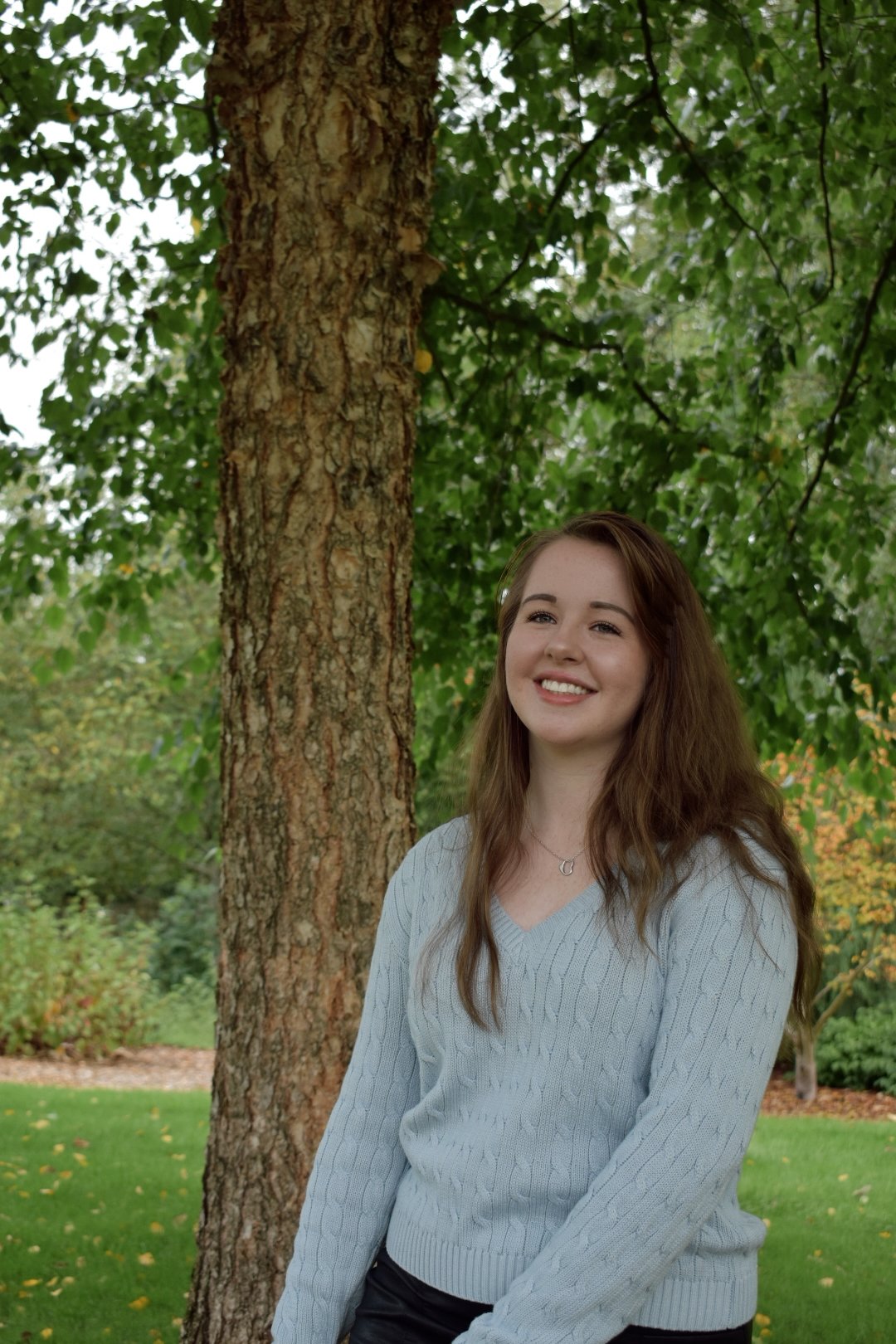
Isabella Nesheiwat (she/they) is a writer based in Southern California whose work explores the intersections of myth, memory, and embodied experience. Her writing has won poetry challenges on Vocal Media, and has appeared in Fragments (Seattle University, 2023) and Fang & Flower (Issue 001, 2025), with new work forthcoming in 2026. She is drawn to stories about transformation, threshold moments, and the risks we take when we allow ourselves to be seen. You can follow her on Substack at bellaslibrary99.